Overview 🎯
Hello — I build tools and jigs that make cutting faster, safer, and more accurate. Today I’m sharing a simple but brilliant homemade circular saw jig that transforms your saw into a precision cutting tool. This jig is safe, easy to build, and perfect for DIY projects where straight, repeatable cuts matter.
“I’m going to make a cake.”
That line is my little laugh at the start. The “cake” here is a playful way to say we are building something nice and satisfying. The real project is the jig — and after you try it you will be pleasantly surprised by how effective it is.
Materials 🧰
Gather a few inexpensive materials. The jig is intentionally low-tech so you can build it with things you likely already have.
- Piece of plywood or MDF for the base (thickness 12 to 18 mm)
- Straight metal or hardwood strip for the fence
- Bolts, nuts, or wing nuts for adjustable stops
- Clamps to hold the jig to your workpiece
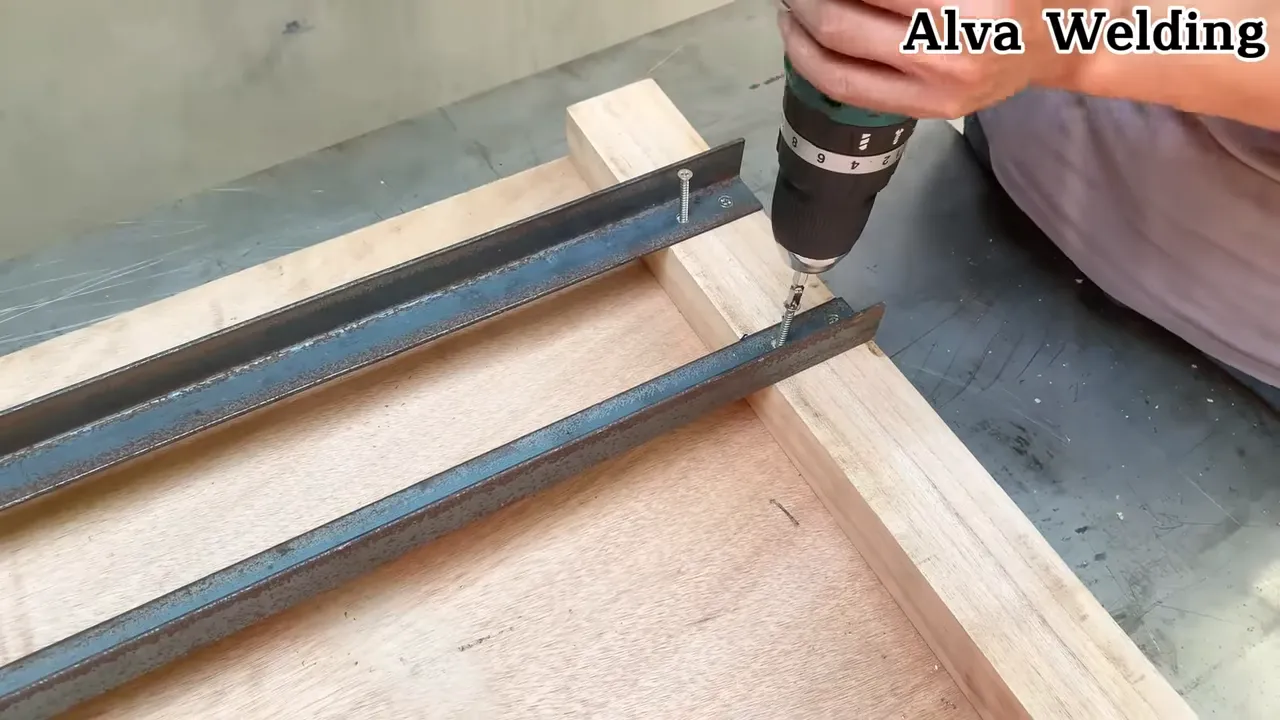
- Wood screws or small bolts to fasten components
- Optional: a thin shim or sacrificial board to protect your saw base
Design Concept 🛠️
The jig is simply a guided platform that gives your circular saw a straight, repeatable track. The fence and base keep your saw aligned while the clamps hold the jig to the material. You can tune it for rip cuts, crosscuts, or even angled cuts by adjusting the fence position and stops.
Step by Step Build 🔧
Follow these core steps. Keep measurements accurate and test on scrap before cutting final pieces.
- Cut the base plate to a size large enough to support your circular saw and provide a stable platform.
- Attach a straight fence to one edge of the base. Use a metal strip or a straight hardwood piece. Make this removable or adjustable with slots so you can set different offsets.
- Install an adjustable stop if you want repeatable short cuts. A bolt through a slot makes a simple, reliable adjustment.
- Create a zero-clearance edge by trimming the base with your saw on the first pass so the cut line is exact; optionally add a sacrificial insert where the blade exits to keep the base from getting chewed up over time.
- Test the jig by clamping it to scrap, running the saw along the fence, and checking for square, repeatable results.
Using the Jig Safely ⚠️
Good technique and safety gear make this jig work well and keep you protected:
- Always wear eye and hearing protection.
- Make sure the saw blade is suitable for the cut and is sharp.
- Clamp the jig and the workpiece securely before cutting.
- Stand to the side of the blade path, not directly behind it.
- Take light passes for deep cuts rather than forcing the saw through the material.
- Set blade depth just past the material thickness (≈3–6 mm / 1/8–1/4 in).
- Support both the kept piece and the off-cut so the kerf doesn’t close on the blade.
Tips and Tricks 💡
- Mark your fence with a scale or tape measure so you can set repeat widths quickly.
- Add rubber pads under the base to keep the jig from slipping on the work surface.
- If your saw shoe is uneven, shim it so the saw rides flat on the base.
- For very long cuts, support the material at each end to avoid drift or binding.
When to Use This Jig 🪚
This jig is ideal for:
- Breaking down sheet goods like plywood or MDF without a table saw.
- Making long straight rip cuts with a circular saw.
- Producing multiple identical parts quickly by clamping and indexing the fence.
- Any shop or jobsite where portability and simplicity are valued.
Common Problems and Fixes 🔩
If your cuts are not square or consistent, check these items:
- Is the fence perfectly straight? Replace or true it if bowed.
- Are the clamps slipping? Add more clamping force or reposition clamps for better hold.
- Is the saw plate rocking? Shim or plane the base so the saw shoe sits flush.
FAQ ❓
What materials do I need to build this jig?
Basic plywood or MDF for the base, a straight metal or hardwood fence, bolts or wing nuts for adjustments, clamps, and a sacrificial edge. Most of these are inexpensive and commonly available.
Will this jig work with any circular saw?
Yes, with small adjustments. Most circular saws will ride on the base just fine. If the shoe is unusually shaped, add shims so the saw sits flat and tracks straight along the fence.
How accurate can I expect the cuts to be?
With a straight fence and careful setup you can expect very good repeatability for woodworking projects. It will not match a precision table saw but is more than adequate for most DIY tasks.
Is this safe to use compared to a table saw?
The jig improves safety by providing control and repeatability, but you must still follow basic circular saw safety: secure the work, wear protection, and make controlled passes. This jig reduces kickback scenarios when used correctly.
Final Thoughts ✅
This homemade circular saw jig is one of those simple ideas that gives big returns. It is cheap to build, easy to adjust, and makes cuts faster and more accurate. Build one, test it on scrap, and enjoy the newfound control over your circular saw.
If you want ideas for variations, try adding a T-track for stops, a quick-release clamp, or a sled-style runner for crosscuts. Little improvements make a big difference.