Disclosure: As an Amazon Associate, we earn from qualifying purchases. If you click a link on this page and make a purchase, we may receive a small commission at no extra cost to you.
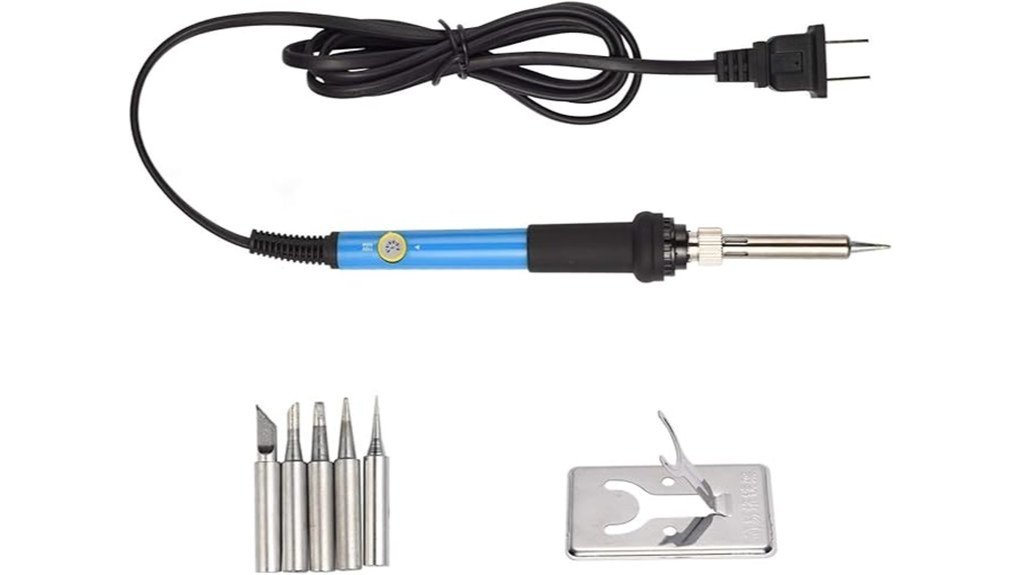
Small soldering jobs can get frustrating fast when your iron runs too hot, heats too slowly, or lacks the right tip for the joint. The Electronics Soldering Iron Kit is built around a simple promise: adjustable heat from 200℃ to 450℃, five interchangeable tips, and a compact design that does not require a separate soldering station. That makes it a practical choice for circuit board repairs, basic appliance fixes, DIY electronics, and light craft work. The tradeoff is that the article does not verify advanced specs like wattage, brand, certifications, or included solder, so this review focuses on the confirmed features and how they affect real use.
Quick Verdict
Rating: 8.1/10, recommended with caveats
Best For: Beginners, DIY users, hobby electronics repair, and small home repair tasks that need adjustable temperature control.
Bottom Line: This kit gives you useful heat control, five tips, and portable operation without a bulky station. It is less ideal if you need verified wattage, ESD-safe certification, professional bench-station stability, or heavy-duty production use.
| Specification | Detail |
|---|---|
| Product name | Electronics Soldering Iron Kit |
| Amazon product identifier | B08JCJ7X8D, based on the product URL |
| Product type | Adjustable-temperature soldering iron kit |
| Temperature range | 200℃ to 450℃ |
| Included tips | Five interchangeable replacement tips |
| Design | Compact and portable, with no separate soldering station required |
| Heat-up note | Article-supported heat-up time is within minutes |
| Supported uses | Circuit board repairs, DIY projects, appliance repair, automotive electronics, and light craft or jewelry soldering |
| Build note | Described as heat and impact-resistant, but exact material is not stated |
| Safety note | Use eye protection, ventilation, a heat-safe work surface, and proper tip cleaning habits |
Key Takeaways
- The 200℃ to 450℃ temperature range gives you more control than a fixed-heat iron for different solder types and small repair jobs.
- The kit includes five interchangeable tips, which helps you match the tip shape to circuit boards, wires, appliances, and craft work.
- The compact design is useful for home repairs because you do not need a full soldering station on your bench.
- The iron is described as heating within minutes, so it fits quick fixes better than long setup projects.
- Buyers who need verified wattage, ESD-safe certification, or professional production-level control should compare it with a full soldering station.
What Is the Electronics Soldering Iron Kit?
The Electronics Soldering Iron Kit is an adjustable-temperature soldering tool made for small electronics, household repairs, craft projects, and hobby work. Its main confirmed feature is the ability to set the heat between 200℃ and 450℃, which gives you more control than a basic plug-in iron with one fixed temperature.
The kit also includes five tips, so you can switch between finer and broader contact points as the job changes. A narrow tip helps with small electronic joints, while a broader tip can transfer more heat to larger wires or repair points. The article describes the unit as compact and portable, so it is better suited to casual bench use, toolboxes, and small home workspaces than to a permanent professional soldering setup.
Before You Buy: The article confirms the temperature range and five tips, but it does not verify wattage, brand, ESD-safe certification, stand quality, solder wire, or warranty terms. Check the current Amazon listing details before buying if any of those points matter for your work.
Who Should Buy It?
Best For
- Beginners who want temperature adjustment without buying a full soldering station.
- DIY users handling circuit boards, loose wires, toys, small appliances, or home electronics.
- Hobbyists who want multiple tip options for different joint sizes and project types.
Skip If
- You need verified wattage, digital temperature display, or station-level heat recovery.
- You work on static-sensitive electronics and need a clearly verified ESD-safe tool.
- You want a complete kit with confirmed solder wire, stand, flux, pump, or storage case details.
Temperature Control and Heating Performance
The strongest buyer-facing feature is the adjustable 200℃ to 450℃ heat range. Lower settings can help when you need more control on small electronic parts, while higher settings can help with larger joints that need more heat transfer. This range also gives beginners room to learn because you can start lower, test on scrap material, and raise the setting only when the solder is not flowing well.
The iron is described as reaching working temperature within minutes. That makes it useful for quick home repairs where you do not want to set up a larger station. The limitation is that the article does not verify wattage or digital temperature accuracy, so you should treat the dial as a practical control rather than a lab-grade temperature system.
Tip Options and Precision
The kit includes five replacement tips, which improves its range of use. Tip choice matters because the tip is the contact point that transfers heat into the joint. A fine tip can help with small pads, thin wires, or tight spaces, while a larger tip can make it easier to heat bigger connectors or thicker wire ends.
This flexibility is a real advantage for beginners because many poor solder joints happen when the tip is too small, too dirty, or poorly matched to the work. Still, five tips do not replace skill or preparation. Clean metal, a tinned tip, suitable solder, and steady hand placement still affect the final joint more than the number of tips in the box.
Design, Portability, and Build Quality
The Electronics Soldering Iron Kit is described as compact and portable. That helps if you work in a small garage, shared apartment, dorm, repair corner, or toolbox setup. You do not need to dedicate bench space to a separate soldering station, which makes the kit more convenient for occasional repairs.
The article also describes the unit as heat and impact-resistant. That is useful because soldering tools deal with repeated temperature changes and frequent handling. Since the exact material is not verified, you should still store the iron carefully, avoid dropping it, and keep tips protected from moisture and impact.
Performance for Common Soldering Jobs
For circuit board repairs, the adjustable heat and tip choice help you make more precise connections. A smaller tip and steady temperature can reduce the chance of overheating nearby components. You still need patience, especially on delicate boards, because too much pressure or heat can lift pads or damage traces.
For appliance repair and DIY electronics, the kit makes sense for loose wire joints, small connectors, and simple electrical repairs. It is not a replacement for professional repair knowledge, and you should avoid working on plugged-in devices, high-voltage parts, batteries, or safety-critical systems unless you know the correct procedure.
For jewelry or craft work, the iron can help with light soldering tasks when the material and solder are suitable. It should not be treated as a welding tool for structural jewelry, thick metal, or load-bearing repairs. The benefit is control and portability, but the limit is heat transfer and the type of soldering the project requires.
Compatibility and Safety
Because this product touches electronics and reaches high temperatures, safety matters as much as convenience. Wear safety goggles, work in a ventilated area, keep the hot tip away from cords and surfaces, and use a heat-safe stand or holder. Keep children, pets, paper, fabric, and plastic away from the work area while the tool is hot.
For electronics, use solder and flux that match the job, and follow the label instructions. The original article recommends lead-free solder, which is a common choice for health and environmental reasons, but it can require good heat control and clean technique. For automotive electronics, limit use to suitable low-voltage repairs and avoid airbag wiring, battery packs, or safety systems unless you have proper training.
How It Performs in Real Use
For Circuit Board Repairs
The kit’s adjustable heat range is helpful for small board work because you can choose a setting that melts solder without applying excessive heat. The five tips give you more control around tight pads and small components. For delicate electronics, use light pressure and short contact time.
For Home DIY and Appliance Repair
For small household fixes, the no-station design is convenient. You can bring the iron to a repair bench, garage shelf, or work table without a large setup. It works best for simple wire joints, small connectors, and hobby repairs, not for high-current or safety-critical electrical work.
For Automotive Electronics
The article supports use for automotive electronics, especially smaller electrical repairs. The adjustable temperature and portable design can help when working on low-voltage connections. Avoid repairs tied to airbags, battery management systems, or major vehicle safety systems unless you have the correct service information and skill.
For Craft and Jewelry Projects
The kit can support light craft soldering and small jewelry-related tasks when the solder, metal, and heat needs are suitable. The tip options give you more control over small work areas. It is not meant to replace a torch, jeweler’s station, or welding setup for heavier metal work.
How to Use It Correctly
Start by choosing the smallest tip that can still transfer enough heat to the joint. Set the temperature based on your solder and material, then let the iron heat fully before touching the work. Practice on scrap wire or an old board before repairing something valuable.
Keep the tip clean during use with a damp sponge or brass cleaner, then re-tin it lightly before storage. A clean, tinned tip transfers heat better and helps prevent weak joints. Do not file or sand the tip unless the product manual specifically allows it, because rough cleaning can damage the plating.
Pro Tip: Before your first real repair, test each included tip on scrap wire at a low-to-mid heat setting. This helps you learn which tip shape transfers heat best before you work near small components.
Pros and Cons
Pros
- Adjustable 200℃ to 450℃ temperature range gives you control for different small soldering tasks.
- Five included tips make it more flexible for circuit boards, wires, appliance repairs, and craft work.
- Compact design is easier to store and move than a full soldering station.
- Heat-up within minutes supports quick repairs and short DIY sessions.
- Useful entry-level option for buyers learning basic soldering technique.
Cons
- Wattage, brand, certifications, and warranty terms are not verified in the source article.
- Not ideal for professional bench work that needs station-level temperature stability or a digital display.
- May require trial and error with tip choice, temperature setting, and solder type.
Is It Worth the Price?
The Electronics Soldering Iron Kit looks like a strong value for the price if you want adjustable heat, multiple tips, and a compact setup for basic repair work. It is better for occasional users than for buyers who need a full station, confirmed ESD protection, or production-grade accuracy.
You get the most value if your projects include circuit board touch-ups, hobby wiring, light appliance fixes, and small craft repairs. The main limitation is missing verified detail. Before buying, check the current Amazon listing for what is included in the box, especially if you expect solder wire, flux, a stand, a desoldering pump, or a case.
How It Compares to Alternatives
Compared with a basic fixed-temperature soldering iron, this kit gives you more control because the temperature can be adjusted from 200℃ to 450℃. That makes it more flexible for mixed DIY tasks and beginner practice.
Compared with a dedicated soldering station from brands such as Weller, Hakko, or YIHUA, this kit is simpler and more portable. A full station may be better if you need verified wattage, fast heat recovery, a stable stand, digital controls, or daily bench use. This kit makes the most sense when portability, tip variety, and basic adjustable heat matter more than professional station features.
Frequently Asked Questions
How long does the Electronics Soldering Iron Kit take to heat up?
The article states that the iron heats up within minutes. Exact heat-up time can depend on the chosen temperature, the tip installed, and the starting room temperature.
Can beginners use this soldering iron safely?
Yes, it can be beginner-friendly because it has adjustable heat and multiple tips. Beginners should wear eye protection, use ventilation, work on scrap material first, and keep the hot tip on a heat-safe stand.
What type of solder should you use with this iron?
The original article recommends lead-free solder. Match the solder diameter and flux type to your project, and follow the solder label for safe handling and temperature guidance.
Can you use it for automotive repairs?
It can be useful for small automotive electronics and low-voltage wiring tasks. Do not use it on airbag wiring, high-current systems, battery packs, or safety-critical vehicle repairs unless you have proper training and service guidance.
Does this kit replace a full soldering station?
No, it is better viewed as a compact adjustable iron for light repairs and DIY projects. A full soldering station is usually better for frequent bench work, digital control, stronger stands, and more stable heat recovery.
How should you clean the soldering iron tips?
Clean the hot tip during use with a damp sponge or brass cleaner, then add a light coating of solder before storage. Avoid harsh scraping unless the manual allows it, because damaged plating can shorten tip life.
Who should skip this soldering iron kit?
Skip it if you need verified wattage, ESD-safe certification, a digital display, or a professional soldering station for daily use. Also compare other options if you need a confirmed complete accessory bundle with solder, flux, stand, pump, and case.
The Bottom Line
The Electronics Soldering Iron Kit is worth considering if you want adjustable heat, five tip options, and a portable setup for small repair jobs. Its main strength is simple temperature control from 200℃ to 450℃, while its main limitation is the lack of verified advanced specs like wattage, ESD safety, and warranty details. Buy it for light DIY and hobby use, but choose a full soldering station if you need professional bench performance.