Disclosure: As an Amazon Associate, we earn from qualifying purchases. If you click a link on this page and make a purchase, we may receive a small commission at no extra cost to you.
Plastic cracks, bumper cover damage, and broken trim tabs can be frustrating because many common plastics do not bond well with ordinary glue. The Polyvance FiberFlex Plastic Welding Rod gives you a repair material made for plastic welding jobs where the exact plastic type may be hard to identify. It works especially well on TPO and polypropylene, which are common in automotive bumper covers and other flexible plastic parts. This review helps you decide if FiberFlex is the right repair rod for your welder, repair style, and project size.
Quick Verdict
Rating: 8.6/10
Best For: DIY and shop-level plastic repairs on bumper covers, trim pieces, tabs, and TPO or polypropylene parts.
Bottom Line: FiberFlex is a strong choice when you need a universal plastic repair rod that bonds well to problem plastics. The main tradeoff is that it works more like a hot-melt adhesive than a true fusion weld, so surface prep and correct heat control matter.
| Specification | Detail |
|---|---|
| Brand | Polyvance |
| Model / Part Number | R10-04-03-BK |
| Product Type | Plastic welding and repair rod |
| Design | Flat ribbon rod |
| Total Length | 30 ft. (9.1 m) |
| Rod Size | Each stick is 1 ft. (30 cm) long, with an approximate flat ribbon profile |
| Color | Black |
| Formulation | Reinforced with carbon and glass fibers |
| Best Compatibility | TPO and polypropylene, plus many other plastic substrates |
| Welder Compatibility | For use with Polyvance Airless Plastic Welders |
| Best Use | Automotive plastic repair, bumper covers, tabs, trim pieces, and general plastic patching |
Key Takeaways
- FiberFlex is a Polyvance plastic repair rod made for difficult-to-bond plastics, especially TPO and polypropylene.
- The 30 ft. package gives you enough rod for multiple small and medium repair jobs.
- The carbon and glass fiber formulation helps strengthen repairs without wire mesh in many applications.
- It works with Polyvance Airless Plastic Welders and needs controlled heat for the best bond.
- It is not a true fusion weld, so correct prep, cooling, and sanding affect the final result.
What Is the FiberFlex Plastic Welding Rod?
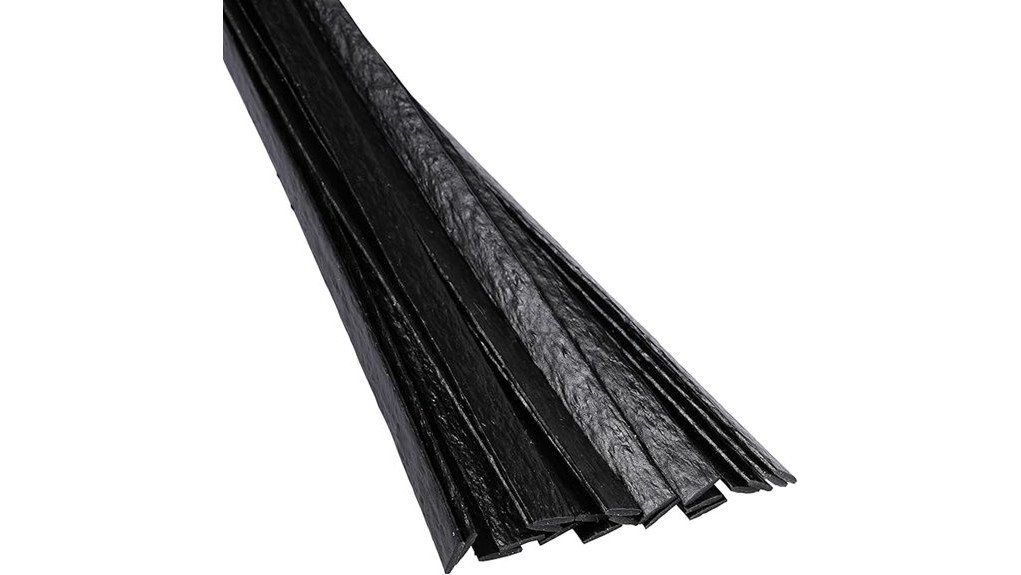
The FiberFlex Plastic Welding Rod is a black flat ribbon repair material from Polyvance. It is made for plastic welding and repair work where you need strong adhesion across different plastic types. Instead of relying on a perfect material match, FiberFlex acts more like a hot-melt adhesive that bonds to the surface when heated with the right welder.
This makes it useful for automotive plastic parts, especially bumper covers and trim pieces made from TPO or polypropylene. Those plastics can be difficult to repair with ordinary adhesives or standard welding rods. FiberFlex gives you a more forgiving option when the plastic type is unknown or hard to confirm.
Who Should Buy It?
Best For
- DIY users repairing cracked bumper covers, tabs, and flexible automotive plastic.
- Body shops that want a universal repair rod for TPO and polypropylene parts.
- Anyone already using a Polyvance Airless Plastic Welder.
Skip If
- You need a true fusion weld with a material-specific welding rod.
- You do not have a compatible plastic welder or safe workspace.
- The damaged part is structural, safety-critical, or better replaced than repaired.
Features and Benefits of FiberFlex Plastic Welding Rod
Carbon and Glass Fiber Reinforcement
FiberFlex is formulated with carbon and glass fibers. That reinforcement helps create a stronger repair bead than a basic filler material. For cracks, broken tabs, and surface repairs, this can reduce the need for wire mesh reinforcement in many jobs.
The flat ribbon profile also gives you a wider contact area than a small round rod. That can help when you need to bridge a crack or build up a repair area before sanding it back down. You still need to prepare the surface well because the bond depends on clean contact and controlled heat.
TPO and Polypropylene Compatibility
FiberFlex is most useful when you are repairing problem plastics such as TPO and polypropylene. These materials show up often in bumper covers and flexible exterior trim. Because FiberFlex sticks to many plastic substrates, it can save time when you cannot easily identify the exact plastic.
That flexibility is the main reason buyers choose it over a material-specific rod. If you already know the part is ABS, HDPE, or another specific plastic, a matching welding rod may still be worth comparing. FiberFlex makes the most sense when broad compatibility matters more than a true fusion weld.
Made for Polyvance Airless Plastic Welders
The listing states that FiberFlex is for use with Polyvance Airless Plastic Welders. That matters because the rod needs steady, controlled heat to melt and flow into the prepared area. A random heat source can burn the plastic, leave a weak bond, or make the repair harder to finish.
Before You Buy: FiberFlex is not a true fusion welding rod. It works more like a hot-melt adhesive, so it is best for cosmetic and non-structural plastic repairs where proper prep, heat control, and finishing are possible.
Application Process and Tips
FiberFlex performs best when you treat the repair like a full surface-prep job, not a quick glue patch. Clean the area first, remove loose plastic, and make sure the surface is dry before heating the rod. Paint, grease, wax, and dirt can weaken the bond.
- Clean and dry the damaged plastic before applying heat.
- Use a compatible Polyvance Airless Plastic Welder for controlled melting.
- Heat the rod enough to flow into the repair area without burning the base plastic.
- Let the repair cool, then sand it to a fine feather edge as directed.
- Practice on scrap plastic before repairing a visible panel.
Pro Tip: Keep your movement slow and steady. If the rod beads up instead of flowing into the prepared area, the surface may need more cleaning, better heat control, or a slower pass.
Performance and Durability Review
In real repair work, FiberFlex is most valuable because it can bond to plastics that often frustrate standard adhesives. The carbon and glass fiber blend gives the repair material strength, while the hot-melt behavior helps it grab onto the surface. For bumper cover cracks, broken mounting tabs, and small missing sections, that combination can be very useful.
The main limitation is technique. A repair can fail if you apply FiberFlex over a dirty surface, overheat the base plastic, or skip finishing steps. When you cool and sand the joint correctly, the repair area can be feathered for a cleaner finish before paint or refinishing work.
FiberFlex works best when you need broad plastic compatibility, especially on TPO and polypropylene, but it still depends on prep and heat control.
How It Performs in Real Use
For Automotive Bumper Covers
FiberFlex is a strong fit for bumper cover repairs because many bumper covers use TPO or polypropylene. It can help fill cracks, reinforce damaged edges, and rebuild small broken areas. You still need to judge whether the part is safe to repair or should be replaced.
For Tabs and Mounting Points
Broken tabs can be difficult because they need strength in a small area. FiberFlex can build material back onto the damaged section, especially when the tab is not carrying a major safety load. For high-stress tabs, extra reinforcement or part replacement may be smarter.
For Shop Use
Body shops can use FiberFlex as a flexible repair option when the plastic type is uncertain. The 30 ft. length is practical for repeated small repairs. It also reduces the need to keep reaching for a different rod every time the plastic type changes.
For DIY Learning
DIY users can get good results, but the learning curve is real. The rod is easier to understand once you see how it melts, flows, cools, and sands. Start with a hidden or low-risk area before using it on a visible exterior panel.
Compatibility and Safety Notes
FiberFlex is designed for plastic repair, not metal, glass, rubber, or structural vehicle components. It is also not a substitute for proper part replacement when the damage affects safety, mounting integrity, or crash performance. When in doubt, ask a qualified body repair professional before repairing a critical part.
Use the rod in a well-ventilated area and follow the welder instructions. Heated plastics can create fumes, and hot tools can burn skin or damage surrounding surfaces. Wear eye protection, heat-resistant gloves when appropriate, and keep flammable materials away from the work area.
Pros and Cons
Pros
- Works especially well on TPO and polypropylene plastic.
- Carbon and glass fiber formulation adds useful repair strength.
- 30 ft. package supports several small to medium repair jobs.
- Can reduce the need for wire mesh reinforcement in many repairs.
- Compatible with Polyvance Airless Plastic Welders.
Cons
- Not a true fusion weld, so it may not suit every repair standard.
- Requires a compatible plastic welder and good heat control.
- Surface prep and sanding affect the final strength and appearance.
Is It Worth the Price?
FiberFlex is worth considering if you already repair automotive plastic or own a compatible Polyvance welder. It is not just a small consumable, it is a repair material that can help save parts that might otherwise be replaced. That can make it strong value for the price when you use it across several repairs.
The value drops if you only need one small cosmetic fix and do not already own the required tool. In that case, a repair shop, a matching material-specific rod, or a replacement part may cost less overall. FiberFlex is best for buyers who care about broad plastic compatibility and repeated repair use.
How It Compares to Alternatives
Compared with material-specific rods, FiberFlex is more forgiving when you do not know the exact plastic type. A polypropylene, ABS, or polyethylene welding rod may be better when you can clearly identify the plastic and want a true fusion-style repair. FiberFlex wins when you need one universal option for tough plastics like TPO and polypropylene.
Compared with two-part plastic repair adhesives, FiberFlex gives you a heated repair method that can be shaped, cooled, and sanded. Adhesives may be easier for small household fixes, but FiberFlex makes more sense for automotive plastic repair work where heat, shape, and finishing matter.
Frequently Asked Questions
What plastics does FiberFlex work best on?
FiberFlex works especially well on TPO and polypropylene, which are common in bumper covers and flexible automotive plastic parts. It can stick to many plastic substrates, but a material-specific rod may be better when you need a true fusion weld.
Do you need a Polyvance welder to use it?
The product listing states that FiberFlex is for use with Polyvance Airless Plastic Welders. A compatible plastic welder gives you better heat control than a random heat source and helps reduce weak or burned repairs.
Is FiberFlex a true plastic weld?
No. FiberFlex works more like a hot-melt adhesive than a true fusion welding rod. That is why it can be useful on problem plastics, but it also means prep and surface bonding matter a lot.
Can FiberFlex be used for outdoor repairs?
It can be used on outdoor plastic parts when the repair is prepared, finished, and protected correctly. Do not treat it as a guaranteed weatherproof fix unless the full repair system, finish, and repaired part are suitable for outdoor exposure.
How should FiberFlex rods be stored?
Store the rods in a clean, dry place away from direct sunlight, dirt, grease, and workshop debris. Keeping the rods clean helps prevent contamination during the repair process.
Can you sand and paint over FiberFlex repairs?
Yes, the repair can be cooled and sanded to a fine feather edge. For painting, follow the refinishing steps required for the base plastic, primer, and paint system you plan to use.
Who should skip this product?
Skip it if you need to repair a safety-critical structural part, do not have a compatible welder, or want a no-heat adhesive fix. You should also compare a matching plastic welding rod if you know the exact plastic type and need a true fusion repair.
The Bottom Line
The Polyvance FiberFlex Plastic Welding Rod is a smart buy if you repair TPO, polypropylene, bumper covers, trim tabs, or mixed plastic parts and already have the right plastic welding setup. Its biggest strength is broad compatibility, while its main limitation is that it is not a true fusion weld. Skip it for structural or safety-critical repairs where replacement or professional repair is the safer choice.