Disclosure: As an Amazon Associate, we earn from qualifying purchases. If you click a link on this page and make a purchase, we may receive a small commission at no extra cost to you.
Plastic repairs can get frustrating when the filler rod does not match the part you are trying to fix. The 78 Pieces Plastic Welding Rods set gives you several common rod materials in one compact kit, including PU, PP, ABS, PE, TPO, PA, and PC. That variety makes it useful for small automotive, garage, and household repairs where plastic type matters. The main tradeoff is that you still need to identify the base plastic correctly, because using the wrong rod can lead to a weak bond.
Quick Verdict
Rating: Recommended with caveats
Best For: DIY users who need a mixed plastic welding rod assortment for bumpers, bins, panels, and household plastic repairs.
Bottom Line: This set is useful because it gives you seven rod types in one case, so you are not limited to only one plastic material. It is not ideal if you need a brand-verified professional repair system, exact OEM bumper material matching, or detailed manufacturer documentation.
| Specification | Detail |
|---|---|
| Product type | Plastic welding rod assortment |
| Total count | 78 rods |
| Rod length | 20 cm per rod |
| Rod diameter | 3 mm, about 1/8 inch |
| Rod materials | PU, PP, ABS, PE, TPO, PA, and PC |
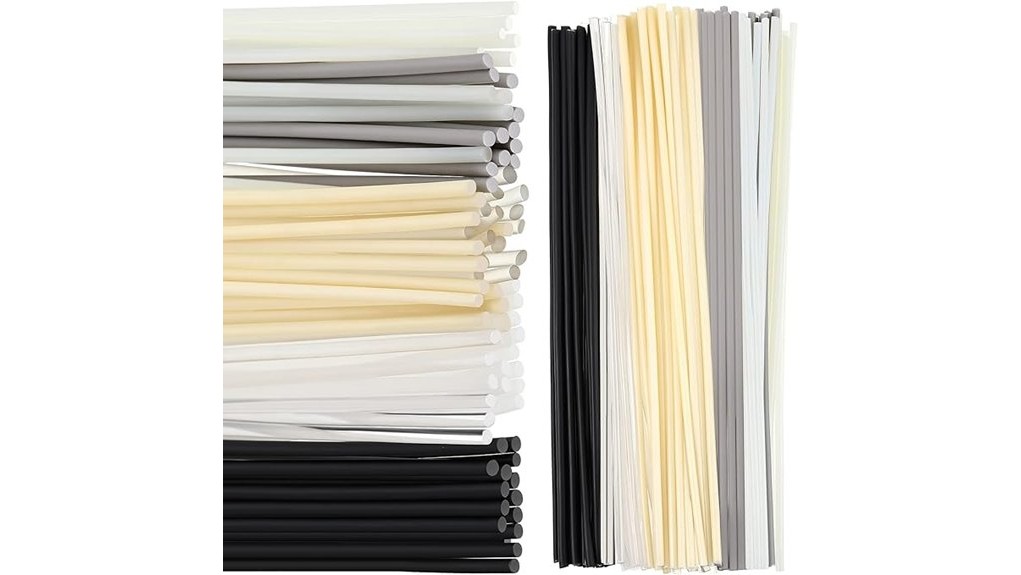
| Count by type | 12 each of PU, PP, ABS, PE, TPO, and PA, plus 6 PC rods |
| Listed colors | Transparent PU, black PP, beige ABS, white PE, gray TPO, milky PA, and transparent PC |
| Case size | 8.5 x 5.51 x 0.71 inches |
| Best use | Small plastic repairs, car bumper work, bins, laundry baskets, panels, and household plastic items |
| Safety note | Use with ventilation, proper heat control, and the correct rod type for the base plastic. |
What Is the 78 Pieces Plastic Welding Rods Set?
The 78 Pieces Plastic Welding Rods set is a mixed assortment of thermoplastic filler rods made for plastic welding repairs. Instead of giving you one rod material, the kit includes seven common types: polyurethane (PU), polypropylene (PP), acrylonitrile butadiene styrene (ABS), polyethylene (PE), thermoplastic olefin (TPO), polyamide (PA), and polycarbonate (PC).
Each rod is 20 cm long and 3 mm wide, which is a practical size for handheld plastic welding work. The set is aimed at DIY repairs rather than high-volume shop use, so it makes the most sense when you need a compact selection for occasional fixes around the garage, vehicle, or home.
Before You Buy: Match the rod material to the plastic you are repairing. A PP rod on an ABS part, for example, may not bond well even if the repair looks clean at first.
Who Should Buy It?
Best For
- DIY users who repair mixed plastic parts and want several rod materials in one kit.
- Garage users fixing bumper covers, plastic panels, storage bins, or small utility items.
- Beginners who want an organized assortment before buying larger packs of one material.
Skip If
- You need a verified OEM repair rod for a specific bumper, tank, or structural plastic part.
- You already know your material and only need a bulk pack of one rod type.
- You do not have a plastic welder, heat gun setup, or safe ventilation for heated plastic work.
Material Composition and Durability
The main advantage of this set is material variety. PU is useful when flexibility matters, PP is lightweight and chemical-resistant, ABS is known for strength and impact resistance, and PE is tough and moisture-resistant. TPO is often chosen for flexible exterior plastic repairs, while PA and PC add more options for harder plastic applications.
This variety helps when you are unsure which type of plastic repair you will face next. It also reduces the chance that you will try to force one rod type into every job. The limitation is simple: the kit gives you options, but it does not identify the plastic part for you.
| Plastic Type | What It Helps With |
|---|---|
| PU | Flexible repairs where the part needs some give |
| PP | Lightweight, chemical-resistant plastic parts |
| ABS | Impact-resistant plastic repairs and rigid household parts |
| PE | Tough, moisture-resistant plastic items |
| TPO | Flexible exterior plastic repairs where UV resistance is useful |
| PA | General plastic repairs where polyamide compatibility is needed |
| PC | Clearer, harder plastic applications when polycarbonate compatibility is needed |
Fit and Compatibility
Plastic welding works best when the filler rod and the base part are the same or very similar material. This set helps because it includes common repair materials, but you still need to check the plastic marking on the part when possible. Many molded parts have a small mark such as PP, ABS, PE, PA, or PC on the back side or underside.
For automotive repairs, this matters even more. Bumper covers, trim pieces, splash shields, and underbody panels may look similar, but they can use different plastic blends. The 78-piece assortment gives you a better starting point than a single-material pack, but it cannot guarantee compatibility with every bumper or panel.
Packaging and Rod Variety
The rods come in a compact case measuring 8.5 x 5.51 x 0.71 inches. That size is useful if you keep repair supplies in a tool drawer, mobile kit, or small garage cabinet. The case also helps separate the different rod types, which matters when several materials look similar at a glance.
The rod breakdown is practical for mixed repairs: 12 rods each of PU, PP, ABS, PE, TPO, and PA, plus 6 polycarbonate rods. That makes the set better for variety than for heavy repeat work. If you repair the same material often, you may eventually need a larger single-material pack.
Ease of Use
The 20 cm length gives you enough material for small cracks, tabs, seams, and reinforcement passes without making the rods hard to control. The 3 mm diameter is also manageable for common handheld repair work. You can trim a rod shorter when working in a tight spot, or use a longer section when the repair line is easy to access.
Beginners should practice on scrap plastic before working on a visible part. Plastic welding needs heat control, surface prep, and steady pressure. Too little heat can leave a weak bond, while too much heat can burn the plastic, distort the part, or create more fumes.
Pro Tip: Clean the repair area, identify the plastic type, and test the rod on a hidden spot or scrap piece before welding the final visible seam.
How It Performs in Real Use
For Car Bumper Repairs
This set can be useful for small bumper cover repairs because it includes TPO, PP, ABS, and other common plastics. The best result depends on matching the rod to the bumper material and preparing the crack with a clean surface and proper groove. It is better suited to minor cracks, tabs, and reinforcement work than major structural damage.
For Household Plastic Items
For items such as laundry baskets, storage bins, covers, and small molded parts, the variety helps you choose a closer material match. PE and PP rods are especially useful because many household items use lightweight, moisture-resistant plastics. The repair may not look factory-new, but it can restore function when the part does not need a perfect cosmetic finish.
For Garage and Workshop Use
The compact case is helpful if you keep a small repair kit near your plastic welder or heat gun. You can quickly grab the rod type you need instead of sorting through loose sticks. The main benefit is convenience, especially for occasional repair jobs where you do not know the plastic type ahead of time.
For Long-Term Use
The rods are described as durable and resistant to wear and aging. Long-term results still depend on the repair surface, rod compatibility, and how much stress the repaired part sees. A repaired tab on a lightly used cover may hold well, while a high-stress flex point may need reinforcement or a replacement part.
How to Use These Rods Correctly
Start by cleaning the plastic with a suitable cleaner and letting it dry fully. Remove loose material, roughen the repair zone, and create a small groove along cracks when needed. This gives the softened rod more surface area to bond with the base plastic.
Next, select the rod that matches the plastic marking on the part. Heat the base plastic and rod gradually so both soften together. Press the rod into the repair area with steady movement, then let the repair cool without forcing or bending the part too soon.
For best results, follow the instructions for your plastic welding tool. Heated plastics can release fumes, so use good ventilation and avoid breathing smoke or vapors during the repair.
Compatibility and Safety
These rods are intended for plastic repair work, not metal welding, electrical soldering, or food-contact repair unless the product instructions clearly allow it. You should not use repaired plastic parts in safety-critical locations unless the repair method is approved for that use.
Ventilation is important. The original article notes that the rods may emit minimal fumes when heated, so you should work in a well-ventilated area and avoid overheating the material. Gloves, eye protection, and careful heat control are smart choices when working with hot plastic.
For automotive work, be realistic about the repair. A cosmetic bumper crack, broken tab, or non-structural plastic bracket is a different job from a load-bearing or safety-related component. When the part affects safety, fitment, or roadworthiness, get professional guidance.
Pros and Cons
Pros
- Includes 78 rods across seven plastic material types.
- Useful for mixed DIY repairs on bumpers, bins, panels, and household plastics.
- 20 cm length and 3 mm diameter are practical for common handheld plastic welding work.
- Compact case helps keep rod types organized and easy to store.
- Material variety reduces the need to buy several separate small packs.
Cons
- You must identify the base plastic correctly for a strong repair.
- Only 6 polycarbonate rods are included, fewer than the other listed types.
- Not a full professional repair system for structural or safety-critical plastic parts.
Is It Worth the Price?
This set is a strong value for the price if you need variety more than bulk quantity. You get several rod materials in one compact case, which is useful when you repair different kinds of plastic and do not want to buy separate packs before you know what you need.
It is worth considering if you handle occasional garage, bumper, trim, storage bin, or household plastic repairs. It is not the best fit if you already know your exact plastic type and need a large supply of one material for repeated work.
How It Compares to Alternatives
Compared with single-material welding rod packs, this set gives you more flexibility but less quantity per material. A bulk ABS or PP pack may be better if you repair the same type of plastic often. This 78-piece set makes more sense when you want a starter assortment for different plastic repair jobs.
Compared with epoxy, glue, or plastic repair adhesives, welding rods can create a more integrated repair when the material match and heat technique are correct. Adhesives may be simpler for cosmetic fixes, but rods are better when you want to fuse compatible plastic rather than only cover a crack.
Frequently Asked Questions
Can these rods be used for car bumper repairs?
Yes, they can be used for some bumper repairs when the rod material matches the bumper plastic. Many bumper repairs need careful prep, correct heat, and the right filler type, so check the plastic marking before you start.
What rod types are included in the 78-piece set?
The set includes PU, PP, ABS, PE, TPO, PA, and PC rods. It includes 12 rods each of PU, PP, ABS, PE, TPO, and PA, plus 6 polycarbonate rods.
How do you choose the right plastic welding rod?
Look for a plastic marking on the part, such as PP, ABS, PE, PA, PC, or TPO. Choose the rod that matches that marking as closely as possible, then test on a hidden area when you can.
Can these rods be painted after welding?
Yes, the repaired area can usually be painted after welding if the surface is prepared correctly. Clean, sand, and finish the area based on the paint system and the plastic type.
Are these rods suitable for outdoor repairs?
They can be suitable for outdoor plastic repairs when the material match is correct and the repaired part is not safety-critical. TPO is described as UV resistant, while other materials may perform differently depending on exposure, stress, and surface prep.
Can these rods be used with a soldering iron?
They may be used with suitable plastic welding or soldering-style heat tools, but control matters. A tool that overheats the rod or base plastic can burn the material and weaken the repair.
Do these rods emit fumes when heated?
The source article notes that the rods may emit minimal fumes when heated. Use proper ventilation, avoid overheating the plastic, and follow safe tool handling practices.
How should you store the rods?
Store the rods in the included case in a cool, dry place. Keeping the rod types separated helps prevent mix-ups during future repairs.
The Bottom Line
The 78 Pieces Plastic Welding Rods set is a smart buy for DIY users who want a compact assortment for mixed plastic repairs. Its biggest strength is the seven-material variety, while its main limitation is that you must still identify the plastic part correctly before welding. Skip it if you need a verified professional repair system for structural, safety-critical, or exact OEM applications.