Disclosure: As an Amazon Associate, we earn from qualifying purchases. If you click a link on this page and make a purchase, we may receive a small commission at no extra cost to you.
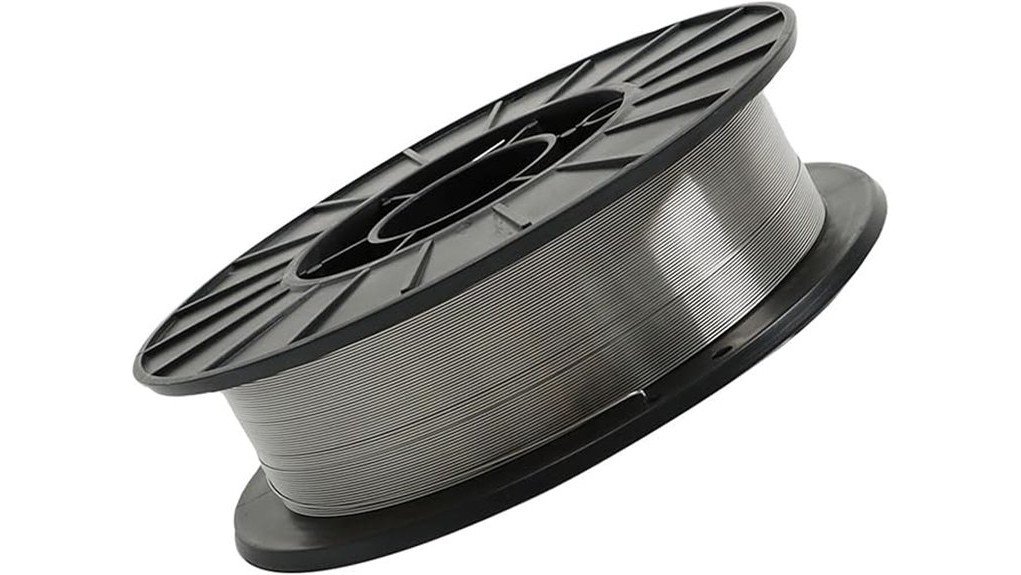
Stainless MIG wire has to match more than the wire-size setting on your welder. You need the correct filler classification for the base metal, a spool that fits your machine, suitable drive components, and the right shielding-gas setup. The Findmall ER308L MIG Welding Wire is a 0.035-inch (0.9 mm) solid stainless wire supplied on a 10-pound spool for gas-shielded MIG welding. It is a practical choice for repeat shop work when ER308L is the correct filler, but it is a poor fit for small-spool machines, gasless welding, aluminum, or stainless grades that require a different alloy match.
Quick Verdict
Rating: 8/10, recommended with caveats
Best For: Welders who regularly join compatible stainless steels and have a gas-shielded MIG machine that accepts 0.035-inch wire and a 10-pound spool.
Bottom Line: The large spool and ER308L classification make this Findmall wire useful for repeated stainless fabrication and repair work. Its value depends on correct alloy matching, spool fit, gas coverage, and machine setup, so it is not a universal wire for every MIG welder or metal.
| Specification | Detail |
|---|---|
| Brand | Findmall |
| Classification | ER308L stainless steel filler wire |
| Product Type | Solid MIG (GMAW) welding wire |
| Wire Diameter | 0.035 inch (0.9 mm) |
| Spool Weight | 10 pounds (about 4.54 kg) |
| Package Quantity | One spool |
| Center Hole | Seller-listed as 2 inches |
| Standard Reference | Seller-listed as AWS A5.9/A5.9M:2006, ER308L |
| Welding Process | Gas-shielded MIG welding, not self-shielded flux core |
| Seller-Listed Uses | All-position welding, butt joints, lap joints, and single-pass or multiple-pass work |
| Typical Material Match | Commonly selected for 304, 304L, 308, and 308L stainless; confirm your base alloy and procedure |
| Amazon ASIN | B0C52XQB39 |
| Storage | Keep clean, dry, covered, and away from grinding dust or ferrous contamination |
Key Takeaways
- You get 0.035-inch (0.9 mm) ER308L solid stainless wire on a 10-pound spool.
- The low-carbon ER308L classification is commonly used for compatible 300-series stainless, including 304 and 304L.
- Your welder must accept the spool, feed 0.035-inch solid wire, and support gas-shielded MIG welding.
- Seller claims such as low spatter and all-position use still depend on clean metal, stable gas coverage, correct settings, and sound technique.
- This is not aluminum wire, mild-steel wire, or self-shielded flux-core wire.
What Is the Findmall ER308L MIG Welding Wire?
The Findmall ER308L MIG Welding Wire is a solid stainless filler metal for the gas metal arc welding process, commonly called MIG or GMAW. The listing identifies the wire as ER308L, 0.035 inch in diameter, and packaged on a 10-pound spool. That format targets welders who use stainless wire often enough to benefit from a larger shop spool.
The “L” identifies a low-carbon version of the 308 filler classification. Low carbon helps limit carbide precipitation in the heat-affected area, which supports resistance to intergranular corrosion when the filler, base metal, and welding procedure are properly matched. ER308L is commonly chosen for 304, 304L, 308, and 308L stainless, but you should verify the exact alloy before welding.
This wire does not replace material identification or a welding procedure. It can suit general fabrication, repairs, brackets, panels, and shop fixtures, but code work and critical parts require the correct filler classification, qualified procedure, and inspection.
Before You Buy: Check four items before ordering: your base-metal grade, 0.035-inch wire support, spool-hub capacity, and shielding-gas equipment. A machine that accepts the wire diameter may still be unable to hold a 10-pound spool with the listed 2-inch center hole.
Who Should Buy It?
Best For
- You weld compatible stainless steels often and want fewer spool changes.
- Your MIG machine feeds 0.035-inch solid wire and accepts a 10-pound spool.
- You need ER308L for common butt, lap, repair, or fabrication joints.
Skip If
- Your welder accepts only small spools or cannot feed 0.035-inch solid wire.
- You need gasless flux-core wire, aluminum wire, mild-steel wire, or a different stainless filler.
- You only have one small repair and cannot store the remaining spool in a clean, dry area.
Spool Size and Shop Practicality
The 10-pound spool reduces changeovers during repeated stainless projects, which suits fabrication shops, maintenance areas, and active home garages. The same size can be a drawback for compact welders that accept only 1-pound or 2-pound reels, so check cabinet space, spindle fit, and hub hardware before ordering.
Protect a partly used spool from humidity, grinding debris, and carbon-steel particles. Long storage without a cover can cause feeding trouble or contaminate the stainless surface.
Key Benefits of ER308L Welding Wire
Low-Carbon Stainless Filler
The low-carbon “L” classification helps reduce carbide precipitation compared with standard 308 filler. That benefit still depends on matching the base metal and controlling heat input.
0.035-Inch Diameter for General Shop Work
The 0.035-inch diameter offers useful deposition on machines designed for it, but it may be too large for low-output welders or very thin material. Start with the machine chart and test on matching scrap.
10-Pound Supply for Repeat Projects
The larger spool supports longer sessions with fewer changeovers. It makes the most sense for several planned jobs, not one small repair.
Gas-Shielded MIG Format
The listing promotes low spatter and all-position use, but those results depend on gas coverage, nozzle condition, settings, stickout, joint preparation, and technique.
Pro Tip: Before loading the full spool, fit a clean 0.035-inch contact tip, confirm the correct drive-roll groove, straighten the gun cable, and run a test bead on matching stainless scrap. This catches spool-fit, feed, gas, and setting problems before they affect the finished part.
Compatible Materials and Applications
ER308L is commonly used for 304, 304L, 308, and 308L stainless. Base-metal identification matters because similar-looking stainless grades can require different fillers. For non-critical work, this wire can suit brackets, panels, fixtures, repair patches, butt joints, and lap joints when ER308L is specified.
Do not substitute it for ER316L when the job requires a 316-series filler. It is also unsuitable for aluminum and should not be treated as gasless flux-core wire.
Compatibility and Machine Setup
Start with the machine manual. Your welder must support gas-shielded solid wire, 0.035-inch diameter, and the physical spool size. Confirm that the spindle, hub, brake, and cabinet provide enough room for the 10-pound spool and its listed 2-inch center hole.
Use a contact tip marked for 0.035-inch wire and a drive-roll groove suited to solid wire. Set only enough drive-roll pressure to move the wire without slipping. Too much pressure can deform the wire, increase liner drag, and contribute to irregular feeding or bird-nesting.
Shielding gas and polarity depend on the process, transfer mode, equipment, and procedure. Follow the welder chart, wire documentation, and gas-supplier guidance rather than copying a setting from a different wire or machine. Keep the nozzle clean and protect the arc from drafts because stainless MIG welds are sensitive to poor gas coverage.
Setup Checklist Before the First Weld
- Confirm the stainless grade and that ER308L is an approved filler for the job.
- Check spool diameter, hub fit, brake tension, and feed direction.
- Install a clean 0.035-inch contact tip and inspect the liner and drive rolls.
- Remove oil, paint, scale, moisture, and embedded carbon-steel debris from the joint.
- Set gas flow and electrical settings from your machine or procedure chart.
- Test on matching scrap and adjust one variable at a time.
Wire Feeding and Weld Consistency
Spatter and arc stability depend on the whole setup, including tip condition, liner drag, grounding, gas coverage, voltage, wire speed, and technique. Keep the gun cable as straight as practical, and inspect the feed path if the wire surges, stubs, or burns back.
Use clean brushes and abrasives reserved for stainless when possible. Carbon-steel residue can contaminate the surface and later cause rust staining.
How It Performs in Real Use
For Routine Stainless Repairs
For compatible repair work, the 0.035-inch wire can provide steady filler delivery and a practical amount of material on the spool. Good joint cleaning is essential. Oil, moisture, paint, and embedded grinding dust can cause porosity or discoloration that the wire cannot correct.
For Repeated Shop Fabrication
The 10-pound format is most useful when you move through several brackets, frames, panels, or fixtures. Fewer spool changes save setup time and reduce the chance of interrupting a long weld sequence. The tradeoff is that you need a machine with enough cabinet space and a clean storage routine.
For Butt and Lap Joints
Butt joints need controlled fit-up because excess gap can increase burn-through and distortion, especially on thin stainless. Lap joints need clean mating surfaces because contaminants trapped between sheets can enter the weld. A short practice coupon helps you confirm heat input and travel speed before welding the final assembly.
For Occasional Home-Garage Use
The wire can work for an experienced hobbyist with a compatible machine, but a 10-pound spool may be excessive for one small job. A smaller ER308L spool may be easier to fit and store. The larger Findmall spool makes more sense when you already know you will use the remaining wire.
Usage, Troubleshooting, and Storage Tips
Load the spool in the feed direction shown in your welder manual and set the spool brake only tight enough to prevent overrun. Excess brake tension adds feed resistance, while too little tension can let the spool coast and tangle when the trigger is released.
When the arc is rough, inspect the simple causes first. Check the ground connection, gas cylinder, regulator, flow, nozzle, contact tip, drive-roll tension, liner, stickout, and surface cleanliness. Make one adjustment at a time so you can identify the real cause.
After use, keep the spool inside the welder or sealed in clean packaging in a dry area. Cover exposed wire and keep it away from grinding stations. Do not wipe the wire with oily shop rags or handle it more than needed.
Safety and Material Notes
Stainless welding creates intense light, hot metal, sparks, and hazardous fumes. Wear a suitable welding helmet, safety glasses, gloves, hearing protection as needed, and flame-resistant clothing. Use effective local exhaust or other ventilation that captures fumes instead of pulling them through your breathing zone.
Chromium in stainless steel can form hexavalent chromium during welding. OSHA identifies stainless hot work as a major potential source of exposure, so follow your workplace exposure controls, the product safety data sheet, and applicable regulations. See the OSHA hexavalent chromium guidance for official safety information.
Do not rely on a consumer product review for pressure vessels, structural components, food-contact equipment, exhaust systems, or code-controlled work. These jobs may require documented filler chemistry, qualified procedures, certified welders, and inspection.
Pros and Cons
Pros
- ER308L classification suits many common 304 and 304L stainless jobs when properly matched.
- 0.035-inch diameter is useful for general shop welding on compatible equipment.
- 10-pound spool reduces changeovers during repeated fabrication or repair work.
- Seller lists support for butt joints, lap joints, all positions, and single-pass or multiple-pass welding.
- Low-carbon classification helps limit carbide precipitation compared with standard 308 filler.
Cons
- The large spool may not fit compact or small-spool MIG welders.
- You still need shielding gas, correct drive components, clean stainless, and tuned settings.
- ER308L is not the right filler for every stainless grade, aluminum, mild steel, or gasless welding.
Is It Worth the Price?
The Findmall ER308L wire is worth considering when you regularly weld compatible stainless and want fewer spool changes. Its value comes from the 10-pound quantity, not extra accessories.
A smaller spool can be the smarter buy for one repair or a compact welder, even when it costs more per pound. Buy based on alloy match, machine fit, and expected use before comparing price.
How It Compares to Alternatives
A 1-pound or 2-pound ER308L spool is easier to fit in compact welders and makes more sense for one repair, while this 10-pound Findmall spool is better for repeat use. ER308LSi may be worth comparing when your approved procedure calls for its higher silicon content and different puddle behavior.
ER316L is the more relevant comparison for certain 316-series stainless and more demanding corrosion environments. For aluminum, compare ER4043 or ER5356 based on the base alloy and procedure. These fillers are not interchangeable, so the correct alternative depends on the metal rather than brand preference alone.
Frequently Asked Questions
What is Findmall ER308L MIG Welding Wire used for?
It is solid stainless MIG wire for gas-shielded welding when ER308L is the correct filler classification. Common uses include compatible stainless repairs, brackets, panels, butt joints, lap joints, and general fabrication.
Which stainless steels commonly use ER308L?
ER308L is commonly selected for 304, 304L, 308, and 308L stainless steels. Confirm the exact base-metal grade and any welding procedure because not every stainless alloy should be joined with ER308L.
Will the 10-pound spool fit any MIG welder?
No. Your machine must have enough cabinet space and the correct spindle or adapter for the spool and its seller-listed 2-inch center hole. It must also support 0.035-inch solid wire and gas-shielded MIG operation.
Does Findmall ER308L wire require shielding gas?
Yes. This is solid wire for gas-shielded MIG welding, not self-shielded flux core. Choose gas, flow, polarity, and settings from your welder chart, wire documentation, and approved procedure.
Can I use this wire for aluminum or mild steel?
No. Aluminum needs an aluminum filler such as ER4043 or ER5356 when appropriate, and mild steel commonly uses a carbon-steel wire such as ER70S-6. Select filler from the base metal and job requirements.
What setup parts should I check before welding?
Check the 0.035-inch contact tip, solid-wire drive-roll groove, liner condition, spool brake, ground clamp, nozzle, gas supply, and gun-cable path. Run a short bead on clean matching scrap before welding the finished part.
How should I store the spool?
Store it in a clean, dry, covered area away from moisture, grinding dust, and carbon-steel debris. Protect exposed wire and avoid touching it with oily gloves or dirty rags.
Who should skip this spool?
Skip it if your machine cannot hold the spool, you need gasless wire, or your material requires another filler classification. A smaller ER308L spool may also be more practical for one occasional repair.
The Bottom Line
The Findmall ER308L MIG Welding Wire earns an 8/10, recommended-with-caveats verdict for welders who need 0.035-inch solid stainless wire in a 10-pound shop spool. Its main strength is the useful quantity for repeat compatible stainless work, while its main limitation is the need to verify alloy match, spool fit, gas setup, and machine capacity. Skip it when you need a smaller reel, gasless wire, aluminum filler, or a different stainless classification.
Ready to Buy?
Confirm your base metal, wire size, spool fit, and gas setup, then check the latest product details.