As an Amazon Associate I earn from qualifying purchases. Buying through these links costs you nothing extra.
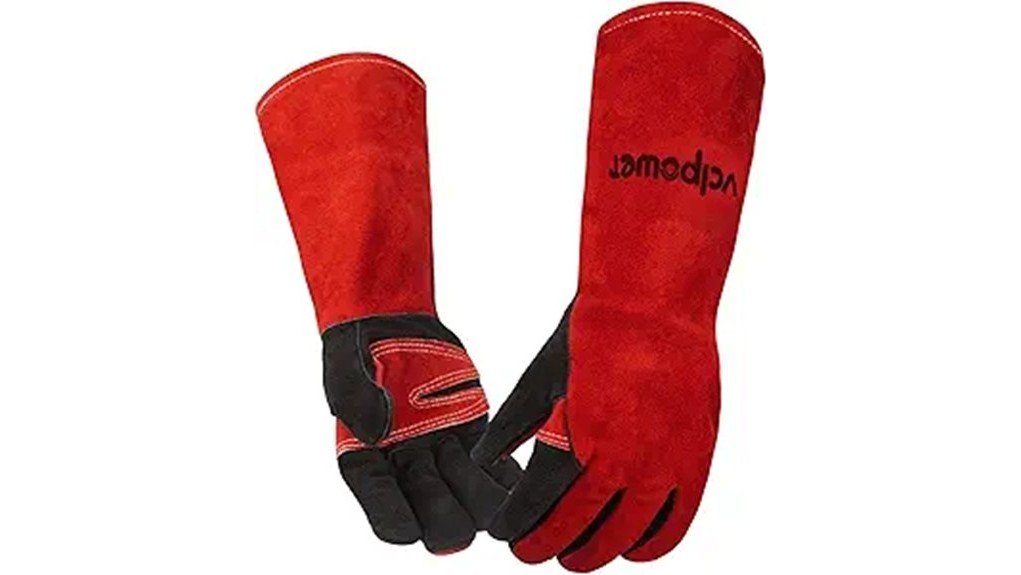
The Fireplace Welding Gloves are 16-inch cowhide leather gloves listed for heat up to 932°F, with Kevlar stitching and a flame-retardant cotton lining. They suit tending a fireplace or wood stove, welding, grilling and forge-side handling. The 932°F figure is the listing’s claim, so check for a certification if you need gloves for regulated work.
Fireplace Welding Gloves: Quick Verdict
- Best for: fireplace and stove tending, grilling, forge-side handling and general welding where you want long cuffs.
- Skip if: you need certified PPE for a regulated job, or a thin glove for TIG work.
- Check first: the size chart and any certification on the Amazon listing.
Specifications as Listed
| Item | Detail |
|---|---|
| Shell | Cowhide leather, about 1.2 mm, per the listing |
| Construction | Double-layer leather, per the listing |
| Stitching | Kevlar thread |
| Lining | Flame-retardant cotton |
| Heat rating | Up to 932°F, per the listing |
| Length | 16 inches, per the listing |
| Sizes | Four sizes, per the listing |
| Certification | Not named here; check the listing |
Materials and Build
Cowhide is a common choice for welding and heat gloves because it resists abrasion, sparks and brief contact with hot surfaces. A double-layer shell adds thickness at the cost of some feel. Kevlar thread is used because stitching is often the first thing to fail in a hot-work glove.
The long cuff helps protect the wrist and forearm when you reach into a grill, stove or forge. It also means the glove is stiffer and bulkier than a short mechanic glove, so it is better for handling hot objects than for fine assembly.
Where Fireplace Welding Gloves Fit
- Adding logs and tending coals in a fireplace or wood stove
- Moving hot grates, cast iron and grill parts
- Welding and cutting where long cuffs help against sparks
- Blacksmithing and forge-side handling of warm stock
- Pulling hot pans from an oven
Keep them dry when working near heat, because damp leather conducts heat faster. They protect hands, not the rest of you, so wear a welding helmet, eye protection and flame-resistant clothing when you weld.
Pros and Cons
Pros
- Long 16-inch cuff for wrist and forearm coverage
- Cowhide shell with Kevlar stitching
- Cotton lining for comfort, per the listing
- Useful across fireplace, grill, forge and welding tasks
Cons
- The 932°F rating is a listing claim and no certification is named here
- Thick leather reduces fingertip feel
- Fit depends on picking the right size from the chart
Related guides: Fire Heat Resistant Gloves review (14-inch) | 932°F leather welding gloves review | types of welding gloves and what they protect against
Frequently Asked Questions
How heat resistant are these fireplace welding gloves?
The listing gives a 932°F rating. Treat that as a product claim, not a licence to hold hot metal or flame for long. Heat still transfers through leather over time, so keep contact brief and let the gloves cool between tasks.
Can I weld with them?
They are sold for welding, forge and fireplace work and use cowhide with Kevlar stitching. For TIG or other fine work you will want a thinner, more flexible glove, and for regulated jobs you should confirm the glove meets the standard your workplace requires.
What length are they?
The listing gives a 16-inch length, which covers the wrist and part of the forearm. Check the size chart on the listing before ordering, because a snug fit gives better control than a loose one.
How do I clean and store them?
Brush off dirt and wipe the leather with a barely damp cloth. Do not soak them or dry them near a heater, because heat and water can stiffen and crack leather. Store them flat or hanging in a dry place.
When should I replace them?
Replace the gloves if you see holes, thin or burned patches, cracked leather or opened seams. Damaged gloves no longer give the protection the rating implies.
Conclusion
The Fireplace Welding Gloves are a long-cuff cowhide option for fireplace, grill, forge and welding tasks. Confirm the size and certification details on the listing, and treat the heat rating as a limit to stay well under.