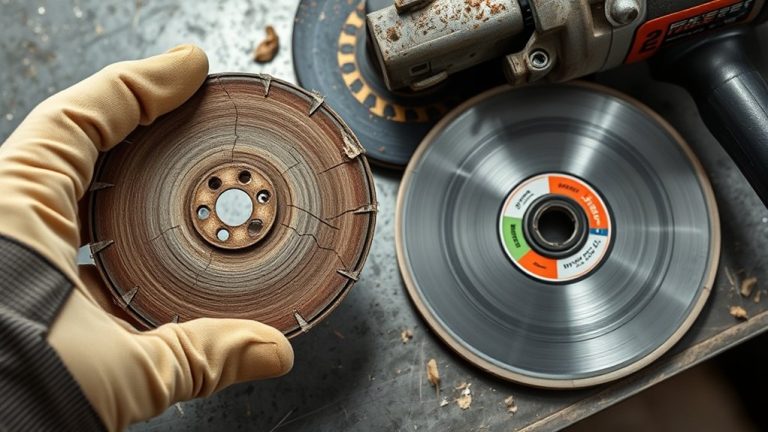
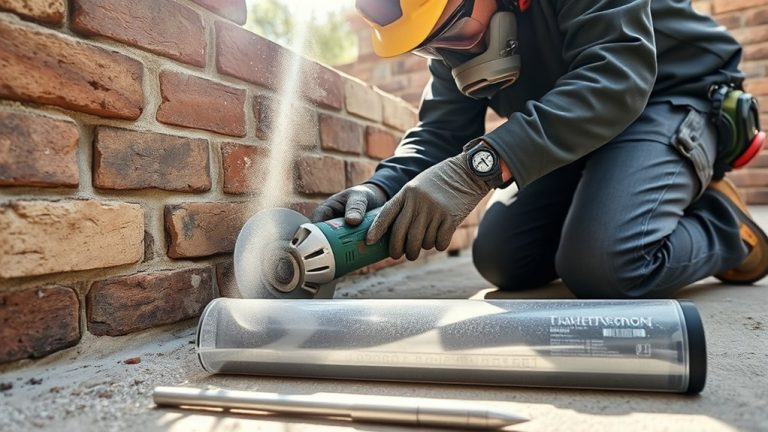
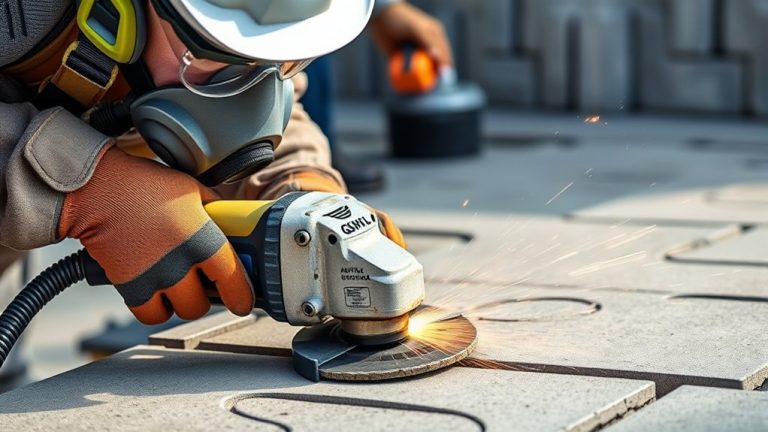
When it comes to welds and finishing, use flap discs for blending and finishing tasks. Their flexible design allows for smooth surface preparation with minimal heat, making them ideal for stainless steel applications. On the other hand, grinding wheels excel at aggressive material removal and shaping but often leave a rough finish that needs further work. Understanding these distinctions will enhance your project’s efficiency and quality, leading to superior results. More insights await you.
What Are Flap Discs and Their Key Benefits?
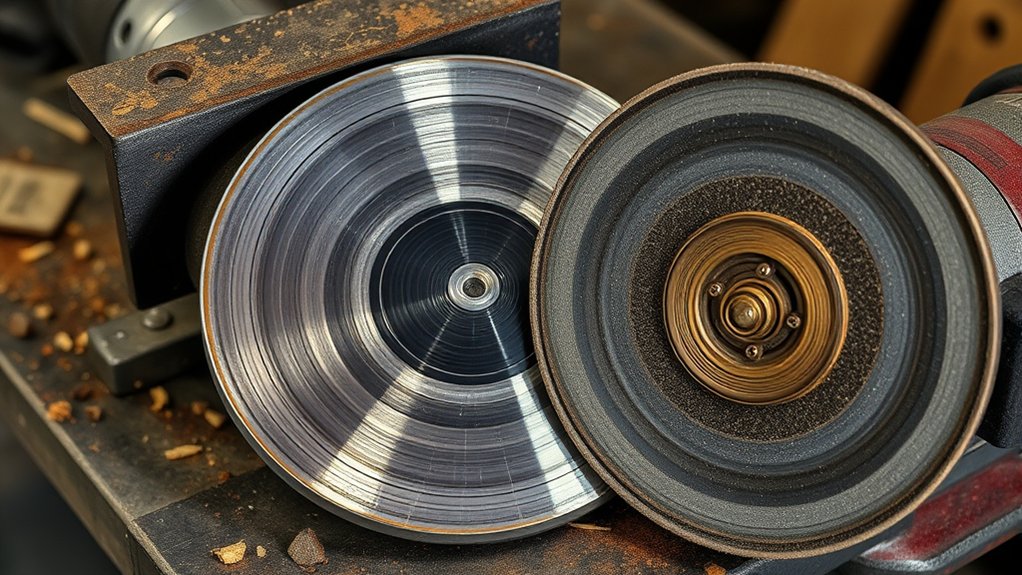
Flap discs are versatile abrasive tools designed for grinding, blending, and finishing surfaces. Their unique structure, featuring multiple overlapping abrasive flaps, allows for consistent material removal while exposing new cutting surfaces as they wear. This design is particularly advantageous when working with stainless steel, as it minimizes discoloration and achieves clean weld seams without gouging.
When comparing flap discs vs grinding wheels, you’ll notice they operate at lower temperatures, producing less noise and vibration, which enhances user comfort during extended tasks. They efficiently remove light rust, paint, and impurities, preparing surfaces for further treatment. A single flap disc can replace both a grinding wheel and a finishing disc, offering a cost-effective solution in metalworking. This versatility not only boosts productivity but also liberates you from the constraints of using multiple tools, allowing for a streamlined approach to your projects.
What You Need to Know About Grinding Wheels
When it comes to aggressive material removal, grinding wheels stand out as a powerful option. These rigid discs, made of bonded abrasive grains, excel in high-pressure applications, making them ideal for tasks like sharpening tools and cleaning unwanted surface contaminants. Their coarse finish often leaves a rougher surface, which means you may need additional finishing work for a smooth result.
Commonly available in sizes like 4-1/2 x 1/4 inches thick, grinding wheels are your go-to for heavy-duty tasks, such as initial grinding on lawn mower blades. However, their aggressive nature can lead to gouging if not used correctly, so caution is essential. While they effectively shape metal workpieces, be mindful that they’re less suitable for delicate finishing tasks. Understanding these characteristics will help you decide when to harness the power of grinding wheels effectively.
Optimal Situations for Using Flap Discs
Choosing the right abrasive tool can greatly impact your project’s outcome, and flap discs shine in several key situations. Flap discs are ideal for blending and finishing welding seams due to their flexible design, which conforms to contours and minimizes the risk of gouging. When you need to remove material efficiently, they excel at tackling light rust, old paint, and surface impurities, making them versatile for various tasks. With a grit selection like 36 grit ceramic fiber, flap discs provide heavy material removal while ensuring a superior finish compared to traditional grinding wheels. Additionally, their layered construction exposes new abrasive material as they wear, maintaining consistent cutting performance throughout their lifespan. You’ll appreciate the reduced operational noise and vibration, making flap discs suitable for sensitive environments or extended grinding jobs, allowing you to focus on your work without distraction.
Choosing Between Grinding Wheels and Flap Discs
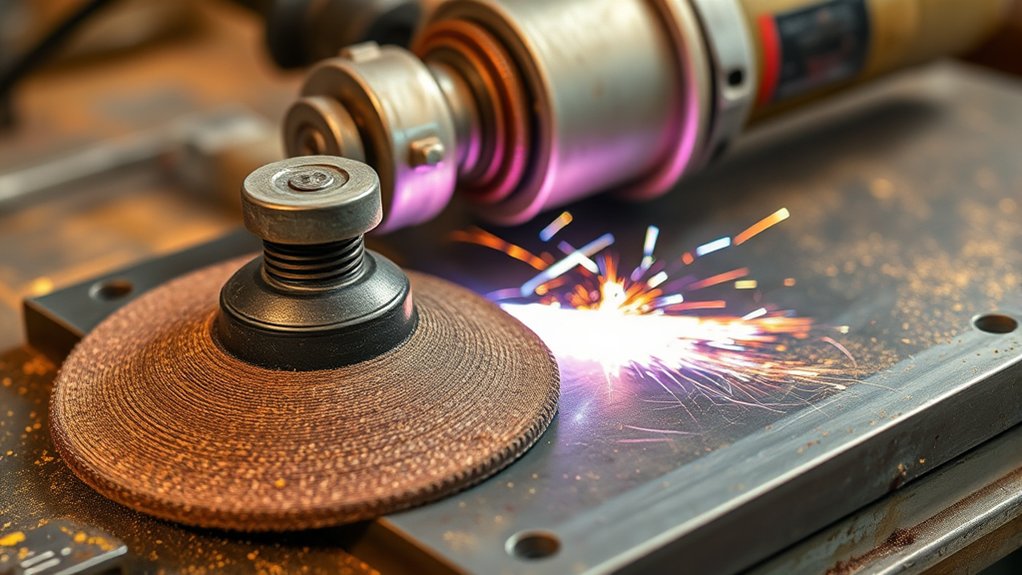
When choosing between grinding wheels and flap discs, it’s essential to align your selection with specific application needs. Grinding wheels excel in heavy material removal and shaping, while flap discs provide superior surface finish and versatility for contour work. Consider factors like material removal efficiency and desired surface quality to make an informed decision.
Application-Specific Use Cases
Selecting the right tool for your grinding and finishing tasks can considerably impact the efficiency and quality of your work. When it comes to application-specific use cases, flap discs excel at finishing and blending weld seams. Their flexible design minimizes the risk of gouging and allows for smooth contours, making them ideal for detailed work. On the other hand, grinding wheels are your best bet for aggressive material removal and shaping tasks, offering superior speed and efficiency in heavy-duty applications. While flap discs operate cooler and quieter, grinding wheels may leave a coarser surface that requires further refinement. Ultimately, choose flap discs for light rust removal and finishing, while reserving grinding wheels for significant stock removal.
Material Removal Efficiency
In the domain of material removal efficiency, understanding the strengths of flap discs and grinding wheels can greatly influence your outcomes. Grinding wheels are designed for heavy stock removal, offering a high Material Removal Rate (MRR) ideal for initial grinding tasks on welds and metal surfaces. Their aggressive structure excels in tough applications, allowing you to accomplish quick material removal. Conversely, flap discs provide a more controlled approach, blending and finishing effectively while minimizing the risk of gouging. Their layered design continuously exposes new abrasive material, enhancing cutting efficiency and reducing noise and vibration. Ultimately, for tasks requiring both grinding and finishing, flap discs can be more cost-effective, reducing downtime and the need for multiple tools.
Surface Finish Quality
Achieving a superior surface finish hinges on the choice between flap discs and grinding wheels. Flap discs excel by providing a smoother finish, minimizing gouging and operating with less noise. They gradually reveal new, sharp abrasive material, ensuring consistent surface finish quality throughout the task. This makes them ideal for delicate work, especially on stainless steel, where they prevent discoloration and achieve a polished look. In contrast, grinding wheels are effective for aggressive material removal but often leave a rougher surface that demands further finishing efforts. For tasks requiring precision and quality, flap discs are typically your best choice, offering versatility and reducing vibration while maintaining excellent surface quality.
Comparing Performance: Flap Discs vs. Grinding Wheels
When you compare flap discs and grinding wheels, consider both material removal rate and surface finish quality. Grinding wheels excel in aggressive material removal, making them ideal for heavy-duty tasks, while flap discs provide a smoother finish and better surface blending. Your choice will largely depend on the specific requirements of your project and the desired outcome.
Material Removal Rate
While both flap discs and grinding wheels serve important roles in material removal, they differ markedly in performance, particularly in Material Removal Rate (MRR). Grinding wheels typically provide a higher MRR, making them ideal for aggressive material removal and heavy-duty applications. This efficiency allows for quicker surface shaping and tool sharpening. In contrast, flap discs offer a lower MRR but excel in blending and finishing welds with less gouging. They operate cooler and produce less vibration, enhancing user comfort during extended use. However, grinding wheels often leave a rougher surface finish, requiring additional finishing work. When choosing between the two, consider your specific needs: flap discs for intricate work and grinding wheels for initial material removal.
Surface Finish Quality
Understanding surface finish quality is essential when selecting between flap discs and grinding wheels, as each tool significantly influences the final outcome of your work. Flap discs provide a smoother surface finish due to their flexible design and gradual wear, minimizing gouging risks. They’re effective for blending and finishing weld seams, especially on stainless steel, where they prevent discoloration. In contrast, grinding wheels excel at aggressive material removal but often leave a rougher surface, requiring additional finishing work. Their high-speed operation generates more heat and noise, potentially compromising surface quality. For consistent finishes with reduced vibration, flap discs are generally the better choice, particularly when surface finish is a priority.
Key Factors for Choosing Between Flap Discs and Grinding Wheels?
Choosing between flap discs and grinding wheels hinges on several critical factors that directly affect your project’s outcome. Understanding these elements helps you make informed decisions for best results.
| Factor | Flap Discs | Grinding Wheels |
|---|---|---|
| Material Removal Rate | Moderate | High |
| Finish Quality | Smooth, minimal gouging | Rough, requires finishing |
| Flexibility and Contouring | Excellent for irregular shapes | Rigid, less adaptable |
| Noise and Vibration | Lower noise, less vibration | Higher noise, more vibration |
| Task Specificity | Ideal for finishing, blending | Best for heavy grinding |
When deciding, consider the material removal rate for aggressive tasks, finish quality for delicate work, flexibility and contouring for complex shapes, and task specificity to guarantee you choose the right tool for each application.
Frequently Asked Questions
When to Use Flap Disc Vs Grinding Disc?
Use flap discs for metal finishing techniques and weld preparation methods requiring smooth surfaces. Opt for grinding wheel types when aggressive material removal is essential. Each has distinct applications, ensuring you achieve the desired results efficiently.
When to Use a Flap Wheel?
Using a flap wheel is like painting with precision. You’ll appreciate its advantages for blending surfaces, ensuring compatibility with various materials. Mastering the technique enhances your finish, allowing for smooth results without damaging the underlying workpiece.
What Are Three Indicators That a Grinding or Flap Disc Should Not Be Used?
If you notice excessive wear, overheating, or visible cracks on your disc, it’s time to replace it. Prioritizing safety precautions guarantees peak performance and compatibility with materials, maintaining a superior surface finish throughout the disc lifespan.
What Is the Main Reason for Using a Flap Disc?
You should use a flap disc for its benefits in achieving a superior surface finish. Its material compatibility with various metals enhances application techniques, allowing for efficient grinding and blending without damaging the underlying surface.
Conclusion
In the world of metalwork, flap discs and grinding wheels are like two skilled artisans, each with a distinct chisel for shaping your masterpiece. Flap discs offer finesse for finishing touches, while grinding wheels deliver raw power for heavy material removal. By evaluating your project’s needs, you can wield the right tool to transform rough welds into polished surfaces, ensuring your work shines with precision and clarity, much like a finely honed blade reflecting the light of craftsmanship.