Disclosure: As an Amazon Associate, we earn from qualifying purchases. If you click a link on this page and make a purchase, we may receive a small commission at no extra cost to you.
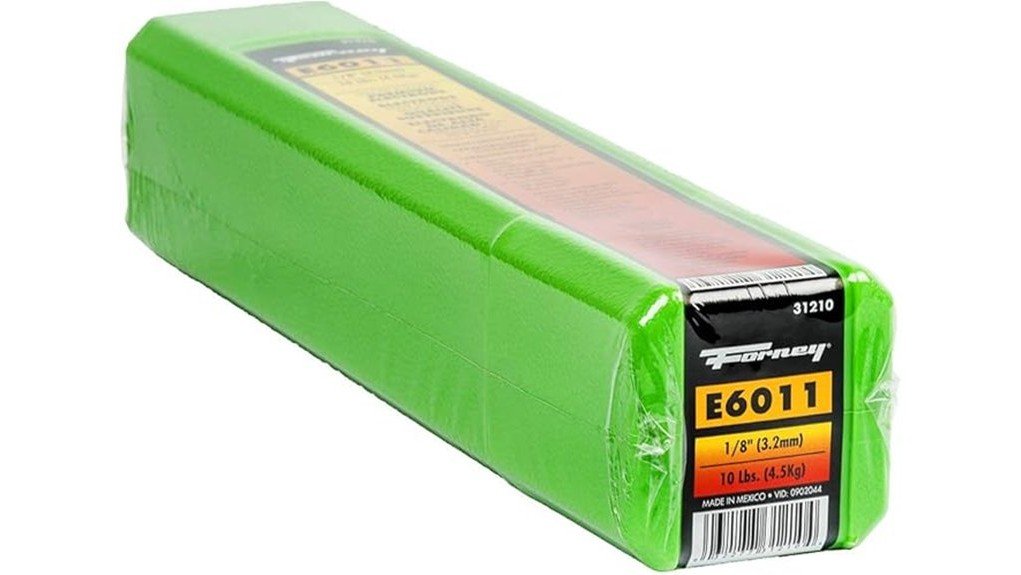
Repair welding rarely happens on perfect, clean metal. You may need a rod that can handle rusty, painted, or less-prepared surfaces without slowing the job down. The Forney 31210 E6011 Welding Rod is built for that kind of maintenance and repair work, with a 1/8-inch rod size, all-position use, and AC or DC+ compatibility. This review looks at where it performs well, where it takes practice, and whether it makes sense for your welding setup.
Quick Verdict
Rating: 8.4/10
Best For: Welders who need an all-position E6011 rod for repair, maintenance, outdoor work, and less-than-perfect steel surfaces.
Bottom Line: The Forney 31210 E6011 is a practical choice when you need deep penetration and reliable arc performance on dirty or rusty material. It is not the easiest rod for every beginner because E6011 can feel more aggressive than smoother, appearance-focused electrodes.
Key Takeaways
- The Forney 31210 is an E6011 welding rod with a 1/8-inch diameter and article-supported 10-pound package weight.
- It supports all-position welding, which helps with repair work where the joint angle is not always convenient.
- It is designed for use with AC and DC+ power sources, giving you more flexibility across common stick welding setups.
- Its main strength is deep penetration on dirty, rusty, painted, or less-prepared surfaces.
- It works best when you understand E6011 behavior, including fast freezing, quicker travel, and more active arc control.
| Specification | Detail |
|---|---|
| Brand | Forney |
| Model | 31210 |
| Product type | E6011 stick welding rod |
| Rod diameter | 1/8 inch |
| Package weight | 10 pounds, based on article details |
| Welding positions | All-position welding |
| Power compatibility | AC and DC+ |
| Article-stated amperage range | 90 to 130 amps |
| Best use | Maintenance, repair work, outdoor welding, and steel with light rust, paint, or surface contamination |
| Storage note | Store dry and limit moisture exposure before use. |
What Is the Forney 31210 E6011 Welding Rod?
The Forney 31210 is a 1/8-inch E6011 stick welding electrode made for welders who need strong penetration and flexible positioning. It suits repair work, farm maintenance, field jobs, shop projects, and jobs where the base metal is not perfectly clean.
Its main appeal is practical versatility. You can use it in all positions, and the article supports use with both AC and DC+ power sources. That makes it useful if your welding machine, work location, or repair angle changes from job to job.
This rod is not mainly about making the prettiest bead with the least effort. It is better for jobs where penetration, access, and surface tolerance matter more than a slow, cosmetic weld bead.
Who Should Buy It?
Best For
- Welders who need a 1/8-inch E6011 rod for repair and maintenance work.
- Users working on dirty, rusty, painted, or less-prepared steel surfaces.
- Anyone who needs AC and DC+ flexibility from one welding rod type.
Skip If
- You mainly want a smooth, beginner-friendly rod for clean shop steel and neat appearance work.
- Your welder cannot run the article-stated 90 to 130 amp range for this rod size.
- You need verified certifications, warranty terms, or exact manufacturer specs before buying.
Before You Buy: E6011 rods can handle imperfect surfaces, but that does not mean you should ignore safety prep. Remove heavy paint, oil, grease, and coatings when possible, and use proper ventilation and protective gear, especially around painted or galvanized metal.
Welding Capabilities and Performance
The Forney 31210 focuses on penetration, fast freezing behavior, and all-position control. Those traits matter when you are repairing brackets, frames, gates, equipment, or utility steel where the joint may not sit flat on a bench.
The article-supported 1/8-inch size gives it enough working capacity for many common repair jobs. The listed 90 to 130 amp range gives you a practical starting point, but your final setting should match your welder, steel thickness, joint design, and technique.
Arc stability is one of the key reasons buyers consider this rod. A steady arc helps you maintain control when the workpiece has rust, old paint, or uneven surface condition. The tradeoff is that E6011 usually asks for more attention to travel speed and rod angle than softer-running rods.
Surface Compatibility and Versatility
This rod is useful when the surface is not perfectly prepared. The original article supports use on dirty, rusty, painted, galvanized, and oily substrates, with minimal surface preparation compared with rods that demand cleaner steel.
That tolerance can save time during field repair, but it has limits. Loose scale, thick paint, grease, and unknown coatings can still affect weld quality and create safety concerns. For stronger and safer results, clean the joint area as much as the job allows before striking an arc.
Its AC and DC+ compatibility also helps if you use different stick welders or move between job sites. You are not locked into one power type, which makes the rod more useful for maintenance teams, farm shops, and home garage repairs.
Build, Handling, and Arc Control
The Forney 31210 uses a fast-freezing E6011 style that helps the puddle set quickly. That behavior supports vertical, overhead, and awkward-position welds, where a slower-freezing puddle can be harder to control.
The rod’s deep penetration helps when the joint needs more bite into the base metal. This is helpful on repair work, but it also means you should avoid using too much heat on thin material. If the steel is light, start carefully and test on scrap when possible.
Spatter control is described as manageable in the original article, but your result will depend on amperage, arc length, travel speed, and surface condition. A short, controlled arc and steady movement usually produce better results than forcing the rod too slowly.
How It Performs in Real Use
For Maintenance and Repair Work
This is the strongest use case for the Forney 31210. It suits jobs where the metal has age, rust, paint, or imperfect prep, and where getting the repair finished matters more than producing a showroom bead.
For Outdoor Welding
E6011 rods are often chosen for field-style work because they can run in less controlled conditions. You still need safe work practices, dry storage, and a stable welding setup, but this rod makes sense for fences, farm equipment, utility repairs, and similar outdoor tasks.
For All-Position Welding
The all-position capability helps when the workpiece cannot be rotated. Vertical and overhead welding still require skill, but the fast-freezing puddle gives you more control than rods that stay fluid longer.
For Dirty or Rusty Steel
The rod’s surface tolerance is useful when full cleaning is not practical. You should still remove loose rust, thick paint, oil, and coating buildup whenever possible because cleaner metal improves consistency and reduces avoidable problems.
How to Use It Correctly
Start with the article-stated 90 to 130 amp range and adjust based on your machine and metal thickness. Too little amperage can make the rod stick or create weak fusion. Too much heat can increase spatter, burn through thin material, or make the puddle harder to manage.
Keep your arc length controlled and avoid dragging the rod too far from the workpiece. A long arc can make the weld less stable and increase spatter. For repair work, make a test bead on scrap steel when you are unsure about the setting.
Pro Tip: Before welding a rusty or painted repair area, chip or grind away loose material at the joint. The rod can tolerate imperfect surfaces, but better contact usually means better arc control and a stronger-looking weld.
Compatibility and Safety
The Forney 31210 is article-supported for AC and DC+ operation. Before buying, check that your stick welder can run 1/8-inch rods within the article-stated amperage range. Smaller machines may struggle if they cannot provide enough stable output.
Use standard welding safety gear, including a properly rated helmet, gloves, protective clothing, and safe ventilation. Welding on painted, oily, or galvanized material can create fumes, so remove coatings where practical and avoid welding in enclosed spaces without proper ventilation.
Storage also matters. Keep the rods dry and protected from moisture. The original article recommends low-humidity storage, around 30% to 50% humidity, to help reduce moisture absorption and support more reliable performance.
Pros and Cons
Pros
- 1/8-inch E6011 rod size suits many common repair and maintenance jobs.
- All-position capability helps when the workpiece cannot be moved easily.
- Works with AC and DC+ setups, based on article-supported details.
- Handles dirty, rusty, and painted surfaces better than rods that require cleaner prep.
- Fast-freezing behavior supports vertical, overhead, and field-style welding tasks.
Cons
- May feel aggressive for beginners who want a smoother, slower-running practice rod.
- Not ideal if your main goal is cosmetic bead appearance on clean shop steel.
- Needs dry storage and correct amperage control for best results.
Is It Worth the Price?
The Forney 31210 is worth considering if you need a practical repair rod instead of a specialty rod for clean, appearance-focused work. Its value comes from surface tolerance, all-position use, and compatibility with AC and DC+ welding setups.
It offers strong value for buyers who regularly fix gates, brackets, farm equipment, utility steel, and general metal projects. The 10-pound package weight also makes sense if you expect to use E6011 rods more than once or want a shop supply on hand.
It is not the best fit if you only weld thin, clean material or want the easiest rod for first-time practice. In that case, compare it with smoother-running alternatives before choosing.
How It Compares to Alternatives
Compared with more appearance-focused rods, the Forney 31210 E6011 is better suited to penetration, imperfect surfaces, and repair work. If you mainly weld clean, flat steel and want a smoother-looking bead, another electrode type may feel easier to control.
Compared with rods that require cleaner prep, this one gives you more flexibility on rough material. The Forney 31210 makes the most sense when you need a dependable repair rod for varied positions and less-than-perfect steel.
Frequently Asked Questions
What is the recommended amperage range for the Forney 31210 E6011 rod?
The original article lists a recommended range of 90 to 130 amps. Use that as a starting point, then adjust for your welder, metal thickness, joint position, and arc behavior.
Can you use the Forney 31210 on rusty or painted metal?
Yes, the article supports use on dirty, rusty, and painted surfaces. For better results and safer welding, remove loose rust, heavy paint, grease, and unknown coatings when possible.
Is the Forney 31210 suitable for beginners?
It can work for beginners who want to learn repair-style welding, but it may take practice. E6011 rods can feel more active than smoother rods, so start on scrap metal before welding a real repair.
Can this rod be used for outdoor welding?
Yes, it makes sense for many outdoor repair jobs because it handles imperfect surfaces and supports all-position welding. Keep the rods dry before use and avoid welding in unsafe wind, rain, or poorly controlled conditions.
Does it work with AC and DC welders?
The article supports compatibility with AC and DC+ power sources. Before buying, confirm that your welder can run 1/8-inch rods in the needed amperage range.
What storage conditions are best for this welding rod?
Store the rods in a dry place and limit moisture exposure. The original article recommends low humidity, around 30% to 50%, to help keep the rods effective.
Who should skip the Forney 31210 E6011?
Skip it if you mainly weld clean, thin material and want the smoothest possible beginner rod. You may also want another option if you need verified manufacturer specs beyond the article-supported details before buying.
The Bottom Line
The Forney 31210 E6011 Welding Rod is a strong fit for welders who need a 1/8-inch all-position rod for repair, maintenance, outdoor work, and imperfect steel surfaces. Its main strength is practical penetration and surface tolerance, while its main limitation is that it requires better arc control than some smoother-running rods.
Choose it if you need a dependable E6011 rod for real-world repair jobs. Skip it if you mainly want a cosmetic bead on clean steel or a softer practice rod for first-time welding.