Disclosure: As an Amazon Associate, we earn from qualifying purchases. If you click a link on this page and make a purchase, we may receive a small commission at no extra cost to you.
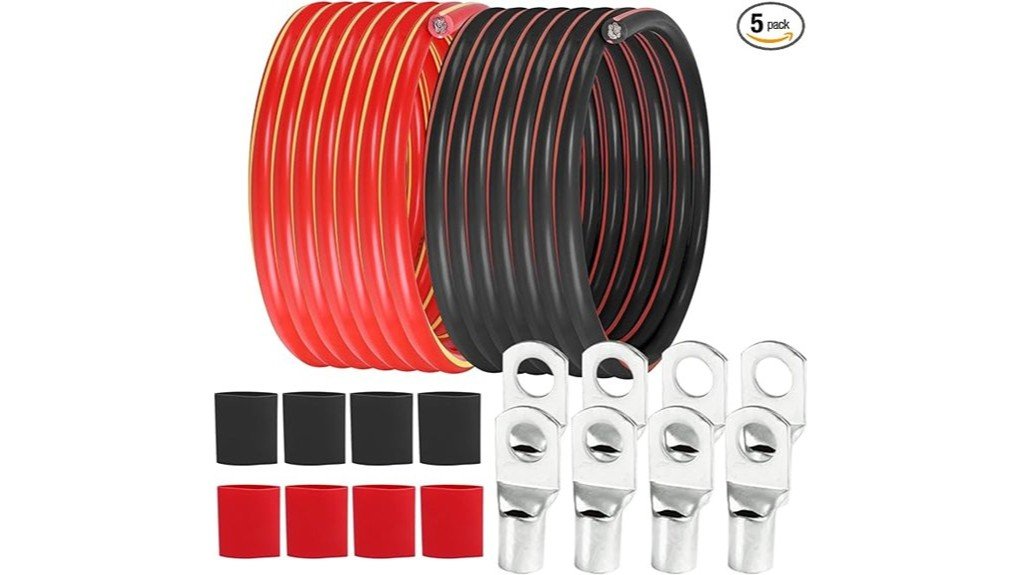
Choosing a battery cable kit is not just about picking a thick wire. You need the right gauge, flexible routing, secure lugs, and insulation that can handle demanding low-voltage work. This 2 Gauge Battery Cable kit gives you red and black cable runs, copper-clad aluminum construction, PVC protection, and included M8 and M10 SC lugs for common automotive, RV, camper, and solar projects. It is a practical choice if you want a flexible cable kit, but it may not be the right fit if your project requires verified pure copper cable, a specific marine rating, or documented temperature certification.
Quick Verdict
Rating: 8/10, Recommended with caveats
Best For: DIY low-voltage automotive, RV, camper, battery, and solar wiring projects where flexibility and included lugs matter.
Bottom Line: This cable kit makes sense if you want 2 gauge red and black wiring with flexible multi-strand construction and included lug options. The main tradeoff is that the article-supported material is copper-clad aluminum, not verified pure copper, so you should confirm it fits your load, distance, and safety requirements before installation.
| Specification | Detail |
|---|---|
| Product name | 2 Gauge Battery Cable |
| Product type | Low-voltage battery and power cable kit |
| Gauge | 2 gauge |
| Cable length | 12 feet black cable and 12 feet red cable |
| Core material | Copper-clad aluminum, based on the article-provided specs |
| Construction | Multi-strand design for flexibility |
| Insulation | PVC protection described as resistant to oil, chemicals, and flame |
| Included connectors | M8 and M10 SC connector lugs |
| Connector design | Heavy-duty copper lug connectors with tin coating and seamless tubular barrel design |
| Item weight | 4.28 pounds |
| Package dimensions | 10.59 x 10.31 x 3.98 inches |
| Best use | Automotive, camper, RV, and solar low-voltage wiring projects |
| Safety note | Confirm load, cable length, lug size, crimp quality, and local code requirements before use. |
Key Takeaways
- The kit includes 12 feet of black cable and 12 feet of red cable, giving you separate positive and negative runs for common low-voltage projects.
- The 2 gauge, multi-strand construction improves flexibility, which helps when you need to route cable through tight spaces.
- The article-supported core material is copper-clad aluminum, which can reduce weight and cost compared with pure copper, but it may not suit every high-demand electrical setup.
- PVC insulation helps protect the cable from common shop, automotive, and outdoor-use exposure risks described in the article.
- The included M8 and M10 SC lugs make the kit more useful for battery, inverter, ground, and solar wiring jobs where those stud sizes match your hardware.
What Is the 2 Gauge Battery Cable?
The 2 Gauge Battery Cable is a low-voltage wiring kit built for projects that need thicker cable than light accessory wiring. It comes with red and black 12-foot cable lengths, which helps you keep positive and negative wiring easy to identify during installation.
The article describes the cable as copper-clad aluminum with a multi-strand design. That combination aims to make the wire easier to bend while keeping the total kit weight manageable. It also includes M8 and M10 SC connector lugs, so you can build cable ends for common battery posts, bus bars, inverters, and ground points when the lug size matches your setup.
This kit is best viewed as a flexible DIY cable option for low-voltage automotive, camper, RV, and solar applications. It is not a one-size-fits-all electrical solution, so you still need to confirm amp load, run length, voltage drop, connector fit, and installation method before you rely on it.
Before You Buy: Copper-clad aluminum is not the same as verified pure copper cable. Check your equipment manual, amperage needs, cable run length, voltage drop limits, and lug size before installing this kit in a critical power system.
Who Should Buy It?
Best For
- DIY users building battery, inverter, or ground cables for low-voltage automotive projects.
- RV and camper owners who need flexible red and black cable for auxiliary power wiring.
- Solar hobbyists who need 2 gauge cable and have already confirmed the cable type fits their system requirements.
Skip If
- Your project specifically requires pure copper cable or a documented marine-grade cable.
- You need verified ampacity, temperature rating, warranty, certification, or manufacturer data before buying.
- You do not have the correct crimping tool, heat shrink, fuse protection, or installation knowledge for battery cable work.
Wire Characteristics and Benefits
The strongest practical feature of this cable is its multi-strand construction. A cable with many smaller strands is easier to route than a stiff solid conductor, which matters when you are working around battery trays, frame rails, storage compartments, solar charge controllers, or tight RV spaces.
The article describes the core as copper-clad aluminum. This can help keep weight and cost lower than a comparable pure copper cable, but it also means you should be more careful about matching the cable to your load. For longer runs or high-current equipment, confirm the correct cable size with the equipment manual or a qualified installer.
The PVC insulation adds a protective layer for everyday shop and vehicle use. It is described as resistant to oil, chemicals, and flame, which is helpful around engines, batteries, tool storage, and outdoor equipment. Still, the cable should be routed away from sharp metal edges, hot exhaust parts, moving belts, and pinch points.
Connector Features and Durability
The included connector hardware makes the kit more useful than bare cable alone. The article lists M8 and M10 SC connector lugs, which are common sizes for many battery, inverter, ground, and bus bar applications. Before crimping, compare the stud size on your equipment with the lug hole size so the connection seats flat and tight.
The lugs are described as heavy-duty copper connectors with a tin coating. Tin coating can help protect against corrosion in normal service, while the tubular barrel design gives you a place to make a strong crimp. A good crimp is critical because a loose battery cable connection can cause heat, voltage drop, unreliable starts, or intermittent power.
For best results, use a crimping tool designed for battery lugs, not pliers or a light-duty hand tool. Add adhesive-lined heat shrink where appropriate, then tug-test the cable end after crimping. If the lug moves, spins, or slips, do not install it.
Pro Tip: Cut the cable slightly longer than your first measurement, route it in place, then mark the final cut. This helps prevent a cable that is too short after you account for bends, strain relief, and lug position.
Fit and Compatibility
This cable kit is most suitable for low-voltage battery and power wiring jobs where 2 gauge cable is appropriate. Common examples include automotive battery leads, ground straps, inverter connections, RV auxiliary power wiring, camper upgrades, and some solar power connections.
Compatibility depends on more than gauge size. You need to match the cable to your current draw, cable length, fuse size, terminal stud size, environment, and device manual. A short battery ground cable has different demands than a long run from a battery bank to an inverter or charge controller.
The red and black color pairing is useful because it helps reduce wiring mistakes. Red is commonly used for positive wiring and black for negative or ground wiring, but you should still label both ends if the cable disappears behind panels, under seats, or through enclosed compartments.
Installation Tips for Better Results
Start by planning the route before you cut either cable. Keep the cable away from exhaust heat, steering components, suspension travel, sharp brackets, and places where cargo can crush it. Use grommets when passing through metal and add clamps or cable ties so the wire does not rub while the vehicle or RV moves.
Strip only enough insulation for the lug barrel, then insert the conductor fully before crimping. The lug should sit straight on the cable, and the crimp should be tight enough that the conductor cannot pull out. If you are using this cable around batteries, disconnect power first and follow the equipment manual.
After installation, check for heat, loose terminals, corrosion, and voltage drop during early use. A cable that feels hot, smells odd, or shows melted insulation should be disconnected and inspected before the system is used again.
Compatibility and Safety
Battery cable work can carry high current, even in low-voltage systems. That is why cable sizing, fuse protection, crimp quality, and routing matter as much as the cable itself. Do not assume 2 gauge is correct for every inverter, winch, battery bank, alternator lead, or solar setup.
If your project supports starting current, charging current, or inverter loads, confirm the correct cable size in the equipment manual. Long cable runs can create voltage drop, and undersized or poorly terminated cable can overheat. For critical systems, marine installations, or code-regulated work, use a qualified installer.
The article does not confirm a specific temperature rating, certification, warranty, or marine approval. Because of that, you should not treat this kit as a certified replacement for specialty cable unless the seller or manufacturer documentation confirms those details.
Customer Feedback and Ratings
The original article notes that buyers respond well to the cable’s flexibility, durability, and easy installation. Those are the areas that matter most for a cable kit like this because a stiff cable can make routing harder, and weak connectors can reduce reliability.
For a more cautious buying decision, focus less on the headline rating and more on the details buyers mention. Look for feedback about crimp quality, insulation feel, cable flexibility, true length, lug fit, and whether the cable performed well in a use case close to yours.
How It Performs in Real Use
For Automotive Battery and Ground Leads
The 2 gauge size and flexible design make the kit useful for custom battery and ground cable builds when the cable length and lug sizes fit your vehicle. It can help when you need to route cable around tight engine bay spaces or replace a worn low-voltage lead. Always match the cable to the vehicle’s electrical load and protect the cable from heat and abrasion.
For RV and Camper Power Projects
RV and camper wiring often requires cable that can bend around cabinets, compartments, and battery storage areas. The red and black 12-foot lengths give you a clear color pair for positive and negative runs. Before using it for an inverter or auxiliary battery system, confirm that copper-clad aluminum cable is acceptable for your load and run length.
For Solar Low-Voltage Setups
The article lists solar low-voltage systems as one of the cable’s intended uses. It may work for battery-to-controller or battery-bank wiring when the system design calls for 2 gauge cable and compatible lugs. Solar systems can involve long runs and continuous current, so voltage drop and overcurrent protection should be checked before installation.
For Shop, Backup, and Custom Cable Builds
This kit can also serve as a flexible cable source for custom shop builds, backup power wiring, and equipment upgrades. The included lug sizes reduce the need to buy every connector separately. The limitation is that you still need the right crimping tool, heat shrink, fuse protection, and installation plan.
Pros and Cons
Pros
- Includes both red and black 12-foot cable lengths for positive and negative wiring runs.
- Multi-strand 2 gauge construction helps the cable bend through tight routing areas.
- Comes with M8 and M10 SC lugs, which adds value for common battery and power connections.
- PVC insulation is described as resistant to oil, chemicals, and flame for tougher work environments.
- Useful for several low-voltage project types, including automotive, RV, camper, and solar wiring.
Cons
- Copper-clad aluminum may not be acceptable for projects that require verified pure copper cable.
- The article does not confirm a specific amp rating, temperature rating, certification, or warranty.
- You need proper crimping tools and installation skill to make safe, reliable cable ends.
How It Compares to Alternatives
Compared with pure copper welding cable, this 2 Gauge Battery Cable may be lighter and more budget-friendly, but pure copper is often preferred for demanding high-current work. Compared with pre-assembled battery cables, this kit gives you more flexibility because you can cut and crimp the cable to your own length.
If you are wiring a boat or a harsh outdoor system, tinned marine cable may be worth comparing because marine-grade wiring is designed around corrosion resistance and specific installation standards. This kit makes the most sense when you want flexible 2 gauge red and black cable, included lugs, and a DIY-friendly format for low-voltage projects.
Is It Worth the Price?
This cable kit can be a strong value for the price if you need both red and black 2 gauge cable and can use the included M8 and M10 lugs. Buying cable and lugs separately can add cost, especially if you are building several custom leads for a vehicle, RV, camper, or solar setup.
The best value comes from using it in a project where the article-supported specs match your needs. If you only need one short cable, a pre-made cable may be simpler. If your equipment requires pure copper, documented ampacity, or a certified marine cable, this kit may not be the safest or most efficient choice.
Frequently Asked Questions
Is this 2 Gauge Battery Cable pure copper?
The article describes the cable as copper-clad aluminum, not verified pure copper. That can work for some low-voltage projects, but you should confirm it is suitable for your current draw, run length, and equipment requirements.
How much cable comes in the kit?
The article lists 12 feet of black cable and 12 feet of red cable. That gives you separate color-coded lengths for positive and negative runs, but you should measure your project before cutting.
Can you use it for automotive battery cables?
Yes, automotive use is one of the article-supported applications. Before using it as a battery or ground cable, verify the required gauge, cable material, lug size, fuse protection, and routing for your specific vehicle.
Is this cable suitable for solar panel installations?
The article lists solar low-voltage systems as a possible use. Check your solar controller, battery bank, inverter, fuse size, and voltage drop requirements before installing it.
Can this cable be used for marine applications?
The article mentions corrosion-resistant connectors, but it does not confirm a marine-grade cable rating. For boats or saltwater use, compare it with documented tinned marine cable and follow marine electrical standards.
What lug sizes are included?
The article lists M8 and M10 SC connector lugs. These sizes are useful only if they match the studs on your battery, inverter, bus bar, charger, or ground point.
What is the biggest installation mistake to avoid?
Do not crimp the lugs with the wrong tool or leave the cable unsupported. A weak crimp, loose terminal, sharp edge, or hot routing path can lead to voltage drop, heat, damaged insulation, or connection failure.
Who should skip this cable kit?
Skip it if your project requires verified pure copper, a published ampacity chart from the manufacturer, a specific temperature rating, or a certified marine cable. You should also skip it if you do not have the correct tools to crimp battery lugs safely.
The Bottom Line
The 2 Gauge Battery Cable is worth considering if you want a flexible low-voltage cable kit with red and black 12-foot lengths, PVC insulation, and included M8 and M10 lugs. It is best for practical automotive, RV, camper, and solar projects where the copper-clad aluminum construction fits your requirements.
Skip it if your setup calls for verified pure copper cable, marine certification, published ampacity data, or a ready-made cable with factory-installed ends. For the right DIY project, it is a useful and value-focused kit, but it needs careful sizing, crimping, and routing.