Disclosure: As an Amazon Associate, we earn from qualifying purchases. If you click a link on this page and make a purchase, we may receive a small commission at no extra cost to you.
Choosing the wrong battery cable can lead to weak connections, voltage drop, hard routing, or early insulation wear. The Geosiry 6 Gauge Battery Cable is built for buyers who need flexible copper cable for automotive, marine, solar, and outdoor electrical projects. This review breaks down its copper construction, EPDM jacket, package setup, best uses, and limits so you can decide if it fits your wiring job. Its biggest strength is the article-supported mix of oxygen-free copper, high strand count, and weather-resistant insulation, but it is not a universal cable for every electrical system or home wiring project.
Quick Verdict
Rating: 8.4/10
Best For: DIY automotive, marine, solar battery, and accessory wiring projects that need flexible 6 gauge copper cable.
Bottom Line: The Geosiry 6 Gauge Battery Cable is worth considering if you want a red and black cable pair with oxygen-free copper strands and a durable EPDM jacket. The main tradeoff is that you still need to confirm the correct gauge, fuse size, terminals, and installation method for your specific system.
| Specification | Detail |
|---|---|
| Brand | Geosiry |
| Product type | 6 gauge battery cable |
| Conductor material | 100% fully annealed oxygen-free copper wire |
| Strand construction | 423 strands of 0.2 mm wire |
| Insulation | EPDM insulating jacket |
| Resistance claims | Heat, moisture, abrasion, and oil resistance |
| Temperature range | -122°F to +221°F |
| Voltage rating | Up to 600 volts |
| Package quantity | 15 feet red cable and 15 feet black cable |
| Approximate weight | About 2.5 pounds per 15 feet |
| Best use | Automotive batteries, accessories, solar battery connections, and marine projects |
| Safety note | Not intended for residential home wiring; confirm system requirements before installation |
What Is the Geosiry 6 Gauge Battery Cable?
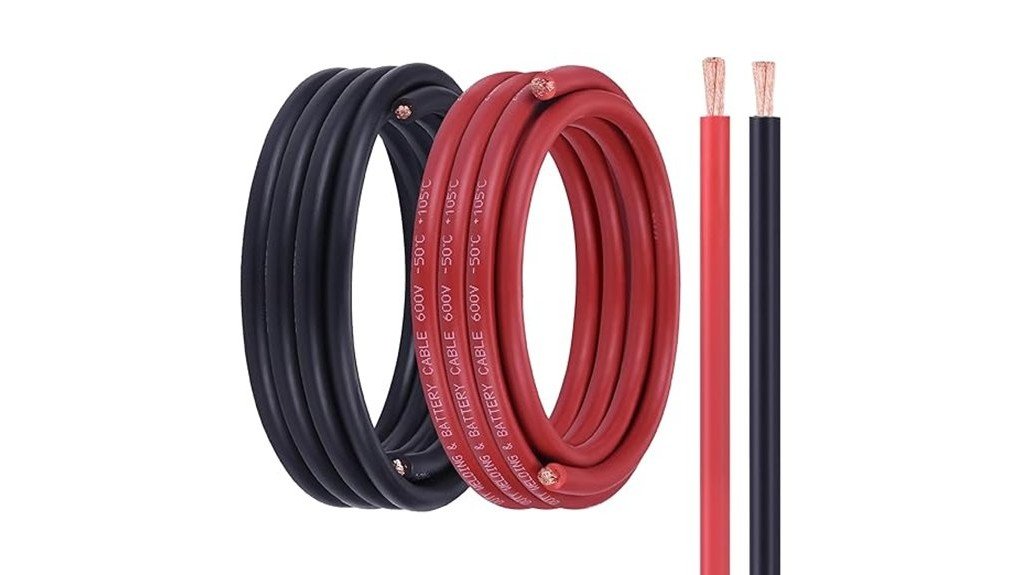
The Geosiry 6 Gauge Battery Cable is a red and black cable pair designed for battery and low-voltage power connection projects. The article-supported package includes 15 feet of red cable and 15 feet of black cable, which gives you enough length for many automotive, marine, solar, trailer, and accessory wiring jobs.
The main construction detail is the 100% fully annealed oxygen-free copper wire. The cable uses 423 strands of 0.2 mm wire, which helps it bend more easily than a stiff solid conductor. That flexibility matters when you need to route cable through tight engine bays, battery boxes, solar setups, or marine compartments.
The EPDM insulating jacket is another key part of the design. It is described as resistant to heat, moisture, abrasion, and oil, with a temperature range from -122°F to +221°F and a voltage rating up to 600 volts. Those specs make it more practical for harsh outdoor and vehicle environments than basic indoor wire.
Before You Buy: This cable is not a shortcut around proper electrical design. Confirm that 6 gauge cable is correct for your amperage, cable length, fuse rating, terminals, and installation environment before you use it.
Who Should Buy It?
Best For
- DIYers who need red and black 6 gauge cable for battery projects.
- Automotive and marine users who want flexible copper cable with a durable jacket.
- Solar battery setups where 6 gauge cable is suitable for the system design.
Skip If
- You need residential home wiring, building wire, or code-approved branch-circuit wiring.
- Your setup requires a larger gauge cable for high-current loads or long cable runs.
- You do not have the right lugs, crimping tools, fuse protection, or installation knowledge.
Key Takeaways
- The cable uses 100% fully annealed oxygen-free copper wire for strong conductivity in battery applications.
- The 423-strand construction helps the cable stay flexible for tight spaces and curved routing paths.
- The EPDM jacket is designed to resist heat, moisture, abrasion, and oil in demanding environments.
- The package includes both red and black cable, with 15 feet of each color.
- The 600-volt rating and wide temperature range make it useful for automotive, solar, and marine projects when the gauge is correct.
Material Quality and Construction
The strongest reason to consider this cable is its conductor material. The cable uses fully annealed oxygen-free copper, which is a better choice than copper-clad aluminum when you want dependable current flow and lower resistance in battery connections.
The 423 strands of 0.2 mm wire also help with flexibility. Instead of fighting a stiff cable during routing, you get a cable that can bend around corners, pass through compartments, and sit more naturally near battery terminals. This can make installation cleaner, especially in vehicles, boats, solar boxes, and custom accessory wiring.
The EPDM insulating jacket adds the durability buyers often need outside a clean indoor environment. It is built to resist heat, abrasion, moisture, and oil, which are common challenges around engines, batteries, trailers, boats, and outdoor solar equipment.
Pro Tip: Measure the full routing path before cutting, including bends, service loops, fuse placement, and terminal reach. A cable that is cut too short can put strain on the lug or battery post.
Performance and Applications
The Geosiry 6 Gauge Battery Cable is designed for electrical projects where copper conductivity, flexible routing, and tough insulation matter. Its oxygen-free copper conductor helps support reliable power transfer, while the EPDM jacket helps protect the cable from moisture, abrasion, oil exposure, and temperature swings.
The 600-volt rating gives the cable broad use potential, but voltage rating alone does not tell you if it is right for a job. You still need to match the cable gauge to the current load, cable length, expected temperature, fuse size, and terminal hardware.
Automotive Uses
For automotive projects, this cable can be useful for battery leads, accessory power wiring, auxiliary batteries, and custom electrical upgrades where 6 gauge cable is the right size. The red and black colors also help you keep positive and negative runs easy to identify during installation and later inspection.
Solar Battery Connections
For solar systems, this cable may work well for battery-side connections or short power runs when the system design calls for 6 gauge copper cable. Solar setups can vary widely, so you should confirm the required gauge, connector type, fuse protection, and controller or inverter requirements before using it.
Marine and Outdoor Projects
Marine and outdoor installations expose wiring to moisture, vibration, heat, and abrasion. The EPDM jacket makes this cable a practical option for those environments, but you should still use the correct terminals, protective routing, strain relief, and corrosion-resistant connection practices.
Fit, Compatibility, and Sizing
This is a 6 gauge battery cable, so it is best matched to systems that specifically call for 6 gauge wire. It should not be chosen only because it looks thick or heavy-duty. A long cable run, high-current inverter, winch, trolling motor, or engine-starting application may need a different gauge depending on the load.
The red and black cable pair is useful when you are wiring both positive and negative sides of a battery circuit. The color coding helps reduce mistakes, but it does not replace safe testing, labeling, or proper polarity checks before energizing the circuit.
Because the article states that the cable is not suitable for home wiring, you should avoid using it as a substitute for residential building wire. Battery cable, automotive cable, and residential wiring are designed around different standards, installation methods, and safety rules.
Installation Tips for Better Results
Good cable performance depends on more than the cable itself. Use lugs that match 6 gauge cable, and make sure the lug stud size matches your battery post, bus bar, fuse holder, inverter, or accessory connection point.
A tight, clean crimp is important. Loose crimps can create heat, resistance, and unreliable connections. If you do not have the right crimping tool, it is better to get help from someone with the proper equipment than to flatten the lug with pliers or a hammer.
Route the cable away from sharp edges, moving parts, exhaust heat, and pinch points. Add grommets, loom, clamps, or strain relief where needed. The EPDM jacket is built for durability, but no insulation should be expected to survive poor routing or repeated rubbing against metal.
Compatibility and Safety
This cable touches electrical systems that can carry high current, so installation safety matters. Before use, inspect the insulation for cuts, flattened spots, shipping damage, or exposed copper. Also check that both red and black cable lengths match your project needs before cutting.
The article notes a temperature range of -122°F to +221°F and a voltage rating up to 600 volts. Those are useful specs, but they do not replace ampacity calculations or system-specific guidance. Battery circuits should be protected with properly sized fuses or breakers placed where your system design requires them.
If you are working on a vehicle, boat, solar bank, RV, or other powered system, disconnect power before cutting, stripping, crimping, or routing cable. For complex or high-current work, have a qualified professional review the setup.
How It Performs in Real Use
For Battery Relocation or Accessory Wiring
The flexible stranded design helps when routing through tight spaces or around curves. That can make it easier to create clean battery connections for accessories, auxiliary power, or custom electrical layouts.
For Solar Battery Setups
The red and black 15-foot lengths are convenient for organized positive and negative battery runs. The cable can be a good match for solar projects when the system calls for 6 gauge copper cable and the installer uses the right terminals and fuse protection.
For Marine and Outdoor Use
The EPDM jacket gives the cable better protection in environments where moisture, oil, vibration, and abrasion are real concerns. For boat or outdoor use, you should still protect the cable from standing water, sharp edges, and constant movement.
For Tight Spaces
The high strand count makes the cable easier to bend than many stiffer options. This is useful when you need to work inside battery boxes, engine compartments, under seats, or around equipment where straight cable paths are not possible.
Customer Support and Satisfaction
The original article notes that Geosiry encourages customer feedback and provides warranty support for product concerns. That is useful for buyers who want a point of contact if the cable arrives damaged or does not match the expected package.
Because warranty terms can vary by seller or listing, you should check the current product page before buying. When the package arrives, inspect the cable length, insulation, color pair, and visible copper before starting your project. Finding a problem before cutting the cable makes returns or support requests much easier.
Pros and Cons
Pros
- 100% fully annealed oxygen-free copper supports strong conductivity.
- 423-strand construction improves flexibility for tight routing.
- EPDM jacket resists heat, moisture, abrasion, and oil.
- Includes both red and black 15-foot cable lengths for organized wiring.
- Useful for automotive, solar, marine, and outdoor battery applications.
Cons
- Not suitable for residential home wiring.
- 6 gauge may be too small or too large depending on the current load and cable length.
- You still need compatible lugs, tools, fuses, and proper installation knowledge.
Is It Worth the Price?
The Geosiry 6 Gauge Battery Cable looks like a strong value for buyers who need a copper red and black cable pair for battery work. The package format is practical because you get matching positive and negative cable lengths instead of buying separate rolls.
It is especially worth considering if flexibility, copper construction, and a durable jacket matter more to you than buying the cheapest cable available. The biggest value comes from using it in the right project, with the right gauge, the right connectors, and safe fuse protection.
It is not the best fit if you need certified residential building wire, a pre-terminated battery cable, or a cable gauge that has already been confirmed by a professional for a high-current setup.
How It Compares to Alternatives
Compared with cheaper copper-clad aluminum cable, this article-supported oxygen-free copper design is the better choice when conductivity and durability matter. Compared with pre-made battery cables, this bulk cable gives you more control over length and routing, but you must cut, strip, crimp, and finish the ends correctly.
If you want a ready-to-install solution, a pre-terminated battery cable set may be easier. If you want custom lengths for automotive, marine, RV, or solar projects, the Geosiry 6 Gauge Battery Cable makes more sense.
Frequently Asked Questions
What length of cable comes in the package?
The package includes 15 feet of red cable and 15 feet of black cable. This setup is useful when you need matching positive and negative runs for battery or accessory wiring.
Is this cable flexible enough for tight spaces?
Yes, the 423-strand construction is designed to improve flexibility. That helps when routing the cable through battery boxes, vehicle compartments, boats, and other areas where space is limited.
Can this cable be used for home wiring?
No. The article identifies this cable as unsuitable for home wiring and better suited to automotive, solar, marine, and outdoor battery applications. Use proper residential building wire and follow local electrical code for home circuits.
What colors are included?
The cable comes in red and black. This is helpful for keeping positive and negative wiring easier to identify during installation and future maintenance.
How heavy is the cable?
The article lists the cable weight at about 2.5 pounds per 15 feet. That weight reflects the stranded oxygen-free copper construction and durable insulation.
Is 6 gauge cable right for every battery project?
No. Cable size depends on current draw, run length, temperature, voltage drop, and fuse protection. Check your equipment manual or ask a qualified installer if you are unsure.
What should you inspect when the cable arrives?
Check the insulation for cuts, crushed areas, or exposed copper. You should also confirm that the package includes both red and black 15-foot lengths before cutting or installing the cable.
Who should skip this battery cable?
Skip it if you need home wiring, pre-crimped battery leads, or a different gauge for a high-current or long-distance run. It is also not ideal if you do not have the tools or knowledge to terminate cable safely.
The Bottom Line
The Geosiry 6 Gauge Battery Cable is a solid choice for buyers who need flexible copper cable with red and black lengths, EPDM insulation, and broad use potential for automotive, solar, and marine projects. Its main strength is the combination of oxygen-free copper, 423-strand flexibility, and durable insulation, while its main limitation is that it still requires proper sizing, terminals, crimping, and fuse protection. Skip it if you need residential home wiring or a ready-made cable with terminals already installed.