6 Gauge Wire Review: Copper Wire for High-Current Electrical Projects
By Garage Welding | Last updated: June 13, 2026
This 6 gauge wire is made for electrical jobs that need a thick conductor, durable insulation, and support for higher current than smaller wire sizes. The article details list a copper core, a 600-volt rating, and an operating temperature range of -50°C to +105°C. Since the live Amazon listing was not checked for this edit, confirm the current product page, manual, and local electrical code before buying or installing it.
Verdict
This 6 gauge wire is a strong option for high-current projects such as solar wiring, vehicle power connections, marine use, and portable generator connections. Its main strengths are the copper conductor, weather-resistant insulation, and broad temperature range. It is not the best choice for very tight spaces or for household wiring unless your local code and project design allow it.
Key Specs
| Specification | Detail |
|---|---|
| Product Type | 6 gauge electrical wire |
| ASIN | B0CWL8LJPY |
| Conductor | Copper conductor according to the provided article details |
| Insulation | Tough insulating sheath described as heat, abrasion, tear, moisture, and corrosion resistant |
| Temperature Range | -50°C to +105°C (-58°F to +221°F) |
| Voltage Rating | Up to 600 volts |
| Approximate Weight | About 0.395 pounds per foot, according to the provided article details |
| Common Uses | Solar systems, vehicle wiring, marine projects, and generator connections |
What Is This Product?
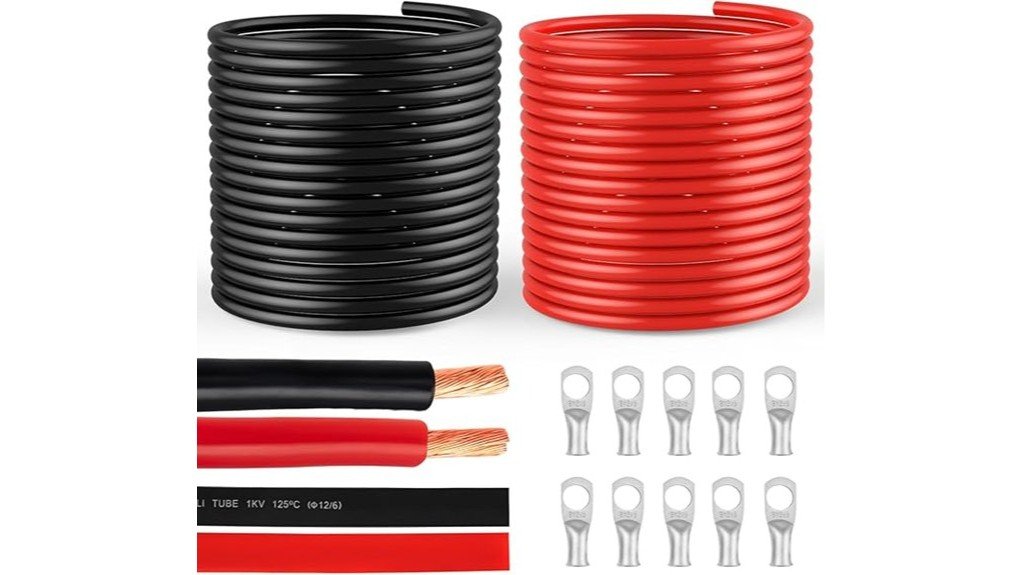
This is a 6 gauge electrical wire for projects that need a thicker wire than common light-duty wiring. The article describes it as having a copper inner core for conductivity and a durable insulating sheath for protection in demanding environments.
The insulation is described as resistant to heat, abrasion, tearing, moisture, and corrosion. That makes it useful for outdoor, vehicle, marine, and power-system applications where ordinary light-duty wire may not be strong enough.
Who It Is For
This wire is best for users who need a heavy-gauge cable for high-current electrical connections. It can fit projects such as solar panel wiring, battery connections, automotive power wiring, marine wiring, portable generator connections, and similar electrical setups.
It is also a good fit for buyers who need wire that can handle wide temperature swings. The listed operating range of -50°C to +105°C gives it more temperature tolerance than many basic wires.
Who Should Skip It
Skip this wire if you need very flexible wire for tight bends or small spaces. The original article notes that 6 gauge wire has limited flexibility, so it may be harder to route in compact areas.
You should also skip it for household wiring unless your electrical plan and local code allow 6 gauge wire for that exact use. Residential wiring must follow local regulations, breaker sizing, insulation type requirements, and installation standards.
Key Features
Copper Conductor
The provided article details describe a copper inner core. Copper is commonly used in electrical wire because it supports efficient current flow. For high-current projects, conductor quality matters because poor conductivity can lead to voltage drop, heat, and unreliable performance.
Durable Insulation
The wire uses a tough insulating sheath that is described as heat-resistant, abrasion-resistant, tear-resistant, moisture-resistant, and corrosion-resistant. This helps protect the conductor in outdoor, vehicle, marine, and workshop environments.
Temperature Resistance
The listed operating temperature range is -50°C to +105°C (-58°F to +221°F). That range makes the wire suitable for cold starts, warm engine bays, outdoor installations, and other areas where temperatures can change quickly.
600-Volt Rating
The article states that the wire is rated for up to 600 volts. Always match wire type, insulation rating, breaker size, load, and installation method to your project. A voltage rating does not replace proper electrical design.
Real-World Use
For solar systems, 6 gauge wire can help connect panels, charge controllers, batteries, and inverters when the current load requires a thicker cable. Correct sizing is important because undersized wire can waste energy and create heat.
For vehicle wiring, this gauge can support higher-load accessories, starter-related wiring, battery connections, and audio systems. It is also useful for marine projects where moisture resistance and corrosion resistance are important.
For portable generators, 6 gauge wire can support high-current connections when the system design calls for it. Always follow the generator manual and use properly rated connectors and terminals.
Pros and Cons
Pros
- Copper conductor supports strong electrical conductivity
- Insulation is described as resistant to heat, abrasion, moisture, tearing, and corrosion
- Wide listed temperature range of -50°C to +105°C
- Useful for solar, automotive, marine, and generator wiring projects
Cons
- 6 gauge wire can be stiff and harder to route in tight spaces
- Household wiring use depends on local electrical code and the exact application
- The provided article does not confirm included accessories, certifications, warranty, or exact dimensions
Is It Worth the Price?
This 6 gauge wire can be worth buying if your project needs a thick copper conductor, durable insulation, and a 600-volt rating. It is most useful when smaller wire would be too light for the current load or too weak for the environment.
The value depends on your required length, conductor type, insulation rating, and project needs. Do not choose wire by gauge alone. Check the current Amazon listing, the product label, and your project requirements before ordering.
Alternatives to Consider
If you are comparing options, look at similar 6 AWG copper or tinned copper wire from brands such as WindyNation, GS Power, and InstallGear. These alternatives are useful context only. Check conductor material, insulation type, temperature rating, voltage rating, strand count, and length before choosing any wire.
Frequently Asked Questions
How Does 6 Gauge Wire Compare to Other Wire Gauges?
6 gauge wire is thicker than smaller-numbered light-duty wires such as 10, 12, or 14 gauge wire. It can support higher-current applications when the insulation type, installation method, and circuit design are correct.
What Is the Weight of 6 Gauge Wire per Foot?
The provided article lists the weight of 6 gauge wire at about 0.395 pounds per foot. The actual weight can vary by conductor material, strand count, insulation thickness, and manufacturer.
Can 6 Gauge Wire Be Used for Household Wiring?
It may be used in some residential electrical applications, but only when the wire type, insulation rating, breaker size, and installation method meet local electrical code. Ask a qualified electrician or local authority before using it for household wiring.
What Tools Are Needed for Installing 6 Gauge Wire?
You usually need a wire cutter, a wire stripper rated for 6 gauge wire, proper terminals or lugs, a crimping tool, heat shrink tubing if needed, and the correct fasteners or connectors for your application.
Is 6 Gauge Wire Flexible for Tight Spaces?
6 gauge wire is thicker and less flexible than smaller wire. It can be harder to bend in tight spaces. Plan the route before cutting, and leave enough room for safe bends and secure connections.
Is This Wire Safe for Outdoor or Marine Use?
The article describes the insulation as moisture-resistant and corrosion-resistant, which can help in outdoor and marine settings. Confirm the current product listing and label before using it in wet, marine, or code-regulated installations.
Final Verdict
This 6 gauge wire is a practical choice for high-current projects that need a copper conductor, tough insulation, a broad temperature range, and a 600-volt rating. It is best for solar, automotive, marine, and generator wiring where the system design calls for this gauge.
Its main limitation is stiffness. It may also be unsuitable for residential wiring unless local code allows it. Check the live Amazon listing, product label, and installation requirements before you buy.