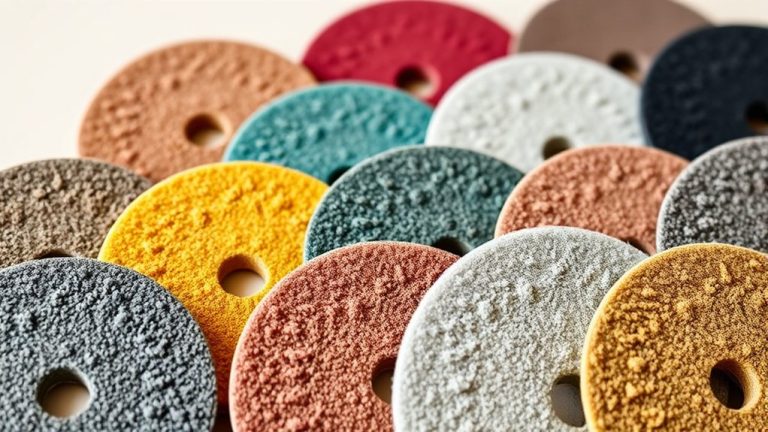
When choosing a grinding wheel hardness grade, consider the material to be processed. Softer grades (A-H) work well for aluminum, while medium (I-P) suits general steel applications. For hard alloys, opt for higher grades (Q-Z) to guarantee strong bond retention. Each grade affects chip removal and surface finish, so select carefully for peak performance. Understanding these nuances will enhance your productivity and effectiveness in grinding tasks—discover more details to refine your choice further.
Understanding Grinding Wheel Hardness Ratings
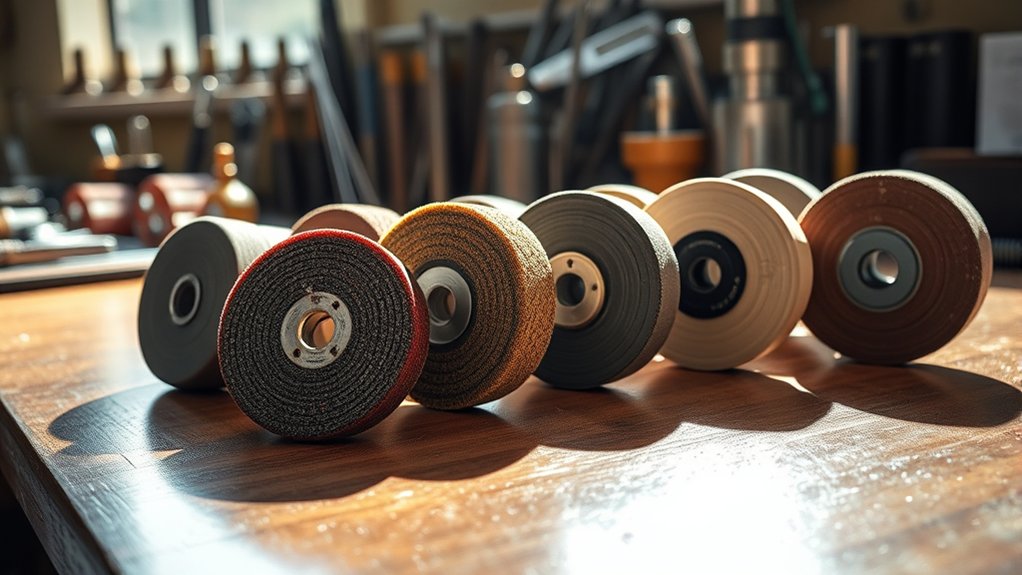
When you select a grinding wheel, understanding its hardness rating is vital for achieving finest results in your machining tasks. Grinding wheel hardness is rated on an alphabetical scale from A to Z, excluding specific letters to indicate bond strength. Softer materials, like aluminum and copper, require wheels graded A-H, while harder materials, such as quenched steel and ceramics, necessitate grades Q-Z. Medium hardness wheels, particularly grades I-P, serve general steel applications effectively.
Selecting the right hardness grade is important for maximizing machining processes. A suitable hardness level not only enhances chip removal efficiency but also guarantees superior surface quality and minimizes operational costs. Higher hardness grades can even double a wheel’s lifespan compared to their softer counterparts. By aligning the grinding wheel hardness with the material being processed, you empower yourself to achieve peak performance and productivity in your machining endeavors.
Choosing the Right Hardness Grade for Your Material
Choosing the right hardness grade for your grinding wheel is crucial, as it directly impacts efficiency and the quality of your machining results. For soft materials like aluminum and copper, opt for softer grades (A-H), which prevent clogging and facilitate ideal chip removal. If you’re machining general steel parts, medium hardness grades (I-P) are recommended, particularly grades K and L for medium-hard alloy steels. Higher grades M-P are necessary for high-hardness alloy and tool steels. For very hard materials, such as quenched steels and ceramics, grades Q-Z guarantee strong shape retention of abrasive grains. Remember, softer wheels enable easier detachment of abrasive grains, enhancing self-sharpening and performance with high-toughness materials. By selecting the appropriate hardness grade based on the material being machined, you can greatly boost efficiency and productivity during rough grinding processes.
Why Does Hardness Matter in Grinding Wheels?
Understanding hardness is crucial for optimizing grinding wheel performance. It directly affects bond strength, durability, and material compatibility, which in turn influences efficiency in machining processes. Selecting the right hardness guarantees you achieve the best results while minimizing wear and maximizing productivity.
Key Factors Influencing Performance
The hardness grade of a grinding wheel considerably impacts its performance, as it dictates how well the wheel retains abrasive grains during operation. Softer wheels, rated A-H, excel in machining softer materials like aluminum, enhancing grinding efficiency and preventing clogging. Conversely, harder wheels, rated Q-Z, are designed for tough materials such as quenched steel, offering superior tool longevity. A single grade increase can nearly double a wheel’s lifespan, greatly affecting operational costs. The choice of hardness grade must align with the material being processed and the desired finish; medium-hard wheels (I-P) are often preferred for general steel parts. Regional preferences also shape these choices, balancing cost efficiency with precision requirements.
Bond Strength and Durability
Bond strength in grinding wheels is essential for effective machining, directly influenced by the wheel’s hardness grade. A higher hardness grade, ranging from Q to Z, guarantees strong bond retention of abrasive grains, making it suitable for durable grinding of hard materials like quenched steel and ceramics. Conversely, softer grades, A to H, are ideal for machining softer materials such as aluminum. By increasing the hardness grade by just one letter, you can potentially double the wheel life, enhancing durability and reducing replacement frequency. Selecting the appropriate hardness grade affects not only bond strength but also the efficiency of your grinding processes. This understanding is vital for executing precision tasks and achieving desired surface finishes in material machining.
Material Compatibility and Efficiency
When selecting a grinding wheel, it’s crucial to contemplate how hardness affects material compatibility and efficiency. The grinding wheel hardness grade directly influences the wheel’s effectiveness for various materials. Softer grades (A-H) work best for soft materials like aluminum and copper, minimizing clogging and enhancing chip removal. For general steel parts, medium hardness grades (I-P) are suitable, while harder grades (Q-Z) are necessary for tough materials like quenched steel and ceramics. This choice impacts the grinding process considerably; rough grinding requires medium-hard wheels (K-P) for efficiency, whereas finishing processes benefit from softer wheels (G-H) for precision. Aligning the hardness grade with material toughness optimizes grinding performance and maximizes efficiency across applications.
Bond Types and Their Impact on Hardness
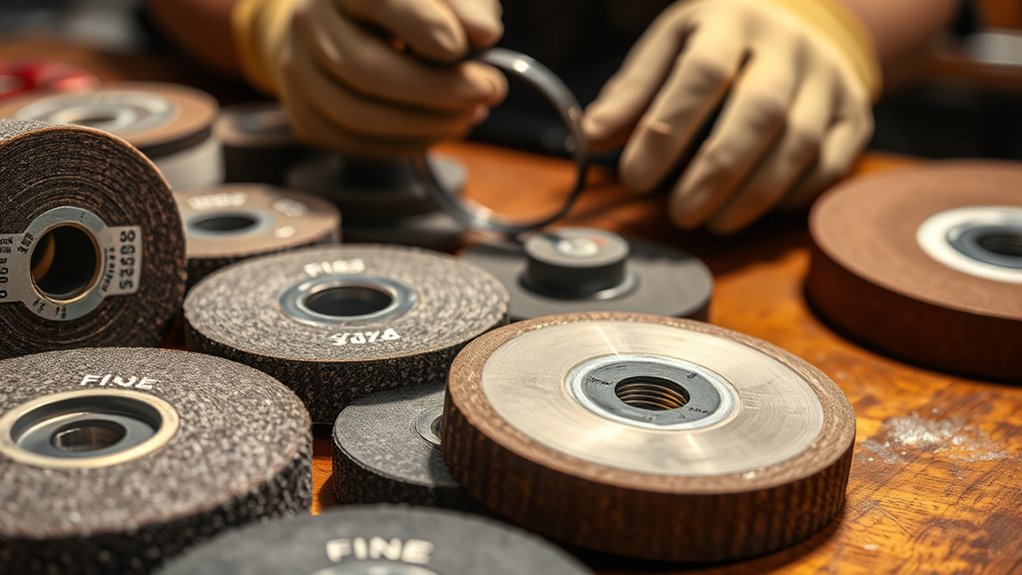
Understanding bond types is essential because they directly influence the hardness of grinding wheels. Vitrified bonds provide rigidity and strength, while resinoid bonds offer a medium hardness that balances performance and longevity. Meanwhile, rubber bonds cater to applications needing softer grades for enhanced grain release and surface finish.
Vitrified Bond Characteristics
Vitrified bonds, which are celebrated for their strength and rigidity, play an essential role in determining the hardness grade of grinding wheels. These bonds are particularly effective for precision grinding, offering a range of hardness from A (softest) to Z (hardest). The bond strength greatly affects grinding efficiency and the wheel’s ability to retain abrasive grains under grinding forces.
- Hard bonds are ideal for high-horsepower jobs, ensuring durability and effective wear resistance.
- Soft bonds facilitate rapid stock removal on harder materials, enhancing cutting efficiency.
- Vitrified bonded wheels excel in applications requiring fine finishes, like tool and die manufacturing, due to their consistent performance.
Selecting the right vitrified bond is critical for optimizing your grinding operations.
Resinoid Bond Advantages
While exploring different bond types for grinding wheels, resinoid bonds stand out due to their unique advantages that directly impact hardness and performance. These synthetic resin-based bonds offer remarkable flexibility, allowing for increased cutting speed in high-speed applications. They soften under heat, enhancing grain release during grinding operations, which contributes to superior performance. Additionally, resinoid bond grinding wheels exhibit higher wear resistance compared to organic bonds, translating into longer tool life. This durability makes them suitable for a variety of materials, including metals and composites. Moreover, the use of resinoid bonds can greatly improve the finish quality of machined surfaces, making them particularly favorable for precision grinding tasks. Embracing these advantages can elevate your grinding outcomes greatly.
Rubber Bond Applications
Rubber bonds offer unique advantages in grinding applications, particularly where flexibility and shock absorption are essential. These bonds typically have a softer grade, allowing for the easy release of abrasive grains, making them ideal for grinding softer materials. Their unique properties enable you to achieve a smooth finish, particularly in woodworking and non-metallic materials.
- Adjustable Hardness: You can modify the hardness by varying the rubber content for peak performance.
- Heat Resistance: Rubber bonds withstand high-speed applications without degrading, ensuring consistent efficiency.
- Extended Lifespan: The durability of rubber bonds enhances the lifespan of your grinding wheels.
Choosing rubber bonds strategically enhances your grinding processes and results in superior finishes.
Grit Size and Its Relationship With Wheel Hardness
Understanding the relationship between grit size and wheel hardness is vital for optimizing grinding performance. Coarser grits (8-24) excel at rapid material removal, while finer grits (70-220) achieve a smooth finish. The hardness grade of your grinding wheel directly influences its bond strength; finer grits typically require a harder bond to maintain wheel integrity during use. As grit size increases, so must the bond strength, ensuring adequate support for the smaller, sharper grains. Striking a balance between grit size and hardness grade is important; an overly hard wheel with fine grit may result in poor cutting performance and accelerated wear. Generally, softer grades pair well with coarser grits to facilitate quick grain release, while harder grades enhance durability and precision for finer grits. By understanding these dynamics, you can select the right combination to maximize your grinding efficiency.
Avoid These Mistakes When Choosing Your Grinding Wheel Hardness
How can you guarantee ideal grinding performance when selecting the hardness grade of your wheel? Avoiding common mistakes is key. Here are critical considerations:
- Don’t match a hardness grade that doesn’t suit the material. A soft wheel (A-H grade) on hard materials leads to rapid wear and poor results.
- Consider the bond type; resin-bonded wheels tend to be 1-2 grades harder than ceramic-bonded wheels, influencing performance.
- Higher hardness doesn’t always mean better performance. Choose a suitable grade to achieve peak efficiency and surface quality.
Neglecting the specifics of your grinding process can also lead to errors. For rough grinding, medium-hard wheels (K-P grades) are ideal, while softer wheels (G-H grades) benefit finishing processes. Stay informed about regional market preferences, as they may dictate different demands for grinding wheel hardness.
Tips for Testing and Adjusting Grinding Wheel Hardness
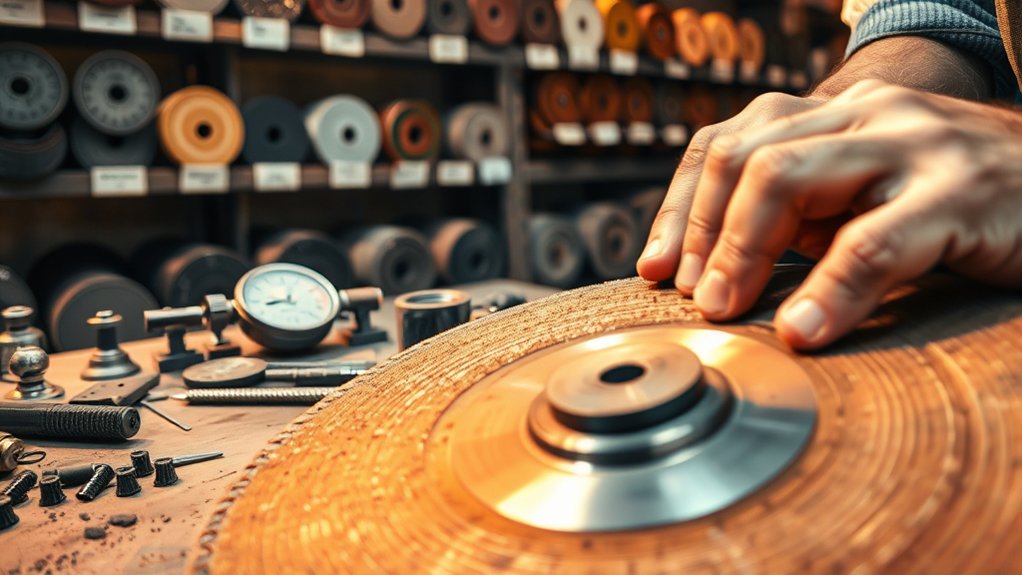
When testing and adjusting the hardness of a grinding wheel, it is essential to utilize precise methods to guarantee peak performance. Understanding the relationship between grit size, bond used, and hardness grade can notably impact your results. Employ the following testing methods for accurate assessment:
| Testing Method | Description |
|---|---|
| Sandblasting Method | Measures indentation depth for hardness |
| Rockwell Hardness | Suitable for grit sizes F100 to F1200 |
| Binder Dosage Adjustment | Increases hardness by altering bond density |
| Grit Size Comparison | Evaluates performance based on finer grits requiring more binder |
| Material Specificity | Secures ideal performance through matching hardness grade to material |
Practical Applications of Grinding Wheel Hardness
Selecting the right hardness grade for your grinding wheel is essential for achieving ideal machining results, as it directly influences both the efficiency and lifespan of the tool. Different hardness grades cater to various materials, enhancing operational efficiency in your tasks.
- Softer wheels (grades A-H) excel in machining soft materials like aluminum and copper, ensuring smooth chip removal.
- Medium hardness wheels (grades I-P) are versatile, balancing efficiency and surface finish for general steel parts.
- Hard wheels (grades Q-Z) are engineered for very hard materials, such as quenched steel and ceramics, ensuring precision grinding with strong shape retention of abrasive grains.
Frequently Asked Questions
What Determines a Grinding Wheel’s Hardness?
A grinding wheel’s hardness is determined by its composition, bond type, grain structure, thickness, and operating speed. Material hardness, cooling methods, and wheel wear also greatly influence performance and durability in grinding applications.
What Grinding Wheel Grit Should I Use?
For fantastic finishes, focus on finer grit sizes for polishing; for fast material removal, coarser grits excel. Match your wheel composition to the grinding application, ensuring peak performance across varying grit types and techniques.
How Do You Select the Correct Grinding Wheel for a Specific Material?
To select the correct grinding wheel, assess material compatibility, application type, and grit size impact. Consider bond type, cooling effects, and desired surface finish quality; these factors influence wheel life expectancy and overall performance.
Which Grinding Wheel Grit Is Coarser, 46 or 60?
In the grit size comparison, 46’s coarser grains release a grinding speed ideal for heavy stock removal, while 60’s fine particles prioritize surface finish. Choose wisely based on application suitability and material compatibility to conquer your tasks.
Conclusion
In the world of grinding, selecting the right wheel hardness is essential for achieving ideal results—think of it as the finely tuned instrument in a symphony. By understanding hardness ratings and their implications, you can avoid costly mistakes and enhance your machining efficiency. Remember, the right choice not only improves your work but also prolongs the lifespan of your tools. Embrace this knowledge, and let it guide you toward precision and excellence in your grinding endeavors.