Disclosure: As an Amazon Associate, we earn from qualifying purchases. If you click a link on this page and make a purchase, we may receive a small commission at no extra cost to you.
Small alignment errors can ruin a welding setup before you ever strike an arc. The Hicarer Welding Table Fixture Pins are made for 5/8-inch fixture tables, giving you simple reference points for positioning tubing, plate, brackets, and repeat parts. This review explains how the 45 carbon steel build, galvanized finish, 10-piece count, and fixed 5/8-inch sizing affect daily workshop use. You will also see where these pins help most, where they fall short, and whether they make sense for your table setup.
Quick Verdict
Rating: 8/10, Recommended with caveats
Best For: Welders using 5/8-inch fixture tables who need simple, durable locating pins for repeatable layouts
Bottom Line: These Hicarer pins are a practical add-on if you already own a compatible 5/8-inch welding table. The steel build and 10-piece count are useful, but the fixed design will not replace clamps, V-blocks, or adjustable stops.
| Specification | Detail |
|---|---|
| Brand | Hicarer |
| Product Name | Hicarer Welding Table Fixture Pins |
| Listing Identifier | ASIN B0CZ95GS6J |
| Product Type | Welding table locating and fixture pins |
| Design | Fixed stop-style pins for alignment and positioning |
| Material | 45 carbon steel |
| Finish | Galvanized finish for added surface protection |
| Pin Size | 1.5-inch height × 1-inch top diameter |
| Fixture Stem Size | Fits 5/8-inch holes, with a listed item diameter of about 0.62 inch |
| Compatibility | 5/8-inch fixture welding tables and compatible table accessories |
| Quantity | 10 pieces |
| Best Use | Repeatable alignment, layout work, stops, and positioning on fixture tables |
| Safety Note | Use with proper clamps when the workpiece needs firm holding pressure |
| Storage Note | Keep pins dry and clean after use to protect the finish and maintain smooth table fit |
What Are the Hicarer Welding Table Fixture Pins?
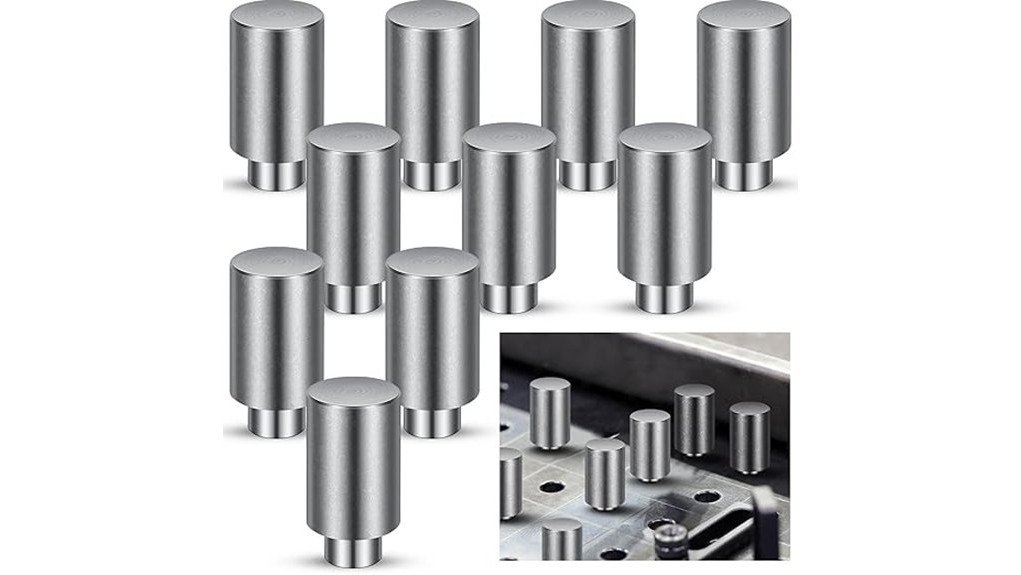
The Hicarer Welding Table Fixture Pins are locating accessories made for modular welding tables with 5/8-inch holes. They give you fixed reference points so you can align workpieces, recreate layouts, and reduce small shifts during setup. They are most useful when you pair them with clamps, stops, squares, or other table fixtures.
Each pin uses 45 carbon steel and has a galvanized finish. The listed sizing includes a 1.5-inch height, 1-inch top diameter, and a 5/8-inch fixture stem. That shape lets the top section act as a stop while the lower section seats into a compatible fixture table hole.
This is a simple product, so its value depends on compatibility and how you use it. If your table uses 5/8-inch holes, the 10-piece count gives you enough pins for basic frame layouts, small batch work, and repeatable reference points. If your table uses a different hole size, these pins are the wrong purchase.
Before You Buy: These pins are made for 5/8-inch fixture table systems. Check your table hole size before ordering, because a 16mm or 5/8-inch setup is not interchangeable with every welding table on the market.
Who Should Buy It?
Best For
- Welders who already use a 5/8-inch fixture table
- DIY fabricators who need repeatable stops for tubing, brackets, or flat stock
- Small shops that want extra locating pins without buying a full clamp kit
Skip If
- Your welding table does not use 5/8-inch fixture holes
- You need adjustable-angle stops, V-blocks, or clamp-style holding force
- You work with heavy assemblies that require dedicated fixturing and support
Fit and Compatibility
Compatibility is the most important buying detail here. These Hicarer pins are built around the 5/8-inch fixture table format, with a lower stem that seats into matching holes. That makes them useful on portable and modular welding tables that use the same hole standard.
The 1-inch top section gives the workpiece a larger contact point than the lower stem alone. This helps when you need a straight stop for square tubing, flat bar, angle iron, or bracket parts. Still, the pins do not adjust to different angles by themselves, so your table hole pattern controls the layout options.
Do not force these pins into a table with a smaller hole size. You can damage the finish, score the table hole, or create a poor fit. If your table holes are larger, the pins may wobble, which defeats the purpose of using a locating accessory.
Build Quality and Materials
The main strength of this set is the 45 carbon steel construction. Carbon steel is a practical choice for workshop accessories because it gives the pin body useful rigidity for positioning tasks. For typical light to medium fabrication setups, that helps the pins hold their shape better than softer, lower-grade accessories.
The galvanized finish adds a protective surface layer. That matters in garages, sheds, and small shops where humidity, grinding dust, and bare metal exposure can speed up surface rust. You should still wipe the pins clean after dirty work, but the coating gives them a better starting point than untreated steel.
Because these are fixed locating pins, not clamp screws, they should not take the full load of a workpiece by themselves. Use them as stops and guides, then add clamps when the part needs pressure, lift control, or resistance against weld pull.
Welding Accuracy and Positioning Performance
These fixture pins are designed to improve layout consistency. They help you create repeatable reference points on the table, so you can place parts in the same location across multiple tack welds or repeated builds. That can reduce measuring time and help you keep a cleaner workflow.
The pins work best when you use them to register a workpiece against a known edge or corner. For example, you can place two pins along one side of square tubing and another pin at the end to create a simple stop. This gives you a faster setup than measuring every piece from scratch.
They are less useful when the job needs pressure from multiple directions. Welding heat can move metal, and tack welds can pull parts out of square. For that reason, these pins should support your setup, not replace clamps, magnets, squares, or proper tacking technique.
Pro Tip: Use two pins as a straight reference edge, then clamp the opposite side of the workpiece before tack welding. This setup helps reduce small shifts without relying on the pins for clamping force.
Setup Tips Before First Use
Start by test-fitting one pin in several table holes. A clean, snug fit is what you want. If the pin feels rough or tight, check the table hole for burrs, slag, paint buildup, or welding spatter before using force.
Next, wipe the pins with a clean shop rag. Welding tables collect dust, grit, and metal chips, and that debris can scratch finishes or make pins harder to remove. Keeping both the table holes and the pins clean improves repeatability.
For repeated parts, mark your table layout or take a quick photo of the pin positions. The pins make batch work easier, but a record of the setup helps you return to the same layout later.
Compatibility and Safety Notes
These pins are safe and useful when you use them within their purpose: positioning, alignment, and repeatable stops. They are not load-rated lifting points, jack stands, or structural supports. Never rely on them to hold suspended material or prevent a heavy part from tipping.
Wear normal shop safety gear when setting up welding work. Gloves can help protect your hands from sharp stock edges, hot table surfaces, and metal burrs. Let the workpiece cool before removing pins near a fresh weld area.
Also remember that galvanized coatings can be damaged by grinding, high heat, or heavy abrasion. You should avoid placing the pins directly in the weld zone when possible. Keep them far enough from the puddle and spatter path to protect the finish and maintain fit.
How It Performs in Real Use
For Fabrication Layouts
The pins help keep tubing, angle iron, and flat stock aligned while you mark, square, and tack parts. They are especially helpful when you need a quick stop along one edge of a part. You still need clamps for pressure, but the pins reduce the amount of measuring needed during setup.
For Repetitive Builds
If you build several matching brackets, frames, or small assemblies, the 10-piece set gives you enough pins to create simple repeatable fixture points. This can improve consistency from one part to the next. It also helps you spot layout mistakes before welding locks the piece in place.
For Light to Medium Duty Welding
These pins make the most sense for small shop, repair, automotive, and hobby fabrication tasks. They work well as positioning aids when the material is resting on the table and supported properly. They are not ideal as the only restraint for heavy parts or high-stress setups.
For Workshop Organization
A set of pins can also make your table easier to use during busy projects. You can define a work zone, mark a repeat line, or keep common parts staged in a consistent position. This is a small benefit, but it matters when you switch between cutting, fitting, tacking, and final welding.
Versatility and Workshop Compatibility
The Hicarer pins are simple, which is both a strength and a limitation. You can use them as straight stops, spacing references, alignment points, or layout markers on a compatible fixture table. Their fixed shape makes them fast to place and remove.
They are less versatile than adjustable stops or clamp systems because they do not pivot, tighten, or lock around the workpiece. If your projects involve odd angles, round tubing, or parts that need downward pressure, you may need V-blocks, table clamps, or dedicated fixture accessories.
For many buyers, the best setup is a mixed fixture kit. These pins can handle quick reference points, while clamps and specialty fixtures handle pressure and unusual shapes. That combination gives you better control than using pins alone.
Pros and Cons
Pros
- 45 carbon steel construction gives the pins a sturdy feel for positioning tasks
- Galvanized finish helps protect the surface in typical garage and shop conditions
- 5/8-inch fixture compatibility works with many modular welding table setups
- 10-piece count gives you enough pins for basic layouts and repeatable reference points
- Simple fixed design makes setup faster than measuring every stop location by hand
Cons
- Only useful with compatible 5/8-inch fixture table holes
- Not a replacement for clamps when the part needs firm holding pressure
- Fixed design offers less flexibility than adjustable stops, V-blocks, or clamp kits
Need simple 5/8-inch layout pins?
Is It Worth the Price?
The Hicarer Welding Table Fixture Pins offer strong value for the price if you already own a compatible 5/8-inch table. You are paying for a 10-piece set of steel locating pins, not a full fixturing system. That makes them a practical add-on rather than a complete solution.
They are worth considering if your current setup needs more repeatable stops or if you often build similar parts. The biggest value comes from saved layout time and fewer small alignment mistakes. You get less value if most of your work requires angled fixtures, round-tube supports, or high clamping force.
For a new welding table setup, these pins should be one part of the accessory kit. Pair them with clamps, squares, stops, and supports so you can control both position and pressure.
How It Compares to Alternatives
Compared to generic loose shop-made stops, the Hicarer pins give you a cleaner fit for 5/8-inch fixture tables and a more repeatable setup. Compared with adjustable table clamps, such as BuildPro-style inserta clamps or T-handle fixture clamps, these pins are faster and simpler but do not apply holding pressure.
If you want quick reference points, the Hicarer set makes sense. If you need downward force, angle control, or support for round tubing, compare it with fixture clamps, V-blocks, and adjustable stop kits before buying.
Frequently Asked Questions
Will these pins fit all welding tables?
No. They are made for 5/8-inch fixture table holes. Check your table specifications before buying, because the pins may wobble in larger holes or fail to seat in smaller holes.
Are these pins clamps?
No. They are locating and stop pins, so they help position the workpiece. Use proper welding table clamps when you need pressure or when the part could move during tacking.
What size are the Hicarer Welding Table Fixture Pins?
The listing supports a 1.5-inch height and 1-inch top diameter, with a 5/8-inch fixture stem. The item diameter is listed at about 0.62 inch, which matches the intended 5/8-inch table format.
How many pins come in one set?
This Hicarer listing is for a 10-piece set. That is enough for many small and mid-size layouts, but larger fixture jobs may need extra pins or a larger accessory kit.
Do they resist rust in humid shops?
The galvanized finish helps protect the steel surface in normal shop conditions. For best results, wipe the pins clean after use and store them dry, especially if your shop has humidity or grinding dust.
Can you use these for heavy welding projects?
They can help position parts during heavier projects, but they should not carry the load by themselves. Use proper support, clamps, and safe workholding methods when the assembly is heavy or unstable.
Can they be used with round tubing?
They can act as basic stops near round tubing, but they are not shaped like V-blocks. If you work with round tube often, use these pins with V-block fixtures or clamps for better contact and control.
Who should skip this set?
Skip it if your table does not use 5/8-inch holes or if you need adjustable fixturing. You should also look at clamp kits if your main problem is holding pressure, not layout alignment.
The Bottom Line
The Hicarer Welding Table Fixture Pins are a smart buy for welders who use 5/8-inch fixture tables and want simple, repeatable alignment points. Their 45 carbon steel build, galvanized finish, and 10-piece count make them useful for everyday layout work.
Skip them if you need adjustable fixturing, heavy clamping pressure, or compatibility with a different table hole size. For the right table setup, they earn the recommended-with-caveats verdict because they solve a real layout problem without pretending to replace a full clamp system.