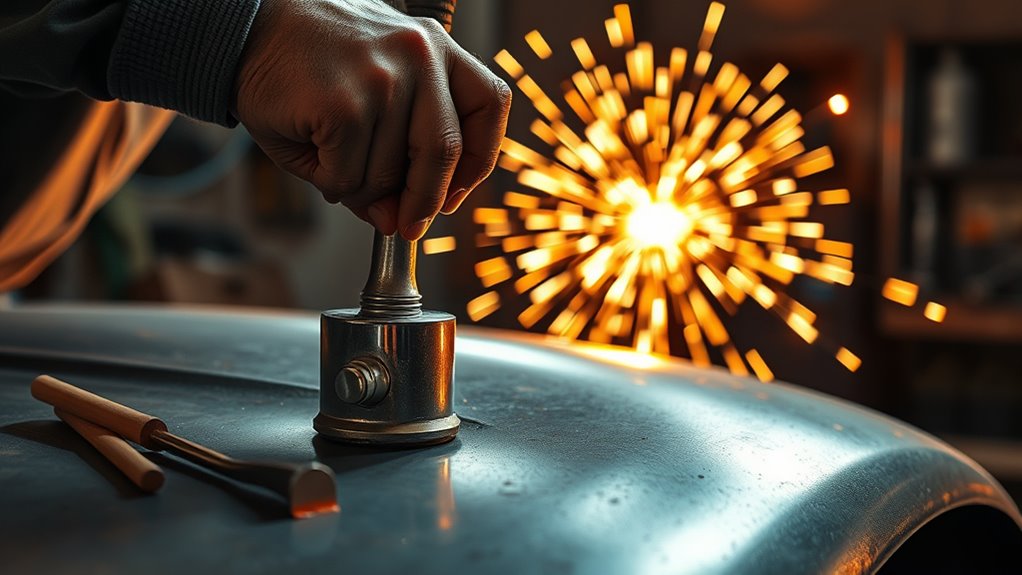
Body hammers and dollies let you correct small waves, high spots, and low spots after welding sheet metal. The goal is not to beat the panel flat. It is to move the metal in small, controlled steps while protecting the weld, the surrounding base metal, and the panel’s original contour.
Quick Answer
Support the welded panel with a dolly that matches its curve, then use light body-hammer taps to correct high and low areas. Start off-dolly for general shape correction and use on-dolly blows sparingly for final planishing. Check the contour often, and never apply heat to a vehicle panel unless the OEM repair procedure allows it.
Key Takeaways
- Identify the panel material and check the vehicle maker’s repair instructions before hammering, heating, or shrinking.
- Use off-dolly blows to correct general highs and lows with less stretching.
- Use on-dolly blows only when you need controlled planishing or to raise a small low spot.
- Keep hammer and dolly faces smooth, clean, and matched to the panel’s contour.
- Stop if the metal cracks, thins, oil-cans, or belongs to a structural area that the OEM says to replace.
At a Glance
| Time Required | About 30–90 minutes for a small cosmetic seam; more for complex distortion |
| Difficulty | Moderate; practice on scrap before working on a visible panel |
| Tools Needed | Body hammer, matching dolly, marker, straightedge or contour gauge, cleaning supplies, eye protection, gloves, and hearing protection |
| Cost | Low if the tools are already on hand; otherwise it varies by tool quality and whether dedicated aluminum tools are required |
What’s in This Article
- Before You Begin
- Why Body Hammers and Dollies Matter After Welding
- Types of Body Hammers
- Choosing the Right Dolly
- On-Dolly vs. Off-Dolly Technique
- How to Hammer a Weld Seam
- Metal Shaping and Smoothing Techniques
- Metal Shrinking After Welding
- Steel, Aluminum, and Coated-Metal Rules
- How to Control Distortion When Welding
- Troubleshooting Panel Shape Problems
- Common Hammer-and-Dolly Mistakes
- Further Learning
- Sources
- Frequently Asked Questions
- Conclusion
Before You Begin
Plan about 30 to 90 minutes for basic hammer-and-dolly work on a small cosmetic weld seam. Large panels, deep dents, oil-canning, limited backside access, or structural damage can take much longer and may require professional measuring and repair equipment.
Gather a clean body hammer, a dolly that closely matches the panel curve, a marker, a straightedge or contour gauge, cleaning supplies, safety glasses, gloves, and hearing protection. A body file or fine abrasive may help reveal high spots, but it should not be used to thin the surrounding sheet metal.
Warning: For a vehicle repair, identify the panel material and read the model-specific body repair procedure before using heat or attempting structural straightening. Some high-strength and ultra-high-strength steels must not be heated or straightened, and the required repair may be complete part replacement.
If more welding, grinding, or heating may be needed, protect nearby glass, trim, wiring, fuel-system parts, batteries, restraint components, and flammable materials according to the applicable repair procedure. Use ventilation and the required welding PPE. Welding and hot work can expose you to fumes, ultraviolet radiation, burns, flying particles, electrical hazards, and fire.
Inspect the Weld and Panel First
Hammering cannot correct a weld with cracks, missed fusion, severe porosity, burn-through, or a gap that was filled with excessive weld metal. Repair the weld defect first using the correct procedure. Then look at the whole panel under low-angle light and mark:
- High spots that catch the light first or rock a straightedge.
- Low spots that remain below the surrounding contour.
- A tight weld seam that has pulled the panel inward as the weld cooled.
- Stretched areas that pop in and out or feel loose, often called oil-canning.
- Thin or cracked metal that should not receive more hammering.
Also inspect both tool faces. Remove rust, burrs, weld spatter, and sharp edges. A damaged hammer or dolly transfers those defects directly into the panel.
Why Body Hammers and Dollies Matter After Welding
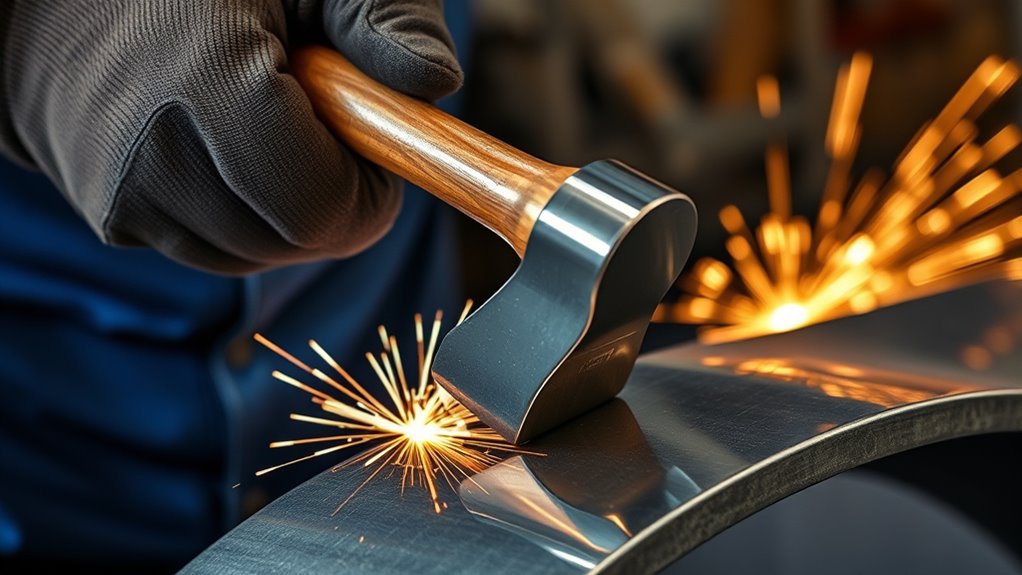
Weld metal and nearby base metal expand while hot and contract as they cool. That uneven expansion and contraction can pull a seam, change the panel crown, or leave a ridge beside the weld. A body hammer supplies controlled force from one side while the dolly supports or redirects that force from the other.
The dolly is more than a backup weight. Its location determines how the metal moves. When it sits directly under the hammer blow, the metal is squeezed between the two faces. When it sits beside the hammer blow, the tool pair works more like a controlled lever to lower a high spot and lift a nearby low spot.
The best hammer-and-dolly repair uses the fewest light blows needed to restore the contour without thinning or stretching the panel.
Good technique can reduce grinding and filler, but it does not make every panel repairable. Material type, damage depth, prior repairs, access, panel thickness, and OEM limits still control whether the part can be straightened safely.
Types of Body Hammers
Body hammers differ in face shape, crown, weight, and opposite-end design. Choose the lightest tool that gives firm control and a face that fits the area you are correcting.
Products Worth Considering

This Body Hammer Set uses high quality fiberglass shaft, covering all body repair and panel beating requirements. High quality fiberglass shaft panel percussion hammer. Long lasting quality.

【Package】Hiceeden auto body repair kit is a must-have for any car enthusiast! Our auto body repair kit including 11.6 inches standard bumping hammer, pick & finish hammer, reverse curve hammer, and curved dolly, utility dolly, double end hand dolly, shrink dolly. Come with a portable plastic case.

COMPREHENSIVE KIT - Includes bumping, pick, and reverse curve hammers plus four specialized dollies, providing professional-grade tools for both major collision repair and precision dent removal on vehicles
Common Hammer Shapes
- Bumping hammer: A general-purpose hammer for raising low spots and correcting broad dents. Its faces may have different crowns.
- Planishing or finishing hammer: Uses a smooth, polished face for light final smoothing over a matching dolly.
- Pick hammer: Uses a narrow point to raise a small, clearly located low spot. The pick can puncture or stretch thin metal if used hard.
- Chisel or cross-peen hammer: Helps work narrow body lines, flanges, and tight channels when the face matches the feature.
- Slapper or spoon: Spreads force over a wider area than a small hammer face and can help smooth broad, shallow distortion.
- Serrated shrinking hammer: Textures the surface and may help control a small stretched area in experienced hands, but it is not a substitute for identifying why the panel is loose. Overuse can leave deep marks and make finishing harder.
Hammer Face Material and Condition
Polished steel faces are common for steel panels. Plastic, rubber, wood, or composite-faced tools may be useful when you want a softer blow or need to protect a surface. The correct choice depends on the panel material, coating, access, and repair stage.
Do not select a hammer only because it is heavy. Thin sheet metal usually responds better to accurate, light blows. A heavier hammer can be useful when its mass lets you tap rather than swing, but poor control can stretch the panel quickly.
For aluminum repairs, use tools and abrasives dedicated to aluminum or cleaned exactly as the OEM and product procedure requires. Steel contamination can contribute to galvanic corrosion and later finish failure.
When Specialty Hammers Help
Use a specialty hammer only when its shape matches a specific feature. A pick can lift a pinpoint low; a cross-peen can work a narrow crease; a slapper can spread force across a broad area. Switching to a more aggressive tool should not replace careful panel reading.
Pro Tip: Put a light marker coat on the panel and glide a clean sanding block or body file over it with almost no pressure. The first contact points reveal highs, while untouched areas show lows. Use the marks for diagnosis, not for removing large amounts of metal.
Choosing the Right Dolly
Choose a dolly whose working face follows the panel’s contour. A dolly that is flatter than the panel can flatten the crown. A dolly with too much crown can create a new high spot.
- Low-crown dolly: Supports flatter door skins, quarter panels, and broad shallow areas.
- Medium- or high-crown dolly: Fits panels with a stronger curve.
- Egg dolly: Offers several changing curves for general shaping.
- Heel dolly: Reaches flanges, edges, and tighter spaces; its heel and toe provide different contours.
- Toe dolly: Uses a narrow end for channels, body lines, and restricted access.
- Flat-faced dolly: Supports straight flanges and nearly flat seams.
Hold the dolly firmly enough to support the metal, but do not force it into the panel so hard that you create a bulge. Move it as the repair area changes. One dolly position rarely fits an entire curved seam.
Products Worth Considering

7 Piece Auto Repair Kit: Each pack comes with a standard bumping hammer, pick & finish hammer, reverse curve hammer, curved dolly, utility dolly, double end hand dolly, and shrink dolly to provide the perfect fit both large and small body car dent repairs.

7 Piece Auto Repair Kit: Each pack comes with a standard bumping hammer, pick & finish hammer, reverse curve hammer, curved dolly, utility dolly, double end hand dolly, and shrink dolly to provide the perfect fit both large and small body car dent repairs.

Auto Body Repair Kits contain all the tools necessary for automobile fender, bumper, and large or small body car dent repairs.
On-Dolly vs. Off-Dolly Technique
Off-Dolly Hammering
With off-dolly work, the dolly supports a low area while the hammer taps a nearby high area. The blow lowers the high and the dolly helps lift the low. Because the hammer and dolly are not directly opposing each other, this method usually moves shape with less direct squeezing and less risk of stretching.
Use off-dolly blows first when a welded seam has a ridge beside a trough, when the panel crown has shifted, or when you are roughing the panel back toward its original contour.
On-Dolly Hammering
With on-dolly work, the dolly sits directly behind the point being struck. The metal is compressed between the hammer and dolly. This can raise a small low spot and planish minor surface irregularities, but repeated blows also stretch and thin the metal.
Use on-dolly blows lightly and mainly for final smoothing after the general shape is close. A sharper ringing sound often indicates direct hammer-to-dolly alignment, but sound varies with panel shape, access, tool mass, and coatings, so use visual and tactile checks as well.
Note: Off-dolly work corrects shape; on-dolly work refines it. Staying on-dolly too long is a common cause of stretched, oil-canning sheet metal.
How to Hammer a Weld Seam
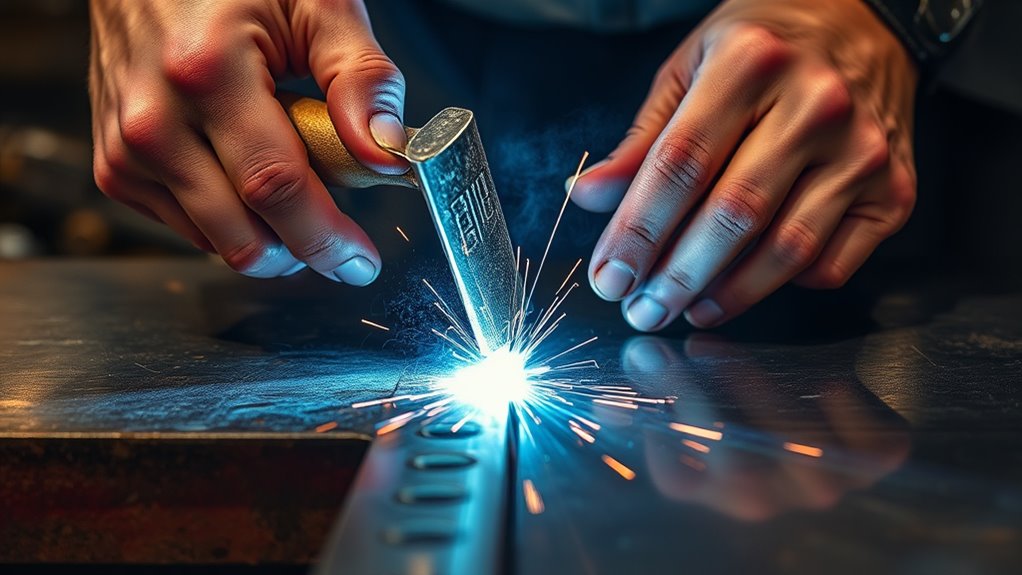
Work slowly and treat the weld seam, the heat-affected area, and the surrounding panel as one shape. Hard strikes can stretch thin metal, crack a brittle area, or hide a weld defect under a smoother surface.
- Confirm the repair is allowed. Identify steel, high-strength steel, ultra-high-strength steel, or aluminum, and check the applicable repair procedure before straightening or heating.
- Make the area safe. Let the panel reach a safe handling temperature. Remove loose scale and sharp spatter, protect nearby components, and wear eye, hand, and hearing protection.
- Verify weld quality. Do not hammer over cracks, incomplete fusion, burn-through, or severe porosity. Correct the weld defect first.
- Read the panel. Use reflected light, a straightedge, a contour gauge, and your gloved hand to map highs, lows, and the direction of pull.
- Dress only proud weld metal when necessary. Use a file or suitable abrasive with control. Stop as soon as the bead is near the panel surface; do not grind the surrounding sheet thin.
- Match and position the dolly. Start with the dolly under a nearby low area and the hammer over the related high area.
- Use light off-dolly taps. Correct the broad shape first. Work a short area that you can monitor rather than following an automatic inch measurement.
- Planish sparingly on-dolly. Once the contour is close, place the dolly directly behind small lows and use very light finishing taps.
- Recheck after every few taps. Move the dolly, change the hammer angle, or stop when the panel reaches the intended contour.
- Inspect the final metal condition. Look for cracks, thinning, pinholes, oil-canning, tool marks, and remaining weld defects before applying corrosion protection or refinishing products.
Pro Tip: Keep your wrist loose and let the hammer rebound. A controlled tap that lands squarely moves metal more predictably than a hard swing that glances across the panel.
Metal Shaping and Smoothing Techniques With Dollies
Metal shaping becomes easier when you separate rough correction from final finishing. First restore the panel’s broad crown with off-dolly work. Then use limited on-dolly planishing to smooth small surface changes.
Match the Dolly to the Contour
Test several dolly faces against an undamaged area of the same panel when access allows. The best face touches over a useful area without rocking on one point. Keep changing the contact face as the curve changes around a wheel opening, body line, or flange.
Control the Blow
- Hold the hammer near the end of the handle for a light, relaxed swing.
- Strike squarely so the face does not drag and leave a crescent mark.
- Overlap light taps instead of concentrating many blows in one spot.
- Work from the outer edge of a broad distortion toward the most damaged area when that follows the reverse order of the damage.
- Check the opposite side of the panel often; a surface that looks flat from one angle may still have a crown error.
- Stop before perfection becomes overworking. A shallow low is easier to finish than stretched, thinned metal.
Panel movement should become smaller as the shape improves. If each correction creates a new high somewhere else, reassess the dolly position and the panel’s overall crown instead of hitting harder.
Metal Shrinking After Welding
Shrinking is for metal that has actually stretched, not every low spot or warped weld. A stretched area may feel loose, pop between two positions, or return after ordinary off-dolly correction. Misdiagnosing a simple low as stretched metal can make the panel worse.
Warning: Do not use a torch, induction heater, heat gun, quenching water, or any other heat-shrinking method on a vehicle panel until the OEM procedure confirms that the specific part and material may be heated and gives the permitted method and temperature limits.
When heat is not permitted, use approved cold-straightening methods or replace the part as required. When heat is permitted, use a temperature-monitoring method suitable for the material and follow the stated limit. Avoid open-flame heating near adhesives, seam sealers, cavity wax, wiring, fuel-system parts, glass, trim, or coatings.
For general fabricated mild-steel sheet that is not part of a vehicle safety structure, an experienced metalworker may use localized heat shrinking. The work still requires fire control, ventilation, temperature control, and practice on matching scrap. Rapid cooling is not a universal requirement and can change hardness, stress, or panel shape; follow the material and repair procedure instead of automatically using a wet rag.
Cold Correction Options
Before adding heat, verify that the panel is truly stretched and try the least aggressive approved method:
- Use off-dolly taps to lower adjacent highs and restore the intended crown.
- Use a slapper over a broad support to spread force.
- Use a shrinking disc or other cold-correction system only when the tool maker and OEM procedure allow it and you understand the heat it still generates through friction.
- Use a serrated shrinking hammer sparingly; deep texture creates extra finishing work and does not guarantee a true shrink.
Steel, Aluminum, and Coated-Metal Rules
Mild-Steel Cosmetic Panels
Minor cold straightening is often possible on repairable mild-steel outer panels. Even then, the panel location, number of layers, prior repairs, and OEM limits matter. Structural members, reinforcements, and crush-zone parts require model-specific repair information.
High-Strength and Ultra-High-Strength Steel
Do not assume a steel-looking panel can be heated or straightened. Modern vehicle bodies mix steels with different strengths, and heat can permanently reduce the properties of some grades. Some OEMs prohibit heat on all body straightening; others permit limited heat only on listed materials under strict limits. Replacement may be the only approved repair.
Aluminum Panels
Aluminum moves and conducts heat differently from steel. Use dedicated or correctly cleaned hammers, dollies, abrasives, and work areas to prevent steel contamination. Follow the OEM temperature limit and monitor the panel continuously if heat is permitted. Nearby structural adhesive may be damaged at temperatures lower than those that visibly harm the aluminum.
Galvanized, Painted, and Coated Metal
Heating or welding zinc-coated, painted, plated, or contaminated metal can release hazardous fumes. Remove coatings only as required by the repair and product procedure, use suitable ventilation or fume extraction, and restore the specified corrosion protection after metalwork. Do not rely on odor or visible smoke to judge exposure.
How to Control Distortion When Welding
The easiest distortion to fix is the distortion you prevent. Weld shrinkage comes from uneven heating and cooling, so reduce unnecessary heat input and keep the joint aligned from the start.
- Improve fit-up. A tight, even joint needs less filler metal and less heat than a wide, irregular gap.
- Use enough tacks. Tack the panel in the sequence required for the job, verify alignment, and add tacks before connecting them.
- Use short welds or spaced tacks. Move around the seam so one area does not absorb all the heat.
- Allow controlled cooling. Do not keep welding into an overheated panel. Use natural cooling unless the applicable procedure permits another method.
- Clamp without forcing the panel. Excessive clamp pressure can preload the panel and release distortion later.
- Use the specified weld size and process. Oversized welds add heat and grinding; undersized or incorrect welds can be unsafe.
- Check the panel throughout the weld. Correct a developing crown or alignment problem before it spreads across the full seam.
After welding, remove clamps in a controlled sequence and inspect the entire panel. Do not automatically hammer the seam while it is hot. For vehicle work, the OEM procedure controls whether warm planishing, cold straightening, or no straightening is allowed.
Troubleshooting Panel Shape Problems
The Weld Seam Is Low
Check for high ridges on one or both sides of the seam. Support the low area with the dolly and tap the related high area off-dolly. Move gradually along the seam. Use on-dolly taps only after the broad contour is nearly correct.
The Panel Has a High Ridge
Place the dolly under the nearby low and tap the ridge with a broad, smooth hammer face or slapper. Do not place the dolly directly under the ridge unless you intend to stretch and planish that exact point.
The Panel Oil-Cans
Oil-canning usually means the panel has lost its stable crown or has stretched. Stop on-dolly hammering. Confirm the surrounding shape, locate the stretched zone, and use only an approved shrinking or replacement method. Continuing to chase the center with direct blows usually makes the loose area larger.
Hammer Marks Appear
Inspect the hammer face for burrs and verify that the face crown fits the panel. Reduce force, square the blow, and use a broader face. Deep marks may indicate that the metal is too thin or overworked to continue safely.
Cracks or Pinholes Appear
Stop hammering. The weld may be brittle, contaminated, too thin, or incompletely fused. Grind only enough to inspect the defect, then repair it with the correct welding procedure. Do not hide a crack with filler.
Dolly Access Is Poor
Do not use a badly matched dolly at an angle just because it fits through the opening. Use an approved spoon, toe dolly, access method, pull system, or replacement procedure. Poor backing contact creates new dents and gives little control.
Avoid These Common Mistakes With Hammers and Dollies
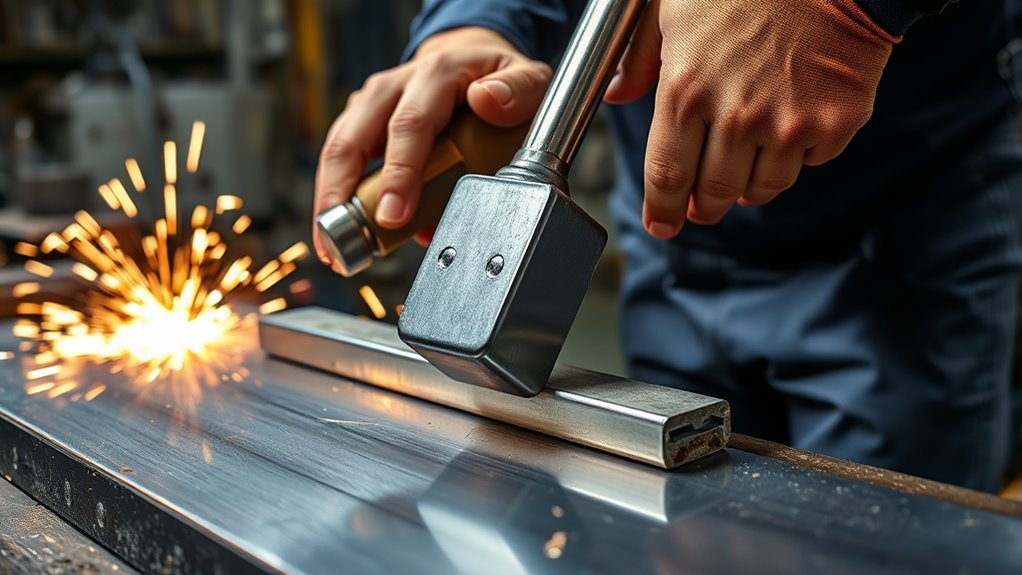
Small mistakes can leave marks, stretch metal, or turn a correctable seam into an unstable panel. Avoid these problems:
- Starting work without identifying the material or checking OEM repairability.
- Using heat because the panel is difficult to move rather than because the procedure permits it.
- Using a dolly that does not match the panel contour.
- Hammering on-dolly for the entire repair and stretching the metal.
- Hitting hard instead of changing the dolly position or tool shape.
- Holding the dolly loosely so it bounces and marks the backside.
- Using sharp-edged, rusty, or damaged tool faces.
- Grinding the weld and surrounding base metal too thin.
- Hammering over cracks, porosity, burn-through, or incomplete fusion.
- Using steel-contaminated tools or abrasives on aluminum.
- Skipping eye, hand, hearing, ventilation, and fire protection.
- Practicing a new method for the first time on a finished vehicle panel.
When the panel stops improving after a few controlled corrections, the answer is usually better diagnosis—not a bigger hammer.
Resources for Further Learning in Metalworking Techniques
Hands-on training is the fastest way to learn hammer angle, dolly placement, and panel reading. Practice on clean scrap that matches the thickness and material you plan to repair. Create a shallow low, weld a short seam, and compare off-dolly and on-dolly results under low-angle light.
For vehicle work, use the current body repair manual for the exact make, model, model year, and VIN configuration. Training from I-CAR, OEM collision-repair programs, welding-equipment manufacturers, and recognized trade schools can help you learn safe metal straightening and distortion control.
Books and demonstrations can support practice, but they should not override a vehicle maker’s repair restrictions. Tool-supplier videos are most useful when they identify the material, panel type, heat limit, and intended repair stage rather than presenting one method as universal.
Sources
- OSHA — Welding, Cutting, and Brazing: Hazards and Solutions — welding fumes, radiation, burns, cuts, electrical hazards, and PPE.
- Lincoln Electric — Weld Distortion — why welds distort and methods for limiting heat-related movement.
- I-CAR — Back-To-Basics: Cold Straightening — hammer-and-dolly work as a cold-straightening method and the need to follow OEM repairability rules.
- I-CAR — Straightening and Heat — material identification, OEM heat restrictions, and structural-safety concerns.
- I-CAR — Aluminum Heat Shrinking — aluminum temperature control, adhesive concerns, and OEM limits.
- 3M — Aluminum Repair Procedures — dedicated aluminum tools, contamination control, and caution near bonded joints.
Frequently Asked Questions
What hammer is used after welding sheet metal?
A smooth body hammer is used with a dolly to correct small highs, lows, and seam distortion. A bumping hammer handles general shaping, while a finishing hammer or slapper can help with final smoothing. The face must be clean, undamaged, and suited to the panel curve.
What is the hammer-and-dolly method for vehicle-body repair?
The method uses a body hammer on one side of the panel and a shaped dolly on the other. Off-dolly blows correct general highs and lows, while limited on-dolly blows raise or planish small areas. Vehicle repairs must follow the OEM procedure for material, straightening, and heat limits.
What is the difference between on-dolly and off-dolly hammering?
On-dolly means the dolly is directly behind the hammer blow, which squeezes and can stretch the metal while raising or planishing a low spot. Off-dolly means the dolly supports a nearby low while the hammer taps a high, allowing broader shape correction with less direct stretching.
How do you shrink metal with a hammer and dolly?
First confirm that the metal is truly stretched rather than simply low. Use approved off-dolly correction before considering heat. On a vehicle, apply heat or use a shrinking process only when the OEM permits it for that exact panel and provides method and temperature limits. Otherwise use an approved cold method or replace the part.
What is a heel dolly used for?
A heel dolly supports curved panels, edges, and flanges. Its heel, toe, and side surfaces provide different contours, making it useful where a broad flat dolly will not fit or match the panel shape.
Can you use a regular hammer instead of a body hammer?
A general claw or ball-peen hammer usually has the wrong face shape and balance for thin exterior sheet metal. It can leave sharp marks or stretch the panel. A clean body hammer gives better face contact and control.
Should you hammer a weld while it is still hot?
Do not treat hot planishing as a universal rule. Let the panel reach a safe handling condition, and follow the material-specific procedure. Some fabrication methods use controlled warm planishing, but vehicle makers may restrict straightening or heat on high-strength steel, aluminum, bonded panels, and structural parts.
When should a welded panel be replaced instead of hammered?
Replace or professionally evaluate the panel when the OEM prohibits straightening, the part is structural or ultra-high-strength steel, the metal is kinked, cracked, severely thinned, repeatedly repaired, badly oil-canned, or inaccessible for a controlled repair. Weld defects and corrosion may also make replacement the safer option.
Safety Disclaimer: This article is for informational purposes only and does not replace professional welding, collision-repair, metalworking, or safety training. Follow current tool instructions and the vehicle maker’s body repair manual. Repairs involving structural parts, high-strength steel, aluminum, restraint systems, fuel systems, high-voltage components, or occupant safety should be handled by a qualified repair professional.
Conclusion
Body hammers and dollies can restore a welded panel when the metal is repairable and the tools are used with restraint. Read the panel first, correct the broad shape off-dolly, and reserve on-dolly planishing for small final adjustments. Keep every blow light, check the contour often, and stop before the metal stretches or thins. On vehicle repairs, material identification and the OEM procedure always come before heat, shrinking, or structural straightening.