How to Become a Welder in California
What’s in This Article
- Why Choose Welding as a Career in California?
- Before You Begin Your Welding Career Path
- Step-by-Step Guide to Becoming a Welder in California
- Choosing the Right Equipment and Materials
- Safety Considerations Every Welder Must Know
- Navigating California’s Welding Certifications and Licenses
- Job Opportunities and Career Growth
- Frequently Asked Questions
- Final Thoughts: Your Next Step as a California Welder
Starting a welding career in California can feel confusing when you see all the training paths, test codes, and job options. You may wonder if you should begin with stick welding, practice MIG in a shop, or push yourself into TIG for thinner metals. This guide shows you the clear path, from basic education and training to certification, safety, and your first welding job.
Good welders do more than lay down clean beads. You need to understand joint prep, weld strength, machine settings, and safe work habits. Once you know the steps, you can build real skills and move toward better welding work in California.
Quick Answer
To become a welder in California, you usually need a high school diploma or GED, hands-on welding training, and a performance-based certification for the work you want. Many welders start with a community college, trade school, or apprenticeship. After that, you can build experience in construction, manufacturing, shipyards, aerospace, or pipe welding.
Key Takeaways
- Start with a diploma or GED because many schools and apprenticeships require it.
- Choose a welding program that gives you real lab time with common welding processes.
- Practice stick, MIG, flux-cored, and TIG welding so you can match the process to the job.
- Earn the right certification before you apply for higher-skill commercial welding jobs.
- Take safety seriously because welding exposes you to heat, fumes, light, fire, and electric shock.
Image by research
Why Choose Welding as a Career in California?
Welding can give you a practical career with visible results. You join metal, repair equipment, build structures, and support industries that need skilled hands. California has work in construction, manufacturing, agriculture, ship repair, aerospace, and fabrication shops.
The Bureau of Labor Statistics reports tens of thousands of yearly openings for welders, cutters, solderers, and brazers nationwide. California employers also need welders for infrastructure, industrial repair, vehicle work, and metal fabrication. Exact openings and pay vary by location, skill level, and industry.
Welding also gives you room to grow. You can work in a local shop, join a union apprenticeship, travel for industrial work, or specialize in pipe, aerospace, structural, or artistic welding.
The trade takes practice and discipline. A welder who ignores technique or protective gear can face burns, eye injury, fume exposure, fire hazards, or electric shock. With the right training path, you can turn those risks into controlled shop habits.
Before You Begin Your Welding Career Path
Estimated time depends on your route. A short certificate may take several months, while an associate degree can take about two years. A paid apprenticeship may run longer because it combines classroom lessons with jobsite hours.
You should be ready for shop math, blueprint reading, physical work, and strict safety rules. You also need patience because clean welds come from repetition, not luck.
Before you apply, gather these basics:
- A high school diploma, GED, or a plan to earn one
- Basic math and measuring skills
- Reliable transportation to school, a shop, or a jobsite
- Protective clothing that can handle sparks and heat
- A willingness to practice weld positions until your beads stay consistent
Step-by-Step Guide to Becoming a Welder in California
Follow these steps to move from beginner to job-ready welder. Each step builds a stronger base for training, testing, and real shop work.
Products Worth Considering

True Color Clear View: A 3.64" x 1.67" viewing area with 1/1/1/1 optical clarity delivers a true color view for improved visibility and reduced eye strain.

LARGE VIEW WITH TRUE COLOR CLARITY: See more of the weld puddle, joint edges, and work position through a wide 3.93" x 3.66" viewing area. The 1/1/1/1 true-color optical clarity provides a clearer, more natural view than traditional green-tinted lenses, helping support better visibility for detailed welding, fabrication, and garage projects.
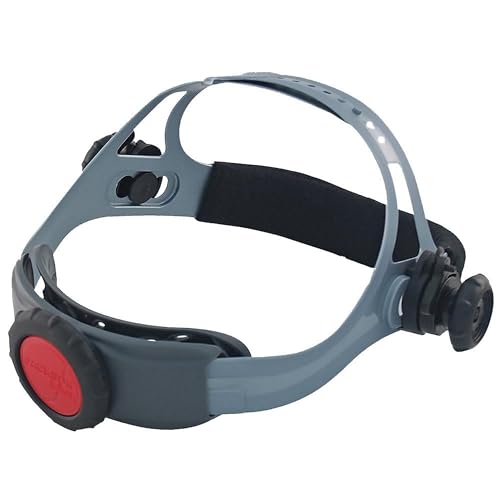
REPLACEMENT WELDING HELMET HEADGEAR - Jackson Safety's Premium 370 Speed Dial Replacement Headgear offers a perfect fit and secure hold for your welding hood
1. Get a High School Diploma or GED
Earn a high school diploma or GED before you apply to most welding programs or apprenticeships. Schools and employers often want proof that you can handle technical training, shop rules, and basic coursework.
If you don’t have one, start with a local adult education center. Many programs offer evening classes, so you can study while you work. This step also helps you prepare for blueprint reading, layout work, and measurement tasks.
Without a diploma, you may still find entry-level labor work. But you may face limits when you apply for better training, union programs, or certification-focused courses.
2. Enroll in a Welding Training Program
Choose a welding school that gives you hands-on practice, not just classroom lessons. California offers community college programs, private trade schools, and career technical education programs. Most programs cover shop safety, blueprint reading, weld symbols, cutting, joint prep, and welding processes.
Common training options include:
- Universal Technical Institute (UTI): Some campuses offer Welding Technology training with common processes such as Shielded Metal Arc Welding (SMAW), Gas Metal Arc Welding (GMAW), Flux-Cored Arc Welding (FCAW), and Gas Tungsten Arc Welding (GTAW).
- Butte College: The Welding Technology program in Chico offers hands-on training and can help students prepare for industry certification work.
- El Camino College: The Torrance-based program offers certificates and degrees with practical training in welding, layout, and related shop skills.
Pro tip: Ask each school how many lab hours you get and which certifications the program helps you prepare for.
Do not pick a program only because it costs less. Check the equipment, lab access, instructor background, employer connections, and certification preparation. A weak program can leave you with outdated habits and fewer job options.
3. Learn Key Welding Processes
Learn more than one process because each job uses different metals, positions, and conditions. A strong beginner should understand the major processes and know when each one fits.
Shielded Metal Arc Welding (SMAW), also called stick welding: You use a flux-coated electrode to create an arc and deposit filler metal. Stick welding works well outdoors and on structural steel. Many beginners start with mild steel plates and common rods such as E6010 or E7018.
Gas Metal Arc Welding (GMAW), also called MIG welding: You use a wire feeder and shielding gas to make fast welds. MIG welding works well in fabrication, automotive repair, and manufacturing. Keep the metal clean and protect the shielding gas from drafts.
Flux-Cored Arc Welding (FCAW): You use a tubular wire with flux inside it. FCAW can work well on thicker material and outdoor jobs when you choose the right wire. Always confirm polarity and wire type before you weld.
Gas Tungsten Arc Welding (GTAW), also called TIG welding: You use a tungsten electrode and often add filler rod by hand. TIG gives you precise control on stainless steel, aluminum, and thin material. It takes more hand coordination than MIG or stick welding.
Clean joint prep matters with every process. Remove rust, paint, oil, and moisture before you weld. A dirty joint can lead to porosity, cracking, and weak fusion.
4. Earn a Welding Certification
Earn a certification that matches the work you want to do. Many California welding jobs look for performance-based qualifications through the American Welding Society (AWS), employer testing, or project-specific codes. A test may require a plate weld, pipe weld, or specific position such as 3G or 6G.
Use this preparation path:
- Choose a program that prepares you for AWS-style performance tests.
- Practice the exact weld joint, position, material, and process you expect on the test.
- Study the code or procedure your test uses, such as AWS D1.1 for structural steel work.
- Ask instructors or experienced welders to inspect your practice coupons before test day.
Certifications matter because they show employers that you can weld to a required standard. They do not replace job experience, but they can help you qualify for better roles. Some jobs may require extra testing for piping, sheet metal, structural steel, or pressure-related work.
Do not schedule a test before you can pass the position in practice. Vertical, overhead, and pipe welds expose weak travel speed, poor fit-up, and bad heat control.
5. Consider an Apprenticeship
Apply for an apprenticeship if you want paid training and jobsite experience. In California, unions, contractors, trade associations, and public workforce programs may offer welding-related apprenticeships. These programs often combine classroom instruction with supervised field work.
Use these ways to find opportunities:
- Contact local unions and ask about welding-related apprenticeship openings.
- Check California apprenticeship and workforce training resources.
- Visit community college career centers and welding department job boards.
- Attend trade events, employer days, and American Welding Society chapter meetings.
Keep notes during training. Record machine settings, material thickness, rod or wire type, gas flow, and position. Those notes help you repeat good results later.
6. Build Experience and Specialize
Look for entry-level work after you finish basic training or earn your first certification. Early jobs may include tack welding, grinding, fit-up, cutting, simple fillet welds, and shop cleanup. Treat those tasks as training because they build habits employers trust.
As you gain experience, consider one of these paths:
- Pipe Welding: Build skill in pipe positions for refineries, utilities, power plants, and industrial work.
- Aerospace Welding: Use precise TIG skills on metals used in aircraft and high-spec parts.
- Underwater Welding: Combine commercial diving with welding and cutting for marine work.
- Artistic Welding: Create gates, furniture, sculptures, signs, and custom metal projects.
Comparison Table: Welding Specializations
| Specialization | Key Process | Typical Pay Range | Best For |
|---|---|---|---|
| Pipe Welding | GTAW, SMAW | Often higher with experience | Travelers and industrial workers |
| Aerospace Welding | GTAW | Often higher for precision work | Detail-focused welders |
| Underwater Welding | SMAW, FCAW | Can vary widely by risk and project | Commercial divers |
| Artistic Welding | TIG, MIG | Depends on clients and projects | Creative fabricators |
Ask for feedback often. Good welders learn from bend tests, visual inspection, x-ray results, and supervisor comments. Small technique fixes can improve your weld quality fast.
Choosing the Right Equipment and Materials
Your tools and materials can affect weld quality, comfort, and safety. As a beginner, you do not need the most expensive machine. You need reliable gear that matches the process you plan to practice.
Welders: A basic MIG welder can help you start with shop and automotive practice. A multi-process machine can handle MIG, TIG, and stick work, but check its limits before you buy. Match the machine to your power supply, material thickness, and training goals.
Electrodes and filler metals: Match filler metal to the base metal and welding process. Common examples include E7018 for mild steel stick welding, 308L filler for many stainless jobs, and ER70S-6 wire for many carbon steel MIG projects. Store low-hydrogen rods in dry conditions to reduce moisture problems.
Safety gear: Use an auto-darkening helmet with the correct shade range, flame-resistant clothing, leather gloves, safety glasses, hearing protection, and sturdy boots. Do not rely on sunglasses or thin work gloves for welding.
Machine settings example:
For 1/4-inch mild steel with Shielded Metal Arc Welding (SMAW) and E7018, use the machine chart or instructor guidance first. A common practice range may include:
- Amperage: About 100 to 140 amps
- Polarity: Direct current electrode positive (DCEP)
- Arc length: Keep it close to the electrode diameter
- Travel speed: Move slow enough to fill the joint without piling up metal
Do not skimp on safety gear. Cheap or damaged gear can cause injuries that interrupt your training and affect your long-term health.
Products Worth Considering

【FASTER AUTO-DARKENING】Features high-end auto-darkening lenses with 4 premium arc sensors, switching from light to dark in 1/25000 sec. Easily adjust the shade and sensitivity of the lenses for different working environments, perfect for TIG/MIG/ARC welding. Dark state level: 4/9-13.

WITH LED WELDING LIGHT: This welding helmet comes equipped with a USB-powered LED light on top, offering two brightness levels. You can weld easily, even in dark environments, without worrying about not being able to see the details of the weld. It is ideal for assisting with welding in various scenarios. NOTE: Welding light comes uninstalled; easy to attach.

Advanced Eye Protection with Blue Light Blocking Technology: This welding helmet features cutting-edge Blue Light Blocking outer lens, shielding your eyes from harmful blue light during welding, protects your eyes by filtering out most of harmful high energy blue light rays while letting through the less harmful portion of the blue light spectrum. This ensures long-lasting eye comfort and safety, making it ideal for extended welding sessions
Safety Considerations Every Welder Must Know
Welding rewards skill, but it can hurt you when you ignore safety. Heat, ultraviolet light, fumes, compressed gases, electricity, sparks, and sharp metal all create real risk. Build safe habits from your first day in the shop.
- Ventilation: Weld in a well-ventilated area or use fume extraction when the job needs it.
- Eye protection: Use a welding helmet with the right lens shade, and wear safety glasses underneath.
- Fire safety: Move flammable items away from sparks and keep a fire extinguisher nearby.
- Electrical safety: Inspect cables, avoid wet surfaces, and follow the machine manual.
- Respiratory safety: Take extra care with coatings, galvanized steel, stainless steel, and confined spaces.
Warning: Never weld near oily rags, fuel, solvents, or other flammable materials.
Clear your work area before you strike an arc. A small spark can start a fire if it lands on rags, cardboard, dust, or dry debris. Good housekeeping protects you and everyone else in the shop.
Navigating California’s Welding Certifications and Licenses
California welding requirements depend on the employer, project, city, code, and type of work. Many commercial jobs require proof that you can pass a welding performance test. Some public, structural, pressure, or piping jobs may require more specific qualifications.
You may see these terms during your research:
- AWS Certified Welder: A performance-based credential through the American Welding Society.
- AWS D1.1: A common structural welding code for steel work.
- ASME Section IX: A qualification standard often used for pressure-related welding work.
- Local or employer tests: Extra tests that match a specific job, procedure, or inspection requirement.
Some schools and private welding test centers in California offer prep courses and testing support. Ask each provider which code, process, material, and position the test covers. Also ask whether the credential meets the employer or project requirement you plan to pursue.
Note: A certification only helps when it matches the exact process, position, material, and code your job requires.
Job Opportunities and Career Growth
After you build skill and earn the right qualification, you can look for jobs in several California industries. Your pay will depend on your location, experience, certification, overtime, union status, and specialty.
Common job areas include:
- Construction: Work on bridges, buildings, railings, structural parts, and field repairs.
- Manufacturing: Build machinery, equipment, frames, parts, and production assemblies.
- Aerospace: Weld precision parts in areas with aviation and defense employers.
- Shipyards: Repair and fabricate metal parts for marine work in coastal cities.
- Maintenance: Repair farm, plant, fleet, and industrial equipment.
Build your network while you train. Join welding groups, attend job fairs, talk with instructors, and ask local shops what skills they need. Many welding jobs come through referrals because employers trust proven work habits.
Keep a simple portfolio with photos of practice welds, projects, certificates, and test results. A clean portfolio helps you show progress when you apply for entry-level jobs.
Frequently Asked Questions
What is the best welding process for beginners in California?
MIG welding, also called Gas Metal Arc Welding (GMAW), often gives beginners the easiest start. It uses a wire feeder, simple torch control, and works well for many shop and automotive projects. You should still learn stick and TIG later because many jobs require more than one process.
How long does it take to become a certified welder in California?
Many certificate programs take several months to about one year, while degree programs can take about two years. Apprenticeships can take several years because they include paid jobsite training. Your timeline depends on your schedule, practice time, and the certification you want.
Do I need a license to weld in California?
You may not need a single statewide license for every welding job. But many commercial, structural, piping, or public projects require specific performance qualifications. Always check the employer, city, project, and code requirements before you schedule a test.
How much can I earn as a welder in California?
Welder pay in California varies by area, skill level, industry, and overtime. Entry-level shop work usually pays less than certified pipe, structural, aerospace, or field welding. Check current local wage data and job listings before you choose a training path.
Can I learn welding without a formal program?
You can practice basic welding on your own, but formal training gives you safer habits and better feedback. Schools also give you access to machines, instructors, code practice, and job connections. If you learn at home, still use proper safety gear and study accepted welding standards.
What should I practice before a welding certification test?
Practice the exact process, joint type, position, and material listed for your test. Focus on fit-up, cleaning, arc length, heat control, travel speed, and stopping defects before they form. Ask a qualified instructor or inspector to review your practice welds.
Final Thoughts: Your Next Step as a California Welder
Becoming a welder in California starts with a simple path: build your education, get hands-on training, practice core processes, and earn the right qualification. Your next step should be choosing a training route that matches your budget, schedule, and career goal.
Once you start, focus on safe habits and steady practice. Better welds come from repetition, feedback, and careful setup. Keep learning new processes as your career grows, and you can turn welding into a long-term trade with real options.