Underwater welding can offer challenging work, specialized skills, travel, and strong earning potential, but it is not an easy shortcut to a high-paying welding job. You must first become a capable commercial diver, complete demanding training, pass medical requirements, and work safely in conditions that may include cold water, poor visibility, current, pressure, and heavy equipment.
The career can suit you if you enjoy physical work, stay calm under pressure, accept irregular projects, and follow procedures without taking shortcuts. Before enrolling in a school, you should also understand the cost, employment path, safety risks, and difference between ordinary commercial-diving work and the highly paid saturation jobs often featured online.
Quick Answer
Yes, underwater welding can be a good career for people who are suited to commercial diving, accept travel and irregular project work, and put safety ahead of headline pay. It is not an easy route to six figures: training is costly, entry-level work often begins as a tender, and the physical and operational risks are serious.
Key Takeaways
- An underwater welder is first a trained commercial diver. Welding is one of several skills used on a job.
- New graduates often begin as tenders or entry-level divers rather than immediately performing complex underwater welds.
- Pay varies by location, project type, depth, overtime, travel, union agreement, experience, and time actually spent working.
- Commercial-diver training, equipment, medical exams, travel, and living expenses can make the total education cost much higher than tuition alone.
- The work has serious pressure, electrical, environmental, and diving hazards, so formal training and disciplined teamwork are essential.
At a Glance
| Time Required | School length varies. One major U.S. commercial-diving program lasts seven months, while welding preparation and field progression add more time. |
| Difficulty | Very high. The job combines commercial diving, welding, rigging, communication, physical endurance, and strict safety procedures. |
| Tools Needed | Commercial-diver training, a current dive medical, welding skills, surface-supplied diving equipment, communications, qualified procedures, and a trained dive team. |
| Cost | Varies by school and location. As one current example, Divers Institute of Technology lists $29,000 tuition, $5,850 for equipment and a physical, and an estimated $48,800 total cost of attendance. |

Underwater welding work combines commercial diving, surface support, and a welding procedure approved for the specific repair.
Warning: Underwater welding is not a recreational or do-it-yourself activity. Never attempt it in a pool, lake, river, harbor, or other submerged setting without formal commercial-diver training, qualified supervision, a complete dive team, an approved welding procedure, and the required emergency support.
What Is Underwater Welding?
Underwater welding is a specialized commercial-diving activity used to join or repair submerged metal. Projects may involve ships, ports, bridge components, dams, intake structures, pipelines, offshore facilities, and other marine infrastructure.
The job is broader than running a weld bead underwater. Commercial divers may inspect damage, remove marine growth, prepare joints, rig tools, cut metal, install clamps, take measurements, record video, assist with nondestructive examination, and document the completed work. Welding may be only one part of the assignment.
The American Welding Society’s underwater-welder career profile describes the occupation as a combination of commercial-diving ability and welding skill. A recreational scuba certificate alone does not prepare someone for this work.
Note: “Underwater welder” is a convenient career label, but employers generally hire commercial divers with welding, burning, rigging, inspection, and repair capabilities. Versatility usually matters more than one isolated skill.
How Does Underwater Welding Work?
Underwater welding uses an electric arc to melt and join metal, but the equipment and work practices must be adapted for a submerged environment. The diver normally works as part of a surface-supported team with voice communications, an air or breathing-gas supply, electrical controls, emergency procedures, and topside supervision.
In the United States, OSHA’s commercial-diving welding rules require safeguards that include grounding the welding-machine frame, insulating cables and connections, providing insulated gloves, and using a current-supply interrupt switch controlled by a dive-team member who can communicate with the diver.
The weld area must also be prepared. Rust, coatings, damaged metal, and marine growth can interfere with fit-up and weld quality. The exact joint design, electrode, polarity, electrical parameters, pass sequence, and inspection method must follow the project’s approved welding procedure rather than a generic internet setting.
Wet Welding
During wet welding, the diver and weld area remain directly exposed to the surrounding water. Shielded metal arc welding is commonly associated with this method because the equipment can be configured for submerged work and the diver can use waterproofed electrodes qualified for the procedure.
Wet welding can provide fast access for certain repairs because a large dry enclosure is not required. However, rapid cooling, hydrogen, limited visibility, bubbles, restricted movement, and changing environmental conditions can make consistent weld quality difficult. A project specification may limit where wet welds can be used or require a particular weld class and inspection plan.
Dry or Hyperbaric Welding
Dry welding places a chamber or habitat around the work area and replaces the water with a controlled pressurized atmosphere. Depending on the system and qualified procedure, the welder may use processes that are difficult or unsuitable for open-water wet welding.
A dry environment can improve access to the joint and allow tighter control over weld quality. It also requires more equipment, planning, chamber support, atmosphere control, and emergency preparation. Dry welding is not automatically risk-free; it replaces some open-water difficulties with pressure, atmosphere, fire, gas, and habitat-management hazards.
| Aspect | Wet Welding | Dry or Hyperbaric Welding |
|---|---|---|
| Work environment | The diver and weld remain in the surrounding water. | A pressurized enclosure creates a dry or partly dry work area. |
| Setup | Generally faster and less equipment-intensive for suitable repairs. | Requires a habitat, sealing, atmosphere control, and additional support systems. |
| Quality potential | More affected by rapid cooling, visibility, bubbles, and direct water exposure. | Can provide conditions closer to controlled welding when properly engineered. |
| Typical use | Selected repairs, attachments, temporary work, or projects qualified for wet welding. | High-integrity work where the project justifies the added cost and setup. |
| Main hazard profile | Direct exposure to water, current, entanglement, visibility limits, and electrical hazards. | Pressure, atmosphere, fire, chamber, gas, access, and complex-system hazards. |
| Depth | No universal internet depth limit applies. Feasibility depends on the diving system, procedure, exposure plan, equipment, personnel, and governing project requirements. | |
The current published AWS D3.6M:2017 Underwater Welding Code covers both dry and wet underwater welding. It establishes requirements for qualification, fabrication, inspection, and different weld classes. The contract and engineering specification determine which requirements apply to a particular job.
Common Underwater Welding Techniques
The selected welding process depends on whether the work is wet or dry, the material, joint design, required quality, available equipment, and qualified procedure.
Shielded Metal Arc Welding
Shielded metal arc welding, often called stick welding, is the process most commonly associated with wet underwater repairs. The electrode must be prepared or manufactured for submerged use and approved under the applicable procedure. A familiar topside electrode classification by itself does not prove suitability underwater.
Processes Used in Dry Habitats
Dry hyperbaric systems may support shielded metal arc welding, gas tungsten arc welding, gas metal arc welding, flux-cored arc welding, or another qualified process. The choice depends on the habitat, atmosphere, material, joint, equipment, and required acceptance standard.
Joint Preparation and Inspection
Divers may use mechanical tools, brushes, grinders, scrapers, cutting equipment, measuring tools, and templates to expose sound metal and achieve the required fit-up. Joint bevels and root openings are determined by the approved procedure, not by a universal angle.
After welding, the work may require visual inspection, measurements, photography, video, surface examination, or other nondestructive testing specified by the engineer, client, code, or procedure. A quick visual check by the diver is not always enough.
Pro Tip: When evaluating this career, focus on schools and employers that teach complete repair work, including rigging, inspection, cutting, fitting, documentation, emergency procedures, and equipment maintenance. Welding alone is too narrow a skill set for most commercial-diving jobs.
What Does an Underwater Welder Actually Do?
A typical assignment may involve much more preparation than welding. Depending on the employer and project, a commercial diver may:
- Attend a pre-dive briefing and review the hazard analysis, emergency plan, communications, and assigned tasks.
- Inspect the structure and confirm the damage, dimensions, access, current, visibility, and surrounding hazards.
- Clean marine growth, coatings, corrosion, or debris from the work area.
- Rig tools, clamps, patches, cables, hoses, and replacement components.
- Cut, grind, fit, tack, weld, bolt, or mechanically secure a repair.
- Communicate continuously with the surface team and stop when conditions become unsafe.
- Record measurements, photographs, video, weld information, and inspection results.
- Clean, inspect, and maintain diving and welding equipment after the operation.
Work Settings and Schedule
Jobs may take place in rivers, lakes, ports, shipyards, reservoirs, industrial facilities, coastal waters, or offshore locations. Work can involve travel, early starts, night shifts, weather delays, standby periods, confined access, cold water, or long rotations away from home.
Project schedules are not always steady. A diver may work substantial overtime during an active repair and then have less work between projects. Annual income therefore depends on more than the highest hourly or daily rate advertised for one assignment.
Is Underwater Welding a Good Career for You?
Underwater welding can be rewarding, but the best decision depends on your physical condition, temperament, finances, and preferred lifestyle. Consider both sides before committing to tuition or equipment costs.
| Potential Advantages | Potential Disadvantages |
|---|---|
| Specialized work that combines mechanical, diving, and welding skills | Serious diving, pressure, environmental, and electrical hazards |
| Opportunities to work on important marine and infrastructure projects | Training, equipment, medical, travel, and living costs can be substantial |
| Potential for overtime, travel allowances, hazard premiums, and strong project pay | Income and schedules may be inconsistent between projects |
| Varied work locations and practical problem-solving | Cold, fatigue, poor visibility, current, and heavy equipment make the work physically demanding |
| Skills can transfer to inspection, rigging, supervision, nondestructive testing, and marine construction | Long trips or offshore rotations can reduce time with family and friends |
| Clear advancement for divers who build a broad, documented skill set | The highest-paying saturation roles require additional experience and are not normal entry-level jobs |
You May Be a Good Fit If You:
- Stay calm in dark, cold, noisy, or low-visibility environments.
- Follow checklists and procedures even when a shortcut appears faster.
- Communicate clearly and work well as part of a tightly coordinated team.
- Can maintain the physical fitness and medical eligibility required for commercial diving.
- Accept travel, irregular hours, weather delays, and entry-level support work.
- Enjoy mechanical work, rigging, inspection, troubleshooting, and equipment maintenance as well as welding.
- Can afford training without relying on a guaranteed six-figure income after graduation.
It May Be a Poor Fit If You:
- Want a predictable Monday-to-Friday schedule in one location.
- Dislike confined spaces, cold water, limited visibility, heights, or heavy physical work.
- Prefer working alone rather than following a supervisor and coordinated dive plan.
- Are attracted mainly by viral salary claims or the idea of immediate saturation work.
- Tend to improvise around electrical, pressure, respiratory, or lockout procedures.
A high advertised day rate does not equal steady annual income. Training cost, tender time, travel, weather, project gaps, overtime, and the number of paid working days all affect what you actually earn.
How to Become an Underwater Welder
The safest route is to build welding ability and commercial-diving competence separately, then combine them under qualified instruction. Requirements vary by employer, project, client, and country, but the following pathway is common in the United States.
- Complete your basic education. Many schools and employers expect a high school diploma or GED. Strong reading, math, mechanical, and communication skills help with procedures, measurements, dive tables, and technical reports.
- Learn topside welding fundamentals. Build skill in joint preparation, fit-up, shielded metal arc welding, cutting, defect recognition, and safe equipment use before adding a diving environment.
- Arrange a commercial-diving medical evaluation. Complete the required medical review before committing nonrefundable tuition. Medical eligibility can be affected by conditions involving the lungs, ears, sinuses, heart, nervous system, or other body systems.
- Attend a recognized commercial-diver training program. Training should cover surface-supplied diving, communications, decompression, emergency procedures, rigging, underwater tools, inspection, maintenance, and applicable regulations.
- Receive supervised underwater-welding training. Practice must take place within a formal program or commercial operation using a complete dive team, controlled electrical system, approved procedure, and emergency support.
- Enter the industry at a realistic level. Many new workers begin as tenders or entry-level divers. This period builds equipment knowledge, topside discipline, logged experience, and trust with the dive team.
- Build additional qualifications. Inspection, rigging, burning, nondestructive testing, hydraulics, first aid, supervision, and specialized diving skills can improve your usefulness and advancement prospects.
- Maintain your medical status and qualifications. Follow the renewal, continuity, logbook, and medical requirements of each employer, issuing body, client, and jurisdiction.
Pro Tip: Complete the required dive medical and review the school’s cancellation policy before paying a large deposit. Do not assume that general fitness or recreational scuba experience guarantees commercial-diving medical clearance.
Requirements and Certifications for Underwater Welders
There is no single universal “underwater welder license” that automatically qualifies you for every project. Your employability depends on several separate layers of training, qualification, medical fitness, experience, and employer acceptance.
Commercial-Diver Training
A commercial-diving program should prepare you to work with surface-supplied equipment, communications, tools, rigging, emergency procedures, decompression planning, and dive-team operations. Recreational scuba training is valuable for personal diving but is not a substitute for formal commercial-diver preparation.
In the United States, employers must comply with applicable requirements in OSHA’s Commercial Diving Operations standard. Other countries, clients, ports, government agencies, and offshore projects may apply different or additional requirements.
Welding Qualifications
The AWS Certified Welder program is performance-based. It demonstrates that a welder can produce an acceptable test weld using a specified process, material, position, and procedure. It does not certify the person as a commercial diver.
Underwater work may require additional qualification under AWS D3.6M, a client specification, an employer procedure, or another governing code. Qualification for one process or joint does not automatically cover every material, position, or underwater application.
Medical, Employer, and Project Requirements
You must remain medically fit for commercial diving and satisfy the employer’s requirements for training, experience, logbooks, drug and alcohol policies, site access, safety courses, visas, background screening, and client approval. These requirements differ, so avoid any school that promises one certificate will guarantee worldwide employment.
Warning: IMCA states that it does not issue in-water diver certificates or approve individual commercial-diving schools. Be cautious when a school advertises an “IMCA-approved” in-water course. Confirm exactly who issues the qualification, which national scheme oversees it, and where employers accept it.
How to Evaluate an Underwater-Welding School
Compare more than the promotional photos and advertised starting salary. Ask each school for written answers to the following questions:
- Which organization or national authority recognizes the commercial-diving qualification?
- Which employers, regions, and types of projects commonly accept it?
- Does the curriculum include surface-supplied diving, decompression, rigging, inspection, underwater tools, emergency drills, and equipment maintenance?
- How much actual supervised water time does each student receive?
- Are welding consumables, diving equipment, medical exams, books, testing, housing, transportation, and retests included in tuition?
- What percentage of graduates enter commercial-diving work, and how is that outcome verified?
- Do placement figures count tender jobs, unrelated employment, temporary contracts, and graduates already working in the industry?
- What is the refund policy if you do not pass the dive medical or must leave training?
- What are the instructor-to-student ratio, equipment condition, emergency resources, and incident-reporting procedures?
- Can you speak privately with recent graduates who are currently working in the field?
Products Worth Considering


You and your Friends love Diving, Scuba Dive sessions and underwater sports? Perfect, get your new divers accessories now!

The distinctive fin design sets the standard for power and durability with its sturdy rubber construction and beefy shape.
How Long Does Training Take?
Training length depends on your starting point and the program. Someone who already has strong welding skills may still need a complete commercial-diving course. Someone entering without welding experience may need additional shop training before or after dive school.
As a current example, Divers Institute of Technology describes its commercial-diving program as seven months long. Completing school does not mean you immediately qualify for complex repairs, deep projects, or saturation work. Field progression continues through tender duties, supervised dives, logged experience, and employer-specific evaluations.
How Much Does Underwater-Welding Training Cost?
There is no dependable national price that covers every combination of welding and commercial-diving education. Tuition is only one part of the total cost.
For one current U.S. example, the Divers Institute of Technology cost page lists:
- Tuition: $29,000
- Equipment and physical: $5,850
- Estimated total cost of attendance: $48,800
That figure is a school-specific example, not a nationwide average. Your total may also include prerequisite welding classes, travel, housing, food, insurance, medical testing, equipment replacement, certification fees, retests, interest on loans, and living costs while you are not earning full-time income.
Note: Scholarships, veterans’ benefits, grants, loans, and employer sponsorship may reduce your immediate cost, but financing does not change the underlying employment risk. Compare expected debt payments with conservative entry-level earnings rather than the highest advertised salary.
Underwater Welder Salary: How Much Can You Earn?
Underwater-welding pay is difficult to summarize with one national median. The U.S. Bureau of Labor Statistics tracks commercial divers, not underwater welders as a separate occupation. Some commercial divers weld regularly, while others focus on inspection, construction, salvage, maintenance, or support work.
AWS currently presents broad career estimates of about $40,000 to $60,000 for entry-level underwater welders and approximately $80,000 to $150,000 or more for experienced workers in specialized roles. Treat those figures as general career guidance, not guaranteed annual pay. For a deeper discussion, see this guide to underwater welding salary.
| Pay Factor | How It Can Affect Earnings |
|---|---|
| Experience and logged dives | Experienced divers may qualify for more complex work, supervisory duties, or specialized projects. |
| Actual role | A tender, entry-level diver, welding diver, supervisor, inspector, and saturation diver have different responsibilities and compensation. |
| Project type | Inland maintenance, marine construction, emergency salvage, ship repair, and offshore work have different rates and schedules. |
| Overtime and rotation | Long shifts or concentrated rotations can raise gross pay but also increase fatigue and time away from home. |
| Travel and allowances | Per diem, lodging, transport, and travel pay can materially affect total compensation and personal expenses. |
| Union or employment agreement | Wage scales, benefits, overtime rules, pensions, and health coverage vary by agreement and employer. |
| Weather and project gaps | Standby days, cancellations, seasonal slowdowns, and time between contracts can reduce annual income. |
| Specialized qualifications | Inspection, nondestructive testing, supervision, mixed-gas, saturation, rigging, and technical skills may expand job options. |
What About Six-Figure Saturation-Diving Pay?
Saturation diving is an advanced branch of offshore commercial diving in which divers live under pressure for an extended period. It requires additional training, experience, medical fitness, support infrastructure, and employer selection. It is not the normal first job after commercial-diving school.
Some experienced saturation divers can earn high project income, especially with overtime and specialized assignments. However, the work is limited, competitive, physically demanding, and dependent on project schedules. Do not build a school-financing decision around the assumption that you will move directly into saturation work.
Job Outlook for Underwater Welders
Underwater welding is a niche skill used within marine construction, port maintenance, bridge and dam work, ship repair, offshore energy, industrial-water systems, and emergency salvage. Demand changes with infrastructure spending, inspections, storms, energy activity, shipping, government contracts, and regional construction cycles.
There is no separate BLS employment projection for “underwater welder,” so claims of guaranteed growth should be treated cautiously. The most employable candidates can perform several commercial-diving tasks and are willing to travel where projects exist.
Remotely operated vehicles and automated inspection systems can handle some observations and interventions without exposing a diver. They do not eliminate every commercial-diving job, but they increase the value of broader skills such as inspection, reporting, rigging, hydraulics, nondestructive testing, equipment maintenance, and ROV support.
Where Work May Be Available
In the United States, opportunities may appear around major ports, inland waterways, industrial facilities, shipyards, coastal construction markets, and offshore-support centers. A job search limited to one city can be difficult. Employers may expect workers to travel or report to projects on short notice.
Hurricanes, floods, vessel damage, and infrastructure failures can create urgent repair work, but emergency demand is unpredictable and should not be treated as a stable career plan.
Dangers and Risks Involved in Underwater Welding
Commercial diving is hazardous even before welding equipment is added. OSHA identifies hazards that include drowning, respiratory and circulatory problems, hypothermia, poor visibility, and the strenuous nature of underwater work. Welding adds electrical, thermal, gas, visibility, and metalworking hazards.
Major Hazards
- Drowning or loss of breathing gas: Hose damage, supply failure, equipment problems, entanglement, or loss of control can become life-threatening.
- Decompression illness: Improper ascent or pressure exposure can allow inert gas bubbles to form in the body.
- Arterial gas embolism and barotrauma: Pressure changes can injure the lungs, ears, sinuses, or other tissues.
- Delta-P: A pressure difference across an opening, valve, gate, intake, or damaged structure can pull and hold a diver with overwhelming force.
- Electrical shock: Damaged insulation, improper grounding, poor connections, uncontrolled current, or unsuitable equipment can expose the diver and team to dangerous current paths.
- Hypothermia and heat stress: Water temperature, suit selection, workload, exposure time, and surface conditions can affect body temperature.
- Entanglement and restricted movement: Cables, hoses, lines, debris, structures, and tools can trap or limit a diver.
- Poor visibility and current: Silt, darkness, bubbles, waves, vessel traffic, and moving water make positioning and communication harder.
- Fire or explosion: Gas pockets, enclosed compartments, oxygen enrichment, fuels, coatings, or flammable vapors can create severe hazards.
- Fatigue and musculoskeletal injury: Heavy equipment, awkward positions, cold, pressure, long shifts, and repetitive work can cause errors and physical strain.
Required Electrical Controls
For welding and burning operations covered by OSHA’s U.S. commercial-diving rules, the welding-current supply must have a manually operated interrupt switch. A designated dive-team member who can communicate with the diver must tend that switch, and it remains open except when the diver is welding or burning.
OSHA also requires the welding-machine frame to be grounded, cables and connections to be insulated, and the diver to wear insulated gloves. Closed compartments containing flammable vapors must be vented, flooded, or purged with a suitable gas before hot work begins.
Warning: A welding machine’s output switch is not a substitute for a complete commercial-diving plan. The team must also control breathing gas, communications, water hazards, pressure exposure, lockout or isolation, emergency recovery, fire risk, vessel activity, weather, and diver condition.
Does Underwater Welding Shorten Your Life Expectancy?
No credible occupational dataset establishes a fixed life expectancy for underwater welders. Claims that every underwater welder dies by a particular age are internet myths, not reliable career statistics.
That does not make the occupation safe. Commercial-diving incidents can be fatal, and repeated pressure exposure, injuries, hearing problems, musculoskeletal strain, or other occupational conditions may affect long-term health. Your risk depends on the type of work, employer, equipment, procedures, medical monitoring, exposure history, and willingness to stop unsafe operations.
Essential Equipment for Underwater Welders
Equipment varies by diving mode, water conditions, project, depth, jurisdiction, and employer. A surface-supplied commercial-diving operation may use:
- A commercial-diving helmet or mask with communications
- A surface breathing-gas supply with required backup systems
- An umbilical containing breathing-gas, communication, and strength components
- An exposure suit selected for temperature and contamination conditions
- A harness, bailout supply, weights, and recovery equipment
- Depth, time, pressure, and gas-monitoring equipment
- A welding power source suitable for the procedure
- Fully insulated cables, holders, connectors, and gloves
- Waterproofed electrodes or other consumables qualified for the job
- Rigging, cleaning, cutting, fitting, measuring, lighting, imaging, and inspection tools
- First-aid, oxygen, emergency-recovery, and decompression resources required by the operation
The diver does not personally choose arbitrary amperage, voltage, polarity, electrode, or joint dimensions once underwater. Those details should be established through the approved welding procedure, equipment instructions, engineering requirements, and dive plan.
Products Worth Considering

【FASTER AUTO-DARKENING】Features high-end auto-darkening lenses with 4 premium arc sensors, switching from light to dark in 1/25000 sec. Easily adjust the shade and sensitivity of the lenses for different working environments, perfect for TIG/MIG/ARC welding. Dark state level: 4/9-13.
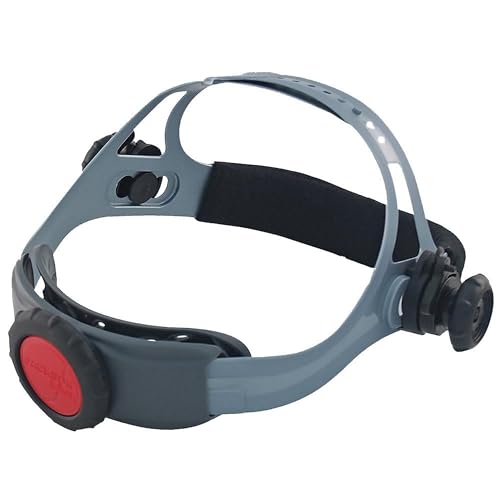
REPLACEMENT WELDING HELMET HEADGEAR - Jackson Safety's Premium 370 Speed Dial Replacement Headgear offers a perfect fit and secure hold for your welding hood

CLEAR VIEWING AREA - Features a 3.86 x 1.62 in viewing area for a clear view of your work. The fixed shade lens requires no manual shade adjustment, making this welding helmet simple and convenient to use
Safety Considerations in Underwater Welding
Safe operations begin before anyone enters the water. The team must identify hazards, confirm diver qualifications and medical status, inspect equipment, establish communications, assign responsibilities, isolate dangerous machinery or water flow, prepare emergency procedures, and review the welding procedure.
During the dive, the supervisor and surface team monitor communications, gas supply, depth, time, current, weather, vessel traffic, electrical status, and the diver’s condition. Any team member should report a hazard immediately, and the operation should stop when conditions move outside the plan.
After the dive, the team records exposure and work details, inspects equipment, reports defects or incidents, reviews the completed repair, and arranges any required weld inspection or nondestructive examination.
Why Fatigue Management Matters
Cold, current, heavy tools, awkward body position, mental workload, pressure exposure, and long shifts can reduce coordination and judgment. Hydration, nutrition, thermal protection, work-rest planning, exposure limits, and honest communication about fatigue are operational controls, not optional comfort measures.
Why Choose Underwater Welding Despite the Risks?
People enter the field because they enjoy practical problem-solving, marine work, travel, mechanical systems, and demanding team environments. Repairing a ship, bridge component, intake, dam, or pipeline can provide a strong sense of purpose because the work supports important infrastructure.
The career can also create paths into dive supervision, inspection, project management, nondestructive testing, safety, equipment maintenance, training, and marine construction. These broader options matter because many divers eventually seek roles with less physical exposure.
The financial potential can be attractive, but it should be treated as one factor rather than the main reason to enter. A person who dislikes commercial diving will not become well suited to it simply because one specialized project offers high pay.
Alternatives to Underwater Welding
If the diving risk, travel, cost, or schedule does not fit your life, several careers use related skills:
- Topside structural or pipe welding: Uses advanced welding skills without commercial-diving exposure.
- Shop fabrication: Offers a more controlled environment and may provide steadier hours.
- Commercial diving without regular welding: May focus on inspection, cleaning, rigging, construction, salvage, photography, or maintenance.
- Nondestructive testing and inspection: Applies defect recognition and documentation skills in marine or land-based work.
- ROV technician or pilot: Supports underwater inspection and intervention through remotely operated systems.
- Marine construction and rigging: Uses practical mechanical, lifting, cutting, and installation skills above or near the water.
- Welding inspection or instruction: Can become an option after building suitable field experience and qualifications.
- Hyperbaric-support work: Includes specialized chamber, life-support, medical, and technical roles with their own training requirements.
Practical Career Tips
- Get the medical first. Do not take on major school debt before confirming that you can meet commercial-diving medical requirements.
- Strengthen your welding fundamentals on land. Joint preparation, fit-up, defect recognition, and consistent stick-welding technique provide a stronger foundation.
- Research job advertisements before choosing a school. Note the qualifications, experience, travel, and location requirements employers actually request.
- Speak with working tenders and entry-level divers. Their experience may be more relevant than testimonials from established saturation divers.
- Ask schools for written outcome data. Verify how placement rates are calculated and what jobs graduates received.
- Develop more than welding skill. Rigging, inspection, burning, hydraulics, reporting, equipment maintenance, and emergency competence can make you more useful.
- Keep accurate records. Maintain your dive log, welding qualifications, medical documents, safety courses, work history, and project references.
- Protect your finances. Plan for loan payments, relocation, equipment, travel, and periods between projects.
- Never hide a problem. Report equipment defects, physical symptoms, fatigue, unsafe flow, loss of visibility, or communication issues immediately.
Note: You cannot safely test this career by trying underwater welding in a backyard pool. Safer ways to evaluate your interest include learning topside welding, improving swimming fitness, speaking with commercial divers, visiting recognized schools, and reviewing real entry-level job requirements.
Conclusion
Underwater welding can be a good career if you are genuinely suited to commercial diving, enjoy demanding mechanical work, accept travel and irregular schedules, and can follow strict safety procedures under pressure. It can provide specialized skills, meaningful infrastructure work, and strong compensation on some projects.
It is a poor choice when the decision is based mainly on viral six-figure salary claims. Training can be expensive, new graduates often start in support roles, projects may be inconsistent, and the hazards are serious. The strongest candidates research schools carefully, complete a dive medical early, build solid topside welding skills, and prepare to become versatile commercial divers rather than one-task welders.
Before enrolling, compare the full cost of attendance with conservative earnings, verify exactly where the qualification is accepted, and speak with recent graduates working in entry-level roles. That preparation will give you a much clearer answer than any dramatic video or salary headline.
Frequently Asked Questions
How dangerous is underwater welding really?
It is high-risk commercial-diving work. Hazards include drowning, decompression illness, Delta-P, electrical shock, hypothermia, entanglement, fire, poor visibility, current, equipment failure, and fatigue. Formal training, qualified supervision, a complete dive team, equipment maintenance, and strict procedures reduce risk but cannot remove it.
What qualifications do you need to start underwater welding?
You generally need formal commercial-diver training, current medical fitness, practical welding ability, and the qualifications required by the employer, client, project, and jurisdiction. An AWS welding certification can demonstrate welding performance, but it does not replace commercial-diver training.
How much does underwater-welding training cost?
Costs vary widely. As one current example, Divers Institute of Technology lists $29,000 tuition, $5,850 for equipment and a physical, and an estimated total cost of attendance of $48,800. Other programs may cost less or more, and you should also account for welding prerequisites, travel, housing, food, medical testing, financing, and lost income.
Is there demand for underwater welders in the United States?
There is ongoing project demand in marine construction, ports, inland waterways, ship repair, industrial facilities, infrastructure maintenance, offshore work, and salvage. However, underwater welding is a niche skill, jobs can be regional or project-based, and employers often prefer commercial divers who can also inspect, rig, cut, maintain equipment, and document repairs.
Can you do underwater welding as a side gig?
It is rarely a practical casual side job. The work requires current commercial-diving qualifications, medical fitness, a trained team, suitable equipment, employer procedures, insurance, emergency resources, and project approval. Experienced commercial divers may accept short contracts, but that is different from performing independent weekend repairs.
Do underwater welders spend every dive welding?
No. They may spend more time inspecting, cleaning, measuring, rigging, cutting, fitting, installing components, operating tools, recording video, or supporting another diver. Welding is normally one part of a broader commercial-diving skill set.
Can a recreational scuba certification replace commercial-diver training?
No. Recreational scuba training does not cover the complete surface-supplied systems, team roles, occupational procedures, tools, communications, emergency planning, decompression practices, and regulatory requirements used in commercial-diving operations.
Sources
- OSHA: Commercial Diving — overview of occupational hazards and applicable U.S. commercial-diving standards.
- OSHA 1910.422: Procedures During Dive — welding-current control, grounding, insulation, gloves, and compartment safeguards.
- AWS D3.6M:2017 Underwater Welding Code — requirements for wet and dry underwater-welding qualification, fabrication, and inspection.
- U.S. Bureau of Labor Statistics: Commercial Divers — current occupational employment and wage profile used instead of an unsupported underwater-welder median.
- IMCA Warning About Unrecognized Diver Training — clarification that IMCA does not approve individual in-water schools or issue in-water diver certificates.
- Divers Institute of Technology: Cost of Attendance — current tuition, equipment, physical, and total cost example.