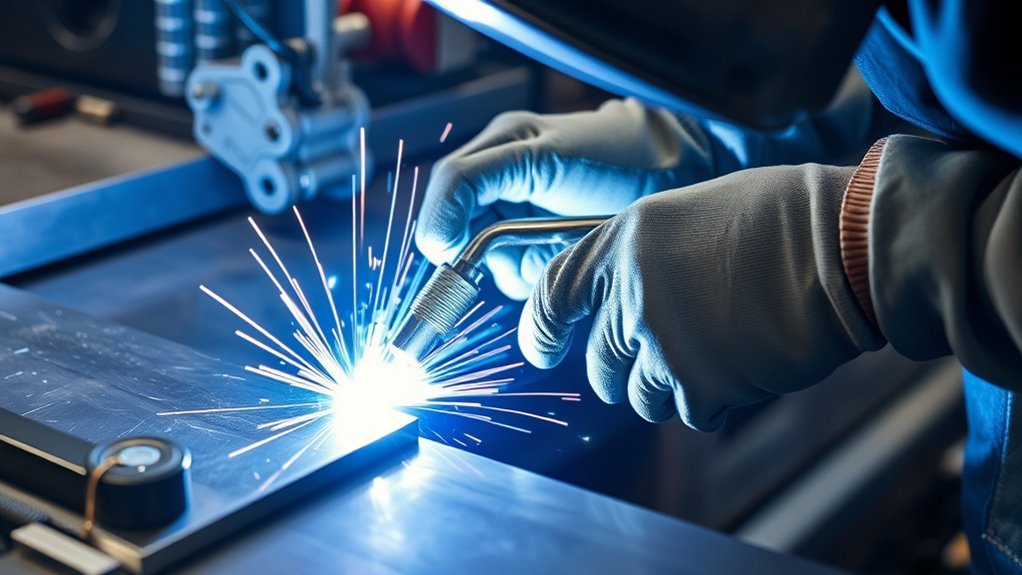
3G and 4G welding tests measure whether you can make an acceptable groove weld in vertical and overhead plate positions. They are important skills for structural fabrication, erection, repair, and other work where the joint cannot always be placed flat. However, the position number alone does not create a universal welding license.
Your actual qualification depends on the governing code, welding procedure specification (WPS), process, base metal, filler metal, plate thickness, backing, progression, and test results. Knowing that difference helps you choose the right test and avoid overstating what a 3G or 4G credential covers.
Quick Answer
A 3G test is a vertical groove-weld test on plate, while a 4G test is an overhead groove-weld test on plate. Passing shows that you met the requirements of a specific code and WPS. It does not automatically qualify every welding process, material, thickness, joint, or position.
Key Takeaways
- The letter G means groove-weld test position: 3G is vertical and 4G is overhead.
- A position test is only one part of a welder qualification; the code and WPS control its full scope.
- A 3G test may require vertical-up or vertical-down progression, so follow the written procedure.
- A 4G plate test is not the same as a 5G or 6G pipe test.
- Visual inspection and bend testing or radiography may be used, depending on the governing requirements.
- Safe practice requires proper PPE, ventilation, fire control, and protection from falling slag and hot metal.
What’s in This Article
- What Do 3G and 4G Welding Certifications Mean?
- What Does a 3G or 4G Qualification Cover?
- How Does 3G Welding Test Vertical Skill?
- What Does 4G Certification Prove About Overhead Welding?
- How Does Gravity Affect the Weld Pool in 3G and 4G?
- How Are 3G and 4G Test Coupons Inspected?
- Which Jobs Require 3G and 4G Welding?
- How Do 3G and 4G Compare to 1G and 2G?
- What Should You Practice Before a 3G or 4G Test?
- How Long Does a 3G or 4G Qualification Last?
- Frequently Asked Questions
- Conclusion
- Sources
What Do 3G and 4G Welding Certifications Mean?
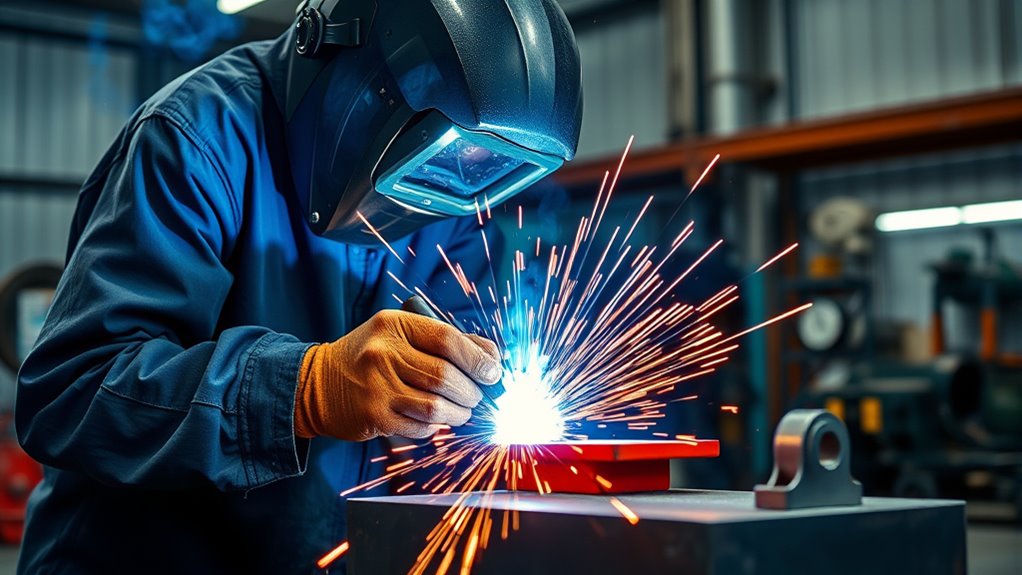
In common shop language, people call these “3G and 4G certifications.” More precisely, 3G and 4G identify groove-weld test positions. A 3G coupon is placed vertically. A 4G coupon is placed overhead, with the welder working from below the joint.
Qualification is the hands-on demonstration that you can produce an acceptable weld under a defined procedure. Certification is the documented confirmation of that result. The AWS Certified Welder Program, for example, evaluates welders against a specific procedure, code, process, material, and position.
3G and 4G describe how the test coupon is positioned. The qualification record describes what the welder is actually permitted to weld.
That distinction matters. Passing one test does not prove that you can use every welding process or weld every metal, thickness, joint design, or production position. Employers and inspectors should review the welder performance qualification record rather than relying only on the words “3G certified” or “4G certified.”
Structural steel work commonly uses the requirements in AWS D1.1/D1.1M:2025-AMD1. Bridge work may instead fall under AASHTO/AWS D1.5M/D1.5:2025. Other industries may use ASME, API, military, company, or project-specific requirements.
Process knowledge still matters. Skills learned through SMAW, GMAW, or FCAW do not transfer automatically from one qualification to another. For example, a welder preparing for a flux-cored test should practice process-specific control rather than rely only on general flux-core welding tips.
What Does a 3G or 4G Qualification Cover?
A valid qualification is tied to the variables recorded during the test. The governing code determines which changes are allowed without retesting. The exact limits can differ, so the test administrator should give you the WPS and explain the acceptance standard before you begin.
| Qualification Factor | Why It Matters |
|---|---|
| Governing code or specification | Sets the test setup, acceptance criteria, qualified ranges, and continuity rules. |
| Welding process | A qualification with SMAW does not automatically qualify GMAW, FCAW, or GTAW. |
| Base and filler metal | Material groups and filler classifications can limit the work covered. |
| Thickness and diameter | The coupon dimensions affect the qualified production range. |
| Backing or open root | A test with backing may not cover a joint welded without backing. |
| Position and progression | Vertical-up, vertical-down, and overhead limits depend on the test and code. |
Note: Do not assume a 3G test alone covers overhead welding or that a 4G test alone covers vertical welding. Review the qualified-position range on the completed record and in the applicable code.
Groove-weld qualification is also different from fillet-weld sizing. A 3G or 4G test does not replace design rules for fillet welds, including limits related to plate edge and thickness. Those design questions should be checked separately, such as when reviewing the maximum fillet weld size for plate thickness.
How Does 3G Welding Test Vertical Skill?
A 3G test places the groove joint in a vertical position. Gravity pulls the molten metal downward, so poor heat control or slow travel can cause the puddle to sag. Moving too fast can create incomplete fusion, underfill, or an uneven bead.
The required progression may be vertical-up or vertical-down. Many structural procedures use vertical-up welding, but the WPS controls. Never choose a direction simply because it feels easier.
Vertical Weld Control
Successful vertical welding depends on a small, readable puddle and consistent sidewall fusion. Hold the electrode or gun angle specified by the procedure, keep a stable arc, and use the permitted motion. Some procedures call for stringer beads; others allow a controlled weave.
- Keep the root opening, bevel, and alignment consistent.
- Use the WPS amperage, voltage, wire-feed speed, polarity, and travel limits.
- Pause only long enough to tie into each sidewall without washing out the edge.
- Clean slag and spatter between passes using only permitted tools.
- Watch for undercut, trapped slag, porosity, excessive reinforcement, and incomplete fusion.
Passing the test shows that you produced an acceptable weld in that setup. It does not by itself prove that every vertical weld you make later will be acceptable; production work still must follow the approved WPS and inspection requirements.
What Does 4G Certification Prove About Overhead Welding?
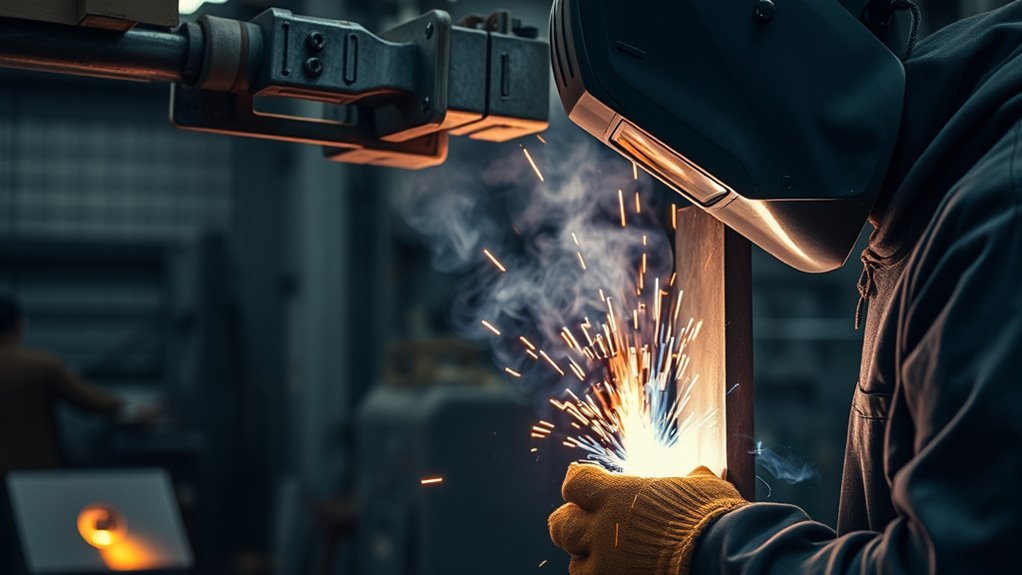
A 4G qualification test places the groove joint overhead. You weld from below while gravity pulls molten metal and slag toward you. The position tests puddle size, arc stability, travel control, body position, and your ability to maintain fusion without excessive buildup or burn-through.
Machine settings must match the WPS. A general stick welding amperage chart can help during practice, but the approved test range always takes priority.
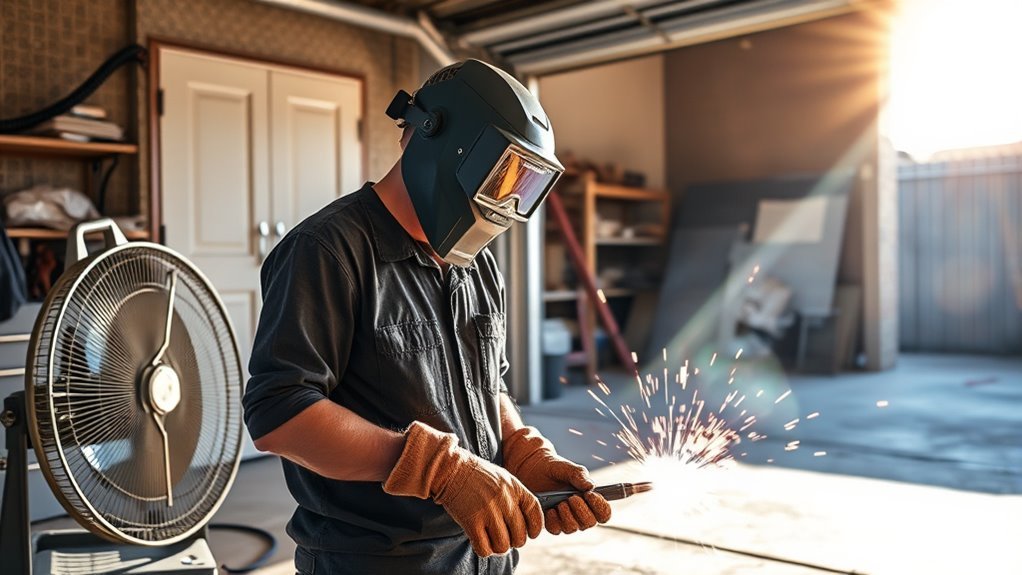
Warning: Overhead welding can drop hot metal and slag onto the welder. Use an approved welding helmet with the correct filter shade, safety glasses, flame-resistant clothing, welding gloves, protective footwear, and any additional PPE required by the hazard assessment. Control fumes, remove or shield combustibles, and follow the applicable OSHA welding, ventilation, and fire-prevention requirements.
Overhead Skill Validation
The test checks whether you can keep the puddle supported while maintaining a sound root, consistent fill passes, and an acceptable cap. A stable work position is important. Brace yourself when allowed, keep your head out of the direct fume plume, and arrange leads or cables so they do not pull your hand off line.
Overhead welding may feel harder than flat welding because visibility, comfort, falling slag, and puddle support all demand attention at once. Still, difficulty is personal and process-dependent. The code does not award extra credit because one position feels harder.
Gravity Control Mastery
Good overhead control usually means keeping the puddle no larger than needed for fusion. Excessive heat can make the pool too fluid, while low heat or poor manipulation can leave lack of fusion or trapped slag. The correct balance comes from the WPS, practice coupons, and careful observation.
| What the 4G Test Shows | What It Does Not Prove by Itself |
|---|---|
| You met the overhead groove-weld acceptance criteria for the test. | That you are qualified for every process, material, thickness, or joint. |
| You controlled bead shape and fusion in the overhead setup. | That you hold a 5G or 6G pipe qualification. |
| Your coupon passed the required inspection or testing. | That future production welds do not need WPS control and inspection. |
How Does Gravity Affect the Weld Pool in 3G and 4G?
Gravity changes the shape and movement of the molten pool. In 3G, it pulls the pool down the face of the joint. In 4G, it pulls the pool away from the joint and toward the welder. The response is not simply “turn the machine down.” You must balance heat, travel, arc length, deposition rate, and joint fusion.
Gravity in Vertical Welding
In a vertical-up weld, you build a small shelf of metal and move upward while tying into both sidewalls. A puddle that is too large may sag or roll downward. A puddle that is too cold may sit on the surface without fully fusing.
- Hold a consistent arc length or contact-tip-to-work distance.
- Keep the puddle small enough to support itself.
- Pause at the sidewalls only as the WPS and puddle require.
- Maintain a steady travel rhythm rather than chasing a collapsing pool.
- Stop and correct a visible defect if the test rules allow repair.
Overhead Weld Pool Control
In overhead welding, excess heat and a long arc can make the puddle harder to support. A smooth, controlled transfer and a comfortable body position help you maintain the correct angle. Keep exposed skin covered because sparks and ultraviolet radiation can reach areas that are not directly in your line of sight.
Ventilation should remove fumes without blowing away shielding gas. General cutting and welding hazards are also discussed in this guide to plasma-cutting and hot-work safety, but your welding setup must follow the specific process and workplace rules.
Puddle Control Techniques
The correct technique depends on the process and WPS. Do not treat stringer beads, weaving, electrode angle, or travel speed as universal settings.
- SMAW: hold the specified arc length, keep electrodes dry as required, and remove all slag between passes.
- FCAW: maintain the required polarity, shielding gas, and contact-tip-to-work distance.
- GMAW: follow the approved transfer mode, gas, voltage, and wire-feed range.
- GTAW: protect the tungsten, maintain shielding, and avoid contaminating the puddle or filler.
Pro Tip: Practice on plate with the same thickness, joint design, backing condition, process, filler metal, position, and machine type expected on test day. Random practice builds confidence, but matched practice builds test readiness.
How Are 3G and 4G Test Coupons Inspected?
The test method comes from the governing code, WPS, and test plan. According to AWS test-preparation guidance, candidates should confirm the visual acceptance limits, inspection hold points, permitted cleaning methods, and whether the coupon will receive bend testing or radiographic examination before welding begins.
Visual Inspection
The inspector may check fit-up and tack welds before the root pass, then inspect the finished coupon for discontinuities and profile limits. Common rejection concerns include cracks, unacceptable porosity, excessive undercut, poor tie-in, incomplete fill, excessive reinforcement, arc strikes, and dimensions outside the allowed range.
Bend Testing or Radiography
Depending on the test, sections may be cut and bent to expose fusion problems, slag inclusions, cracks, or other internal discontinuities. Another test plan may use radiography. The acceptance method is not something the welder should guess; it should be stated before the test.
The AWS guide to passing a welding test also stresses reviewing the WPS, preparing clean groove faces, maintaining even root opening and alignment, controlling interpass temperature, and following the allowed cleaning rules.
Which Jobs Require 3G and 4G Welding?
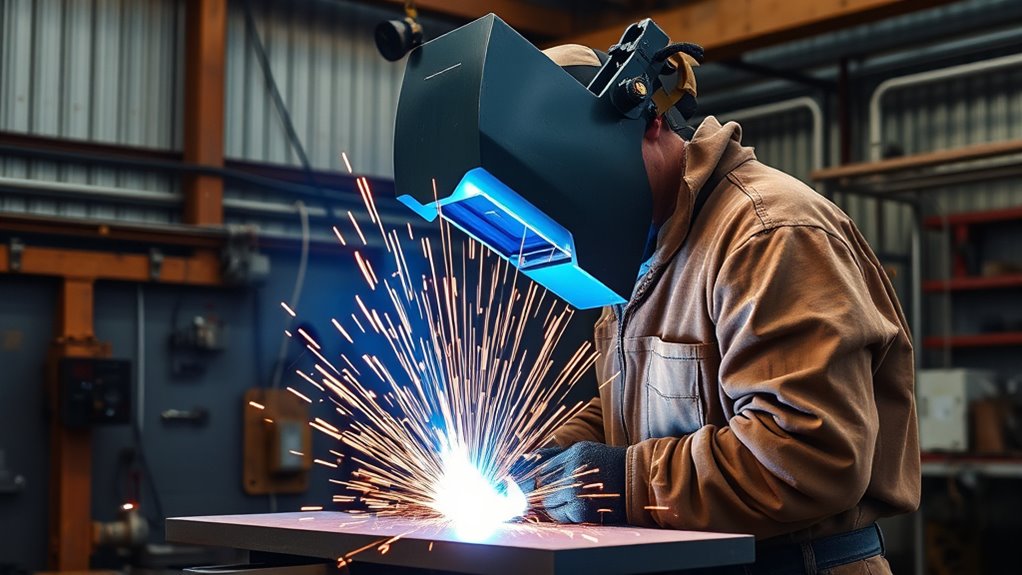
Employers may require vertical or overhead qualification for structural steel fabrication, steel erection, bridge fabrication, heavy equipment repair, industrial maintenance, shipbuilding, manufacturing, and field repair. The exact credential depends on the contract, employer, process, and code.
Bridge welding is a clear example of why the governing standard matters. A bridge project may require qualification under AASHTO/AWS D1.5 rather than a general D1.1 test. Pressure piping and pipeline work may use ASME or API rules and pipe positions such as 5G or 6G instead of relying on a 4G plate test.
The U.S. Bureau of Labor Statistics reports that welders work across manufacturing, specialty trade contracting, repair, and other industries. It projects about 45,600 openings per year on average from 2024 through 2034, mostly from replacement needs. A qualification can help an employer verify a specific skill, but it does not guarantee hiring, travel work, union placement, or a particular wage.
Career research should match the industry. A person considering offshore work can review the realities of oil rig welding careers, while someone considering highly regulated work may also compare the training and experience discussed in this guide to nuclear welding careers and pay.
Products Worth Considering

AWS D1.1 Compliant Weld Geometry - Limited Thickness Qualification Plate Designed for welder performance qualification and welding procedure testing in accordance with AWS D1.1 standards. Assembled and Ready to Weld with 45 degree bevel and a 1/4" Root Gap

100% Made in the U.S.A. with U.S.A. Steel "Build American Buy America" (BABA) Compliant

Welding Kit Includes: Our welding practice kit has 12 welding practice coupons, including 4 different thicknesses approximately: 9 Gauge(0.15”), 11 Gauge(0.12”), 14 Gauge(0.07”), 16 Gauge (0.06”), each with 3 pieces, suitable for beginners and basic welding, enough to meet your various practice needs, ideal for your practice welding
How Do 3G and 4G Compare to 1G and 2G?
For plate groove-weld tests, the number identifies the test orientation and the letter identifies the joint type. “G” means groove. Fillet-weld test positions use “F.”
| Position | Plate Groove Test Orientation | Main Control Challenge |
|---|---|---|
| 1G | Flat | Maintaining fit-up, fusion, and bead profile with gravity supporting the pool. |
| 2G | Horizontal | Preventing the pool from sagging toward the lower sidewall. |
| 3G | Vertical | Controlling upward or downward progression and sidewall fusion. |
| 4G | Overhead | Supporting the molten pool against gravity while protecting the welder. |
3G and 4G generally demand more positional control than 1G, but “advanced” should not be read as “universally better.” A difficult open-root 1G test can expose weaknesses that a backed test does not. The full procedure matters more than the position label alone.
Pipe uses additional position designations. A 5G test uses fixed pipe with a horizontal axis, while a 6G test uses fixed pipe at an angle. Those tests require the welder to move through several working positions around the pipe. A 4G plate qualification should not be advertised as a pipe qualification.
What Should You Practice Before a 3G or 4G Test?
Start by getting the test details in writing. Ask which code, WPS, process, position, progression, coupon thickness, joint design, backing condition, filler metal, shielding gas, machine type, and inspection method will be used. Then practice the same setup.
Products Worth Considering

Material: low carbon steel; Finish: Plain

Crafted with precision, our steel plates are laser-cut, offering unparalleled edge smoothness and dimensional accuracy compared to stamped and sheared parts.

201 STAINLESS STEEL - Made of Premium Type 201 stainless steel with excellent corrosion and heat resistance. Ideal for consistent practice across MIG, TIG, Stick, and wire-feed welding applications.
Fit-Up and Procedure Control
Clean the groove faces and nearby plate surfaces. Verify the bevel, root face, root opening, alignment, and backing fit. Poor fit-up forces you to change technique along the coupon and can create root-fusion problems.
Do not transfer settings from unrelated work. Welding thin sheet with flux core, for example, requires a different heat strategy from a thick qualification plate. Review this guide to welding thin metal with flux core as a separate application, not as a substitute for the qualification WPS.
Common Reasons Welders Fail
- Starting without reading the WPS or acceptance criteria.
- Uneven root opening, poor alignment, or loose backing.
- Wrong polarity, filler metal, gas, or machine settings.
- Changing from stringers to a weave when the procedure does not allow it.
- Poor cleaning that traps slag between passes.
- Excessive heat, long arc length, or inconsistent travel speed.
- Ignoring visible undercut, porosity, arc strikes, or poor tie-in.
- Exceeding interpass temperature or skipping required preheat checks.
- Using an uncomfortable body position that cannot be held for the full pass.
Test-Day Checklist
| Before Striking an Arc | During and After Welding |
|---|---|
| Read the WPS and ask about hold points. | Stay within the approved parameters. |
| Confirm process, polarity, filler, gas, and position. | Clean every pass using allowed methods. |
| Inspect fit-up, tacks, root opening, and alignment. | Watch the sidewalls, root, bead profile, and stops. |
| Set a safe, repeatable body position and route leads. | Do not repair or grind unless the rules allow it. |
| Check PPE, ventilation, fire protection, and screens. | Present the coupon without unauthorized changes. |
Confidence comes from repeatable preparation, not from memorizing one hand motion. Practice until you can explain why each setting, angle, and pass sequence complies with the WPS.
How Long Does a 3G or 4G Qualification Last?
There is no single expiration rule for every 3G or 4G credential. The governing code and certification program control continuity. AWS guidance states that under D1.1, a welder qualification remains valid while the welder continues using the qualified process without an interruption longer than six months.
The current AWS Certified Welder Program also requires participants to maintain their credentials through WeldCert Pro and submit continuity information before expiration. Employer-issued qualifications may have different documentation or renewal procedures. Keep your records current and verify the rule before starting a new job.
Note: A wallet card or old test record does not prove current qualification by itself. The employer or inspector may need the full performance qualification record and evidence of continuity.
Frequently Asked Questions
What Is 2G, 3G, 4G, and 5G Welding?
These are groove-weld test-position designations. On plate, 2G is horizontal, 3G is vertical, and 4G is overhead. A 5G test normally refers to fixed pipe with its axis horizontal. The qualified production range depends on the applicable code and test variables.
What Is the Difference Between 3G and 4G Welding?
A 3G test positions a plate groove vertically. A 4G test positions it overhead. The 3G test focuses on controlling vertical progression and sidewall fusion, while the 4G test focuses on supporting the pool from below and controlling falling slag and hot metal.
What Is a 3G Welder Qualification?
It is documented proof that a welder passed a vertical groove-weld performance test under a defined code and WPS. The record should list the process, position, progression, materials, thickness, backing condition, and resulting qualified ranges.
What Does 4G Mean in Welding?
4G means an overhead groove-weld test position on plate. The welder works below the joint and must maintain acceptable fusion, bead profile, and defect control while gravity pulls the molten pool downward.
Does Passing 3G and 4G Qualify All Positions?
Not automatically. Some codes provide broad position ranges for particular combinations of tests, but the answer depends on the governing code and all essential variables. Review the completed qualification record instead of assuming that two position labels cover every job.
Is 4G the Same as a Pipe Welding Certification?
No. A 4G test is an overhead groove weld on plate. Fixed-pipe tests commonly use 5G or 6G designations. A plate qualification may build useful skills, but it should not be presented as a pipe qualification.
Can 3G and 4G Certifications Help You Get Better Welding Jobs?
They can help employers verify that you passed vertical or overhead testing for a specific process and procedure. They may expand your eligibility for structural, fabrication, repair, or field work, but they do not guarantee a job, wage, or acceptance on every project.
Conclusion
3G and 4G are important groove-weld test positions: 3G is vertical and 4G is overhead. Passing either test shows that you met a defined acceptance standard under a specific procedure. The real value is in the complete qualification record, not the position label alone.
Prepare by matching the test setup, reading the WPS, controlling fit-up and heat, practicing the required progression, and learning the inspection method. Protect yourself with proper PPE, ventilation, and fire controls. When a job requires vertical or overhead welding, confirm the governing code and qualified ranges before you strike an arc.
Sources
- American Welding Society — Certified Welder Program — program scope, performance testing, Accredited Test Facilities, and current credential-maintenance requirements.
- American Welding Society — AWS D1.1/D1.1M:2025-AMD1 — current structural steel welding code reference.
- American Welding Society and AASHTO — D1.5M/D1.5:2025 Bridge Welding Code — bridge-specific welding requirements.
- American Welding Society — How to Pass a Welding Test — WPS review, fit-up, inspection, bend testing, radiography, and test preparation.
- Occupational Safety and Health Administration — 29 CFR 1910.252 — welding PPE, ventilation, fire prevention, and general safety requirements.
- U.S. Bureau of Labor Statistics — Welders, Cutters, Solderers, and Brazers — work settings, hazards, employment, wages, and job outlook.