Working on an oil rig as a welder is no joke. Thick carbon-steel plate, pipe, corrosion-resistant alloys, awkward positions, weather, and strict inspection requirements can test even experienced hands. The real challenge is not choosing MIG or TIG by habit; it is following the approved welding procedure, controlling the joint, and producing a safe weld that passes inspection.
Getting those details right protects people, equipment, and production time. If you are aiming for oil rig welding, you need more than a general welding certificate. You need job-ready pipe and structural skills, documented qualifications for the work you will perform, relevant field experience, and the safety training required by the employer, facility, and location.
Quick Answer
To become an oil rig welder, build strong structural and pipe-welding skills, pass the exact performance tests an employer or project requires, gain field experience, and complete site-specific safety credentials. Offshore roles may also require a TWIC, medical clearance, and OPITO-style survival training, but no single universal “oil rig welder license” exists.
Key Takeaways
- Learn pipe and structural welding, fit-up, blueprint reading, grinding, inspection basics, and safe work practices.
- A code such as AWS D1.1 or API 1104 is not automatically a personal license; your qualification is tied to a tested procedure, process, material, position, and range.
- Get real field experience in fabrication, pipe, maintenance, shipyard, or oilfield work before targeting offshore openings.
- Confirm the employer’s exact requirements before paying for TWIC, BOSIET/HUET, medicals, or extra welding tests.
- Never change filler metal, preheat, heat input, gas, polarity, or machine settings outside the approved WPS.
At a Glance
| Time Required | Often 1–4 years from beginner to a competitive rig candidate, depending on training, practice, and field experience |
| Difficulty | Advanced, safety-critical trade work |
| Tools Needed | Proper PPE, supervised welding practice equipment, grinders, measuring and fit-up tools, test coupons, and access to the applicable WPS/code |
| Cost | Varies widely by school, testing facility, medical, and offshore course; a standard new TWIC application is currently $124 when the credential is required |

Image by local246
What Does an Oil Rig Welder Actually Do?
Oil rig welders fabricate, install, maintain, and repair metal components used in drilling, production, processing, and support systems. Depending on the job, that can include structural members, pipe supports, skids, handrails, tanks, pressure-related piping, manifolds, and damaged equipment. The work starts with drawings, specifications, permits, and an approved welding procedure—not with striking an arc.
A normal task may include checking the joint and base material, confirming the filler and consumables, verifying preheat or interpass limits, fitting and tacking the joint, welding in the required position, cleaning between passes, and preparing the weld for visual or nondestructive examination. Welders also maintain leads, feeders, torches, ovens, grinders, gas equipment, and other tools.
Rig Welder, Pipeline Welder, and Underwater Welder Are Different Jobs
A platform or rig welder usually works on equipment and structures at a drilling or production site. A pipeline welder specializes in transmission or gathering pipe and may work under a project specification that references API Standard 1104. A commercial diver who performs underwater cutting or welding follows a separate commercial-diving career path, with diving-specific training, medical fitness, equipment, supervision, and safety rules.
Note: “Offshore welder” does not automatically mean “underwater welder.” Most welding on an offshore installation is performed topside. Underwater work is a separate commercial-diving specialty.
The Welding Process Is Chosen by the Procedure
You may encounter SMAW, FCAW, GMAW, GTAW, or combinations of processes. Self-shielded FCAW and SMAW can be useful where shielding gas would be hard to control; gas-shielded processes require suitable wind protection and ventilation. GTAW may be specified for roots or alloy work, while higher-deposition processes may be used for fill and cap passes. None of those choices is universal. The WPS, project code, material, service, joint design, access, and environmental controls decide what is allowed.
Material compatibility is just as important. Choosing filler by a rough “match the alloy” rule is not enough. The approved procedure accounts for base-metal group, filler classification, strength, toughness, corrosion service, hydrogen control, heat input, preheat, interpass temperature, and any post-weld heat treatment. High-pressure or high-temperature service makes procedure control even more important.
The Daily Grind: Life on an Oil Rig as a Welder
Rig work is built around permits, coordination, and shifts. Offshore schedules may use rotations such as 14 days on and 14 off, 21/21, or another operator-specific pattern. Twelve-hour shifts are common in round-the-clock operations, but the actual hitch, overtime rules, travel time, and standby expectations belong in the written job offer.
A shift often begins with a toolbox talk or job safety analysis. The crew reviews dropped-object hazards, simultaneous operations, weather, hydrogen sulfide, hydrocarbons, energized equipment, confined spaces, and escape routes. Only after the work area, isolation, gas testing, fire watch, and hot-work permit are ready should welding begin.
Some jobs use an approved welding habitat or temporary enclosure to control weather and help separate hot work from the surrounding area. A habitat is not a magic shield against gas. It must be part of the site’s engineered hot-work plan, with ventilation, gas monitoring, alarms, supervision, and shutdown rules.
Life offshore also includes shared accommodations, galley meals, emergency drills, helicopter or boat transfers, exercise rooms, and long periods away from home. Breaks and sleep matter because fatigue can ruin judgment and hand control. An urgent repair may happen at night, but emergency pressure never cancels the permit, isolation, testing, or procedure.
Onshore rigs and yards bring different conditions: dust, heat, cold, long drives, temporary housing, and changing job sites. Offshore work adds marine corrosion, limited evacuation options, weather delays, and stricter travel requirements. In both settings, versatility helps, but nobody should improvise a process or alloy repair that is outside their qualification.
Pro Tip: Practice difficult positions in a controlled booth with an instructor. Do not use a fan to “simulate offshore wind.” Airflow can strip shielding gas from a weld and can also move fumes into another person’s breathing zone.
Essential Skills Every Aspiring Oil Rig Welder Needs
Welding, Fit-Up, and Arc Control
Build consistent skill in the processes and positions used by your target employers. Pipe candidates commonly practice open-root joints and fixed positions, including 6G when relevant. Structural candidates may need fillet and groove welds in flat, horizontal, vertical, and overhead positions. The exact test can vary by employer, project, code, pipe size, wall thickness, backing, process, and material.
Fit-up matters as much as bead appearance. Learn to measure root opening, land, bevel angle, alignment, hi-low, distortion, and tack placement. Never assume a universal tolerance such as a 1/16-inch maximum gap; use the drawing, WPS, code, and supervisor’s instructions.
Blueprints, Welding Symbols, and Practical Math
You need to read drawings, isometrics, spool sheets, weld maps, and welding symbols. Practical math includes fractions, decimals, angles, circumference, offsets, takeoffs, and material estimates. Digital calculators and welding apps can help, but verify their result against the drawing and approved procedure instead of trusting an unfamiliar app on a safety-critical joint.
WPS Discipline and Basic Metallurgy
Learn how to read a Welding Procedure Specification. Check process, electrode or wire, diameter, polarity, shielding gas, amperage or wire-feed range, voltage, travel speed, technique, preheat, interpass temperature, and post-weld requirements. Do not apply a blanket preheat such as 150°F to every API 5L pipe. Required preheat depends on the qualified procedure and factors such as grade, thickness, restraint, hydrogen level, heat input, and temperature.
Low-hydrogen electrodes also need proper storage and handling. Stainless, duplex, nickel alloys, and other corrosion-resistant materials can have strict cleanliness, heat-input, purge, and interpass controls. When the procedure is unfamiliar, stop and ask rather than guessing.
Inspection and Documentation
Oilfield welds may receive visual testing and, when specified, liquid penetrant, magnetic-particle, ultrasonic, or radiographic examination. A welder should understand common discontinuities such as porosity, slag inclusions, undercut, incomplete fusion, incomplete penetration, cracks, arc strikes, and excessive reinforcement. You also need to identify welds correctly and complete required records without hiding repairs.
Teamwork, Stamina, and Judgment
Welders coordinate with fitters, riggers, inspectors, operators, safety staff, and supervisors. Clear stop-work communication is a core skill. The job may involve climbing, awkward positions, confined-space controls, heat, cold, noise, vibration, and handling equipment. Build stamina safely, use lifting aids, rotate demanding tasks when possible, hydrate, and report fatigue before it becomes a mistake.
Step-by-Step Guide to Becoming an Oil Rig Welder
There is no single route, and there is no guaranteed timeline. A focused beginner may become employable in a general welding role within a year, while becoming competitive for demanding pipe, maintenance, or offshore work can take several years. Use the steps below as a practical path, then adjust them to the employers and region you are targeting.
Products Worth Considering

Crafted with precision, our steel plates are laser-cut, offering unparalleled edge smoothness and dimensional accuracy compared to stamped and sheared parts.
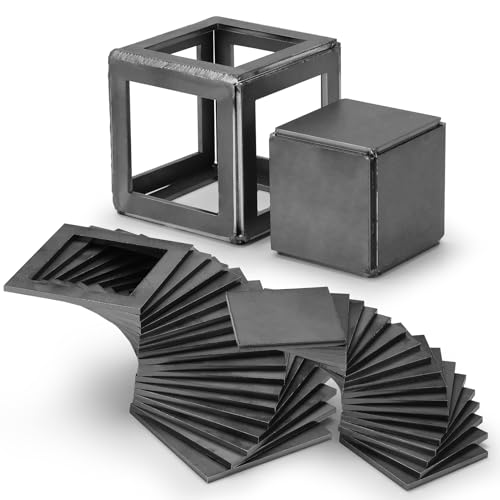
Quantity and size: Welding practice kit, with 18 of 3.6 inch, 18 of 2.6 inch, set of 36

COMPLETE PRACTICE SET: Includes 6 welding practice coupons, each 2" x 4" and 3 mm thick; compact mild steel plates form a convenient welding starter kit
1. Earn Your High School Diploma or GED
Many employers and training programs expect a high school diploma or equivalent. Algebra, geometry, reading, and shop classes are useful because welders measure joints, interpret specifications, and document work. A diploma is not an AWS Certified Welder prerequisite, but it can still be an employer or school requirement.
2. Enroll in a Welding Vocational Program or Structured Training Route
Look for a trade school, community college, union program, military pathway, or employer training program with enough booth time. A useful curriculum covers SMAW, GMAW, FCAW, GTAW, cutting, fit-up, drawings, metallurgy, inspection basics, and safety. Program length and tuition vary widely, so compare published total cost, lab hours, instructor access, completion rates, and the exact tests students practice.
Do not judge readiness by an arbitrary count such as 200 beads. Keep a weld journal with joint type, position, consumable, settings, preheat, problems, inspection result, and corrective action. Quality, repeatability, and honest feedback matter more than raw bead count.
For a practice joint, start with the electrode or wire manufacturer’s published range and the instructor’s procedure. A generic setting for 1/4-inch plate and 1/8-inch E7018 is not a field prescription. Machine calibration, joint design, position, electrode brand, technique, and WPS can all change the correct range.
3. Build Pipe and Structural Test Skills
Practice the coupon configurations your target employers actually use. For pipe, that may include open-root SMAW, GTAW roots with SMAW or FCAW fill, or another qualified combination. For structural work, it may include plate groove tests or fillet-weld qualification. Ask for the process, position, base metal, thickness or pipe schedule, backing condition, code, and acceptance method before scheduling a test.
4. Get the Qualifications and Credentials That Match the Job
The language around “certification” causes confusion. AWS D1.1/D1.1M:2025 is a structural welding code, not a universal oil-rig license. The AWS Certified Welder Program is performance-based and tests a welder at an AWS Accredited Test Facility. A project may instead qualify you directly to an employer’s WPS or another governing code.
API 1104 is a pipeline welding standard, not a personal certificate issued by API to every pipeline welder. Employers or contractors qualify welders under the applicable procedure and project requirements. Inspection credentials such as CSWIP 3.1 are separate, later-career options; they do not replace a welder performance qualification.
Pro Tip: Before paying for a test, ask the hiring contact whether the qualification is accepted, what continuity documentation is required, and whether you will be retested after hire. Many employers conduct their own weld test even when you already hold a credential.
| Credential or Standard | What It Covers | How It Relates to Rig Work | Current Practical Note |
|---|---|---|---|
| AWS Certified Welder | Performance test to a specific procedure and code requirement | Can document structural, pipe, refinery, or other welding ability within the tested range | Testing fees vary by ATF; AWS continuity must be maintained and documented |
| AWS D1.1 | Structural steel procedure, qualification, fabrication, inspection, and acceptance rules | May govern structural steel portions of a project when adopted by the contract | A code, not a stand-alone personal license |
| API 1104 | Welding of pipelines and related facilities | Relevant to qualifying pipeline procedures and welders when the project specifies it | Current verified edition is the 22nd edition; qualification is project/employer controlled |
| TWIC | Security threat assessment and biometric maritime credential | May be needed for unescorted access to secure areas of regulated U.S. maritime facilities or vessels | Standard new application: $124; valid for five years |
| OPITO BOSIET/HUET | Offshore safety induction, helicopter escape, sea survival, first aid, and firefighting | Commonly required when an operator sends personnel offshore by helicopter under an OPITO training scheme | Use an approved center; the BOSIET-to-FOET interval is generally four years |
| CSWIP 3.1 or Similar Inspection Credential | Welding inspection knowledge and duties | Useful for an inspection or supervisory career path | Not an entry-level welder qualification and not a substitute for a weld test |
5. Build Real-World Experience Through Apprenticeships and Field Jobs
Theory is not enough. A Registered Apprenticeship combines paid work, mentoring, classroom instruction, progressive wage increases, and a recognized credential. The U.S. Department of Labor lists time-based welder apprenticeships that commonly run about three or four years, although individual programs differ. Search current opportunities through Apprenticeship.gov.
Other useful starting points include fabrication shops, pipe shops, tank and vessel contractors, shipyards, industrial maintenance teams, and oilfield service companies. These jobs build habits in fit-up, documentation, tool care, housekeeping, production pace, and inspection. Relocation may help because oil and gas work clusters around producing basins, ports, fabrication yards, and service hubs.
6. Add TWIC, Offshore Safety Training, and Medical Clearance When Required
A Transportation Worker Identification Credential is used for workers who need unescorted access to secure areas of regulated U.S. maritime facilities and vessels. It is not required for every land rig, every offshore platform job, or every person who enters a port. Apply when the employer or facility confirms that your role needs it.
For offshore helicopter travel, an operator may require OPITO BOSIET, HUET, or an equivalent accepted by that operator. Training includes controlled water, helicopter-escape, sea-survival, firefighting, and first-aid exercises. Candidates may need medical evidence and must be capable of completing physically and psychologically demanding drills.
Commercial diving is a different route. Do not treat a short “diver certificate” as an add-on to a welding resume. Underwater welding requires recognized commercial-diver training, diving medical fitness, supervised work experience, and compliance with commercial-diving rules. Claims of automatic $100,000-plus pay are marketing, not a guarantee.
7. Prepare for the Employer’s Weld Test and Site Onboarding
Expect many employers to retest you. Confirm whether the test is plate or pipe, the position, process, material, thickness, backing, root method, time limit, visual criteria, and destructive or nondestructive examination. Arrive rested, follow the test WPS, inspect your fit-up, keep consumables clean, and do not hide a defect with grinding that the rules do not allow.
Site onboarding may also include drug and alcohol testing, fit-for-duty or medical review, background screening, H2S awareness, confined-space training, fall protection, respiratory clearance, fire watch, rigging, or operator-specific orientation. Requirements vary, so use the employer’s written checklist.
Physical and Mental Prep: Can You Handle Rig Life?
Rig work may require lifting and carrying equipment, climbing ladders, working from platforms, crawling into restricted areas, and standing or kneeling for long periods. Train for strength, balance, mobility, and endurance, but do not turn fitness advice into a private pass/fail standard. The employer’s job description and medical program determine the actual requirements.
Offshore survival courses include water-based exercises, but there is no universal rule that every Gulf rig welder must pass a 500-yard swim. The accepted course, training center, operator, and medical protocol control the assessment. Practice swimming and water confidence only with proper supervision if a required course involves immersion or underwater escape.
Isolation, shared living, noise, interrupted sleep, and long hitches can be harder than the welding. Build routines for sleep, hydration, food, exercise, and contact with home. Ear protection must match the hazard and site rules; do not use earbuds or anything that blocks alarms. Report stress, seasickness, or fatigue early instead of trying to power through a safety-critical shift.
How to Find and Pass Your First Oil Rig Welding Job
Start with employer career pages, union halls, apprenticeship programs, fabrication yards, industrial contractors, shipyards, and oilfield service companies. Search titles such as pipe welder, structural welder, maintenance welder, offshore welder, rig welder, combo welder, and welder-fitter. Read each posting closely because the same title can describe very different tests and travel requirements.
Build a Resume That Proves Scope, Not Hype
- List each current qualification with process, position, material, thickness or diameter range, code/procedure, test date, and continuity status.
- Describe real work: pipe size and schedule, joint type, process combination, material, shop or field setting, inspection method, and repair rate when documented.
- Include safety credentials only when current and relevant.
- State travel, rotation, relocation, and offshore availability honestly.
- Never claim “API certified,” “6G certified,” or “offshore certified” without explaining the exact qualification behind the phrase.
Prepare for the Interview and Practical Test
Bring the identification and PPE requested by the employer. Ask whether tools and consumables are supplied. During the test, follow instructions, confirm the WPS, protect the root, clean every pass, control starts and stops, and stop if equipment is unsafe. A foreman is evaluating judgment and procedure discipline as well as bead appearance.
Networking still matters. Welding instructors, inspectors, fitters, former supervisors, local AWS sections, union representatives, and contractors can point you toward legitimate openings. One useful contact can help, but steady applications, documented skill, and a clean work record matter more than a dramatic cold-call story.
What Kind of Salary Can You Expect as an Oil Rig Welder?
There is no official national wage category for “oil rig welder,” so precise viral salary ranges should be treated carefully. The U.S. Bureau of Labor Statistics reports a median annual wage of $51,000 for welders, cutters, solderers, and brazers in May 2024. The lowest 10 percent earned under $38,130, while the highest 10 percent earned more than $75,850. Those figures cover the occupation broadly, not a guaranteed offshore rate.
Offshore earnings can be higher than a basic shop wage, but the difference usually comes from skill scarcity, overtime, rotation hours, travel, per diem, allowances, and project conditions—not from the job title alone.
Compare written offers by separating base hourly rate, scheduled hours, overtime multiplier, travel pay, per diem, bonuses, benefits, union dues, unpaid weather delays, and time spent in transit. A claim such as “$80,000–$120,000 in year one” or “$150,000 for every journeyman” is not reliable without a specific employer, schedule, location, and overtime calculation.
| Pay Benchmark | Annual Wage | What It Shows | Important Limit |
|---|---|---|---|
| National median, all welders | $51,000 | Middle of the U.S. occupation in May 2024 | Not offshore-specific |
| Specialty trade contractors median | $57,310 | Industry median reported by BLS | Includes many trades and projects, not only rigs |
| Repair and maintenance median | $53,300 | Useful benchmark for maintenance-oriented work | Does not include a guaranteed rotation or overtime package |
| Top 10 percent of all welders | More than $75,850 | Shows that higher earnings exist nationally | Does not prove a typical entry-level offshore salary |
Experience, tested process range, pipe ability, alloy work, location, union status, supervisory duties, and willingness to travel can all affect pay. So can boom-and-bust cycles. Keep an emergency fund and evaluate benefits and job stability along with the headline rate.
Pros and Cons of Life as an Oil Rig Welder
Rig welding can be a strong career for someone who likes difficult work, travel, and visible results. It is also demanding, and the trade-offs should be clear before you accept a hitch.
Pros:
- Potential for above-average earnings when specialized skill, overtime, and difficult locations are involved.
- Rotational schedules can provide blocks of time off between hitches.
- Large-scale repair and fabrication work can sharpen pipe, structural, and troubleshooting skills.
- Crews often build strong trust because safety and production depend on teamwork.
- Experience can lead toward lead welder, welding supervisor, inspector, planner, or quality roles.
Cons:
- Long periods away from family, including holidays and important events.
- Heat, cold, wind, noise, fumes, awkward positions, burns, strains, and seasickness.
- Long shifts, disrupted sleep, travel delays, and fatigue.
- Strict testing and the possibility of repeated qualification for new employers or projects.
- Hiring can rise and fall with project cycles, commodity prices, shutdowns, and decommissioning work.
For hobby welders, local fabrication or industrial work is a safer way to test whether you enjoy production pace and procedure discipline before chasing offshore scale. A rig is not a place to learn basic arc control from scratch.
Safety First: Gear, Protocols, and Staying Alive Out There
Warning: This guide is career information, not a Welding Procedure Specification, hot-work permit, confined-space permit, rescue plan, or substitute for site training. Never weld on oilfield equipment, pipe, tanks, vessels, or structures without authorization, isolation, atmospheric testing, and the approved procedure.
Oil and gas sites can release flammable hydrocarbons and toxic hydrogen sulfide. Welding, cutting, brazing, and grinding are ignition sources. The safest welder is the one who refuses to start until the work package and controls are complete.
Products Worth Considering
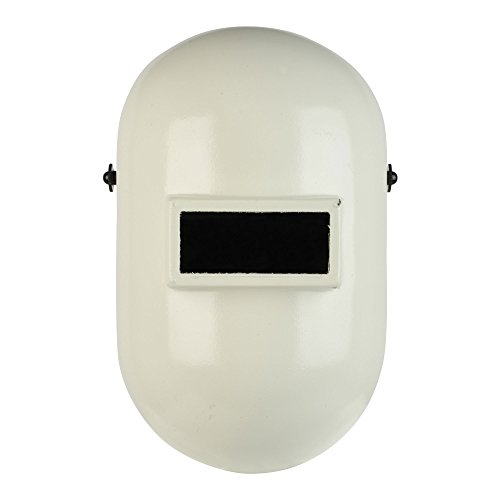
Molded from SuperGlas Plus, a material formulated for lightweight and strength, Pipeliner provides everything pipe welders need in a helmet to be safe and productive under the harshest welding conditions.

100% COTTON FR FABRIC – LIGHTWEIGHT & BREATHABLE:Made from 7.5oz flame resistant cotton twill, softer and less bulky than standard FR pants. Pre-washed and preshrunk – machine wash without shrinking. FR buttons, FR sewing threads, and UL-certified FR label on pocket. (NFPA 2112, ASTM F1506, CAT 2 / HRC2, Arc Rating 9.8 cal/cm²)
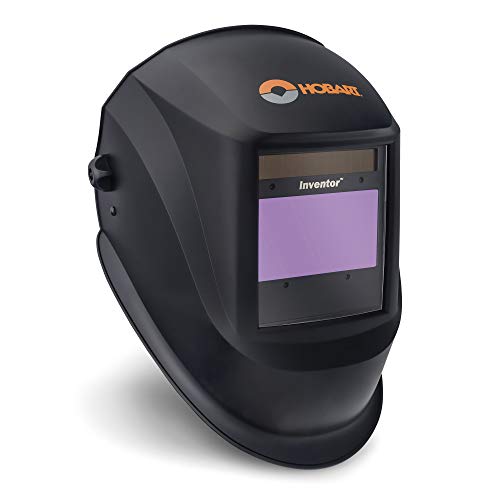
Technology You Can Trust: Get continuous UV & IR protection with our Hobart 77890 Inventor Auto Darkening Welding Helmets for men & women; Engineered for your safety with an auto-on/off power control that triggers the lens at the strike of an arc
Core Hot-Work Controls
- Plan the job: Review the risk assessment, hazard analysis, JSA, simultaneous operations, weather, and stop-work conditions.
- Isolate energy and process: Follow lockout/tagout, depressurization, draining, cleaning, blanking or blinding, and line-breaking procedures.
- Test the atmosphere: Use calibrated instruments for oxygen, flammable gas or vapor, and toxic hazards such as H2S as required. OSHA defines a permit-space atmosphere below 19.5 percent or above 23.5 percent oxygen as hazardous, but an acceptable oxygen reading alone does not make the area safe.
- Control ignition: Use the site’s hot-work permit, barriers, fire-resistant covers, approved lighting and equipment, and a trained fire watch with the required extinguishing equipment.
- Ventilate and protect breathing: Use local exhaust or other engineered ventilation. Respirators require a proper employer respiratory-protection program, medical evaluation, fit testing, cartridge selection, and change schedule.
- Protect people below and nearby: Control sparks, slag, dropped tools, arc radiation, and access to the work zone.
- Prepare for rescue: Confined-space and work-at-height jobs need the specified attendant, retrieval or rescue capability, fall protection, communication, and emergency plan before entry.
For confined spaces, oxygen from 19.5 to 23.5 percent is only one part of the entry criteria. The employer must also evaluate flammability, toxic contaminants, engulfment, configuration, energy, heat, and other hazards. Inerting can create an oxygen-deficient, immediately dangerous atmosphere.
Wear the PPE selected by the employer’s hazard assessment: welding helmet with the proper filter shade, safety glasses with side protection under the helmet, flame-resistant clothing, welding gloves, safety footwear, hearing protection, fall protection, and respiratory protection when required. Do not wear synthetic clothing that can melt, and do not wear flame-resistant clothing contaminated with flammable liquids.
Used tanks, drums, vessels, and connected lines are especially dangerous. Do not weld on them until the responsible team has cleaned, isolated, disconnected or blanked, vented or purged as required, tested, and authorized the work. “Empty” does not mean gas-free.
Wrapping It Up: Your Path to Rig-Ready Confidence
The path to becoming an oil rig welder is straightforward, but it is not quick or casual: learn the trade, practice pipe and structural positions, understand WPS control, pass the qualifications your employer accepts, gain field experience, and add only the access and offshore credentials your job actually requires.
Your weld can affect containment, structural integrity, uptime, and lives. Keep a weld journal, protect your qualification records, ask for the procedure before every test, and build a reputation for stopping when conditions are wrong. Rig-ready confidence comes from repeatable skill and disciplined safety—not from a broad certificate, a viral salary claim, or a willingness to improvise.
Frequently Asked Questions
How long does it take to become an oil rig welder?
A beginner may complete an entry welding program in about 6–12 months, but becoming competitive for pipe, maintenance, or offshore work often takes 1–4 years of training and field experience. A Registered Apprenticeship may run three or four years. The timeline depends on practice quality, employer tests, location, and available jobs.
Do you need to know how to swim for offshore welding?
You need to meet the requirements of the offshore survival course and operator that apply to your job. OPITO BOSIET/HUET includes controlled water and helicopter-escape exercises, but there is no universal 500-yard swim rule for every Gulf rig welder. Check the approved training center’s medical and participation requirements before enrolling.
What is the difference between onshore and offshore rig welding?
Onshore work is reached by road and may involve drilling sites, yards, shops, tanks, pipe, and field maintenance. Offshore work adds marine travel, shared accommodations, emergency and survival training, weather delays, corrosion, limited evacuation, and operator-specific access rules. Both settings use approved procedures and may require multiple welding processes.
Can I become an oil rig welder without prior experience?
You can start from zero, but most employers will not put a brand-new welder directly into safety-critical rig repairs. Build skill through school, an apprenticeship, a fabrication or pipe shop, a shipyard, industrial maintenance, or an oilfield helper role. Then pass the employer’s weld test and complete the required site training.
Are oil rig welding jobs in demand right now?
Demand changes by basin, port, project, shutdown schedule, and energy market. BLS projects 2 percent growth for welders overall from 2024 to 2034 and about 45,600 openings per year, mostly from replacement needs. That is not an offshore forecast, so check current employer postings and regional project activity.
Sources
- U.S. Bureau of Labor Statistics: Welders, Cutters, Solderers, and Brazers — education, duties, pay, work environment, and 2024–2034 outlook
- American Welding Society: Certified Welder Program — performance testing, Accredited Test Facilities, scope, fees, and continuity
- American Petroleum Institute: API Standard 1104, 22nd Edition — pipeline welding scope
- Transportation Security Administration: TWIC — eligibility, access purpose, fees, renewal, and validity
- OPITO: BOSIET with Emergency Breathing System — offshore safety, helicopter escape, sea survival, first aid, and firefighting training
- OSHA: Oil and Gas Extraction Hazards — hot work, fire, explosion, hydrogen sulfide, PPE, and oilfield safety controls