Rig welding can pay far more than ordinary shop welding, but the headline hourly rate never tells the whole story. A job described as “rig welding” may involve an onshore drilling site, pipeline construction, a refinery turnaround, an offshore platform, or a contractor who supplies a truck-mounted welding machine. Your base rate, overtime, per diem, travel, benefits, qualifications, and equipment costs all affect what you actually earn.
Quick Answer
As of July 2026, a sensible U.S. planning range for qualified rig and pipe welders is about $35–$50 per hour. Entry roles may start lower, while senior, union, remote, shutdown, or contractor-owned-rig jobs can exceed $50. Overtime and legitimate per diem can raise total pay, but no official BLS “rig welder” wage exists.
Key Takeaways
- Use $35–$50 per hour as a practical planning range for qualified U.S. rig and pipe work, not as a guaranteed national wage.
- A high gross contractor rate may have to cover the welding rig, truck, fuel, repairs, insurance, travel, consumables, and unpaid downtime.
- Federal overtime generally begins after 40 hours in one workweek for covered, nonexempt employees; state law or a union agreement may provide more.
- The most valuable qualifications are the ones that match the employer’s process, material, position, code, and qualified welding procedure.
- Safety credentials and access documents such as TWIC or OPITO training are job-specific rather than universal requirements for every rig welder.
At a Glance
| Practical Base-Pay Range | About $35–$50 per hour for many qualified U.S. rig and pipe roles; entry jobs may be lower and specialized work may be higher. |
| Official Wage Comparison | BLS publishes wages for the broader welder occupation, not a separate national “rig welder” category. |
| Typical Work Pattern | Long shifts and project-specific rotations are common, especially during remote work, outages, and shutdowns. |
| Biggest Pay Drivers | Qualified processes and positions, documented weld quality, location, schedule, union scale, equipment ownership, overtime, and per diem. |
Image by universalfabrications
Who Exactly Is a Rig Welder?
A rig welder is a field welder who works on drilling, extraction, pipeline, petrochemical, marine, or related energy infrastructure. The label is broad. One welder may repair structural supports on an onshore drilling site, while another joins process pipe during a refinery shutdown or works from a truck-mounted welding rig on a pipeline spread.
Offshore platform work is only one part of the field. Rig welders may work in the Permian Basin, the Bakken, the North Slope, Gulf Coast fabrication yards, compressor stations, refineries, terminals, or marine facilities. The environment can include heat, cold, wind, salt spray, mud, limited access, work at height, and flammable-process hazards.
Common processes include shielded metal arc welding (SMAW or stick), gas tungsten arc welding (GTAW or TIG), flux-cored arc welding (FCAW), and gas metal arc welding (GMAW or MIG). The employer’s qualified welding procedure specification, usually called the WPS, determines which process, filler metal, polarity, position, joint design, preheat, interpass limits, and inspection requirements apply.
An E6010 root followed by E7018 fill and cap passes is common in some carbon-steel pipe procedures, but it is not a universal rig-welding recipe. Stainless, nickel alloy, chrome-moly, duplex, structural steel, and high-strength pipeline material may require entirely different procedures and controls.
Note: “Rig welder” is a job-market description, not a single federally defined occupation. Read the job scope carefully before comparing one hourly number with another.
How Much Does a Rig Welder Make an Hour?
For career planning in July 2026, a reasonable base-pay target for a qualified U.S. rig or pipe welder is approximately $35–$50 per hour. Less-experienced workers and helper-level roles may fall below that range. Senior welders, union hands, remote specialists, shutdown crews, or contractors who provide a complete mobile welding rig may earn or bill more than $50 per hour.
That range is not an official national statistic. The U.S. Bureau of Labor Statistics occupational wage data combines welders across many industries and does not publish a separate national wage for “rig welders.” Job-board figures can help reveal current demand, but they may mix different job types, schedules, locations, and contractor arrangements.
A high hourly number is not automatically a high take-home income. Compare overtime, travel, per diem, benefits, downtime, and who pays for the truck, welding machine, fuel, repairs, insurance, and consumables.
Practical U.S. Rig Welder Pay Bands
The following bands are planning ranges based on the way rig, pipe, shutdown, and field-welding jobs are commonly structured. They are not government wage statistics or guaranteed offers.
| Experience and Job Scope | Planning Range | Annual Equivalent at 40 Hours per Week | What Usually Moves the Rate |
|---|---|---|---|
| Entry, helper, or limited code experience | $25–$35 per hour | $52,000–$72,800 | Training, supervision level, process coverage, and ability to pass the employer’s test |
| Qualified rig or pipe welder | $35–$48 per hour | $72,800–$99,840 | Position, code work, NDT history, location, shift, and project urgency |
| Senior, remote, union, shutdown, or specialized work | $48–$60+ per hour | $99,840–$124,800+ | Advanced alloys, leadership, difficult access, union scale, remote premium, or rig ownership |
Annual equivalents assume 2,080 straight-time hours and exclude overtime, per diem, bonuses, benefits, unpaid gaps, taxes, and contractor expenses.
How Experience Shapes Your Hourly Rate
Time in the trade matters, but documented capability matters more. A welder who can pass the required test, follow the WPS, produce acceptable roots and caps, and maintain a strong visual and nondestructive-testing record is more valuable than someone who simply has more calendar years on a résumé.
Employers may look at:
- The welding processes you can run to production standard
- Pipe diameters, wall thicknesses, positions, materials, and joint types covered by your qualifications
- Experience with structural, pipeline, pressure-piping, or process-piping codes
- Recent radiographic, ultrasonic, bend-test, or other acceptance history
- Ability to read drawings, isometrics, weld maps, WPS documents, and material records
- Fit-up, preheat, interpass, consumable-control, and repair experience
- Safe performance during remote, elevated, confined, or operating-facility work
Keep a lawful, nonconfidential record of your qualifications, continuity, processes, positions, materials, and passed tests. Do not retain protected client drawings or inspection records without permission.
Where Location and Job Type Change the Rate
Geography affects wages, but the type of project is just as important. A high-cost location does not automatically produce the best net income once housing, travel, taxes, and unpaid gaps are included.
| Region or Work Type | Common Pay Factors | Questions to Ask |
|---|---|---|
| Permian Basin and Gulf Coast | Project volume, refinery turnarounds, LNG and petrochemical work, travel, and outage schedules | Is lodging provided? Is travel or mobilization paid? What happens during weather or permit delays? |
| Bakken and other northern fields | Remote location, winter conditions, rotation, and limited local labor supply | Who pays transportation, winter PPE, lodging, and standby time? |
| Alaska and North Slope work | Remote logistics, strict onboarding, rotation, weather exposure, and medical requirements | Are flights, camp, meals, and weather delays covered? |
| California industrial work | Local wage market, state overtime rules, refinery schedules, and high living costs | Which state overtime rules, site agreements, or collective bargaining terms apply? |
| Offshore Gulf and marine facilities | Marine access, survival training, medical clearance, helicopter or vessel travel, and extended hitches | Which TWIC, OPITO, medical, and operator-specific credentials are required? |
| Mobile welding-rig contractor | Truck and machine ownership, fuel, repairs, insurance, consumables, and business risk | Is the quoted number a wage, a rig rate, or an all-inclusive contractor billing rate? |
Employee Pay Versus Contractor Revenue
A W-2 employee’s hourly wage and an independent contractor’s billing rate are not directly comparable. An employee may receive payroll-tax contributions, workers’ compensation coverage, unemployment coverage, health benefits, retirement benefits, paid travel, tools, consumables, and employer-provided equipment.
A contractor may receive a larger gross check but may also pay for:
- A truck, welding machine, leads, bottles, tools, and maintenance
- Fuel, tires, repairs, depreciation, and replacement equipment
- Consumables and protective equipment
- Commercial auto, general liability, equipment, and health insurance
- Licensing, accounting, payroll, and tax compliance
- Travel, lodging, unpaid mobilization, and downtime
- Self-employment taxes and retirement funding
Note: Worker classification depends on the actual working relationship, not merely on whether the contract uses the term “1099.” Seek qualified tax or legal advice for your circumstances.
What an 84-Hour Week Can Pay
Assume a covered, nonexempt employee earns $42 per hour and works all 84 hours inside the employer’s defined workweek. Under the general federal rule, the first 40 hours would be paid at $42 and the remaining 44 hours at $63:
- 40 straight-time hours × $42 = $1,680
- 44 overtime hours × $63 = $2,772
- Total gross wages for the workweek = $4,452
The Fair Labor Standards Act generally requires overtime after 40 hours in a workweek for covered, nonexempt employees. It does not create a nationwide overtime trigger merely because a shift exceeds eight hours. State law, union agreements, or employment contracts may provide additional rights.
For example, California generally has daily overtime and double-time requirements, subject to exemptions and alternative workweek rules. Always check the law and agreement that apply to the actual job.
Factors That Pump Up—or Pull Down—Rig Welder Earnings
Pay is usually driven by a combination of tested ability, job risk, location, schedule, labor supply, equipment responsibility, and the total compensation package. One impressive hourly figure can be misleading if the job provides few guaranteed hours or shifts major expenses to the worker.
Qualifications: Prove the Exact Work You Can Perform
The AWS Certified Welder program is performance-based. A welder passes a practical test under a defined process, position, base material, thickness or diameter range, and governing procedure. It is not a blanket credential for every welding job.
A 6G pipe test places fixed pipe at approximately 45 degrees, requiring the welder to work through several positions. It is widely respected because it is demanding, but “6G qualified” still does not mean qualified for every process, material, code, diameter, or procedure.
For pipeline work governed by API 1104, the employer or project normally qualifies welders to the applicable procedure and acceptance requirements. The useful résumé statement is not simply “API certified.” It is a clear description of the process, position, pipe size, wall range, material group, progression, test method, and governing code or procedure.
Overtime, Rotations, and Per Diem
Long shifts and rotations can raise annual income quickly, but verify how the employer defines its workweek. A 14-day hitch does not automatically mean every hour above 40 in the entire hitch is overtime; payroll is calculated by workweek, not by averaging two weeks together.
Per diem may cover meals, incidental expenses, and lodging, or it may be split into separate allowances. Federal rates are useful benchmarks, but a private employer is not automatically required to pay the GSA rate.
Under an accountable reimbursement plan, payments generally need a business connection, timely substantiation, and the return of excess amounts. Federal rate limits alone do not make every per-diem payment tax-free. The worker’s tax home, assignment duration, and other facts can affect treatment. Review IRS Publication 15 and current GSA per-diem rates, then confirm the offer with payroll or a qualified tax professional.
Access, Safety, and Medical Credentials
A Transportation Worker Identification Credential is required when a worker needs unescorted access to covered secure areas of maritime facilities or vessels. It is useful for many Gulf Coast and offshore-support jobs, but it is not a universal requirement for every onshore rig-welding position.
Operators that transport personnel offshore by helicopter may require OPITO HUET, BOSIET, or another approved offshore-survival course. Requirements vary by operator, country, transfer method, and contract. Practical training may also require an accepted offshore medical or fitness certificate.
Other common onboarding items include:
- Fit-for-duty or offshore medical clearance
- Drug and alcohol screening
- Respirator medical evaluation and fit testing when required
- Site safety orientation
- H2S, confined-space, fall-protection, or fire-watch training where applicable
- Current welder performance qualifications or a successful project weld test
How to Compare Two Rig-Welding Offers
Before accepting a job, get the complete compensation terms in writing. Ask:
- What is the base wage or contractor billing rate?
- Is the rate for the welder only, or does it include a truck and welding rig?
- What is the employer’s defined workweek?
- When does overtime begin, and what multiplier applies?
- Are there double-time, shift-differential, holiday, or premium rates?
- How many hours are reasonably expected or guaranteed?
- Is there show-up, standby, weather-delay, or permit-delay pay?
- What per diem is paid, and what receipts or substantiation are required?
- Are lodging, camp meals, flights, mileage, and mobilization covered?
- Who supplies fuel, electrodes, wire, gas, grinding discs, and replacement parts?
- Who pays for testing, medicals, TWIC, survival training, and site credentials?
- Are health, retirement, workers’ compensation, and unemployment benefits included?
- What happens if the project ends early or the welder fails a project-specific test?
Pro Tip: Compare expected net income for the full rotation, not just the largest hourly number. A slightly lower wage with paid travel, lodging, benefits, consumables, and guaranteed hours can beat a higher all-inclusive contractor rate.
The Welding Techniques That Make Rig Welders Valuable
Rig work rewards versatility, but versatility does not mean improvising outside the procedure. The welder must be able to adapt body position, access, sequencing, and arc control while keeping every essential variable inside the qualified WPS.
SMAW remains useful for field work because the equipment is portable and the process can perform well outdoors when the joint and consumables are properly protected. FCAW may improve deposition on structural or fabrication work. GTAW offers precise control for roots and alloy piping. Mechanized or semi-automatic processes may also be used when the procedure and site conditions permit them.
A Common Carbon-Steel Pipe Sequence—Not a Universal Recipe
Some procedures use an E6010 open root followed by E7018 hot, fill, and cap passes. Other procedures use GTAW roots, low-hydrogen electrodes throughout, flux-cored wire, downhill cellulosic techniques, mechanized welding, or a different consumable combination.
The WPS must define or control:
- Joint design, bevel angle, root face, root opening, and backing
- Process and consumable classification
- Electrode or wire diameter
- Polarity and current range
- Travel direction and progression
- Preheat and maximum interpass temperature
- Stringer or weave limitations
- Shielding gas and flow where applicable
- Cleaning between passes
- Heat input, repair method, and inspection requirements
Manufacturer data also matters. For example, Lincoln Electric’s Excalibur 7018 MR product information lists usable current and polarity ranges by electrode diameter. Those figures are a starting reference, not permission to override the project WPS.
Joint Preparation and Consumable Control
Good welding begins before the arc starts. Remove heavy rust, paint, coatings, and mill scale by the approved mechanical method. Use only site-approved solvents for oil or grease, allow them to evaporate fully, and follow the safety data sheet. Solvent cleaning does not replace mechanical scale removal.
Check alignment, hi-lo, root opening, tack quality, joint restraint, and material identification before welding. Protect low-hydrogen electrodes from moisture and follow the manufacturer’s storage, holding-oven, exposure, and rebaking limits. Do not use damaged, wet, contaminated, or unidentified consumables.
During welding, maintain a controlled travel speed, arc length, electrode angle, bead placement, and heat input. Clean each pass as required and inspect for slag, undercut, overlap, arc strikes, porosity, cracks, and incomplete fusion before covering the bead.
Warning: This article is not a welding procedure specification, hot-work permit, qualification record, or authorization to weld. Never select a bevel, consumable, amperage, polarity, preheat, interpass limit, progression, or repair method from a general article. Follow the approved WPS, manufacturer data, applicable code, and site instructions.
Rig-Welding Safety and Work Conditions
Rig welding combines ordinary welding hazards with process-industry hazards. Arc radiation, burns, fumes, electric shock, noise, compressed gas, falling objects, work at height, confined spaces, hydrocarbons, pressure, and stored energy may all be present at the same job.
Before hot work begins, the responsible team may need to:
- Complete the job safety analysis or job hazard analysis
- Issue and verify the hot-work permit
- Identify flammable materials, process lines, drains, and adjacent spaces
- Isolate equipment and apply the required lockout/tagout procedure
- Drain, depressurize, purge, blind, or otherwise isolate process equipment as specified
- Test the atmosphere initially and continuously where required
- Provide ventilation or respiratory protection based on the hazard assessment
- Remove or shield combustibles and assign a trained fire watch
- Install fall protection, barricades, screens, and dropped-object controls
- Confirm rescue and emergency-response arrangements
Follow the employer’s program and applicable OSHA welding and cutting requirements. Confined-space, maritime, construction, and general-industry rules may differ.
Inspect the power source, electrode holder or gun, leads, connectors, insulation, remote controls, and work clamp before use. Attach the work lead correctly and follow site requirements for electrical grounding and bonding. Never describe this step as “grounding the stinger.”
Use the PPE selected by the hazard assessment, which may include flame-resistant clothing, welding hood and correct filter shade, safety glasses, gloves, hearing protection, safety footwear, fall protection, and respiratory protection. Stainless and alloy work may create additional fume hazards, including hexavalent chromium, that require effective controls.
Products Worth Considering
![KwikSafety BOA Safety Lanyard [Combo] 6FT Single Leg Fall Arrest Gear](https://m.media-amazon.com/images/I/51Z68iP-LYL._SL500_.jpg)
FALL PROTECTION COMBO - The KwikSafety BOA Fall Protection COMBO is the ultimate bang for your buck, high value PPE products all bundled into one! Each COMBO comes with a: 3D THUNDER Safety Harness, 6’ BOA Safety Lanyard with External Shock Absorber, and One 20 lb TENTACLE Tool Lanyard! Truly the perfect Construction / Roofing / Roofers tool kit for high quality premium fall protection gear for amazing value.
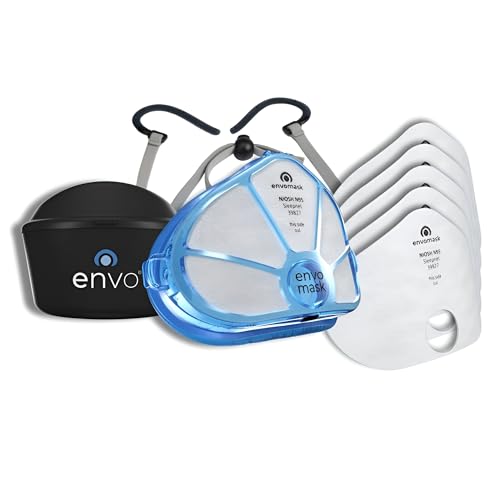
NIOSH-APPROVED: Approved by the National Institute for Occupational Safety & Health (NIOSH), the reusable N95 envo mask, N99 envo pro and N95 envo pro respirator are designed for superior comfort and seal and are ideal for use in many industrial and commercial environments.
Pros and Cons: Is Rig Welding Your Jam?
Rig welding can provide strong earning potential and valuable experience, but the work asks for more than good bead appearance. Consider the complete lifestyle and risk profile.
| Pros | Cons |
|---|---|
| Higher base rates than many entry-level shop jobs | Long shifts and extended time away from home |
| Overtime, shift premiums, per diem, or remote allowances may increase total earnings | Work can be physically demanding and exposed to severe weather |
| Experience with demanding procedures, materials, and inspection requirements | Employment may follow shutdown, project, and energy-market cycles |
| Clear advancement path for welders with documented qualifications and quality | Project-specific tests can determine whether work begins or ends |
| Travel and work in different industrial settings | Remote camps, offshore isolation, noise, fatigue, and limited privacy |
| Union, employee, and contractor paths are available | Contractors may carry major equipment, insurance, tax, and downtime costs |
Rig welding may suit you if you enjoy field work, can follow detailed procedures, remain calm under inspection pressure, and manage travel or rotations. It may be a poor fit if you need a predictable local schedule or dislike repeated testing and strict site controls.
Stepping Into Rig Welding: Your Roadmap
A community college, trade school, union apprenticeship, employer program, or military training path can build the foundation. Program length varies, and completing a course does not automatically make someone ready for code-quality field pipe work.
A realistic path to the first rig-welding job is:
- Build safe fundamentals. Learn SMAW, GMAW, FCAW, and GTAW as relevant; practice joint preparation, fit-up, machine setup, drawing interpretation, and defect recognition.
- Develop pipe and positional skill. Progress from plate to pipe and from comfortable positions to the positions required by target employers. Practice the actual process and test restrictions you expect to encounter.
- Pass relevant performance tests. Pursue an AWS credential or employer qualification that matches the process, material, position, and code needed for the job. Treat 6G as a test position, not a universal license.
- Gain field experience. Structural fabrication, pipe shops, industrial maintenance, pipeline support, and turnaround crews can provide valuable experience before remote or offshore work.
- Document qualifications and quality. Track permitted qualification records, continuity, test dates, processes, positions, and inspection outcomes.
- Complete job-specific onboarding. Obtain TWIC, OPITO training, medical clearance, H2S training, respirator clearance, or other credentials only when the target job requires them.
- Compare the full offer. Review overtime, travel, lodging, per diem, tools, rig requirements, benefits, downtime, and classification before accepting.
Do not buy an expensive welding truck or engine drive merely because some rig-welding jobs use one. First determine whether your target employers hire employee welders, rent rigs, pay a separate rig rate, or require contractors to supply complete equipment.
Products Worth Considering

Crafted with precision, our steel plates are laser-cut, offering unparalleled edge smoothness and dimensional accuracy compared to stamped and sheared parts.

Compatible with TIG/MIG Welding: our owl welding practice kit is made from high quality 17 gauge cold rolled steel sheet, ideal thickness, adaptable to various welding processes such as TIG and MIG, a practical training tool to improve welding accuracy and control

Fun and Functional Dachshund Design: turn practice into art! This welding practice kit lets you craft a charming 3D dachshund (sausage dog) sculpture; Once completed, it serves as an ideal desk decor piece or handmade gift, ideal for Father's Day, birthdays, and holiday gifting for welding enthusiasts and dog lovers alike
A Day—or Night—in a Rig Welder’s Boots
A typical shift may begin with a toolbox talk, permit review, weather check, atmospheric-testing plan, and discussion of simultaneous operations. The welder confirms the drawing, weld identification, material, WPS, consumables, equipment condition, access, and isolation status before touching the joint.
Fit-up may involve checking bevels, root opening, alignment, tacks, cleanliness, preheat, and restraint. Production welding then proceeds pass by pass, with interpass cleaning and inspection. A foreman, inspector, or quality representative may verify hold points before the joint advances.
If visual examination or NDT identifies an unacceptable indication, the repair must follow the approved method. Grinding blindly until a defect “looks gone” is not a repair plan. The discontinuity must be located, removed, re-examined when required, rewelded under the correct procedure, and reinspected.
The shift may end with housekeeping, consumable return, equipment shutdown, permit closeout, documentation, and a handover to the next crew. On remote rotations, the workday may be followed by camp meals and rest rather than a drive home. Fatigue management is part of safe performance, not a sign of weakness.
Wrapping It Up: Your Edge in the Arc
Qualified rig welders commonly use roughly $35–$50 per hour as a practical U.S. planning range, while entry work may pay less and specialized, union, remote, shutdown, or contractor-owned-rig work may pay more. The strongest offer is not always the one with the largest hourly number.
Compare the complete package: overtime rules, workweek definition, per diem, travel, lodging, benefits, equipment responsibility, downtime, and worker classification. Keep your qualifications current, document your quality, and never trade procedure compliance or safety for speed. Those habits protect both your weld record and your long-term earning power.
Frequently Asked Questions
What is the starting pay for a rig welder?
Entry, helper, or limited-experience roles may pay about $25–$35 per hour, depending on location and scope. Passing the employer’s procedure-specific test and demonstrating consistent quality can move a welder toward the $35–$50 range.
Do rig welders receive overtime and benefits?
Many employee positions provide overtime and benefits, but the package varies. Covered, nonexempt employees generally receive at least 1.5 times their regular rate after 40 hours in one workweek under federal law. State law, union agreements, and contracts may provide more. Independent contractors usually arrange their own insurance, taxes, and retirement.
How does rig-welding pay compare with shop-welding pay?
Rig and field work often pays more because of travel, difficult conditions, testing requirements, long shifts, and project risk. Shop work may provide steadier hours, less travel, employer-owned equipment, and more predictable year-round employment. Compare annual net compensation rather than hourly rate alone.
Can women and new graduates enter rig welding?
Yes. Hiring should be based on safe performance, qualifications, and ability to meet the job requirements. New graduates often benefit from gaining shop, structural, pipe, maintenance, or turnaround experience before competing for remote or offshore positions.
Is rig welding worth the long hours?
It can be worthwhile for welders who value field experience, travel, and overtime income and who can manage rotations safely. Consider fatigue, family time, project gaps, physical demands, and contractor expenses before deciding.
Does every rig welder need a TWIC card or BOSIET training?
No. TWIC is required when the job needs unescorted access to covered secure maritime areas. BOSIET, HUET, or another offshore-survival course may be required by an offshore operator, especially for helicopter travel. Onshore jobs may require neither.
Is a $60 contractor rig rate the same as a $60 employee wage?
Usually not. A contractor rig rate may need to cover the truck, welding machine, fuel, repairs, insurance, consumables, taxes, travel, and unpaid downtime. An employee wage may come with employer-provided equipment, payroll-tax contributions, workers’ compensation, and benefits.
Sources
- U.S. Bureau of Labor Statistics Occupational Employment and Wage Statistics — official wage comparison for the broader welder occupation.
- U.S. Department of Labor Fact Sheet 23 and California DIR Overtime FAQ — federal workweek overtime and California daily-overtime rules.
- IRS Publication 15 and GSA Per Diem Rates — accountable-plan requirements and federal travel-rate benchmarks.
- AWS Certified Welder Program and Lincoln Electric Excalibur 7018 MR data — performance qualification and consumable guidance.
- OSHA Welding and Cutting Standards — hot-work, fire-prevention, ventilation, and welding-safety requirements.
- TSA TWIC Program and OPITO HUET Standard — maritime-access and offshore helicopter-safety training.