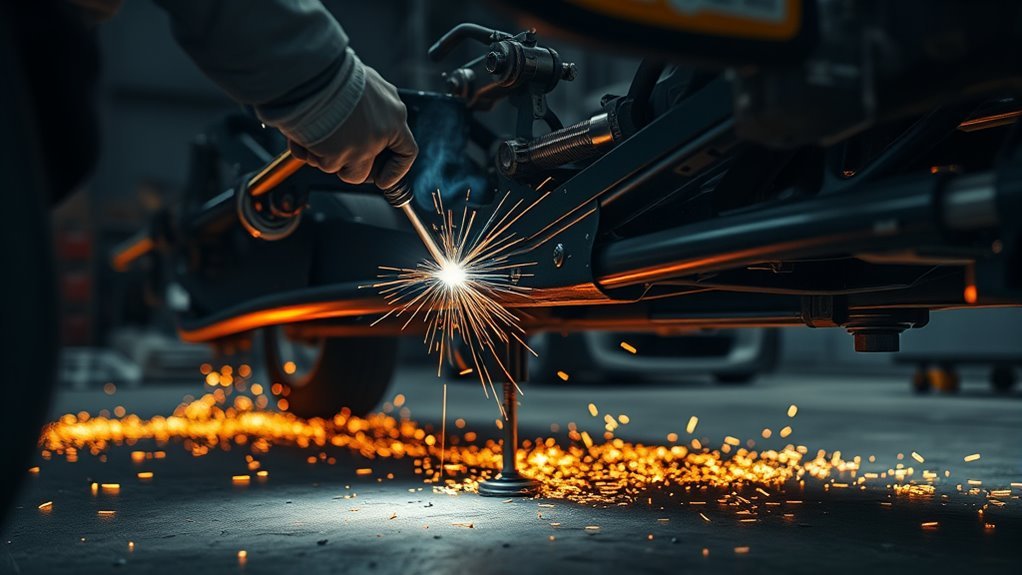
Horizontal welding in auto repair means you weld across a side-facing seam while the joint is on a vertical or near-vertical surface. In weld-position codes, a true horizontal groove weld is called 2G. Many vehicle seams, brackets, frame patches, and body joints are also horizontal but may be closer to 2F fillet, lap, flange, or OEM-specific welds. Either way, the main challenge is the same: gravity tries to pull the molten puddle down before it freezes.
Quick Answer
Horizontal welding in auto repair is a side-facing weld where the bead runs left to right while gravity pulls the puddle downward. For clean results, verify the OEM repair procedure, clean the joint to bare metal, use the correct wire or rod, keep a short arc, favor the upper toe, and weld short controlled passes.
Key Takeaways
- A 2G weld is a horizontal groove weld, but many car repairs use horizontal fillet, lap, flange, or plug welds instead.
- Most auto repair welding depends on clean metal, tight fit-up, short passes, and steady heat control.
- For solid MIG wire on mild steel, ER70S-6 is common; E70T-1 is not solid wire, because “T” means tubular flux-cored wire.
- Too little heat causes poor fusion; too much heat causes sagging, undercut, warping, or burn-through.
- Structural vehicle repairs should follow the OEM repair manual and may require a qualified technician or inspection.
At a Glance
| Time Required | 15 to 30 minutes for setup and practice beads; repair time depends on the part, material, and OEM procedure. |
| Difficulty | Intermediate. Harder than flat welding because the puddle wants to sag. |
| Tools Needed | Welder, matching filler wire or rod, clamps, grinder or wire brush, PPE, fume extraction, fire extinguisher, and scrap metal of the same thickness. |
| Cost | Low if you already own the welder. Expect extra cost for wire, rods, shielding gas, abrasives, PPE, and professional inspection when needed. |
Warning: Do not guess on structural vehicle repairs. Modern cars can use high-strength steel, ultra-high-strength steel, aluminum, adhesives, rivets, sensors, fuel lines, and battery systems near the repair area. Check the OEM repair procedure before welding, and have critical welds done or inspected by a qualified repair technician.
What Is Horizontal Welding in Auto Repair?
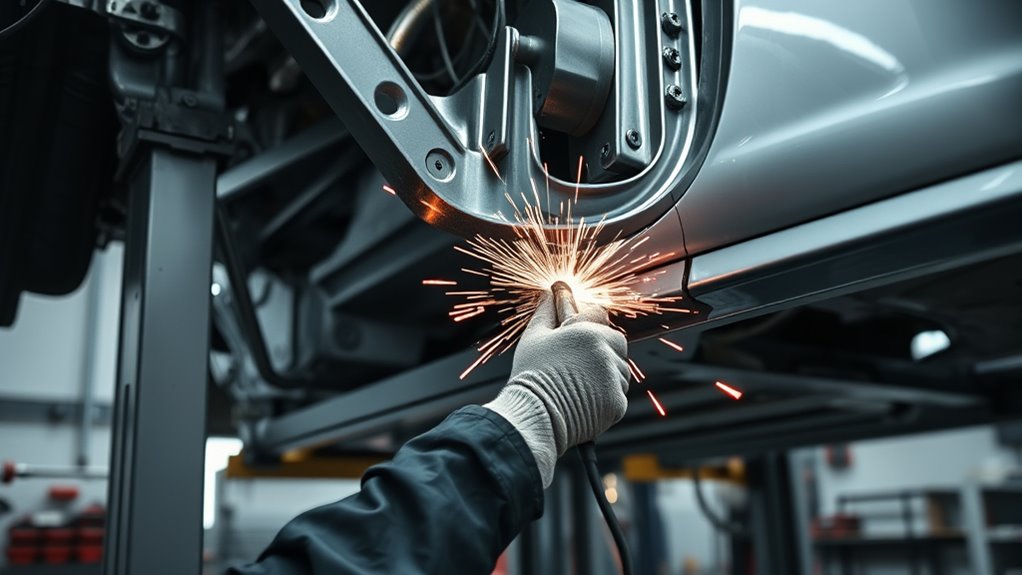
Horizontal welding in auto repair is the process of welding across a joint that runs side to side while the work surface faces you. You may see this on frame sections, support brackets, rocker repairs, patch panels, suspension mounts, or reinforcement plates.
The term 2G is more specific. It means a horizontal groove weld, where the joint groove is on a vertical plane and the weld axis runs horizontally. Many automotive repairs are not groove welds. They may be 2F-style fillet welds, lap welds, flange welds, plug welds, or spot-weld replacements. Still, they share one major challenge: the puddle wants to roll downward.
Your job is to keep the molten metal small, supported, and tied into both edges of the joint. That takes clean metal, tight fit-up, proper heat, a short arc, and steady travel speed. If the puddle gets too hot or too wide, the bead can sag. If it stays too cold, it may sit on top without full fusion.
Note: Horizontal welding is a position, not a welding process. You can weld horizontally with MIG, flux-core, stick, or TIG, but the right choice depends on the vehicle material, joint design, and repair procedure.
Why 2G and Horizontal Welds Matter on Cars
Horizontal welds matter because many repairs carry load, vibration, and road shock. A weak weld on a bracket, rail, crossmember, or reinforcement plate can crack later, even if it looks acceptable at first glance.
Good horizontal welding protects joint strength, panel alignment, and repair durability. Poor control can create sagging, undercut, porosity, lack of fusion, or distortion. These defects are not just cosmetic. On a structural part, they can reduce the strength of the repair.
A clean horizontal weld is not just smooth. It is tied into both edges, free of cracks and visible porosity, and made with the filler, process, and heat range allowed for that repair.
Modern auto repair also has another layer: the vehicle maker may limit where you can weld. Some advanced steels can lose strength if overheated. Some repairs require squeeze-type resistance spot welding, plug welds, rivet bonding, sectioning, or full part replacement instead of a continuous bead.
Before You Weld: Check the Repair Procedure
Before you strike an arc on a car, confirm that welding is allowed in that location. Do not rely only on the old damaged part or on a general welding habit. Use the OEM repair manual or service information for the exact model, year, material, and part.
- Check the material. Mild steel, high-strength steel, ultra-high-strength steel, galvanized steel, stainless steel, and aluminum need different methods.
- Find the approved joining method. The repair may call for MIG welding, squeeze-type resistance spot welding, plug welds, brazing, adhesive bonding, rivets, or replacement.
- Protect the vehicle. Disconnect the battery when required, protect electronics, move or shield fuel and brake lines, and keep heat away from trim, glass, wiring, seam sealer, and airbags.
- Remove coatings safely. Paint, undercoating, seam sealer, rust, zinc coating, and oil can contaminate the weld and create hazardous fumes.
- Practice first. Use scrap metal with the same thickness and position before welding the actual part.
Pro Tip: If the practice bead sags, undercuts, or burns through, do not move to the car yet. Adjust heat, travel speed, wire size, or joint fit-up on scrap until the bead is repeatable.
How 2G Welding Works
When you run a 2G weld, you weld a horizontal groove on a vertical surface. The puddle forms at the arc, then gravity pulls it downward before it freezes. You control that by keeping the puddle small and moving at a steady pace.
Start with clean joint preparation. Remove paint, rust, oil, seam sealer, zinc residue where the procedure allows, and any loose coating near the weld. Fit the parts tightly so the gap does not force you to overfill the joint. Clamp the work so the panel or bracket cannot move as heat builds.
Set your welder from the wire, rod, gas, thickness, and position chart, then test on scrap. A horizontal weld usually needs a balance: enough heat for fusion, but not so much that the puddle washes down.
- Clean both sides of the joint to bright metal where welding will occur.
- Clamp the parts so the gap stays even.
- Use tacks to hold alignment before a full pass.
- Keep the arc short and steady.
- Use stringer beads or short controlled passes instead of wide weaves.
- Pause only long enough for the upper toe to fill.
- Let the part cool between short passes when panel warping is a risk.
For thin body panels, use small welds, skip around, and cool the work as needed. For heavier brackets or frame sections, follow the repair procedure for bead size, pass count, and inspection.
Choose the Right Process for Horizontal Auto Welding
The best process depends on the material and the repair. Do not pick a process only because it is available in your garage.
| Process | Best Use in Auto Repair | Watch Out For |
| MIG/GMAW | Common for mild-steel panels, brackets, plug welds, and many shop repairs when approved. | Needs clean metal, correct shielding gas, and careful heat control on thin panels. |
| FCAW/flux-core | Useful on thicker mild steel and outdoor work when the wire is rated for the position. | More spatter, slag, and fumes. Not ideal for thin cosmetic body panels. |
| Stick/SMAW | Heavier steel repairs, shop fabrication, and practice joints where the procedure allows it. | Hard to control on thin sheet metal. Rod storage and slag cleanup matter. |
| TIG/GTAW | Precise welds on thin steel, stainless, or aluminum when approved. | Slower and more skill-intensive. Requires very clean metal. |
For most mild-steel auto work, MIG with solid wire and shielding gas is the common shop choice. Flux-core can work well on heavier steel, but it needs more cleanup and fume control. Stick welding with 7018 is better suited to heavier steel than thin body panels.
Products Worth Considering
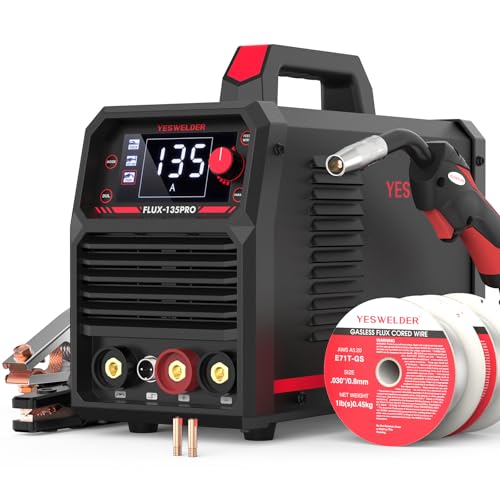
READY OUT OF THE BOX: Start welding immediately! It masterfully handles Gasless Flux Core MIG, Stick, and Lift TIG (Extra Lift TIG torch required). This budget-friendly 3-in-1 machine includes extra E71T-GS .030''&.035'' flux core wires, known for its smooth arc and high feedability. Say goodbye to heavy shielding gas cylinders—perfect for outdoor, windy, or all-position welding.

Compatible Welder Models: this compatible with KP1939-1 replacement kit is designed for use with 170A flux core welders; Before ordering, please confirm your welder uses the KP1939-1 nozzle interface by checking your welder manual or comparing the nozzle size with our product images
Best Torch Angles for Clean 2G Welds
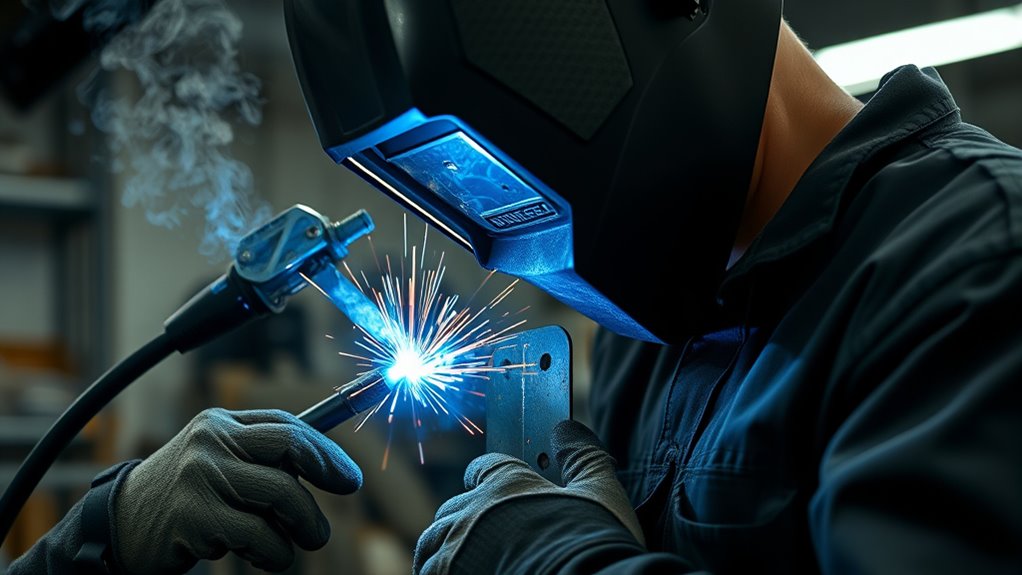
A clean horizontal weld starts with a stable torch or electrode angle. The exact angle depends on the process, joint, and wire or rod, but the goal stays the same: direct heat into both sides of the joint without letting the puddle spill down.
Torch Angle Basics
For MIG or flux-core on a horizontal fillet-style joint, hold the work angle so the wire points into the joint and splits the two pieces. On a 90-degree joint, that is often near 45 degrees, but you may aim slightly more toward the thicker piece or upper toe if the puddle wants to sag.
Use a small travel angle, often about 5 to 15 degrees. Keep it steady. Too much angle can stretch the bead, reduce shielding, and push the puddle out of shape. Too flat an angle can leave weak tie-in at one edge.
For stick welding with 7018 on heavier steel, keep a short arc and a steady rod angle. Favor the upper edge slightly so the bead does not roll down. Avoid a wide weave unless the procedure calls for it.
- Short arc: improves control and helps reduce spatter.
- Steady travel speed: keeps the bead even.
- Upper-toe focus: helps fight gravity in the horizontal position.
- Small puddle: freezes faster and sags less.
- Stringer beads: are easier to control than wide weaves.
Travel Angle Control
Travel angle controls where the arc force and heat go. If the lower edge gets too much metal, raise your aim slightly toward the top toe. If the top edge is undercut, slow down slightly and let it fill before moving on.
Do not jerk the gun or rod to “catch” the puddle. Make small, smooth changes. Watch the leading edge of the puddle, not just the bright arc. The bead should wet into both sides without a cold ridge along the top or a heavy droop along the bottom.
Pick the Right Filler Metal for 2G
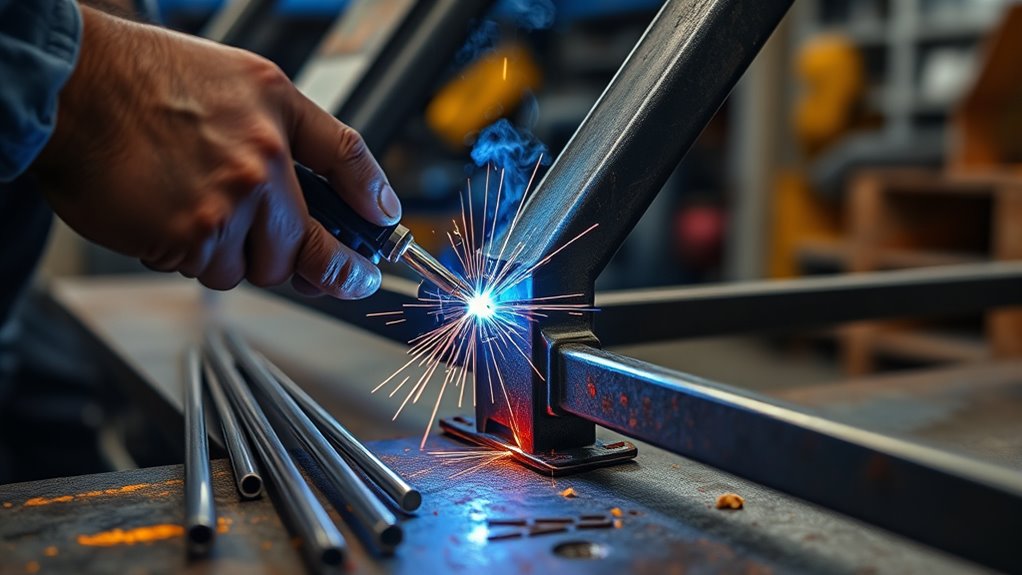
Filler metal must match the base metal, process, joint strength, and repair procedure. Do not choose wire or rod by position alone. Check the filler classification, manufacturer chart, shielding gas requirements, and OEM repair instructions.
| Filler | Type | Good Fit | Caution |
| ER70S-6 | Solid MIG wire | Clean mild-steel auto panels and brackets when approved. | Needs shielding gas and clean metal. |
| E71T-11 | Self-shielded flux-cored wire | Outdoor mild-steel work and thicker practice pieces. | Creates slag and more fumes. Check position rating and repair approval. |
| E71T-1 | Gas-shielded flux-cored wire | Heavier mild-steel fabrication and some structural work. | Not solid wire. Requires the correct gas and cleanup. |
| E7018 | Low-hydrogen stick electrode | Heavier steel repairs, practice coupons, and shop fabrication. | Not for thin body panels. Keep rods dry and follow storage directions. |
| E6013 | General-purpose stick electrode | Light practice and non-critical mild-steel work. | Not a low-hydrogen structural substitute for 7018. |
Products Worth Considering

ER70S-6 MIG WIRE: It's the most common wire of the copper-coated mild steel GMAW (MIG) wires for single or multiple pass welding.

High-quality: ARCCAPTAIN's ER70S-6 mig welding wire .035" meets industry standards(Net Weight: 10lbs), ensuring consistent performance, superior strength. With its smooth feeding and stable welding parameters, you can achieve optimal penetration, high deposition rates, and exceptional overall welding performance.

High-quality: ARCCAPTAIN's ER70S-6 mig welding wire .030" meets industry standards(Net Weight: 10lbs), ensuring consistent performance, superior strength. With its smooth feeding and stable welding parameters, you can achieve optimal penetration, high deposition rates, and exceptional overall welding performance.
Wire Types for 2G
For solid-wire MIG on clean mild steel, ER70S-6 is a common choice because it works well with typical shielding gas and has deoxidizers that help with minor mill scale. It still needs clean, bare metal for a sound weld.
For flux-core, choose a wire that is rated for the welding position and the base metal. Self-shielded flux-core can help outdoors, but it creates slag and more fume. Gas-shielded flux-core can deposit metal fast on heavier steel, but it is usually too aggressive for thin cosmetic panels.
Positional Capability Codes
Read the filler classification before welding. With stick electrodes, the number after the tensile-strength digits helps indicate position capability. With flux-cored wires, the classification and manufacturer data sheet tell you whether the wire is rated for all positions or limited positions.
Do not assume a wire is safe for a horizontal vehicle repair just because it runs smoothly on scrap. Match it to the material, thickness, joint type, and repair procedure.
Control Heat and Sag
Heat control is the difference between a bead that ties in and a bead that droops. Too little heat can leave lack of fusion or poor penetration. Too much heat can cause sagging, undercut, burn-through, warping, or excessive reinforcement.
- Use stringer beads instead of wide weaves.
- Keep the arc short and the puddle small.
- Favor the upper toe if the bead starts to roll downward.
- Use short passes on thin panels to limit heat buildup.
- Let the work cool between passes when distortion starts.
- Adjust one setting at a time on scrap before welding the vehicle.
Step-by-Step Horizontal Welding Method
Use this basic sequence for practice and non-critical mild-steel work. For vehicle structure, follow the OEM procedure first.
- Identify the material and repair method. Confirm whether the part can be welded and what process is allowed.
- Prepare the work area. Clear flammables, protect glass and wiring, and keep a fire extinguisher nearby.
- Clean the metal. Remove paint, rust, oil, undercoating, seam sealer, and zinc residue where the repair procedure allows.
- Fit and clamp the joint. Keep the gap even. Poor fit-up makes horizontal welding much harder.
- Set the machine. Start with the wire, rod, gas, and material-thickness chart, then fine-tune on scrap.
- Tack first. Use small tacks to hold alignment and reduce movement.
- Run short controlled beads. Watch the puddle, keep the arc short, and avoid overwelding.
- Clean between passes. Remove slag, spatter, and contamination before adding another bead.
- Inspect the weld. Look for cracks, porosity, undercut, poor tie-in, burn-through, and distortion.
Common 2G Welding Problems
Most horizontal welding problems come from heat, angle, travel speed, fit-up, or contamination. Use the bead shape as feedback.
| Problem | Likely Cause | Fix |
| Sagging bead | Too much heat, wide puddle, slow travel, or low aim. | Reduce heat, speed up slightly, use stringers, and favor the upper toe. |
| Undercut at the top edge | Moving too fast or not letting the upper toe fill. | Slow slightly, hold the upper edge a moment, and reduce travel angle. |
| Lack of fusion | Too cold, dirty metal, poor angle, long arc, or poor fit-up. | Clean better, increase heat as needed, shorten the arc, and aim into both edges. |
| Porosity | Contamination, poor gas coverage, wind, paint, rust, oil, or damp electrodes. | Clean to bare metal, check gas flow, block drafts, and store rods or wire correctly. |
| Burn-through | Too much heat on thin metal or a gap that is too large. | Lower heat, use shorter welds, improve fit-up, and practice on matching scrap. |
| Slag inclusion | Flux-core or stick slag trapped between passes. | Chip and brush fully before the next pass. Avoid wide cold laps. |
Safety Tips for Horizontal Welding
Horizontal welding puts sparks, spatter, fumes, and heat near panels, wiring, coatings, and hidden cavities. Treat it as hot work, not just metal repair.
The Occupational Safety and Health Administration lists welding hazards that include metal fumes, ultraviolet radiation, burns, eye damage, electrical shock, cuts, and crushed toes or fingers. Wear a welding helmet with the correct shade, safety glasses under the helmet, welding gloves, flame-resistant clothing, and hearing protection when grinding or chipping.
Use ventilation or local fume extraction, especially around coated, galvanized, painted, or confined areas. The CDC/NIOSH notes that welding fumes are made of metals and often contain manganese. Do not breathe fumes from zinc coating, paint, seam sealer, undercoating, brake cleaner residue, or unknown coatings.
Follow fire-prevention rules. OSHA’s welding, cutting, and brazing standard requires fire hazards to be moved or guarded and suitable fire-extinguishing equipment to be ready for use. In risky areas, a fire watch may be required after welding because sparks can smolder inside panels, trim, or insulation.
- Remove or shield combustible materials near the weld area.
- Protect fuel lines, brake lines, wiring, trim, glass, and upholstery.
- Keep a fire extinguisher within reach.
- Use fume extraction close to the weld when possible.
- Never weld near flammable vapors, fuel leaks, or solvent residue.
- Inspect both sides of the panel after welding if you can reach them.
- Do not use oxygen for ventilation.
Practice Horizontal Welding on Scrap First
Before you weld on a vehicle, practice horizontal welding on scrap metal that matches the repair thickness. Position the scrap vertically so the weld runs side to side, just like the real repair.
Run short beads and compare the results. A good practice bead should be even, tied into both edges, and free of visible cracks or porosity. The top toe should not be undercut, and the lower edge should not droop like a shelf.
Change only one thing at a time. Adjust voltage, wire speed, amperage, travel speed, or angle, then run another bead. This makes it easier to find the cause of sagging or poor fusion.
For stick welding, clean slag between passes and keep low-hydrogen rods dry according to the manufacturer’s instructions. TWI notes that electrode performance depends on good storage and that moisture control matters for basic and basic-rutile electrodes.
Inspect the Weld Before You Finish
Do not grind a bad weld flat and call it fixed. Grinding can hide problems without correcting them. Inspect the bead first.
- Look for cracks. Any crack is a reject on a structural repair.
- Check tie-in. The bead should blend into both sides, not sit on top.
- Check for porosity. Pinholes often mean contamination or shielding problems.
- Watch for undercut. A groove along the upper toe can weaken the joint.
- Check distortion. Warped panels or shifted brackets may need correction before final finishing.
- Clean the back side if accessible. Sparks, coating damage, and heat marks can create later corrosion or fire risk.
On cosmetic panels, finish the weld carefully so you do not thin the surrounding metal. On structural areas, follow the repair procedure for grinding limits, corrosion protection, seam sealer, primer, cavity wax, and inspection.
Frequently Asked Questions
Can you run 7018 horizontally?
Yes, you can run 7018 horizontally on suitable steel when the joint, thickness, and procedure allow it. Keep a short arc, use stringer beads, control heat, and store low-hydrogen rods dry according to the manufacturer’s directions. It is usually a poor choice for thin body panels.
Is horizontal welding hard?
Horizontal welding is harder than flat welding because gravity pulls the puddle down. It becomes easier when you keep the puddle small, use a short arc, favor the upper toe, and practice on scrap in the same position before welding the real part.
What are the 4 types of welding positions?
The four basic welding positions are flat, horizontal, vertical, and overhead. Groove welds often use G codes, such as 1G, 2G, 3G, and 4G. Fillet welds often use F codes, such as 1F, 2F, 3F, and 4F.
Is 2G the same as every horizontal weld?
No. 2G refers to a horizontal groove weld. A horizontal fillet weld is usually 2F. Auto repair often includes lap, flange, plug, and spot-weld replacement joints, so it is better to say “horizontal welding” unless you are truly making a 2G groove weld.
Can you MIG weld horizontally on car panels?
Yes, MIG can weld horizontally on mild-steel car panels when the repair procedure allows it. Use clean metal, correct wire and gas, short welds, low heat, and cooling time between passes to reduce burn-through and warping.
Conclusion
A clean horizontal weld in auto repair comes from control, not speed. First, confirm the repair procedure. Then clean the joint, clamp it tight, choose the right filler, set the machine on scrap, and keep the puddle small. If the bead ties into both edges without sagging, undercut, cracks, or porosity, you are on the right track. If it does not, fix the setup before you touch the vehicle.
Sources
- OSHA 29 CFR 1910.252, Welding, Cutting, and Brazing — fire prevention, eye protection, ventilation, and hot-work safety requirements.
- OSHA Welding, Cutting, and Brazing Hazards and Solutions — welding hazards including fumes, UV radiation, burns, eye injury, shock, and other shop risks.
- CDC/NIOSH Welding Fumes and Manganese — current welding fume and manganese exposure information.
- TWI: Equipment for Manual Metal Arc Welding — electrode storage, PPE, fume extraction, and SMAW equipment basics.
- Ebrahimi et al., The Effect of Groove Shape on Molten Metal Flow Behaviour in Gas Metal Arc Welding — technical background on GMAW melt-pool behavior and process effects.