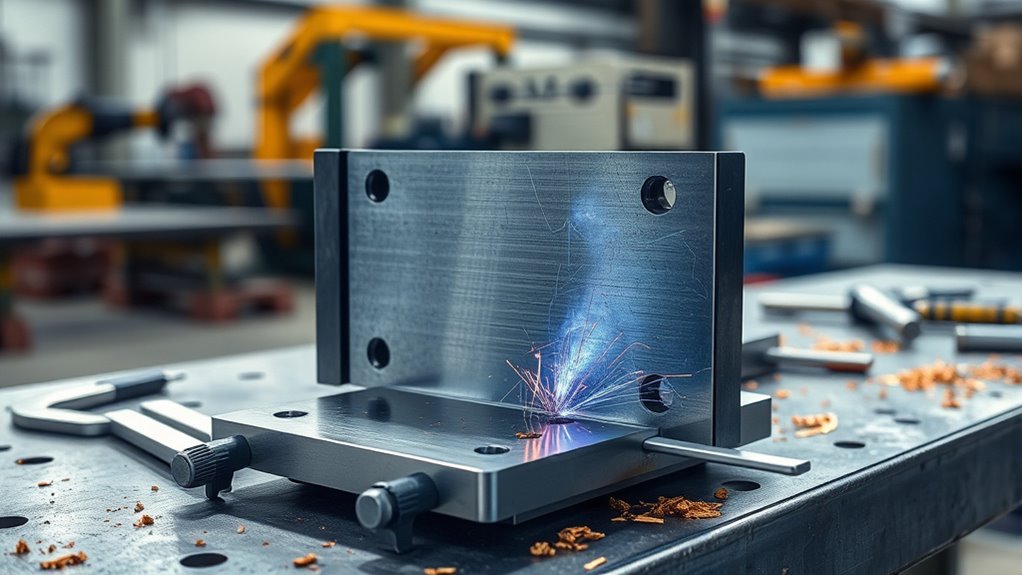
A weld coupon is a controlled piece or assembly that is welded so the weld can be examined, tested, practiced, or qualified before similar work is accepted. Depending on its purpose, the coupon may be a plate, a T-joint, pipe, tube, or another specified shape. Its material, joint design, position, and welding variables should match the written procedure or practice goal.
Quick Answer
A weld coupon is a test weld made on a controlled sample. Welders use coupons for practice, welding-procedure qualification, welder performance qualification, or production quality checks. The completed coupon may be visually inspected, examined by NDT, or cut into bend, tensile, macroetch, or other test specimens.
Key Takeaways
- A weld coupon is the welded test assembly; pieces cut from it for mechanical testing are more precisely called test specimens.
- Practice coupons build skill, but they do not create a formal qualification record.
- Procedure and performance coupons must follow the governing code, contract, WPS, and test instructions.
- Coupon dimensions and pass/fail limits are not universal; they depend on the applicable standard and qualification range.
- Visual testing, NDT, and destructive tests reveal different types of discontinuities, so the required test method must match the material and code.
What’s in This Article
- What Is a Weld Coupon?
- Weld Coupon vs. Test Specimen
- Types of Weld Coupons
- Why Weld Coupons Matter in Testing
- How Weld Coupons Are Prepared
- Common Weld Coupon Shapes and Sizes
- Weld Coupon Testing Methods
- What Makes a Weld Coupon Pass or Fail?
- Weld Coupons in Certification Exams
- How Weld Coupons Support Quality Control
- Common Mistakes That Ruin a Weld Coupon
- How to Choose the Right Weld Coupon
- Frequently Asked Questions
- Conclusion
- Sources
What Is a Weld Coupon?
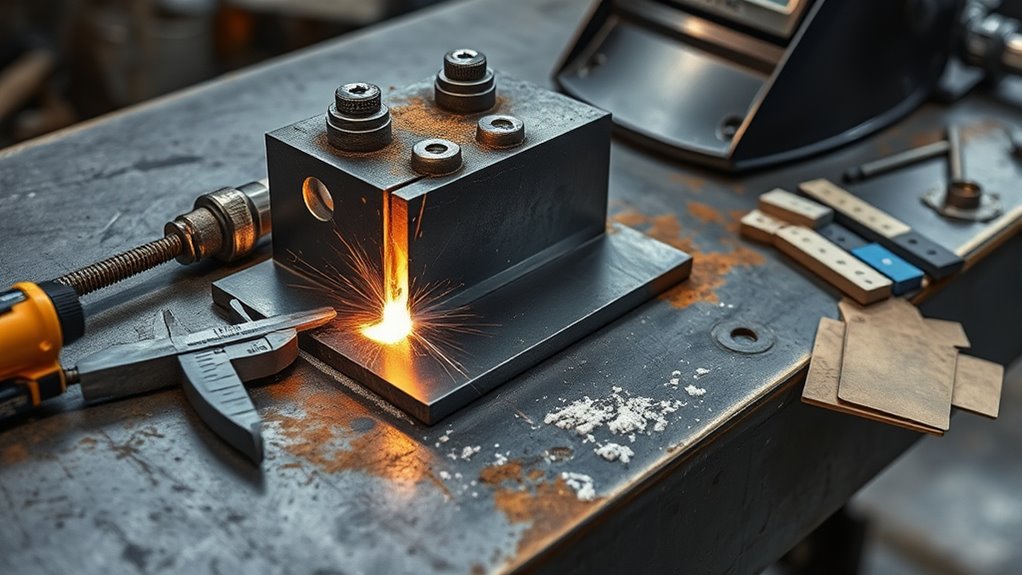
A weld coupon is a sample weldment made under controlled conditions. It gives you a smaller, traceable way to evaluate a welding process, a written procedure, or a welder’s ability without risking a finished component.
The coupon may copy a production joint, but it does not always have to look like the final part. A code may prescribe a standardized plate, pipe, groove, fillet, or workmanship coupon because that geometry provides a repeatable test. The important point is that the coupon represents the variables being evaluated, such as base metal, filler metal, process, thickness, position, joint details, backing, shielding, preheat, and technique.
Butt joints and T-joints are common because they represent groove and fillet welds used in fabrication. Pipe and tube coupons are used when diameter, wall thickness, fixed position, or access around the joint matters. A coupon can help you refine technique, control heat input, improve weld quality, and maintain consistency across passes.
A coupon is useful only when its material, joint, position, variables, and test method represent the qualification or production question you need to answer.
In a qualification setting, the coupon creates objective evidence. Inspectors compare the completed weld and any test specimens with the acceptance criteria in the governing standard. Practice coupons can also help you understand bead profile, penetration, fusion, and fillet weld size, but practice alone does not qualify a procedure or certify a welder.
Weld Coupon vs. Test Specimen
The terms are often used loosely in shops, but the distinction matters in formal testing:
- Weld coupon: The complete plate, pipe, tube, T-joint, or other assembly that is welded for evaluation.
- Test specimen: A piece removed from the completed coupon and machined or prepared for a specific test, such as a face bend, root bend, side bend, tensile, macroetch, impact, or fillet-break test.
- Production weld: The actual weld placed in the finished component. A production weld is not automatically a coupon, although some standards allow qualification or examination through specified production testing.
This difference protects traceability. The coupon identification should carry through to each specimen so the laboratory, inspector, employer, and welder can connect every result to the correct test assembly.
Note: In casual training, people may call a small bead-practice strip a coupon. In code work, use the terminology and specimen layout required by the governing document.
Types of Weld Coupons
Not every coupon serves the same purpose. Before you prepare one, identify which of these categories applies.
Products Worth Considering

Material: low carbon steel; Finish: Plain

AWS D1.1 Compliant Weld Geometry - Limited Thickness Qualification Plate Designed for welder performance qualification and welding procedure testing in accordance with AWS D1.1 standards. Assembled and Ready to Weld with 45 degree bevel and a 1/4" Root Gap

1" Thick Weld Test Plate Set beveled to 22.5 degrees per plate for a total of 45 degree grove. 2" Wide by 1/4 thick backing strip with run-off tabs. 4" Wide (each plate) with 22.5 degre (+/- 3 degrees) bevels on both sides 6" Height on Both Plates Unit is assembled and ready to weld
Practice Coupons
A practice coupon helps you develop arc starts, travel speed, work angle, bead placement, root control, interpass cleaning, and heat management. You may repeat practice as often as needed, but the work does not become a formal qualification unless it is witnessed, documented, and tested under the required program.
Procedure Qualification Coupons
A procedure qualification coupon is welded to prove that a proposed set of welding variables can produce an acceptable joint. The actual variables used and the test results are recorded in a procedure qualification record, often called a PQR. That record supports a WPS within the ranges permitted by the governing standard.
The current AWS B2.1/B2.1M:2026 specification separates procedure qualification from welder and welding-operator performance qualification. Other construction codes may provide their own rules or modify the qualification requirements.
Welder Performance Qualification Coupons
A performance coupon tests whether a welder or welding operator can follow a WPS and deposit an acceptable weld within specified essential variables. The test may qualify only certain processes, positions, materials, filler-metal groupings, thicknesses, pipe diameters, joint details, or progression directions. The exact range comes from the applicable code, not from the coupon’s appearance alone.
Production and Verification Coupons
Some contracts, quality plans, and construction standards require production test plates, extension coupons, mock-ups, or periodic verification coupons. These samples can confirm that production conditions remain capable of meeting requirements. They do not replace the required inspection of the actual work unless the governing document specifically says they do.
Why Weld Coupons Matter in Testing
Weld coupons create repeatable evidence. They help separate opinion from measurable results and can show whether a procedure, welder, consumable combination, or production setup meets the stated requirements.
Test Accuracy
Accurate testing starts with a representative sample. If the coupon uses the wrong base metal, thickness, joint detail, position, backing, or welding process, the result may not answer the production question. Matching the essential variables improves test reliability and makes the result defensible.
Coupons also let inspectors remove specimens from known locations. That is important because a face bend, root bend, side bend, tensile specimen, or macro section evaluates a particular part of the weld. A specimen cut from the wrong location can invalidate the test.
Code Compliance
Coupons can support compliance, but a passing coupon is not a universal approval. The employer, inspector, or examiner must apply the correct edition and acceptance criteria for the job. For example:
- AWS D1.1/D1.1M:2025-AMD1 covers structural welding of commonly used carbon and low-alloy constructional steels.
- ASME BPVC Section IX, 2025 edition contains qualification rules used by other Boiler and Pressure Vessel Code sections.
- API Standard 1104, 22nd edition addresses welding of pipelines and related facilities within its stated scope.
The contract may adopt a different edition, add project requirements, or use another standard. Always confirm the governing document before cutting material or striking an arc.
Process Validation
A procedure coupon helps validate the welding variables used to create a WPS. Testing can reveal lack of fusion, cracking, porosity, slag inclusions, poor ductility, inadequate strength, or other unacceptable conditions before full production begins.
During development, you can adjust machine settings, heat input, travel speed, joint preparation, shielding, and consumable handling based on measured results. When stainless steel or another heat-sensitive material is involved, careful heat input management can limit distortion and unwanted metallurgical changes.
Once a procedure is qualified, changing an essential variable outside its permitted range may require a new qualification. The written WPS and governing standard decide which variables are essential.
How Weld Coupons Are Prepared
A coupon should be prepared from the written requirements, not from a generic shop size. A small strip such as 1 inch by 4 inches may be convenient for bead practice, but it is not a universal qualification coupon. Code tests can require much larger plates, specified pipe diameters, exact bevels, defined root openings, backing arrangements, and enough extra material for specimen removal.
- Identify the purpose and governing document. Confirm whether the coupon is for practice, procedure qualification, performance qualification, or production verification.
- Review the WPS or test instructions. Check process, base metal, filler, thickness, diameter, position, joint design, backing, shielding, preheat, interpass temperature, and allowed cleaning methods.
- Select and identify the material. Verify the material specification, grade, thickness, heat or lot identification when required, and surface condition.
- Cut and prepare the joint. Bevel, square, drill, machine, or fit the pieces to the required dimensions. Remove burrs and contamination without changing dimensions beyond tolerance.
- Set the fit-up. Measure root face, root opening, alignment, included angle, and backing or insert placement. Tack the coupon only as allowed.
- Position and secure the assembly. Use a fixture when needed, but do not let the fixture change the required restraint, access, or test position.
- Record the variables. Note amperage, voltage, wire-feed speed, travel speed when required, shielding-gas details, electrode classification and size, preheat, interpass temperature, and pass sequence.
- Weld and inspect at required hold points. Follow the procedure, clean between passes, and stop for examiner checks when the test instructions require them.
- Allow the required cooling or heat treatment. Do not rush inspection, bend testing, or machining while the coupon is too hot or before required postweld treatment is complete.
- Transfer identification before cutting specimens. Mark each specimen so its location and orientation remain traceable to the original coupon.
For sheet-metal practice, careful fit-up and restraint are just as important as machine settings. The same discipline used for proper welding processes helps keep the coupon from moving or distorting.
Pro Tip: Clean the coupon immediately before fit-up and welding. Oil, moisture, paint, rust, mill scale, oxide, zinc coating, and shop debris can create discontinuities or hide whether your technique is actually improving.
Warning: Coupon work still creates arc radiation, fumes, hot metal, sparks, fire risk, grinding debris, and electrical hazards. Use suitable PPE, protect nearby workers, control combustibles, and provide ventilation that meets workplace requirements. Radiographic testing must be performed by authorized personnel using controlled radiation-safety procedures.
Common Weld Coupon Shapes and Sizes
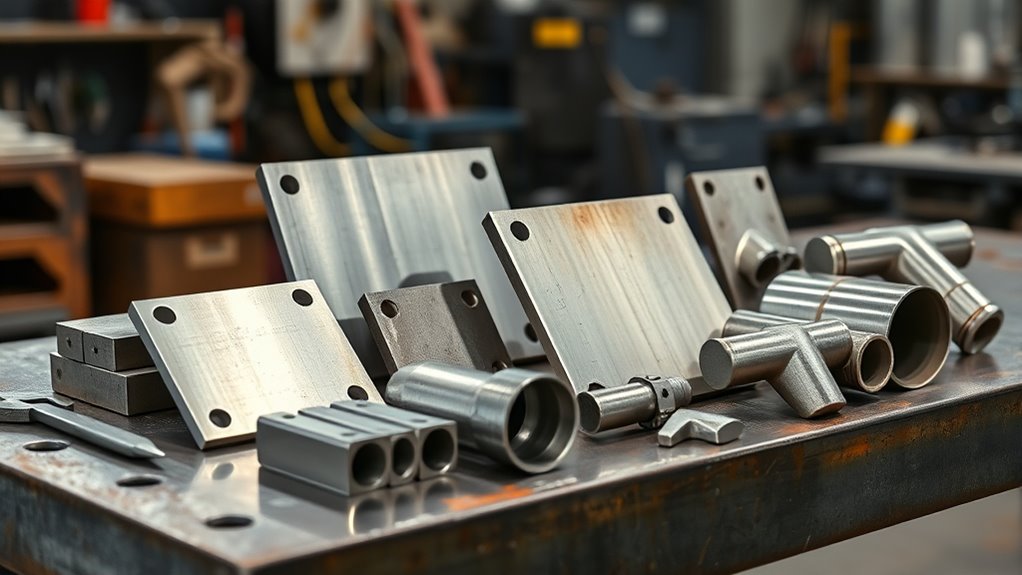
It is more accurate to classify coupons by joint and product form than by saying they are rectangular, square, or round. Common examples include:
- Plate groove coupon: Two plates prepared as a square, V-, bevel-, U-, or other specified groove, with or without backing.
- Plate fillet coupon: A T-joint, lap joint, cruciform, or other specified assembly used for fillet-weld qualification or practice.
- Pipe or tube groove coupon: Two pipe or tube sections joined around the circumference in a specified position.
- Pipe or tube fillet coupon: A branch, socket, sleeve, or plate-to-pipe arrangement when the governing test uses that geometry.
- Workmanship or mock-up coupon: A shape designed to reproduce restricted access, a production detail, a repair, or another job-specific condition.
Coupon size depends on the standard, test type, process, material, and number of specimens needed. Thick plate may require side bends instead of face and root bends. Pipe diameter and wall thickness can affect the specimen layout and the range qualified. Impact, hardness, corrosion, or macro testing can require extra coupon length.
For practice, choose enough length to establish a stable arc and inspect the bead without running off the ends. For formal tests, follow the drawing or dimensions exactly. Starting with properly prepared metal keeps fit-up and contamination from confusing the result.
Weld Coupon Testing Methods
The required test method depends on the coupon’s purpose and governing document. A test plan may use visual testing alone, visual testing plus NDT, destructive testing, or an allowed choice between methods. Do not assume every coupon receives every test.
Visual and NDT Checks
Visual testing is usually the first evaluation because it can reveal surface cracks, poor profile, undercut, overlap, excessive reinforcement, arc strikes, poor starts and stops, dimensional problems, and other visible conditions. Good lighting, access, cleaning, and the correct gauges matter.
Nondestructive testing methods have different capabilities and limits:
- Liquid penetrant testing (PT): Finds surface-breaking discontinuities in clean, solid, nonporous materials. It does not show buried flaws.
- Magnetic particle testing (MT): Finds surface and near-surface discontinuities in ferromagnetic materials. It is not suitable for aluminum, austenitic stainless steel, or other nonferromagnetic materials.
- Radiographic testing (RT): Uses X-rays or gamma rays to create an image of internal features. Technique, geometry, thickness, orientation, and interpretation affect what it can reveal.
- Ultrasonic testing (UT): Uses high-frequency sound to detect and locate discontinuities. The procedure, calibration, material, thickness, surface condition, and operator qualification affect reliability.
NDT results must be evaluated against the acceptance criteria in the applicable standard. An indication is not automatically rejectable; it becomes a defect only when it exceeds the permitted limit or otherwise fails the required criteria.
Destructive Strength Testing
Destructive testing permanently bends, pulls, fractures, etches, or otherwise alters specimens cut from the coupon. Common methods include:
- Guided bend tests: Face, root, side, or longitudinal bends expose the weld and heat-affected zone to severe deformation. Open discontinuities are measured and evaluated under the applicable rules.
- Tensile tests: Reduced-section or full-section specimens measure how the welded joint performs under tension and where it fractures.
- Fillet-weld break or fracture tests: The specimen is loaded to expose the root and fusion surface when the standard calls for this method.
- Nick-break tests: Used by some standards to open the weld and reveal internal soundness.
- Macroetch examination: A polished and etched cross-section shows penetration, fusion, weld size, layer shape, and some internal discontinuities.
- Impact, hardness, corrosion, or chemical tests: Added when service conditions, materials, or the governing document require properties beyond basic soundness and strength.
Specimen cutting and grinding can change the result if performed incorrectly. Keep heat input low during removal, maintain the required orientation, round specimen edges only as permitted, and do not grind away discontinuities. The filler metal and shielding also affect coupon behavior; for example, selecting suitable flux-core MIG wire is part of keeping the test consistent with the intended process.
What Makes a Weld Coupon Pass or Fail?
A coupon passes only when it meets every required acceptance criterion for that test. There is no single universal list of allowable undercut, porosity, reinforcement, cracks, bend openings, tensile strength, or NDT indications.
Evaluation commonly includes:
- Identity and setup: Correct material, filler, dimensions, joint, position, WPS, and traceability.
- Visual acceptance: Required size, contour, profile, root condition, alignment, and absence of prohibited surface defects.
- NDT acceptance: Indications within the limits for the selected method and code.
- Mechanical-test acceptance: Bend, tensile, fracture, macroetch, impact, hardness, or other results within the stated limits.
- Documentation: Complete, accurate records signed or certified by the responsible organization or examiner.
Common failure causes include cracks, lack of fusion, incomplete joint penetration, slag inclusions, excessive porosity, wrong weld size, unacceptable undercut, poor root profile, specimen-preparation damage, and welding outside the permitted variables. Correct protective clothing does not change the acceptance result, but it helps you perform the work safely and with better control.
Warning: Do not grind, polish, peen, gouge, reweld, or repair a formal test coupon unless the WPS, examiner, and governing standard allow that exact action. Unauthorized dressing can invalidate the test even when the final surface looks acceptable.
Weld Coupons in Certification Exams
In a welder certification or employer qualification test, the coupon is a controlled performance test. You must follow the assigned WPS, joint details, position, process, filler, progression, backing rules, cleaning limits, and examiner hold points.
The AWS Certified Welder Program, for example, uses a hands-on performance test administered through an AWS Accredited Test Facility. The completed weld is evaluated against the applicable code or standard before qualification documentation is issued.
Test Specimen Requirements
Formal coupons must match the test instructions. Verify all of the following before welding:
- Base-metal specification, type, and thickness or pipe diameter and wall thickness
- Groove or fillet joint geometry, root face, root opening, included angle, and backing
- Welding process, filler-metal classification, electrode or wire size, shielding, and polarity
- Test position and whether the coupon may rotate
- Preheat, interpass temperature, pass sequence, and cleaning methods
- Required identification, witness marks, hold points, and specimen layout
Understanding electrode selection helps during preparation, but the test WPS—not personal preference—controls the consumable.
Inspection and Testing
After welding, the coupon normally receives visual inspection. The governing standard then specifies the required mechanical tests, NDT, or permitted alternatives. A coupon is not guaranteed to receive NDT before destructive testing, and passing one method does not waive another required method.
When specimens are cut, identification and orientation must remain clear. Face, root, side, or longitudinal bends are not interchangeable unless the standard allows the substitution. The examiner or testing laboratory records each result and compares it with the correct acceptance criteria.
Qualification Standards and Limits
Passing a coupon does not qualify a welder for every job. The record should state the welding process, test position, base metal or grouping, filler metal or grouping, thickness range, pipe-diameter range when applicable, backing condition, progression, and other essential variables.
Qualifications can also require continuity or periodic maintenance. For the AWS Certified Welder credential, AWS states that six-month continuity documentation is required to keep the certification active. Employer and code qualifications may use different continuity, renewal, or transfer rules, so check the actual record and governing program.
How Weld Coupons Support Quality Control
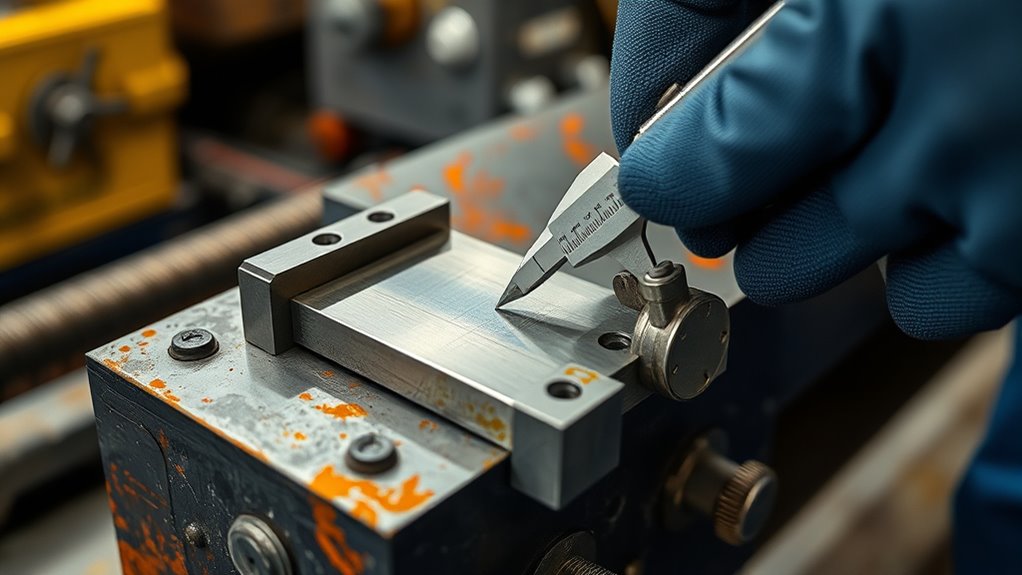
Weld coupons support quality control by turning setup and technique into traceable test results. They can help qualify a WPS, verify personnel performance, confirm consumable combinations, reproduce difficult details, and check whether production variables remain controlled.
Coupons are only one part of a quality system. Material control, WPS availability, welder identification, equipment condition, consumable storage, preheat records, inspection, NDT procedures, calibration, repair control, and final documentation still matter. Safe protective practices are also needed when coupons are cut, ground, machined, or prepared for testing.
| Check | What It Evaluates | Typical Output |
|---|---|---|
| Visual testing | Dimensions, profile, surface condition, alignment, and visible discontinuities | Inspection report and measurements |
| RT or UT | Internal or subsurface indications within each method’s capabilities | Images, scan data, indications, and acceptance decision |
| Tensile testing | Strength and fracture location under tension | Measured load or strength and fracture description |
| Bend or fracture testing | Ductility, fusion, root soundness, and exposed discontinuities | Specimen-by-specimen acceptance record |
| Audit log | Traceability of material, welder, WPS, variables, specimens, and results | Defensible qualification or QC record |
Common Mistakes That Ruin a Weld Coupon
A coupon can fail because of welding defects, but it can also become invalid before testing. Avoid these common mistakes:
- Using the wrong standard or edition: Dimensions and acceptance criteria can change, and project documents may name a specific edition.
- Confusing practice with qualification: A good-looking practice bead is not a witnessed, documented qualification test.
- Poor material control: Unknown grade, wrong thickness, mixed filler, or lost heat and lot identification breaks traceability.
- Bad surface preparation: Rust, oil, oxide, paint, moisture, or zinc can create porosity, inclusions, fumes, and erratic arc behavior.
- Incorrect fit-up: Wrong root opening, land, bevel angle, alignment, or backing changes penetration and may violate the test drawing.
- Welding outside the WPS: Wrong amperage, voltage, polarity, gas, wire speed, progression, preheat, or interpass temperature can invalidate the test.
- Unauthorized grinding or repair: Dressing away a flaw or rewelding without permission can cause automatic rejection.
- Damaging specimens: Excessive cutting heat, wrong orientation, sharp machining marks, lost identification, or incorrect dimensions can spoil valid weld data.
- Testing too soon: Handling hot material, skipping required cooling, or ignoring required heat treatment can affect safety and results.
- Incomplete records: Missing variables, signatures, specimen locations, or results can make the qualification unusable even when the weld passes.
Controlled technique and heat control help protect the coupon, but discipline before and after welding is just as important.
How to Choose the Right Weld Coupon
Choose the coupon by working backward from the job and test requirement.
- Name the purpose. Practice, procedure qualification, welder performance qualification, mock-up, or production verification.
- Identify the governing document. Use the code, contract, customer specification, WPS, test facility instructions, and required edition.
- Match the product form. Plate, sheet, pipe, tube, branch, T-joint, or another representative assembly.
- Match the important variables. Material, thickness, diameter, joint, process, filler, position, backing, progression, shielding, and thermal controls.
- Provide enough material for testing. Include run-on and run-off length, discard areas, and all required specimens.
- Plan identification and records. Mark the coupon and specimens before cutting so every result remains traceable.
TIG, stick, flux core, and MIG coupons can use similar joint shapes, but their WPS variables and qualification limits can differ. For coated materials, include the required preparation and safety precautions; do not assume a galvanized practice coupon represents uncoated production steel.
Note: A practice coupon and a formal qualification coupon may look alike, but only the governing standard, witnessed test conditions, inspection results, and completed records determine whether the weld creates a valid qualification.
Products Worth Considering

♛【What You Get】: You will get 5pcs welding coupons, which is 150mm/5.9inch in length, 50mm/1.96inch in width. Sufficient quantities and commonly used size of welding coupons are enough for your daily welding requires.

♛【What You Get】: You will get 5pcs welding coupons, which is 75mm/2.95inch in length, 75mm/2.95inch in width. Sufficient quantities and commonly used size of welding coupons are enough for your daily welding requires.

♛【What You Get】: You will get 5pcs welding coupons, which is 100mm/3.9inch in length, 50mm/1.96inch in width. Sufficient quantities and commonly used size of welding coupons are enough for your daily welding requires.
Frequently Asked Questions
What is the purpose of a weld coupon?
A weld coupon provides a controlled sample for practice, procedure qualification, welder performance qualification, or production verification. It lets inspectors evaluate fit-up, technique, weld profile, fusion, penetration, soundness, strength, and other required properties without testing a finished component first.
Can you reuse welding coupons?
You may use untouched, unaffected areas of some practice material when it remains safe and useful. Do not reuse a formal qualification coupon or weld over an existing heat-affected area unless the examiner and governing procedure specifically allow it. Previously welded material may no longer represent the required base-metal condition.
What tests are used on weld coupons?
Common methods include visual testing, liquid penetrant, magnetic particle, radiographic, ultrasonic, guided bend, tensile, fillet-break, nick-break, macroetch, impact, hardness, and corrosion testing. The required method depends on the code, material, joint, qualification purpose, and service requirements.
Why do weld coupons fail?
Coupons fail because of rejectable cracks, lack of fusion, incomplete penetration, slag inclusions, porosity, undercut, wrong weld size, poor profile, weak mechanical results, incorrect fit-up, welding outside the WPS, damaged specimens, lost traceability, or unauthorized grinding and repair.
How do you choose a weld coupon size?
For formal testing, use the dimensions and tolerances in the governing standard or test drawing. The coupon must be large enough for the required joint, run-on and run-off areas, discard sections, and all test specimens. For practice, choose enough length to stabilize the arc and inspect repeatable beads.
What is the difference between a weld coupon and a test specimen?
The weld coupon is the complete welded test assembly. A test specimen is a section cut from that coupon and prepared for a specific mechanical, metallographic, or other destructive test. The terms are sometimes used interchangeably in casual shop talk, but formal records should keep them distinct.
Can a coupon pass visual inspection and still fail testing?
Yes. A weld can look acceptable at the surface but contain lack of fusion, incomplete penetration, slag, porosity, cracking, low ductility, or inadequate strength. That is why the governing standard may require NDT or destructive testing in addition to visual inspection.
Does passing one weld coupon qualify every welding position?
No. The qualified positions and ranges depend on the test position, joint, process, material, thickness, pipe diameter, progression, backing, and other essential variables defined by the governing standard. Read the qualification record rather than assuming an all-position approval.
Conclusion
A weld coupon is more than a scrap piece with a bead on it. It is a controlled test assembly that can build skill, qualify a welding procedure, demonstrate welder performance, or support production quality control.
Start with the correct governing document, match the important variables, prepare and identify the coupon carefully, and use the required inspection or test method. Clean work, controlled settings, accurate specimen preparation, and complete records give the result technical value—and keep a good weld from being rejected because of preventable paperwork or handling errors.
Sources
- AWS B2.1/B2.1M:2026, Specification for Welding Procedure and Performance Qualification — procedure qualification, performance qualification, variables, tests, and specimen layouts.
- AWS D1.1/D1.1M:2025-AMD1, Structural Welding Code—Steel — structural-steel WPS, personnel qualification, fabrication, inspection, and NDT context.
- ASME BPVC Section IX, 2025 — welding, brazing, and fusing procedure and performance qualification rules.
- API Standard 1104, 22nd Edition — qualification and welding requirements for pipelines and related facilities within its scope.
- American Society for Nondestructive Testing: NDT Methods — capabilities and limitations of VT, PT, MT, RT, UT, and other NDT methods.
- OSHA Welding, Cutting, and Brazing Standards — workplace requirements related to PPE, ventilation, fire prevention, fumes, and welding hazards.