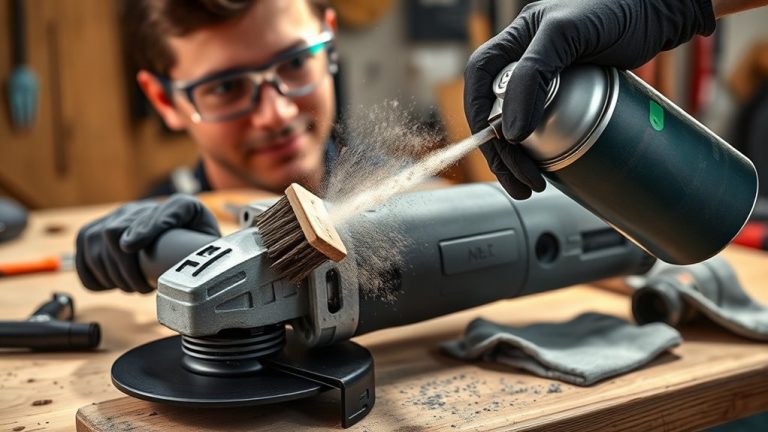
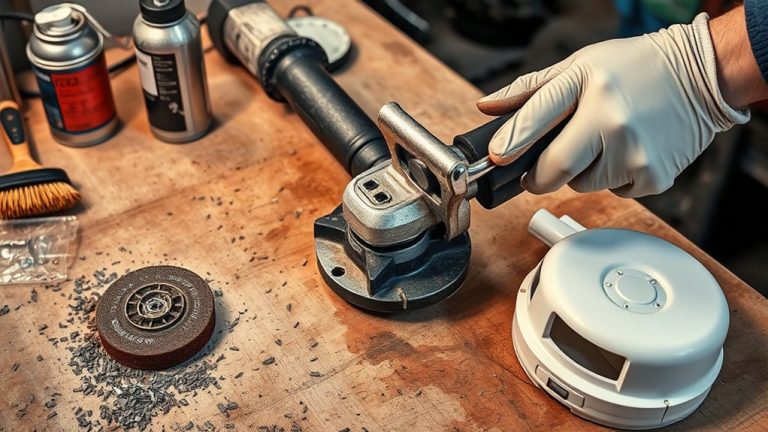
To clean your angle grinder after concrete dust exposure, unplug the tool and wear safety goggles, gloves, and a dust mask. Start by using a soft brush to remove loose dust from vents and shrouds. Rinse the dust shroud under running water and inspect rubber grommets for damage. Check the vacuum hose for blockages and clear any debris. Finally, use a damp foam plate to scrub stubborn residue. Follow these steps for ideal maintenance, and you’ll find more tips ahead.
Why Cleaning Your Angle Grinder Is Essential After Concrete Dust Exposure
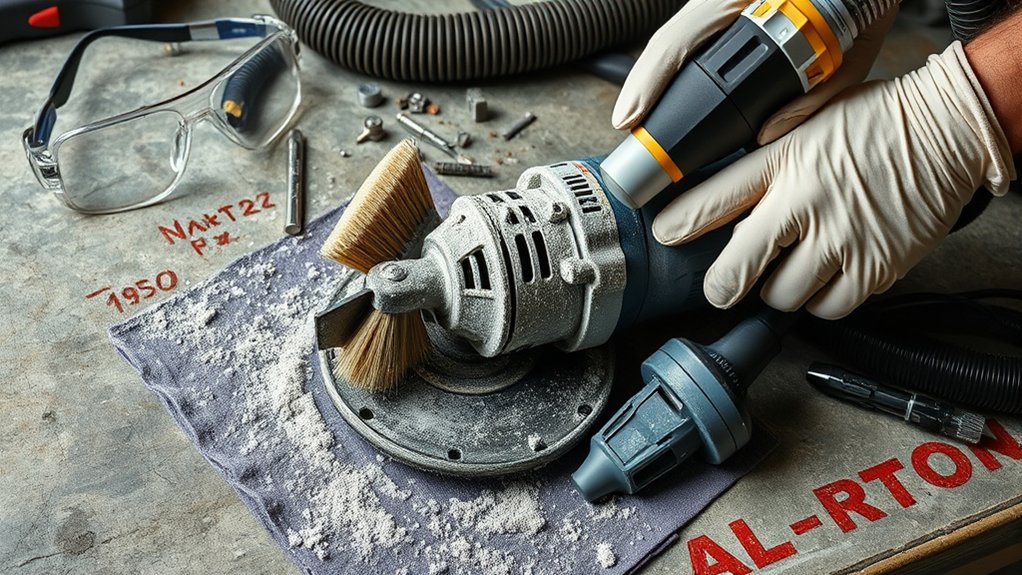
Cleaning your angle grinder after exposure to concrete dust is essential, as it directly impacts the tool’s performance and longevity. Concrete dust can accumulate and damage sensitive components, leading to decreased efficiency and increased wear on parts like rubber grommets. Regular maintenance, including thorough cleaning, prevents abrasive particles from hindering operation, ensuring your grinder remains stable and safe to use.
Neglecting this task not only risks costly repairs but also compromises air quality on job sites. By keeping your grinder clean, you enhance dust collection efficiency, reducing silica exposure and the potential for health issues like silicosis. A well-maintained angle grinder promotes peak performance, allowing you to work effectively while safeguarding your health and safety. Prioritizing cleaning is a step toward liberation, giving you control over your tools and the environment in which you work, ultimately leading to a more productive and secure job site.
Ensure Safety Before Cleaning Your Angle Grinder
Before you start tackling the grime on your angle grinder, make sure it’s unplugged and completely cool to the touch. This prevents burns and eliminates electrical hazards. Next, gear up with the right personal protective equipment (PPE). Don your safety goggles to shield your eyes from any residual concrete dust, along with gloves and a dust mask to protect your skin and lungs.
It’s also essential to work in a well-ventilated area. This minimizes the risk of inhaling airborne silica particles stirred up during cleaning. Consider using a HEPA filter vacuum to capture 99.97% of particles as small as 0.3 microns, ensuring you minimize dust exposure effectively. Finally, always follow the manufacturer guidelines for cleaning procedures to maintain your angle grinder’s lifespan and effectiveness. Taking these safety precautions will empower you to clean efficiently and confidently.
Remove Loose Dust With a Soft Brush
Gently sweep away loose concrete dust from your angle grinder with a soft brush, focusing on areas where debris tends to accumulate, like the vents and motor casing. Use a brush with fine bristles; this will effectively dislodge particles without scratching sensitive components. Pay special attention to the dust shroud and rubber grommets, as these areas can trap fine dust that wears down your grinder over time.
Start at the top and work your way down, applying light pressure to lift and remove the dust. Regularly cleaning your grinder not only enhances its performance but also prolongs its lifespan by preventing dust buildup. After brushing, make sure you dispose of the collected dust properly to minimize airborne particles, protecting your health during cleanup. Taking these steps will keep your angle grinder in prime condition, allowing you to work efficiently and safely on your projects.
Thoroughly Rinse the Shroud and Surroundings
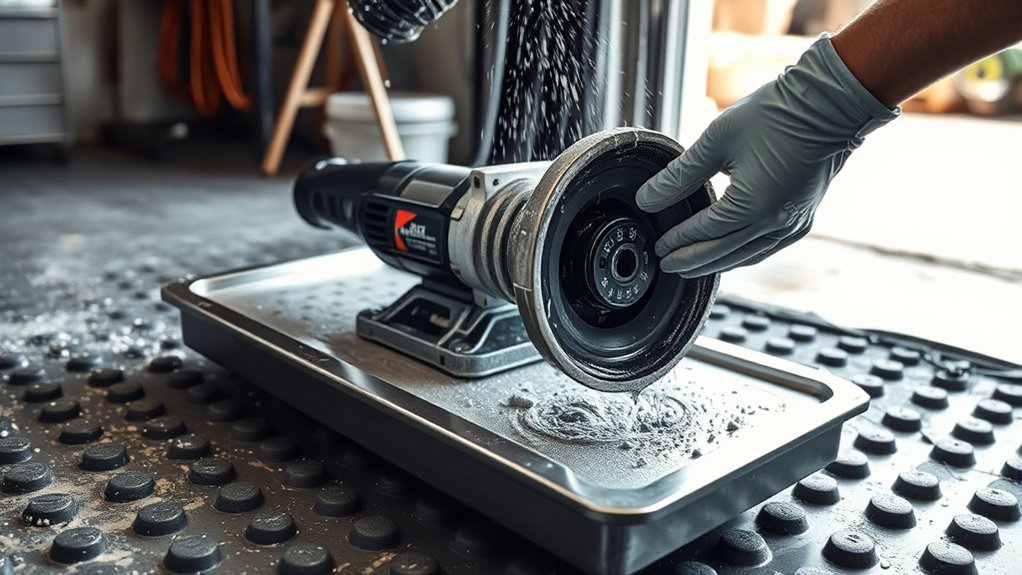
Start by rinsing the dust shroud under running water to remove any concrete slurry residue. Pay close attention to the rubber grommets and rings, as any buildup here can lead to equipment issues. Finally, inspect the shroud for signs of wear or damage, ensuring it remains effective for dust collection.
Rinse Under Running Water
Disconnect the angle grinder from its power source to guarantee safety before you begin rinsing. Position the dust shroud under a steady stream of running water, ensuring you thoroughly rinse both its interior and exterior surfaces. Focus on the rubber grommets and seals; rinse these areas well to prevent concrete slurry buildup that could lead to dry rot. Don’t forget to rinse the vacuum hose and the surrounding area to eliminate any residual dust, which could clog your system during future use. After rinsing, allow all cleaned components to dry completely. This step is essential for maintaining peak performance when you reassemble the angle grinder, ensuring it’s ready for your next project without any hindrance.
Remove Concrete Slurry Residue
After rinsing the dust shroud, it’s important to focus on removing any concrete slurry residue that may have accumulated during grinding. This residue can hinder your grinder’s performance if not addressed. Here’s how to thoroughly rinse and clean:
- Use clean water to rinse the shroud, targeting rings and edges to prevent buildup.
- Employ a foam plate or soft brush to scrub areas affected by slurry.
- Inspect the grinder head for any accumulated material that could lead to overheating.
- Clean all components, especially rubber grommets, to avoid dry rot and maintain integrity.
Inspect for Damage
To guarantee peak performance of your angle grinder, it’s crucial to inspect for any damage after cleaning. Start by thoroughly rinsing the dust shroud to eliminate accumulated concrete debris. Once clean, examine the shroud for cracks or any signs of wear; even minor damage can greatly affect its dust-capturing ability. Next, check the rubber grommets around the shroud; verify they’re intact and free from dry rot, as compromised grommets can cause air leaks, reducing suction efficiency. Don’t forget to clear any concrete dust from the surrounding area where you used the grinder, as residual particles can harm air quality and lead to future equipment problems. Finally, inspect the vacuum hose for clogs to maintain ideal dust collection performance.
Inspect Rubber Grommets for Damage and Maintenance Needs
You should regularly inspect the rubber grommets for any signs of wear, including cracks or dry rot, to guarantee they maintain a proper seal. Look for concrete slurry buildup, as it can affect their flexibility and effectiveness. If you find any damaged grommets, replace them immediately to protect your dust extraction system and your health.
Regular Inspection Schedule
Regular inspections of rubber grommets are essential for maintaining an angle grinder’s performance and safety. Establish a regular inspection schedule to guarantee your equipment functions efficiently. Here’s what to focus on:
- Check for visible cracks or softness in grommets.
- Look for signs of dry rot that could compromise the dust shroud.
- Schedule inspections at least once a week during heavy use.
- Document your findings to track maintenance needs.
Signs of Wear
While maintaining an angle grinder, inspecting rubber grommets for signs of wear is critical to guaranteeing peak performance and safety. Regularly check for cracks, splits, or dry rot in the grommets, as these issues can compromise the integrity of the dust shroud. Damaged grommets may lead to dust leaks, reducing the efficiency of your dust collection system and increasing the risk of silica exposure. Verify the grommets fit securely around the grinder to prevent dust from escaping, which is essential for worker safety and compliance with OSHA standards. If you notice any deterioration, replace the grommets promptly. Finally, document any maintenance or replacement activities to monitor equipment condition and guarantee consistent performance over time.
Replacement Procedures
Inspecting rubber grommets for damage is crucial to maintaining the angle grinder’s performance and safety. Regular checks help guarantee a proper seal, preventing dust from escaping. Here’s how to execute effective replacement procedures:
- Look for signs of wear, cracking, or dry rot.
- Replace damaged grommets immediately to uphold dust collection efficiency and protect against silica exposure.
- Use high-quality, compatible replacement grommets for peak performance.
- Document the condition and replacement dates as part of your maintenance routine.
Check Your Vacuum Hose for Blockages
Maintaining an efficient vacuum hose is essential for ideal dust collection when using an angle grinder. To guarantee maximum suction efficiency, regularly check your vacuum hose for blockages. Even small clogs can greatly reduce airflow and increase your exposure to harmful dust particles, including silica dust. Use a flexible brush or compressed air to clear any debris that might accumulate inside the hose, assuring unobstructed airflow.
Additionally, inspect the hose for kinks, cracks, or splits that could impede suction and allow dust to escape into the air. It’s wise to perform a visual inspection after every 500 square feet of grinding to maintain optimal performance and prevent dust buildup. If you notice extensive wear or damage, replace the vacuum hose immediately. A compromised hose can remarkably decrease the effectiveness of your dust collection system, putting your health at risk.
Use a Foam Plate to Remove Residue Effectively
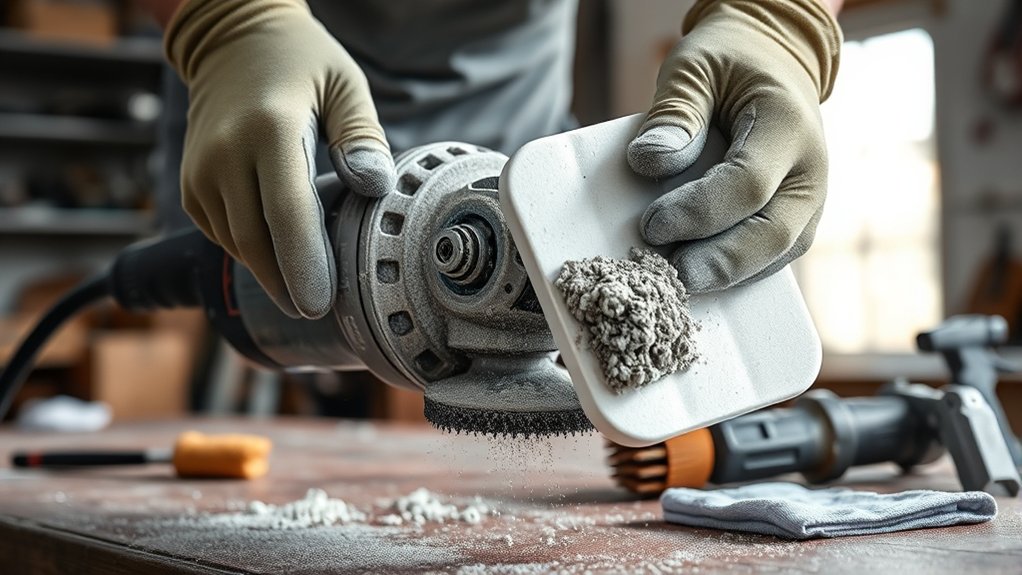
One effective method for cleaning your angle grinder is using a foam plate to scrub away stubborn concrete dust and slurry. This approach is gentle yet efficient, ensuring you don’t damage any sensitive components. Here’s how to do it effectively:
- Dampen the foam plate slightly to enhance its residue-lifting capabilities while preventing scratches.
- Focus on accumulation areas like vents and crevices to maintain ideal airflow and avoid overheating.
- Regularly replace the foam plate to prevent transferring hardened debris back onto the grinder, which can lead to added wear.
- Rinse the foam plate thoroughly after use to remove captured dust and debris for effective future cleaning.
Frequently Asked Questions
How to Clean up Concrete Dust After Grinding?
To effectively manage dust after grinding, disconnect your equipment, then wipe surfaces with a damp cloth. Use a vacuum for fine particles, and make certain all components, like dust shrouds, are cleaned and maintained for peak performance.
How to Clean Dust From an Angle Grinder?
To clean dust from your angle grinder, disconnect it, rinse the dust shroud, use a soft brush on the body, and check the vacuum hose. Prioritize dust prevention by maintaining seals and documenting your upkeep.
How to Clean a Concrete Grinder?
To clean a concrete grinder, unplug it, rinse the dust shroud, scrub the grinder head with a soft brush, inspect hoses for clogs, and check components for wear. Effective dust management guarantees peak performance and longevity.
How to Detox From Concrete Dust?
To detox from concrete dust, implement dust prevention strategies like using HEPA vacuums, wear protective gear, and schedule regular health check-ups. Prioritize air quality monitoring to guarantee a safer environment and reduce health risks effectively.
Conclusion
So, now that you’ve transformed your angle grinder from a concrete dust magnet back to its former glory, give yourself a pat on the back! Just remember, cleaning it isn’t a workout routine, so don’t try to break a sweat. After all, you’re not auditioning for a dust-busting superhero role. Maintain that shiny tool, and it’ll reward you by not turning your next project into a mini dust storm. Happy grinding—just not too dusty!