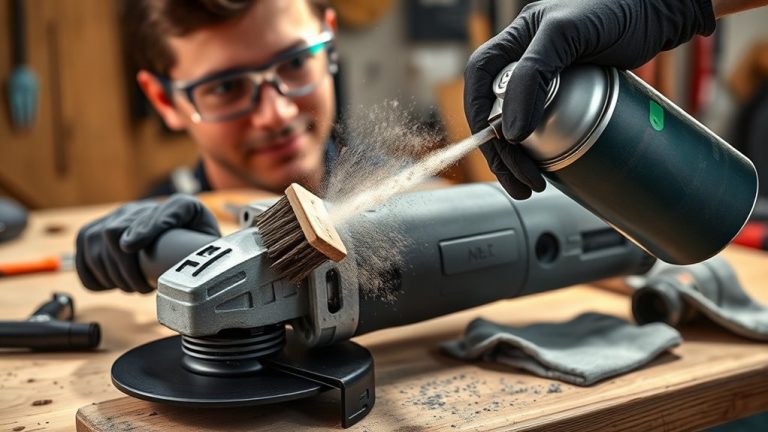
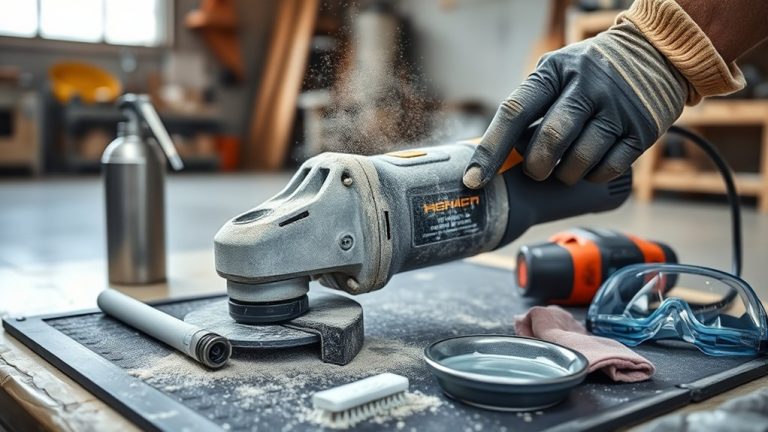
To clean your angle grinder after metal grinding, first, unplug it and wear safety glasses and gloves. Remove debris with a wire brush or shop vacuum, then blow out dust with compressed air. Wipe the exterior with a suitable cleaning solution. Inspect the grinding disc, checking for wear or damage, and lubricate moving parts per the manufacturer’s guidelines. Finally, store it in a dry, dust-free place. You’ll find more detailed steps ahead to guarantee peak performance.
Ensure Safety Before Cleaning
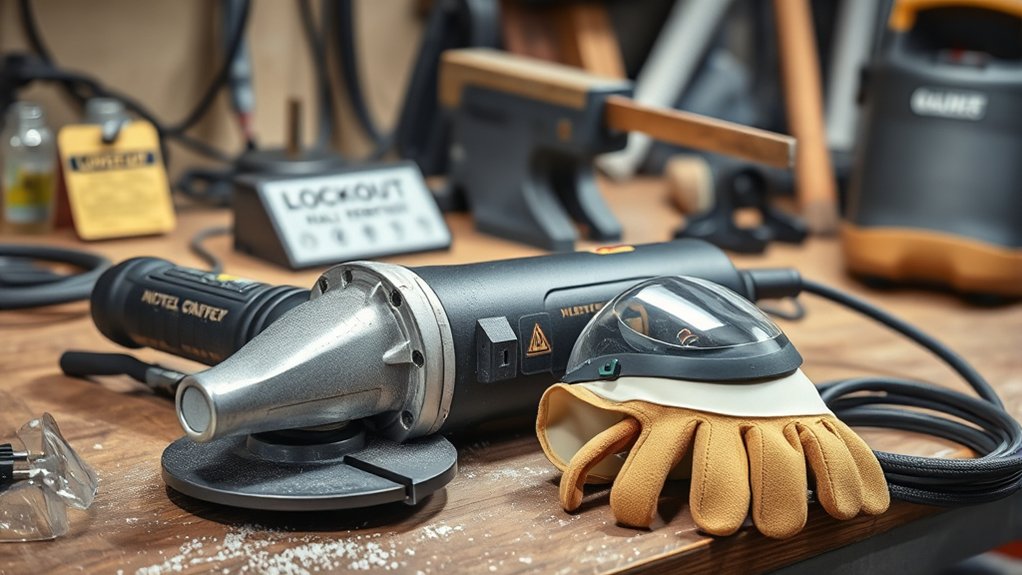
Before you begin cleaning your angle grinder, it’s vital to guarantee safety to prevent any accidents. First, disconnect the grinder from the power source or remove the battery to prevent accidental activation during the cleaning process. Next, wear appropriate personal protective equipment (PPE), including safety glasses and gloves, to shield yourself from debris and sharp edges that may cause injury.
Allow the grinder to cool down after use since metal components can retain heat, posing a burn risk. Confirm your workspace is clear of flammable materials within a 30-foot radius to minimize fire hazards while cleaning. This precaution is essential to protect yourself and your surroundings from potential hazards. By taking these steps, you lay the groundwork for a safe and effective cleaning session, ensuring your angle grinder remains in excellent condition without any risk of wear or damage during maintenance.
Initial Cleaning Steps for Your Grinder
Start by making sure the angle grinder is unplugged or the battery is removed. This step is essential for your safety. Next, use a wire brush or shop vacuum to remove debris and metal shavings from the grinder’s body, vents, and crevices. This initial cleaning prevents buildup that can affect performance.
Once you’ve cleared the surface, apply compressed air to blow out dust and particles from hard-to-reach areas. This guarantees a thorough clean without damaging components. After that, wipe down the grinder’s exterior with a suitable cleaning solution to eliminate grease and grime, and dry it with a clean cloth.
Finally, inspect the tool for any visible damage or wear, especially on the disc and guard. Address any issues before storing it to maintain your maintenance schedule. Always wear protective gear during this process to safeguard yourself from debris.
Deep Cleaning Techniques for Optimal Use
To maintain your angle grinder’s performance, deep cleaning is essential, especially after extensive use. Follow these steps to guarantee peak cleaning and maintenance:
- Disconnect Power: Always disconnect the angle grinder from power to guarantee safety before you start cleaning.
- Remove Debris: Use a wire brush or compressed air to remove loose debris and metal filings from the grinder’s exterior and vents.
- Apply Degreaser: For deeper cleaning, apply a degreaser or suitable cleaning solution to a cloth and wipe down all surfaces, avoiding electrical components.
- Inspect Grinding Disc: Carefully inspect the grinding disc for wear or damage, replacing it if necessary before reassembling the tool.
Finally, lubricate moving parts as per the manufacturer’s guidelines to keep your grinder functioning smoothly. Regular maintenance not only enhances performance but also extends the tool’s lifespan.
How to Check for Damage When Cleaning Your Angle Grinder?
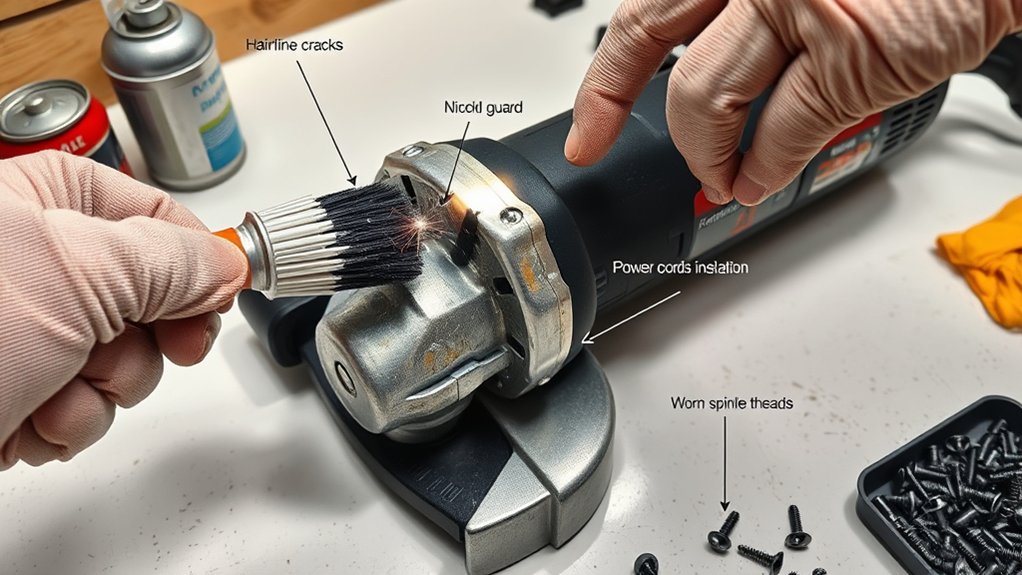
When cleaning your angle grinder, start with a thorough visual inspection. Look for cracks or chips on the disc, verify the guard is secure, and check the power cord for any fraying. Next, assess functional components like the spindle lock to confirm it operates smoothly, guaranteeing both safety and efficiency.
Visual Inspection Techniques
A thorough visual inspection is essential for maintaining the safety and performance of your angle grinder. By following these steps, you can guarantee your tool remains reliable and safe:
- Inspect the housing: Look for cracks, dents, or signs of wear that could indicate structural damage.
- Examine the grinding wheel: Check the disc for visible cracks, chips, or excessive wear; these can compromise both safety and performance.
- Check the power cord: Ascertain there are no frays, cuts, or exposed wires to prevent short circuits and guarantee electrical safety.
- Inspect the guard and side handle: Verify secure attachment and check for any signs of damage, as both are critical for user safety during operation.
Remember to wear safety glasses throughout the inspection process.
Functional Component Assessment
Begin your functional component assessment by closely examining the critical parts of your angle grinder. First, inspect the guard to make certain it’s securely attached and free from cracks; this is essential for your safety against debris. Next, check the spindle lock to confirm it functions properly, allowing safe disc changes without accidental rotation. Review the disc condition, looking for cracks or excessive wear that could pose serious risks during use. Examine power cords and hoses for frayed wires or leaks, which can lead to electrical hazards. Finally, assess the motor housing for signs of overheating or damage, indicating potential internal issues. By following these steps, you guarantee safety and maintain the grinder’s peak performance.
Effective Lubrication Techniques for Angle Grinders
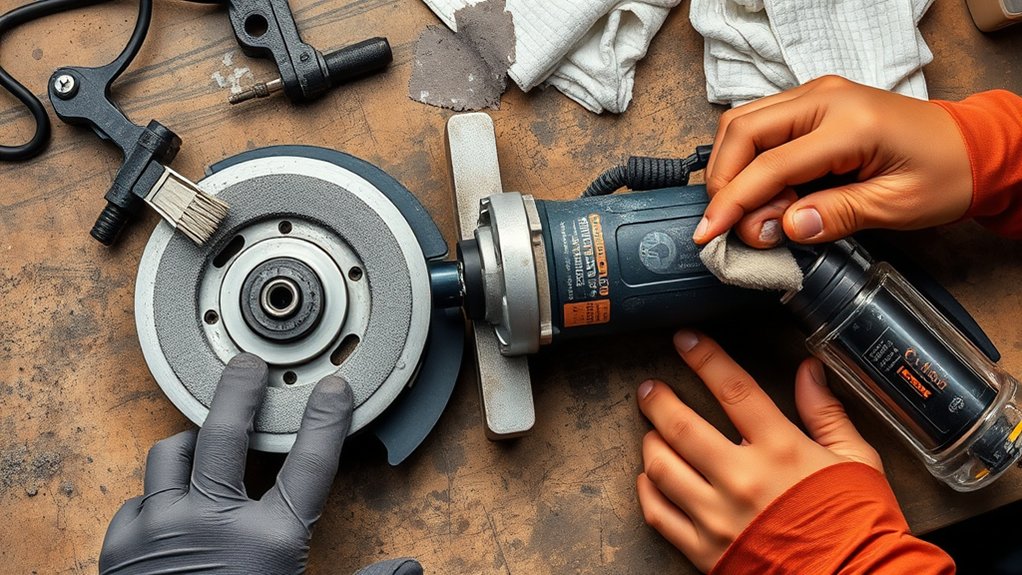
Lubricating your angle grinder effectively is crucial for maintaining its performance and longevity. To guarantee peak operation, follow these techniques:
- Use Light Machine Oil: Regularly lubricate the moving parts with light machine oil to reduce friction and guarantee smooth operation.
- Target the Spindle Lock: Apply lubricant to the spindle lock and gears to maintain control and enhance tool lifespan.
- For Air-Powered Grinders: Add a few drops of air tool oil to the air inlet before use to improve efficiency and minimize wear.
- Safety First: Always guarantee the grinder is unplugged or the battery is removed before applying any lubricant to prevent accidental activation.
How to Safely Store Your Angle Grinder After Use
After verifying your angle grinder is properly lubricated, focus on safe storage to protect its components and maintain performance. First, make sure the grinder is unplugged and completely cooled down to prevent any accidental activation or burns. Store it in a dry, dust-free environment to avoid rust and corrosion on the metal parts.
Utilize a dedicated storage rack or case to securely hold the grinder, shielding it from physical damage. If you still have the original packaging or protective covers for the grinding discs, use them to prevent any wear during storage.
To maintain organization, label your storage areas clearly, allowing for easy identification among other tools. By following these steps, you not only safeguard your angle grinder but also guarantee it remains in peak condition for your next project.
Frequently Asked Questions
How Do You Clean an Angle Grinder?
To clean your angle grinder, wear safety gear, unplug it, use cleaning tools like brushes for metal dust, inspect grinder components, and apply proper lubrication techniques to guarantee peak performance and longevity.
What Are 10 Safety Precautions Before Using a Grinding Machine?
Before using a grinding machine, have you considered safety? Prioritize personal protective equipment, check machine lubrication, apply spark control techniques, make certain dust extraction systems are functional, and implement vibration reduction methods for ideal grinding wheel maintenance.
How to Clean a Metal Grinder?
To clean a metal grinder, use appropriate cleaning tools to remove metal debris. Follow maintenance tips for your grinder type, ensuring rust prevention and workspace safety during the process. Regular cleaning enhances performance and longevity.
What Is the Step by Step Procedure in Using a Grinding Machine?
Want to master grinding techniques? Start by donning safety gear, selecting appropriate abrasive materials, and securing your workpiece. Follow machine operation steps meticulously, and heed troubleshooting tips for ideal equipment maintenance throughout your project.
Conclusion
Cleaning your angle grinder is essential for maintaining its performance and extending its lifespan, which can average around 10 years with proper care. Regular cleaning not only enhances efficiency but also reduces the risk of accidents caused by debris buildup. By following the steps outlined, you guarantee your grinder remains in peak condition, ready for your next project. Remember, a well-maintained tool is not just a safer tool; it’s a more effective one.