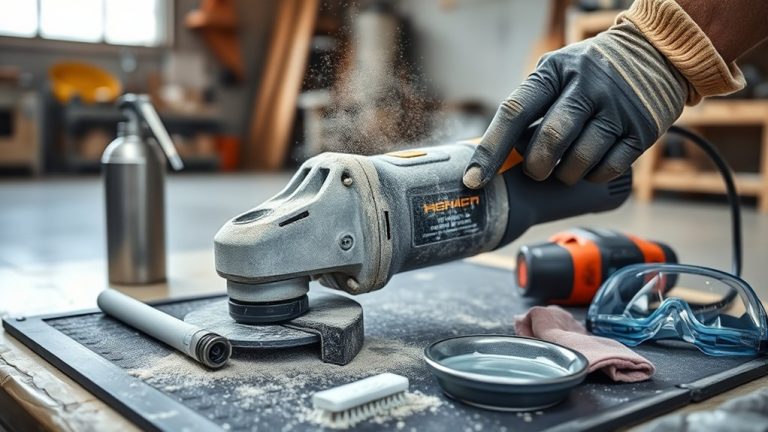
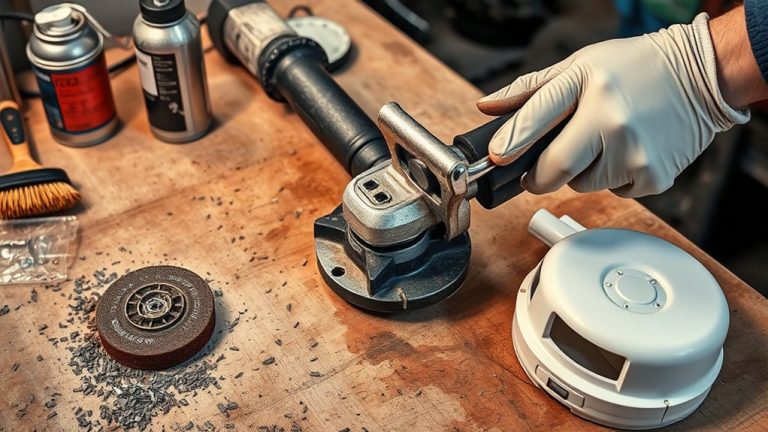
To clean your angle grinder air vents safely, first make certain it’s unplugged and cool. Use compressed air to blow out dust from about 6-12 inches away. For stubborn debris, gently use a soft brush in conjunction with the air. Conduct visual inspections for blockages and damage, avoiding water and harsh cleaners that could harm components. Finally, check all parts before reassembly. If you’re keen on maintaining your grinder’s efficiency, there’s more important information ahead.
The Importance of Maintaining Angle Grinder Air Vents
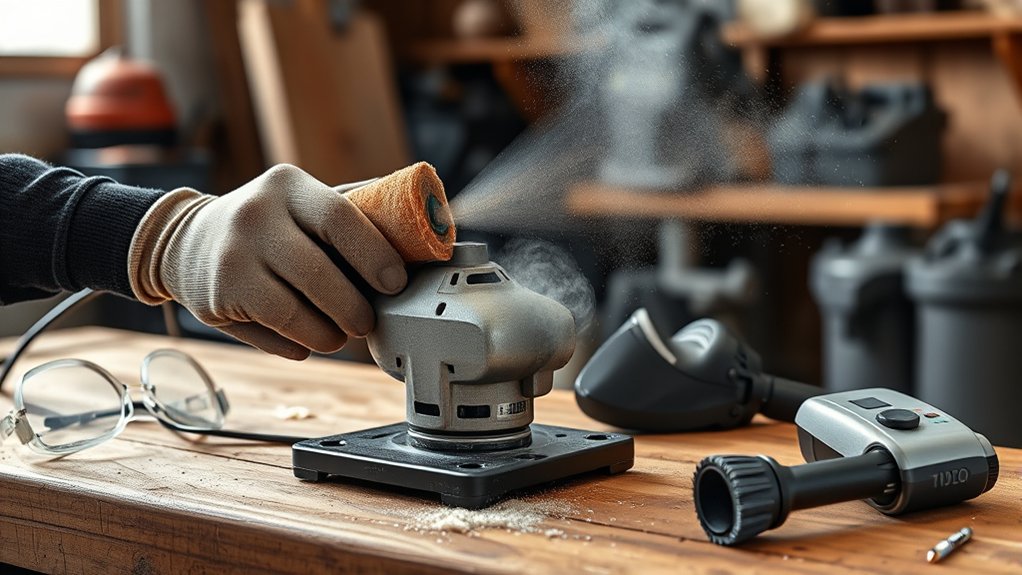
Maintaining angle grinder air vents is vital, as clogged vents can lead to overheating and decreased performance. Regular maintenance guarantees peak airflow, preventing motor temperatures from rising excessively during operation. Dust and debris accumulation in these vents not only reduces efficiency but also risks loss of grinding power, compromising your work.
A clean air vent system is essential for dispersing harmful fumes and dust, safeguarding both your grinder’s internals and your health. Neglecting this maintenance can invite electrical issues by allowing dust to infiltrate sensitive components, increasing the risk of failure.
To enjoy the full capabilities of your angle grinder, prioritize air vent cleanliness. By guaranteeing proper ventilation, you enhance both performance and safety. Remember, a well-maintained tool not only extends its lifespan but also empowers you to work confidently and effectively.
Essential Safety Gear for Cleaning Your Angle Grinder
When cleaning your angle grinder’s air vents, wearing the right safety gear is essential. Use safety glasses to shield your eyes from dust, a dust mask or respirator to filter harmful particles, and heavy leather gloves to protect your hands. Additionally, consider hearing protection and a full-face shield to guard against noise and flying debris.
Recommended Safety Equipment
Cleaning your angle grinder effectively requires proper safety equipment to protect yourself from potential hazards. Ascertain you gear up with the following essentials:
- Safety Glasses: Protect your eyes from dust and debris during the cleaning process.
- Dust Mask: Use a respirator with a P100 filter to avoid inhaling harmful particles released from the air vents.
- Heavy Leather Gloves: Safeguard your hands against sharp edges or debris while handling the grinder.
Additionally, don’t forget hearing protection like earmuffs for loud tools, and wear fire-resistant clothing to minimize burn risks from flying sparks. Prioritizing these safety measures will empower you to clean efficiently while keeping yourself safe.
Proper Gear Usage
Using the right gear is vital for a safe and effective cleaning process of your angle grinder’s air vents. Always wear safety glasses to shield your eyes from flying debris and dust. A dust mask or respirator with a P100 filter is essential to prevent inhaling fine particles released during cleaning. Heavy leather gloves protect your hands from sharp edges and heat when handling the grinder. For added safety, consider using a full-face shield alongside your safety glasses to guard against sparks. If your cleaning involves compressed air, don’t forget to wear hearing protection, as the noise levels can be hazardous. Proper gear usage guarantees you can clean effectively while minimizing risks.
Step 1: Ensure the Grinder Is Unplugged and Cool
Before you start cleaning the air vents of your angle grinder, it’s essential to make certain the tool is unplugged and has cooled down. This guarantees your safety and prevents accidental activation during the cleaning process.
Follow these steps:
- Unplug the Tool: Make sure the grinder is completely unplugged to eliminate any risk of electrical shock or unintended operation.
- Cool Down: Wait at least 10-15 minutes after use to allow the components to cool down, minimizing the risk of burns.
- Inspect the Air Vents: Wear safety glasses and gloves while you inspect the air vents for visible dust or debris buildup that could obstruct airflow.
Taking these precautions not only safeguards you but also prepares the angle grinder for effective cleaning, guaranteeing it runs efficiently and lasts longer.
Step 2: Use Compressed Air for Dust Removal
Before using compressed air, make sure you’re wearing safety glasses and a dust mask to protect yourself from flying debris. Position the nozzle about 6 inches from the air vents and blow dust and debris away, ensuring effective removal without risk. Regularly cleaning in this manner not only maintains airflow but also prevents overheating of your angle grinder.
Safety Precautions First
To guarantee a safe cleaning process when using compressed air for dust removal, first unplug and allow your angle grinder to cool down. This prevents injury and equipment damage. Always wear appropriate personal protective equipment—specifically:
- Safety goggles: Protect your eyes from flying debris.
- Dust mask: Prevent inhalation of harmful dust particles.
- Maintain distance: Keep at least 12 inches between the air nozzle and the grinder to avoid damaging internal components.
When using a clean, dry air compressor, direct the airflow at an angle to effectively remove dust without pushing it deeper into the grinder. After cleaning, inspect the air vents for any remaining obstructions to guarantee proper airflow and maintain peak performance.
Proper Compressed Air Technique
Once you’ve confirmed your angle grinder is unplugged and cooled down, it’s time to effectively use compressed air for dust removal. First, always wear safety glasses and a dust mask to protect yourself from flying debris. Set your air compressor to a safe pressure level, around 30-40 PSI, to dislodge dust without damaging the grinder’s internal components. Attach a nozzle extension to direct airflow specifically into the air vents. Maintain a safe distance of 6-12 inches to avoid excessive force. After using compressed air, inspect the grinding area and air vents for any remaining debris. This regular maintenance keeps your angle grinder performing at its best, ensuring longevity and efficiency in your tasks.
Step 3: Use a Soft Brush for Stubborn Debris
Gently use a soft-bristle brush to dislodge stubborn debris from the angle grinder’s air vents. This step is essential for maintaining airflow and preventing dust accumulation, which can hinder peak performance. Before you begin, verify the grinder is unplugged and cooled down to avoid any accidents.
- Focus on vent areas where dust tends to gather, such as the sides and back.
- Brush gently to avoid damaging internal components; the soft bristles will effectively loosen debris.
- Combine this brushing technique with compressed air for thorough cleaning, reaching those hard-to-access spots.
Regularly cleaning the vents prolongs your grinder’s life by preventing overheating. By following this methodical approach, you’ll help maintain your tool’s efficiency, allowing you to work with confidence and liberation.
Step 4: Check for Blockages and Damage
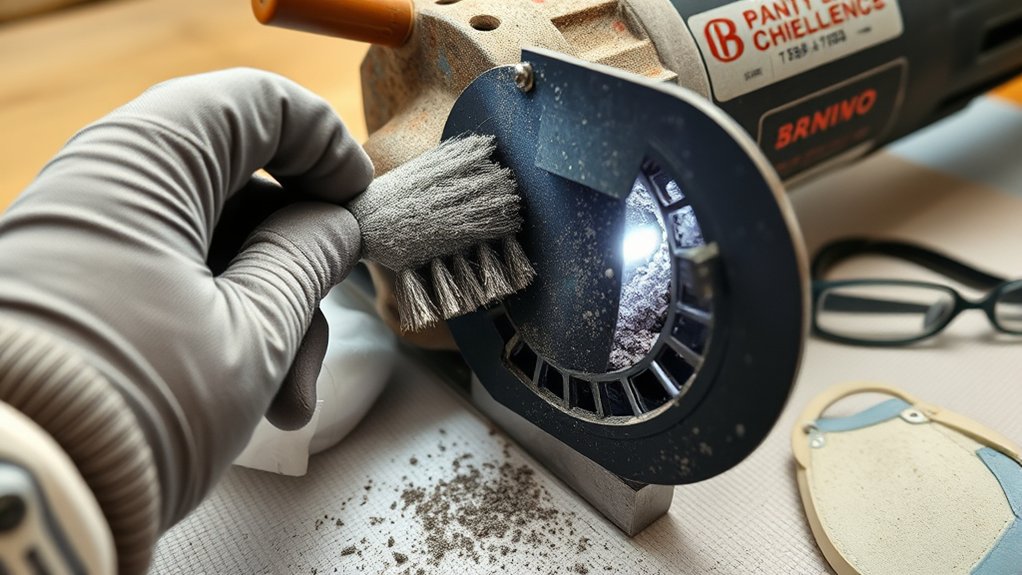
After using a soft brush to clear debris, it’s important to check for blockages and damage in the air vents. Begin by inspecting the vents closely for any visible dust, debris, or clogs that may impede airflow. Restricted airflow can lead to overheating and decreased performance, so thorough examination is essential. Use a flashlight to guarantee you can see all sections clearly.
If you find any blockages, carefully use compressed air to blow out dust and debris, directing the airflow away from your face and body for safety. Next, check for signs of wear, such as cracks or breaks in the vent covers. Damage like this can compromise your grinder’s cooling system, so be ready to inspect and replace any affected components. Regularly checking for blockages and damage can greatly prolong your angle grinder’s lifespan by maintaining ideal performance and preventing overheating issues.
Step 5: Avoid Water and Harsh Cleaners
When cleaning the air vents of your angle grinder, it’s crucial to avoid using water and harsh cleaners, as these can lead to significant damage. Water can short-circuit electrical components, posing safety hazards. Harsh cleaners may corrode materials, compromising functionality and lifespan. Instead, opt for safe cleaning methods.
- Use compressed air to blow out dust and debris effectively, ensuring you don’t introduce moisture.
- Choose mild cleaning products recommended by the manufacturer to protect the integrity of your grinder.
- Regularly inspect air vents for blockages; accumulated dust can hinder airflow, leading to overheating during operation.
Why Do Final Checks Matter Before Putting It Back Together?
Final checks are essential to guarantee your angle grinder operates safely and effectively once reassembled. Before putting it back together, inspect for loose screws and parts; vibrations during operation can cause them to loosen further, leading to potential failures. Make certain that air vents are free from debris to prevent overheating, which can greatly extend your tool’s lifespan.
Additionally, confirm that all safety guards are correctly in place to mitigate the risk of injury from flying debris during use. Conduct a thorough visual inspection to catch any signs of wear or damage that may compromise the tool’s performance. These final checks not only enhance safety but also optimize the angle grinder’s efficiency. By diligently addressing these aspects, you empower yourself to work confidently, knowing your equipment is in top condition for any task ahead.
When to Schedule Regular Cleaning of Your Angle Grinder Air Vents
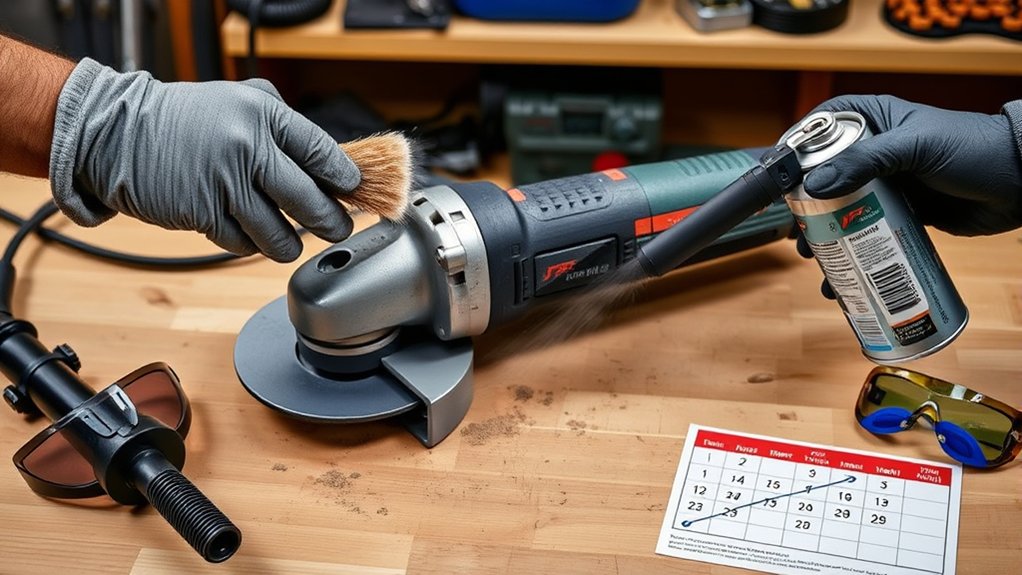
To maintain peak performance and prevent overheating, you should schedule regular cleaning of your angle grinder air vents after every 10 hours of use. This routine helps eliminate dust buildup that can obstruct airflow and reduce efficiency. Here’s a methodical approach to guarantee your grinder remains in prime condition:
- Weekly Inspections: Check the air vents for debris, especially in dusty environments.
- Immediate Cleaning: If you notice a drop in motor performance or hear unusual noises, clean the air vents right away.
- Monthly Deep Cleaning: Remove the grinder’s cover to access and thoroughly clean the air vents.
Always use compressed air for cleaning, confirming the grinder is unplugged and cooled down for safety. Regular maintenance not only enhances performance but also extends the lifespan of your grinder, liberating you from frequent repairs and downtime.
Frequently Asked Questions
What Are the Key Safety Precautions to Take When Using an Angle Grinder?
When using an angle grinder, prioritize personal protective equipment, practice safe handling techniques, follow grinder maintenance tips, guarantee proper tool storage practices, and be aware of common grinder injuries to enhance safety during operation.
What Are the OSHA Requirements for Angle Grinders?
OSHA requires angle grinders to have safety features, undergo regular maintenance, and be equipped with personal protective equipment. Electrical safety checks and proper ventilation are essential to minimize risks during operation and guarantee worker safety.
How to Stop Angle Grinder Dust?
To stop angle grinder dust, use effective dust containment methods like a vacuum attachment, guarantee proper workspace ventilation, prepare your grinding surface appropriately, and always wear personal protective equipment for safety.
What Are the Safety Precautions During Grinding?
During grinding, prioritize protective gear and maintain equipment. Organize your workspace for efficiency, practice proper grinding techniques, and regularly inspect tools to guarantee safety, ultimately preventing injuries and enhancing your overall performance.
Conclusion
In summary, keeping your angle grinder’s air vents clean guarantees peak performance and longevity. By regularly inspecting, brushing, and blowing away debris, you maintain airflow and prevent overheating. Just as a well-oiled machine runs smoothly, a clean grinder operates efficiently. So, commit to this routine, safeguard your tools, and enhance your work quality. Remember, a little effort today leads to powerful performance tomorrow. Prioritize maintenance, and let your angle grinder shine in every project.