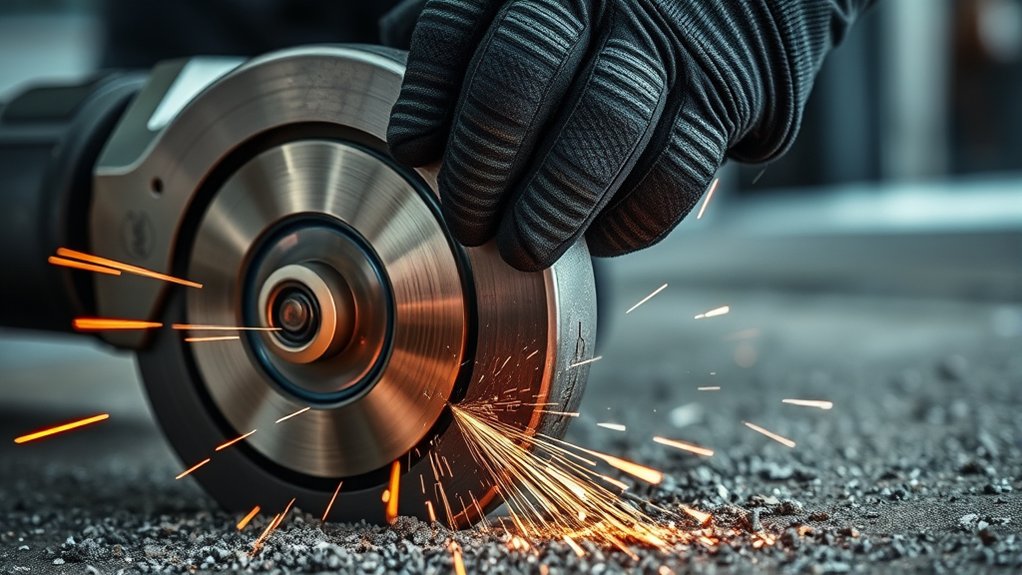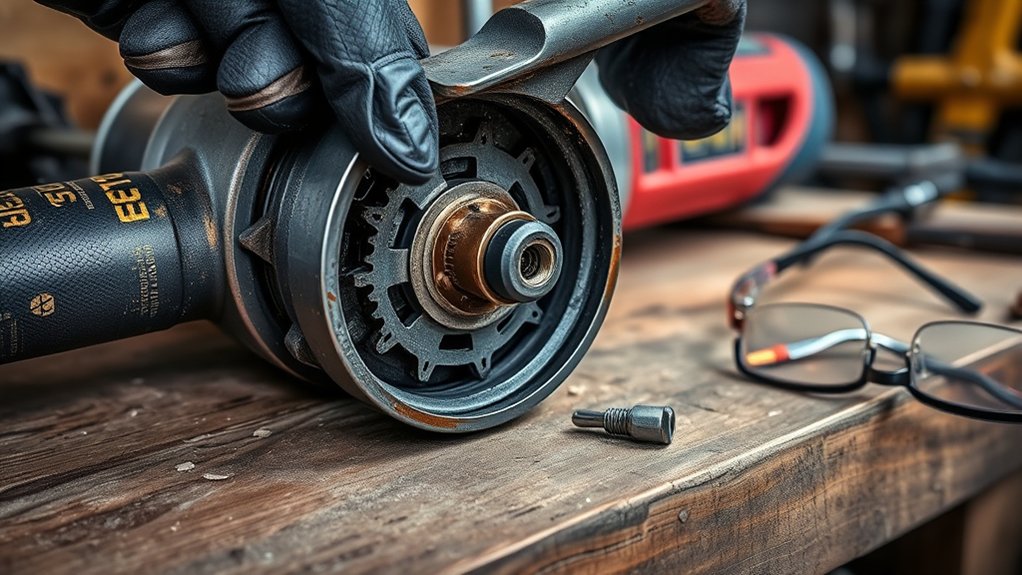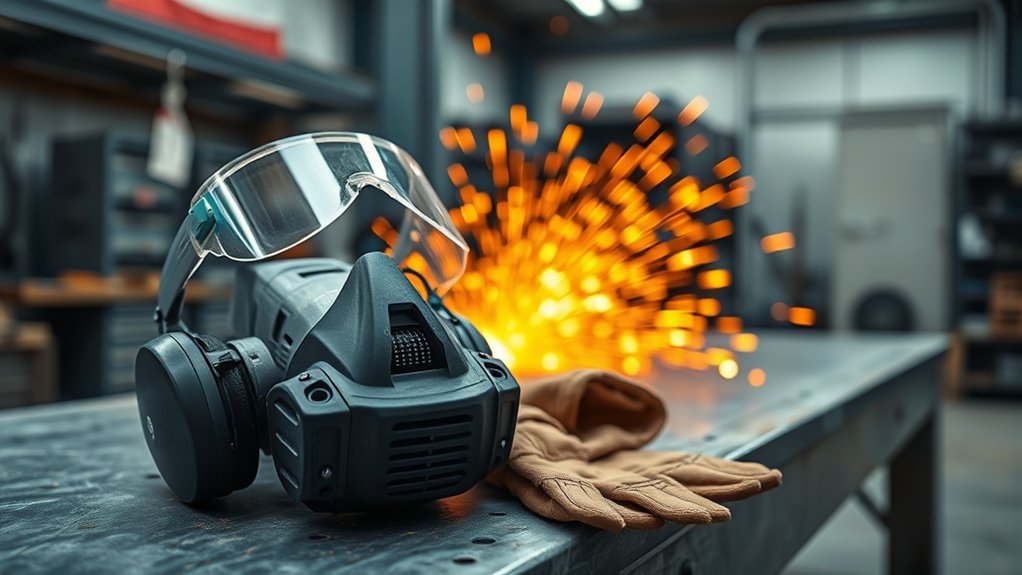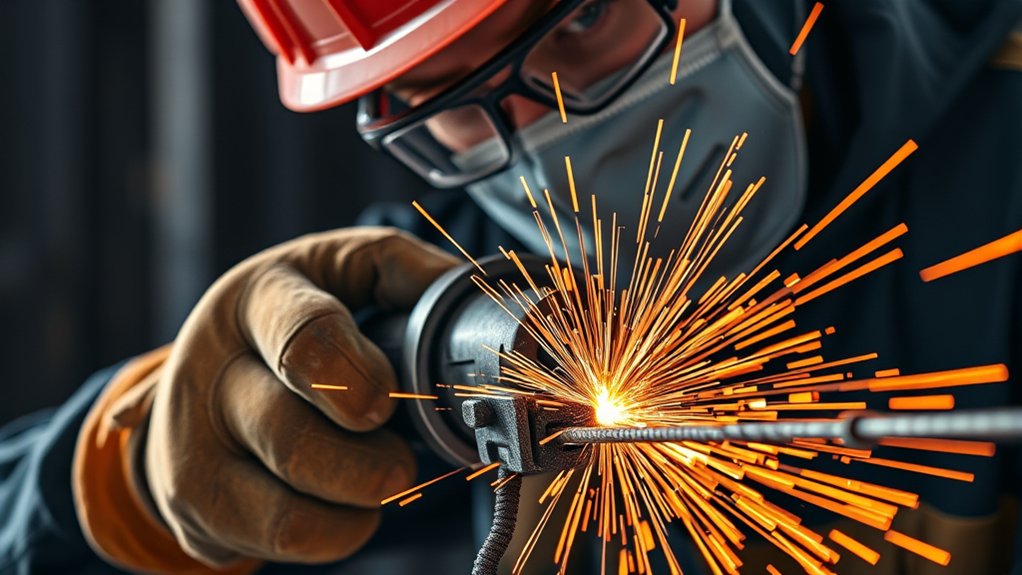
Cutting rebar with an angle grinder can be quick, but the wheel spins fast enough to throw sparks, hot metal, and broken abrasive fragments across the work area. You need the correct cut-off wheel and guard, stable support that will not pinch the wheel, and full protective equipment. This guide walks you through the setup, cut, troubleshooting, deburring, and cleanup steps.
Quick Answer
To cut rebar with an angle grinder, install a metal-rated cut-off wheel and the exact cutting guard approved for your grinder. Clamp the retained section near the mark, support long offcuts without closing the kerf, wear full protective gear, and cut with light pressure. Let the steel cool before deburring it with a separate flap disc.
Key Takeaways
- Wear safety glasses under a face shield, plus hearing protection, gloves, long sleeves, and sturdy footwear.
- Use only a cut-off wheel, flange, and cutting guard approved for the exact grinder.
- The wheel’s maximum RPM must equal or exceed the grinder’s rated speed.
- Support the rebar so the cut stays open and the wheel cannot become pinched.
- Never twist, bend, or grind with the side of a thin cut-off wheel.
- Do not cut installed structural or prestressed reinforcement without professional approval.
At a Glance
| Time Required | Usually several minutes per cut after setup; thick rebar, wheel changes, cooling, and deburring add time |
| Difficulty | Moderate; requires confident two-handed grinder control |
| Tools Needed | Angle grinder, approved cutting guard, metal cut-off wheel, clamps or vise, stable supports, measuring tools, and deburring disc |
| Cost | Low if you already own the grinder, approved guard, clamps, and protective equipment; wheel and consumable costs vary |
What’s in This Article
- Essential Safety Gear for Cutting Rebar With an Angle Grinder
- Choosing the Right Angle Grinder, Wheel, and Guard
- Set Up Your Workspace for Safe Rebar Cutting
- What You’ll Need Before You Cut Rebar
- Inspect the Grinder and Prepare for Startup
- Step-by-Step Instructions to Cut Rebar With an Angle Grinder
- Cutting Thick or Coated Rebar
- Top 5 Mistakes to Avoid When Cutting Rebar
- Troubleshooting Rebar Cutting Problems
- Tips for Clean Cuts and Burr Removal
- Post-Cutting Cleanup and Tool Maintenance
- When an Angle Grinder Is Not the Right Tool
- Frequently Asked Questions
- Sources
- Safety Disclaimer
- Conclusion
Warning: Do not cut rebar that is already embedded in a slab, wall, beam, column, foundation, precast member, or other structure unless a structural engineer or responsible project professional has approved the cut. Never cut prestressed or post-tensioned reinforcement. It may be carrying a structural load or stored tension.
Essential Safety Gear for Cutting Rebar With an Angle Grinder
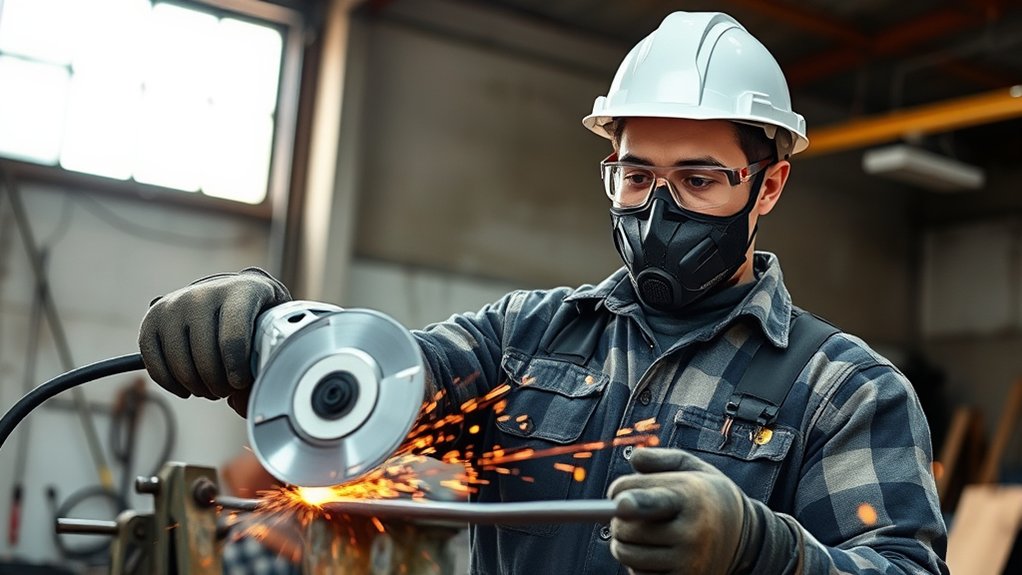
Safety gear protects you from sparks, sharp steel, noise, hot cut ends, and fragments from the workpiece or abrasive wheel. Wear impact-rated safety glasses with side protection and place a face shield over them. A face shield protects more of your face, but it does not replace primary eye protection. The OSHA eye and face protection guidance specifically states that safety glasses should be worn under a face shield.
Wear close-fitting, cut-resistant work gloves while handling the grinder and rebar. Keep the gloves and your hands away from the spinning wheel. Do not wear loose gloves, loose sleeves, jewelry, or anything that could catch on the tool. Tie back long hair.
Wear long sleeves and full-length trousers made from durable material. Natural fibers such as cotton or wool are less likely to melt against the skin than many synthetic fabrics when struck by hot sparks.
Use properly fitted earplugs or earmuffs. Angle grinders can create enough noise to damage hearing, especially during repeated cuts or when you work near walls that reflect sound.
Wear sturdy, closed-toe work boots with slip-resistant soles. They help protect your feet if the rebar, offcut, grinder, or sharp scrap falls.
Ordinary clean steel cutting may not require respiratory protection in an open area, but grinding dust and coatings can create an inhalation hazard. Identify painted, galvanized, epoxy-coated, contaminated, or unknown material before cutting it. Improve ventilation and follow the coating supplier’s safety data sheet and applicable workplace respiratory-protection rules.
Warning: Never cut near fuel, flammable liquids, gas cylinders, explosive dust, loose sawdust, dry leaves, cardboard, oily rags, or other material that sparks can ignite.
Products Worth Considering

SUPERIOR PROTECTION — Experience all-around face protection thanks to the curved design of this faceshield. The visor of this face guard is ANSI Z87+ certified, and up to 2x thicker for increased durability. Plus, you can comfortably wear your grinding face shield over prescription glasses.

Included: (1) DeWalt N441218 Angle Grinder Guard Replacement for Angle Grinder DCG414B

HIGH IMPACT FACE SHIELD - Sellstrom's Advantage Face Shield is ideal for various types of machinery, welding, cutting, grinding, woodworking, and other types of work that present potential hazards to the face
Choosing the Right Angle Grinder, Wheel, and Guard
Select the grinder, wheel, guard, and flanges as one compatible system. Do not assume that a wheel is safe merely because its center hole fits the spindle.
A 4.5-inch angle grinder can cut many common rebar sizes, but actual capacity depends on the grinder design, guard, wheel diameter, wheel wear, and bar diameter. Check the tool manual rather than relying on grinder size alone. Never install an oversized wheel or remove the guard to gain extra cutting depth.
Use a bonded abrasive cut-off wheel labeled for ferrous metal or steel. Type 1 or Type 41 wheels are common cutting-wheel classifications, but you must use the type listed in your grinder’s manual. Do not use a masonry wheel, toothed wood blade, saw-chain accessory, damaged disc, or an accessory not approved for the tool.
Check all of the following before installation:
- The wheel diameter matches the grinder and guard.
- The arbor or center-hole size matches the approved flange system.
- The wheel is labeled for cutting steel or ferrous metal.
- The wheel’s maximum revolutions per minute rating equals or exceeds the grinder’s rated speed.
- The wheel is approved for edge cutting, not only surface grinding.
- The wheel has no cracks, chips, warping, moisture damage, contamination, or excessive wear.
- Any marked expiration date has not passed.
Use the cutting guard required by the tool manufacturer. Many grinders include a grinding guard but require a separate closed, two-sided, Type 1/41, or clip-on cutting guard for abrasive cut-off wheels. Makita’s metalworking guidance and current DEWALT grinder instructions both direct users to install the guard approved for the selected cutting wheel.
Many steel-cutting wheels use aluminum oxide or zirconia-based abrasive material. However, abrasive material alone does not prove that a wheel is compatible. The wheel label and tool manual must approve its application, size, speed, flange, and guard.
Note: A thin cut-off wheel cuts with its outer edge. Never use its side to grind or remove burrs. Change to an approved grinding wheel or flap disc after the cut.
Products Worth Considering


[High-Performance Cutting] Designed for cutting metal & stainless steel, these cut off wheels 4 1/2 inch work efficiently with any angle grinder wheel, supporting speeds up to 13,300 RPM.
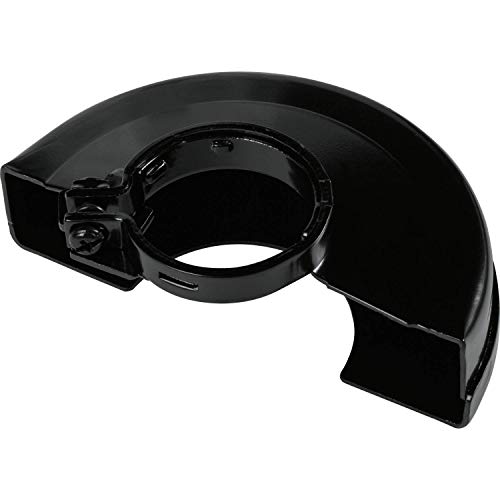
For use during cutting applications
Set Up Your Workspace for Safe Rebar Cutting
Set up the workspace before connecting the grinder to power. Work in a clean, well-lit area with enough room to maintain a balanced stance and move away if the tool kicks back.
Remove combustible material and inspect nearby surfaces, gaps, floor openings, wall cavities, and the opposite side of partitions. Grinder sparks can travel beyond the immediate cutting point. OSHA treats spark-producing work as a fire hazard that requires combustible material to be removed, isolated, or protected. Keep suitable fire-extinguishing equipment ready and inspect the area again after the cut.
Place the rebar on a sturdy workbench or sawhorses. Clamp the section you intend to keep close to the cut line. Support a long offcut so it cannot fall, whip, or pull the grinder, but arrange the support so the cut stays open instead of closing around the wheel.
Direct sparks and the open side of the wheel away from your body, other people, vehicles, windows, hoses, cords, batteries, and combustible surfaces. Keep children, pets, and bystanders outside the work area.
For a corded grinder, inspect the cord and plug. Keep the cord behind the tool and away from the sparks, sharp rebar, and wheel. Use an outdoor-rated extension cord when working outdoors. Do not expose an ordinary grinder to rain or wet conditions. If damp-location use is unavoidable and the manufacturer permits it, use a ground-fault circuit interrupter protected supply.
| Task | Purpose | Tools or Controls |
|---|---|---|
| Clear the workspace | Reduce fire, trip, and distraction risks | Broom, fire-resistant shielding, good lighting |
| Create a stable cutting surface | Prevent movement and loss of control | Workbench or sawhorses |
| Clamp near the cut | Stop the retained section from rolling | Vise, C-clamps, or locking clamps |
| Support the offcut correctly | Prevent falling without pinching the wheel | Adjustable stand or stable block |
| Control sparks | Protect people and combustible material | Guard, fire-resistant screen, extinguisher |
| Improve ventilation | Reduce airborne dust and improve visibility | Open-air location or suitable local exhaust |
What You’ll Need Before You Cut Rebar
Gather every tool and safety item before you start. This prevents rushed wheel changes, unstable improvised supports, and leaving a connected grinder unattended.
Estimated total time: The cutting portion may take only a few minutes, but total time varies with rebar diameter, setup, wheel condition, cooling, repositioning, and burr removal.
- Angle grinder approved for cut-off work
- Correct metal-rated cut-off wheel
- Manufacturer-approved cutting guard
- Correct backing flange and locking flange or nut
- Installed and tightened side handle
- Clamps or a vise
- Sawhorses, workbench, or stable support stands
- Tape measure and bright marker or chalk
- Safety glasses and face shield
- Cut-resistant work gloves
- Hearing protection
- Long sleeves, full-length trousers, and sturdy footwear
- Approved flap disc or grinding wheel for burr removal
- Fire-resistant spark screen when needed
- Suitable fire extinguisher
Inspect the Grinder and Prepare for Startup
Disconnect a corded grinder or remove the battery from a cordless grinder before installing, removing, or adjusting an accessory.
- Read the tool and wheel instructions. Confirm that the grinder is approved for cut-off work and identify the required wheel, guard, and flange arrangement.
- Inspect the tool. Check the switch, cord or battery connection, spindle, guard, side handle, vents, and housing for damage.
- Inspect the wheel. Reject a wheel with cracks, chips, warping, moisture damage, contamination, heavy wear, or an expired date marking.
- Install the cutting guard. Position it between your body and the wheel while directing sparks away from you.
- Install the correct flanges and wheel. Seat the wheel flat and tighten it according to the manual. Do not overtighten or improvise washers, bushings, or adapters.
- Turn the wheel by hand. With power disconnected, confirm that it does not touch the guard or tool.
- Clear the startup area. Keep yourself and everyone else outside the plane of the wheel.
- Run the grinder at no load. Follow the test period stated in the manual. Stop immediately if you notice wobble, unusual vibration, rubbing, cracking sounds, or loose parts.
Warning: Never disable the guard, lock the trigger on by improvised means, clamp a hand-held grinder in a vise, or operate it with one hand.
Step-by-Step Instructions to Cut Rebar With an Angle Grinder
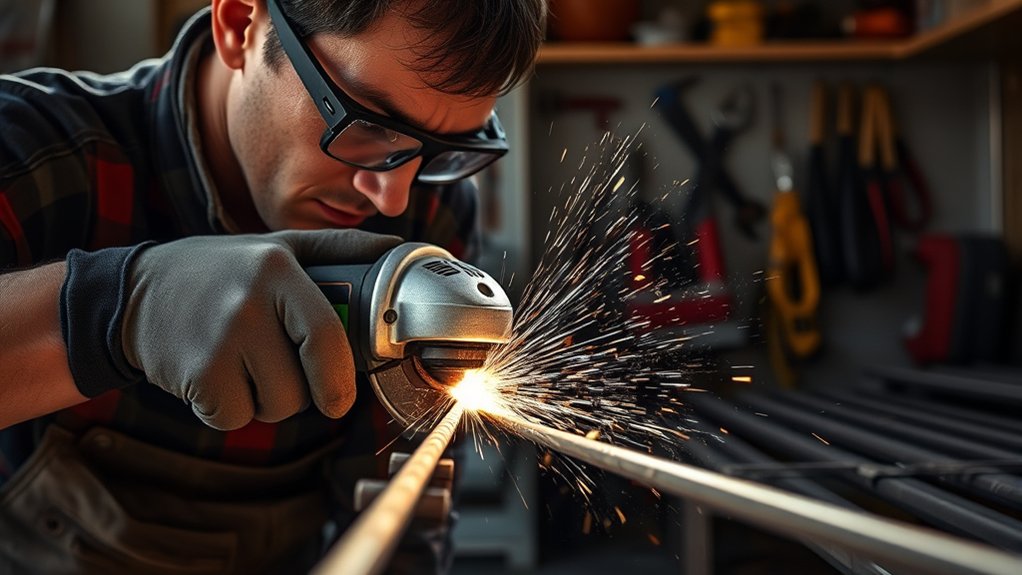
Follow each step in order. Most grinder problems begin with the wrong accessory, poor support, or a rushed startup rather than the cutting motion itself.
Essential Tools Needed
You need an angle grinder approved for abrasive cutting, a compatible metal cut-off wheel, the required cutting guard and flanges, a side handle, personal protective equipment, clamps, and a stable support surface.
Measure and mark the cutting line before clamping the bar. Inspect every accessory before installation and replace anything damaged or incompatible.
| Tool | Purpose |
|---|---|
| Angle grinder | Powers the approved cutting wheel |
| Metal cut-off wheel | Cuts the rebar with its outer edge |
| Cutting guard and flanges | Help contain fragments and hold the wheel correctly |
| Clamps and supports | Prevent rolling, falling, and wheel pinching |
| Safety glasses and face shield | Protect the eyes and face from particles and fragments |
| Flap disc or grinding wheel | Removes sharp burrs after the cut |
Step-by-Step Cutting Process
- Confirm that the rebar may be cut. Do not cut installed, structural, prestressed, post-tensioned, or unidentified reinforcement without professional approval.
- Choose the correct system. Match the grinder, cut-off wheel, guard, flanges, arbor, diameter, material rating, and RPM.
- Measure and mark the cut. Use chalk or a bright marker so the line remains visible through sparks and dust.
- Clamp the retained section. Place the clamp or vise close enough to control vibration without interfering with the guard.
- Support a long offcut. Prevent it from dropping or swinging, but keep the support from forcing the kerf closed.
- Inspect and assemble the grinder. Disconnect power or remove the battery while checking the guard, side handle, wheel, and flanges.
- Put on all protective equipment. Wear safety glasses under a face shield, hearing protection, gloves, protective clothing, and work boots.
- Check the spark path. Remove combustible material, shield anything that cannot be moved, and keep an extinguisher ready.
- Take a balanced stance. Hold the grinder with both hands and keep your body out of line with the rotating wheel.
- Bring the grinder to full speed. Start it away from the rebar and listen for unusual sound or vibration.
- Create a shallow straight groove. Touch the wheel’s edge to the mark with light pressure while keeping the wheel square to the cut.
- Deepen the cut gradually. Let the wheel maintain speed. Do not twist the grinder, rock it sideways, force it, or attempt a curved cut.
- Stop safely if the wheel binds. Release the switch and hold the grinder still until the wheel stops. Disconnect power, correct the support or alignment problem, then restart outside the cut and re-enter only after full speed is reached.
- Finish the cut under control. Be ready for the offcut to separate, but do not reach toward it while the wheel is moving.
- Remove the grinder from the workpiece. Release the switch and wait for the wheel to stop before setting the tool down.
- Disconnect the power. Unplug the cord or remove the battery before changing to a flap disc or grinding wheel.
- Let the rebar cool. Treat the cut end and nearby metal as hot until you have confirmed otherwise.
- Deburr the edge. Use an approved grinding wheel or flap disc, not the side of the cut-off wheel.
- Inspect the area. Look for hot debris, damaged cords, smoldering material, wheel damage, and sharp scraps.
Pro Tip: A shallow starter groove can help the wheel follow the mark. Once the groove is established, keep the same cutting angle. Changing the angle can bend and side-load the wheel.
Cutting Thick or Coated Rebar
Thick Rebar
Do not force a small wheel through rebar that exceeds its practical cutting depth. Never install a larger wheel than the grinder and guard are designed to accept.
If the approved wheel cannot reach through the bar in one pass, stop the grinder, wait for the wheel to stop, disconnect power, and let the steel cool. Reposition or rotate the rebar, clamp it again, verify that the first cut will not pinch the wheel, and finish from the opposite side. Do not rotate or reposition the bar while the grinder is running.
For repeated cuts or rebar beyond the grinder’s practical capacity, a dedicated rebar cutter, properly guarded abrasive chop saw, cold-cut saw, or portable band saw may provide better control. Follow the selected machine’s capacity and clamping instructions.
Coated, Galvanized, or Contaminated Rebar
Coatings and surface contamination can create hazardous dust or fumes. Identify the material before cutting. Read the product safety data sheet and use suitable ventilation, containment, and respiratory controls.
Do not cut steel that has contacted fuel, solvents, toxic chemicals, or unknown substances until it has been professionally assessed and cleaned. Do not perform spark-producing work in an explosive or flammable atmosphere.
Top 5 Mistakes to Avoid When Cutting Rebar
Small setup errors can cause kickback, rough cuts, fire, or wheel failure. Check these five problems before every cut.
1. Using the Wrong Wheel, Guard, or Flanges
A wheel may fit the spindle and still be unsafe. Use only the wheel types, flanges, and guard listed for the exact grinder. Check the material rating, diameter, arbor, RPM, application, condition, and expiration marking.
Never use a masonry disc, toothed saw blade, oversized wheel, damaged accessory, or cut-off wheel with an ordinary guard unless the manual explicitly approves that combination.
2. Supporting the Rebar in a Way That Pinches the Wheel
Unsupported rebar can sag, while badly placed supports can force the cut closed. Either condition can pinch the wheel and cause kickback.
Clamp the retained piece near the cut. Support a long offcut so it cannot drop, but make sure its weight does not close the kerf around the disc.
| Support Method | Benefit | Risk Controlled |
|---|---|---|
| Clamp retained section near the cut | Controls rolling and vibration | Loss of control |
| Support long offcut independently | Prevents sudden falling or whipping | Impact and wheel pulling |
| Keep the kerf open | Allows the wheel to move freely | Pinching, kickback, and breakage |
3. Forcing the Grinder Through the Cut
Hard pressure slows the wheel, builds heat, and makes binding more likely. Apply light, steady pressure and let the wheel cut at operating speed.
If progress becomes unusually slow, stop and inspect the wheel, material, grinder speed, support, and alignment. Do not compensate by pushing harder.
4. Cutting Without the Correct Guard or Side Handle
The cutting guard helps direct sparks and reduce exposure to broken-wheel fragments. The side handle improves two-handed control during startup and kickback.
Do not remove the guard for visibility or extra depth. Reposition the work, lighting, or tool instead.
5. Touching Hot or Sharp Rebar Too Soon
The freshly cut end may be hot enough to burn skin and sharp enough to cause a deep cut. Allow it to cool naturally, verify the temperature cautiously, and remove burrs before carrying or installing it.
What to Do If You Encounter Problems While Cutting
Stop immediately when the grinder feels different, the wheel begins to bind, or the tool becomes difficult to control. Release the switch, hold the tool still until the wheel stops, disconnect power, and correct the cause before restarting.
| Problem | Likely Cause | Safe Response |
|---|---|---|
| Wheel binds or stalls | Closing kerf, twisted wheel, excessive pressure, or poor support | Release the switch, wait for a full stop, disconnect power, and correct the support or alignment |
| Strong vibration or wobble | Damaged wheel, incorrect flange seating, loose guard, or tool damage | Stop using the tool and inspect every component before restarting |
| Cut wanders | Poor marking, bar movement, or changing wheel angle | Reclamp the bar, remark the line, and re-enter the cut at full wheel speed |
| Wheel or steel becomes very hot | Excessive pressure, worn wheel, repeated cuts, or poor wheel selection | Stop and let the wheel and steel cool naturally; inspect the wheel before continuing |
| Cutting becomes unusually slow | Worn or wrong wheel, low battery, unsuitable extension cord, or excessive load | Disconnect power and identify the cause instead of increasing pressure |
| Sparks travel toward a hazard | Incorrect guard position, stance, or workpiece orientation | Stop, reposition the guard or workpiece, and add fire-resistant shielding |
Warning: Never pour, spray, or drip water onto a standard electric grinder or bonded abrasive cut-off wheel to cool it. Stop the tool, disconnect power, and allow the components to cool naturally.
Essential Tips for Clean Cuts and Burr Removal
Clean cuts begin with a visible mark, a suitable wheel, a rigidly controlled workpiece, and a straight cutting motion. Confirm that the rebar cannot roll and that the support arrangement will keep the cut open.
Bring the grinder to full speed before contacting the bar. Create a shallow groove, then deepen it while maintaining the same angle. Do not bounce the wheel into the work or twist it to correct a wandering cut.
After the cut, wait for the wheel to stop and disconnect power before changing accessories. Let the rebar cool, then install an approved grinding wheel or flap disc with the correct guard. Use controlled passes to remove sharp burrs and corners.
Do not use the side of a thin cut-off wheel for deburring. Side pressure can crack or shatter a wheel designed only for edge cutting.
Best Practices for Post-Cutting Cleanup and Tool Maintenance
Cleanup protects people from sharp scrap and helps you detect heat, fire, wheel damage, and tool problems before the next job.
- Inspect for fire: Check the cutting area, nearby gaps, the opposite side of walls or partitions, and any surface reached by sparks. Continue watching until you are confident that nothing is smoldering.
- Collect scraps safely: Use gloves, pliers, a brush, or another suitable tool instead of sweeping sharp fragments with bare hands.
- Dispose of worn wheels: Remove damaged, expired, heavily worn, or contaminated discs so nobody can reinstall them.
- Inspect cut ends: Confirm that burrs and sharp projections have been removed before moving or installing the rebar.
- Store rebar securely: Keep cut pieces in a dry, organized area where they cannot roll or create a trip hazard.
- Inspect the grinder: Check the guard, side handle, switch, cord, battery connection, spindle, flanges, and housing.
- Clean the vents: Disconnect power and follow the grinder manufacturer’s cleaning instructions. Do not direct metal debris deeper into the tool.
- Store wheels correctly: Keep abrasive wheels dry, protected from impact, and away from extreme heat, freezing conditions, or high humidity.
When an Angle Grinder Is Not the Right Tool
Choose another method or hire a qualified professional when:
- The rebar is installed in a structural member.
- The reinforcement may be prestressed or post-tensioned.
- You cannot identify the bar’s structural purpose.
- The bar is too large for the approved grinder and wheel combination.
- You need many identical, square cuts.
- The work area contains flammable vapors, explosive dust, fuel, or combustible material that cannot be removed or protected.
- You do not have the correct cutting guard, flanges, wheel, clamps, or protective equipment.
- The steel has an unknown, toxic, or contaminated coating.
- You cannot maintain a stable two-handed grip and balanced stance.
A dedicated rebar cutter, portable band saw, properly guarded chop saw, or professional cutting service may offer better control for these situations.
Frequently Asked Questions
How do you cut rebar with an angle grinder?
Confirm that the rebar may safely be cut, mark it, clamp the retained section, and support the offcut without closing the kerf. Install the correct metal cut-off wheel, flanges, and cutting guard. Wear full protective equipment, let the grinder reach full speed, and cut with light pressure while keeping the wheel straight.
How do you cut rebar safely?
Use an approved grinder, cut-off wheel, guard, and flange system. Wear safety glasses under a face shield, plus hearing protection, gloves, protective clothing, and work boots. Control sparks, clamp the bar, keep your body outside the wheel’s plane, and stop immediately if the wheel binds or vibrates.
What safety precautions should you follow when using an angle grinder?
Inspect the grinder, guard, wheel, flanges, handle, and power connection before use. Disconnect power during accessory changes, keep both hands on the tool, stand outside the wheel’s line of rotation, remove combustible material, and wait for the wheel to stop before setting the grinder down.
How do you use an angle grinder step by step?
Prepare the work area, select the approved accessory system, disconnect power, install and inspect the wheel, clamp the workpiece, put on protective equipment, run the grinder at no load, cut with both hands and light pressure, wait for a full stop, disconnect power, and change to the proper finishing disc for deburring.
Can you cut rebar with a regular angle grinder?
You can use a standard angle grinder only when its manual approves cut-off work and you install the specified cutting wheel, guard, and flanges. Do not assume the grinding guard supplied with the tool is approved for a thin abrasive cut-off wheel.
What type of wheel should you use to cut rebar?
Use a bonded abrasive cut-off wheel labeled for steel or ferrous metal and approved for your grinder. Its diameter, arbor, wheel type, maximum RPM, flanges, and guard must match the tool manufacturer’s instructions.
Can you deburr rebar with the cut-off wheel?
Do not grind with the side of a thin cut-off wheel. Disconnect the grinder and install an approved flap disc or grinding wheel with the correct guard. Side-loading a cut-off wheel can cause it to crack or break.
What should you do if the wheel binds in the rebar?
Release the switch and hold the grinder still until the wheel stops. Do not pull a moving wheel from the cut. Disconnect power, inspect the wheel, and correct the support, alignment, or pressure problem. Restart outside the cut, reach full speed, and carefully re-enter it.
Can you cut rebar that is already inside concrete?
Do not cut reinforcement inside concrete unless a structural engineer or responsible project professional has identified the bar and approved the change. Cutting installed reinforcement can weaken the structure, damage utilities, or release stored tension in prestressed systems.
Sources
- OSHA: Safe Use of Portable and Hand-Held Power Tools — abrasive-wheel hazards, guards, wheel inspection, startup position, and protective equipment
- OSHA 1910.243: Guarding of Portable Powered Tools — grinder guarding, wheel inspection, mounting, and maximum operating speed
- OSHA PPE Selection for Surface Preparation — eye, face, hearing, hand, and respiratory hazards from grinding
- OSHA Precautions for Hot Work — combustible-material control, spark hazards, area inspection, and fire prevention
- DEWALT DCG407/DCG408 Angle Grinder Instruction Manual — cutting guards, side handle use, kickback, minimum pressure, wheel binding, and accessory compatibility
- Makita Metalworking FAQ — approved cut-off-wheel guards and accessory-speed compatibility
Safety Disclaimer
Safety Disclaimer: This article provides general information and does not replace hands-on training, a hazard assessment, the grinder and wheel manufacturers’ instructions, workplace safety procedures, or structural engineering advice. Follow all local rules and product manuals. Stop and hire a qualified professional when the material, structure, coating, accessory, or working conditions are uncertain.
Conclusion
The safest way to cut rebar with an angle grinder is to treat the grinder, wheel, guard, flanges, and support setup as one system. Confirm that the bar may be cut, protect yourself, control the spark path, and keep the kerf from closing around the wheel. Use both hands, light pressure, and a straight cutting motion. Afterward, disconnect power, let the metal cool, deburr it with the correct accessory, and inspect the area for sharp scrap, tool damage, and fire.