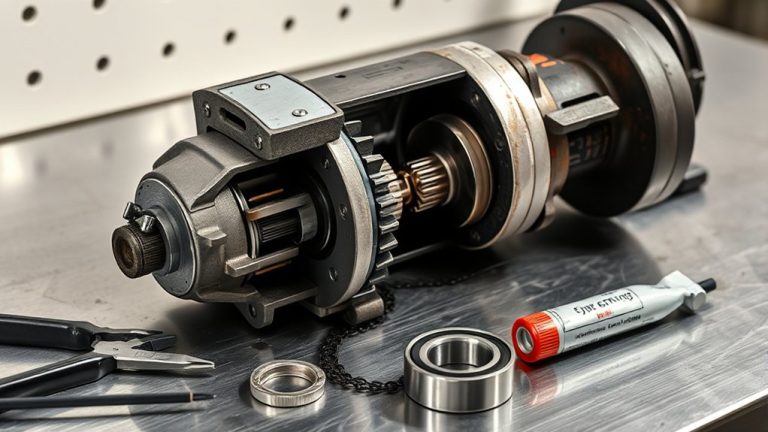
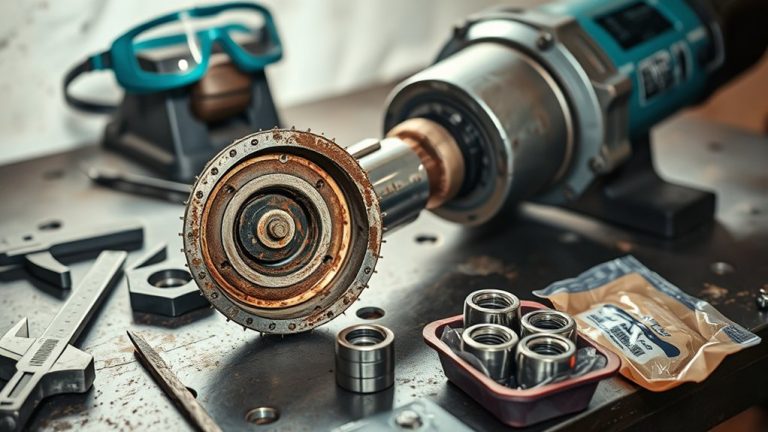
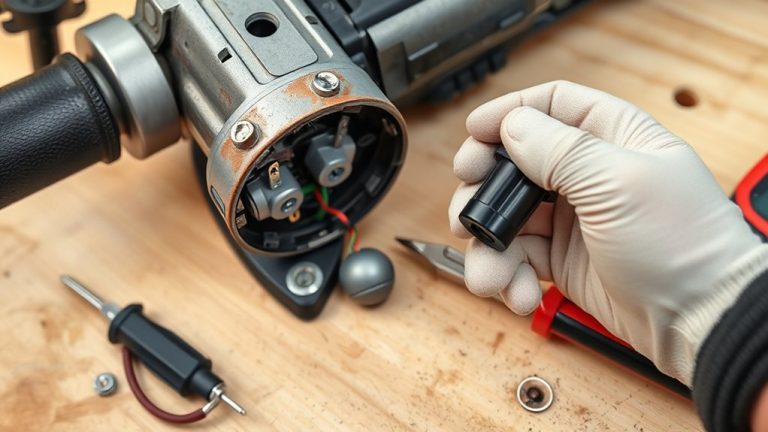
To diagnose angle grinder gearbox problems, start by ensuring the tool is unplugged and cooled down. Conduct a visual inspection for oil leaks, unusual wear on gears, and any cracks in the housing. Check lubrication levels regularly and listen for strange noises during operation. Misalignment can be evident through excessive vibrations. If you notice persistent issues like severe leaks or overheating, it’s time to consult a professional. You’ll want to explore detailed inspection steps for thoroughness.
Safety First: Preparing Your Angle Grinder for Inspection
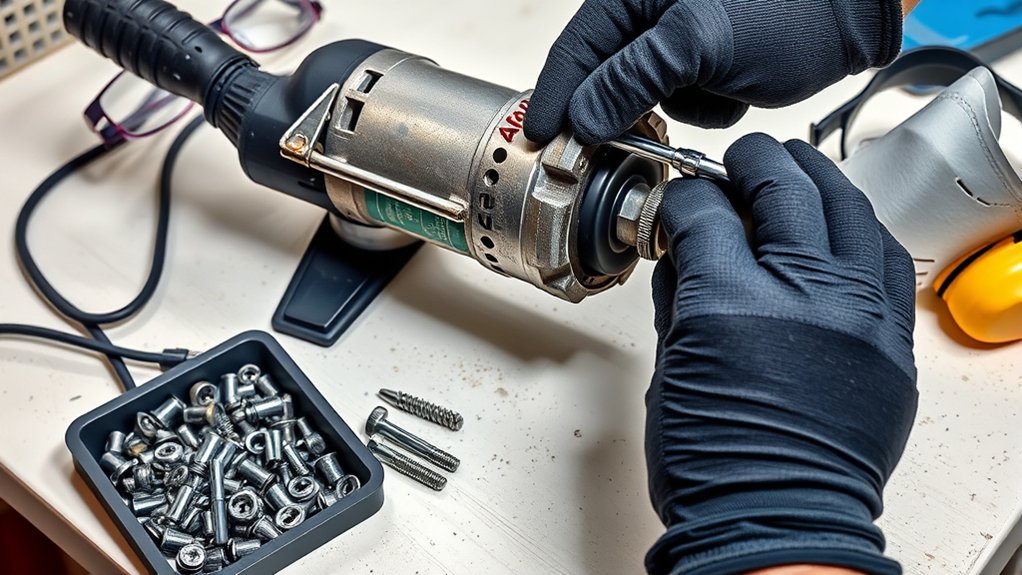
Before you explore inspecting your angle grinder, it’s essential to prioritize safety to prevent any accidents. First, verify the grinder is unplugged to eliminate the risk of accidental startups. Don’t overlook your personal protective equipment (PPE); wear safety goggles, gloves, and hearing protection to shield yourself from debris and noise.
If you’ve been using the grinder, allow it to cool down completely, as hot components can lead to burns or injuries. Once cooled, clean the exterior of the grinder thoroughly to remove dust and debris. A clean surface makes it easier to spot any signs of wear or damage during your inspection.
Lastly, consult the manufacturer’s manual for specific safety guidelines and recommendations related to your angle grinder model. Following these precautions will empower you to conduct a thorough and safe inspection, making sure your tool remains in peak condition.
Gearbox Visual Inspection: Identifying Damage and Wear
When inspecting the gearbox, start by looking for common visual indicators like cracks or dents that suggest mishandling. Next, closely examine the gear teeth for any signs of wear, such as pitting or chipping, which can compromise performance. Finally, check the seals and gaskets for oil leaks, as these may indicate wear that could lead to lubrication failure.
Products Worth Considering
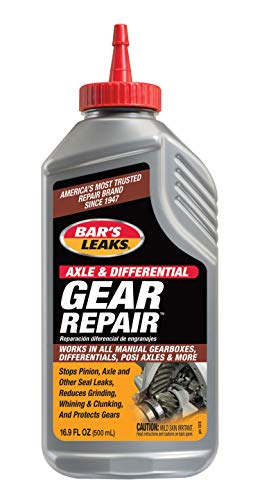
STOPS PINION, AXLE, OUTPUT SHAFT AND OTHER SEAL LEAKS: This is a treatment additive for use with automotive, heavy duty, agricultural, marine and industrial gear oils.

Product Type: Auto Oil
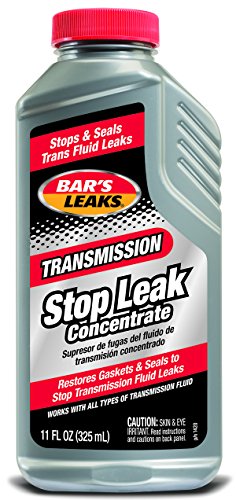
Stops and seals transmission fluid leaks
Common Visual Indicators
Visual inspection of the gearbox is essential for identifying potential problems early. Start by checking for oil leaks around the gearbox; these often indicate worn seals or gaskets that need immediate attention. Next, look for unusual wear patterns on the gears, such as pitting or scoring, which can signal misalignment or inadequate lubrication. Assess for excessive play in the gearbox components, as this may suggest worn bearings or gears, compromising efficiency. While inspecting, listen for grinding or whining noises during operation—these could indicate internal damage. Finally, examine the gearbox housing for cracks or deformities, which can affect structural integrity and require prompt repair or replacement to maintain safety and peak performance.
Gear Tooth Examination
A thorough gear tooth examination is critical for diagnosing gearbox issues effectively. Start by inspecting the gear teeth for signs of wear, such as pitting or chipping, which often indicate insufficient lubrication or misalignment. Check for abnormal tooth wear patterns; uneven wear can signal overload conditions or improper mesh clearance. Measure tooth thickness at various points to identify significant wear that could compromise load capacity and overall performance. Look for scoring or galling, typically caused by inadequate lubrication or contamination, as these can lead to premature wear and failure. Finally, verify the teeth are free from cracks or fractures, as these defects can propagate under load, resulting in catastrophic gearbox failure. Regular maintenance and inspection are essential.
Seal and Gasket Inspection
While inspecting a gearbox, don’t overlook the critical role of seals and gaskets in maintaining system integrity. Start your seal inspection by checking for visible signs of wear, like cracks or deformation, which can lead to oil leaks and contaminated oil. Regularly monitor for oil leaks around the gearbox housing; persistent leakage often indicates degraded seals needing replacement. Confirm gaskets are properly seated and free from debris, as misalignment exacerbates leakage issues. If feasible, conduct a pressure test to assess seal integrity and identify potential gasket failure points. Finally, routinely check the oil level and condition; low or contaminated oil can signal seal or gasket failure, resulting in lubrication issues and increased wear on gearbox components.
Check Gearbox Lubrication Levels
Maintaining proper lubrication levels in the gearbox is essential for peak performance and longevity. Inadequate oil can lead to increased friction and overheating, ultimately causing gear failure. Regular maintenance is key; check the gearbox lubrication every 200–300 hours, especially in high-dust environments.
Proper lubrication is vital for gearbox performance; neglect can lead to friction, overheating, and gear failure. Regular checks are essential.
- Use high-quality grease with oxidation resistance to reduce wear on components.
- Inspect oil levels and guarantee the correct quantity is maintained; too much can lead to contamination, while too little causes dry friction.
- Conduct oil analysis to identify contamination from dirt and metal shavings.
Products Worth Considering

▸Outstanding Heat Protection: your equipment's longevity in the most extreme heat environments with our angle grinder grease's unique high-temperature formula that provides remarkable lubrication, maintaining optimal performance at all times.
High-temperature lubrication : Enjoy smooth and efficient operationn while maximizing equipment lifespan with our angle grinder grease. Engineered with a special high-temperature formula, this grease provides unparalleled resistance to extreme heat and maintains excellent performance in any environment
Inspect Gears for Wear and Damage
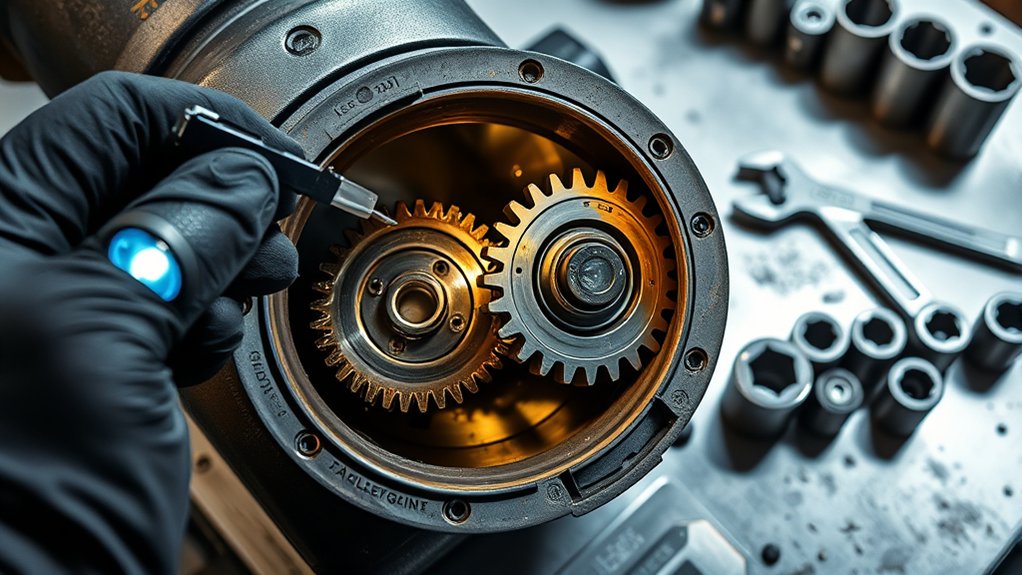
Inspecting gears for wear and damage is essential to guaranteeing your angle grinder operates efficiently and safely. Start by checking for signs like pitting or scoring, which often indicate inadequate lubrication or alignment issues, risking gearbox failure. Look for cracks or chips on gear teeth; these can compromise structural integrity and lead to catastrophic failure.
Measure gear backlash with a dial indicator to confirm it’s within manufacturer specifications, as excessive backlash can cause increased wear and noise. Additionally, inspect for discoloration or signs of overheating, which point to excessive friction from insufficient lubrication or overload conditions. Finally, verify all gears mesh smoothly without binding, as irregularities suggest alignment issues or gear damage that need immediate attention.
| Type of Damage | Indication | Action Required |
|---|---|---|
| Pitting or Scoring | Inadequate lubrication | Lubricate, realign |
| Cracks or Chips | Structural integrity compromised | Replace gears |
| Excessive Backlash | Increased wear | Adjust backlash |
| Discoloration | Overheating | Lubricate, reduce load |
| Binding or Resistance | Alignment issues | Realign gears |
Products Worth Considering

Package Includes: 227506-5 227471-8 Angle Grinder Spiral Bevel Gear Kit, Replace 227542-1 227541-3

1: 1 right angle bevel gearbox, suitable for simple DIY mechanical applications

Product Name : Spiral Bevel Gear
Testing Performance: Running the Grinder for Diagnostics
To effectively diagnose potential gearbox issues, run the angle grinder at various speeds and listen for any unusual noises, such as grinding or whining. These sounds can indicate gear wear or misalignment.
While testing performance, keep these critical points in mind:
- Monitor temperature: Excessive heat may signify inadequate lubrication or internal friction issues.
- Observe vibrations: Excessive vibrations can indicate internal gear failure or misalignment that affects performance.
- Conduct a visual inspection: Look for oil leaks or signs of wear, which may point to seal degradation or a lack of lubrication.
Additionally, check for smooth operation; if the grinder stalls or bogs down under load, this may signal gear engagement problems or internal blockages. By methodically evaluating these factors, you can identify and address gearbox issues effectively, ensuring your grinder operates efficiently and safely.
Diagnosing Noises: What Unusual Sounds Indicate?
When diagnosing gearbox issues, unusual sounds can provide critical clues about underlying problems. Grinding noises often indicate worn gears or bearings, signaling an immediate need for inspection and potential replacement. If you hear whining sounds, it’s likely a sign of misalignment, which can lead to uneven wear and eventual gearbox failure if not addressed. Clicking or popping noises may suggest damaged or misaligned gear teeth, requiring a thorough check of all gearbox components. A high-pitched squeal points to insufficient lubrication, increasing friction and accelerating wear on the gears. Finally, rattling noises during operation may indicate loose components, necessitating a careful assessment of the tightness of components to prevent further damage. By actively diagnosing noises, you can pinpoint issues early and extend your angle grinder’s lifespan, ensuring peak performance.
Checking for Misalignment: Ensuring Proper Gear Mesh
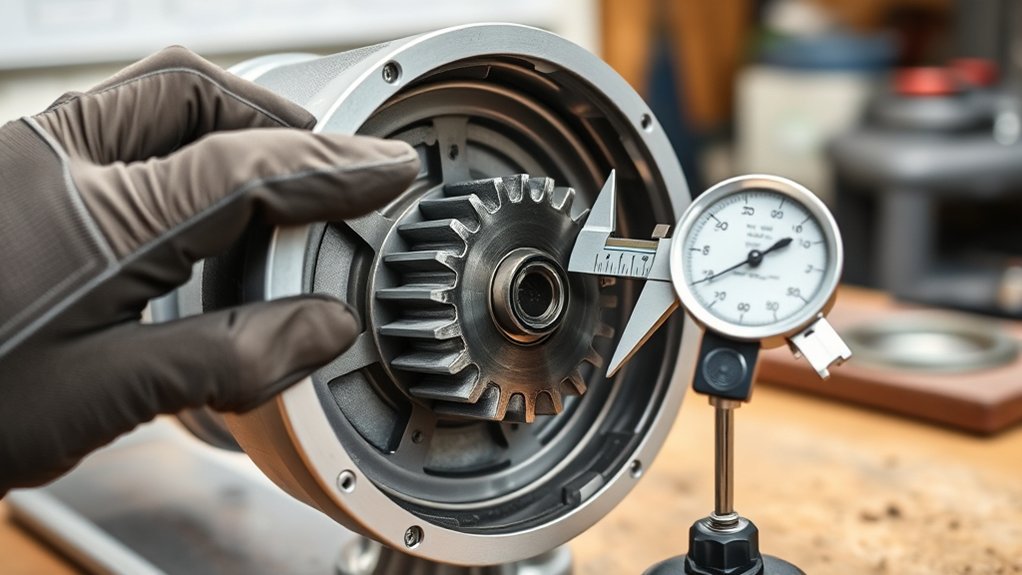
Misalignment in angle grinder gearboxes can considerably impact performance, leading to uneven load distribution and increased wear. When checking for misalignment, focus on ensuring proper gear mesh clearance to mitigate operational inefficiencies.
- Use alignment tools like laser devices for precise measurements.
- Monitor vibrations and temperature for abnormal readings indicating alignment issues.
- Adhere to manufacturer specifications for pressure and spiral angles.
Regularly inspecting the gearbox visually can reveal misalignment issues, but using advanced alignment tools will provide exact positioning data. Improper gear mesh may result in excessive clearance, causing noise and vibrations, or insufficient clearance, leading to tooth breakage. By systematically addressing these factors, you’ll enhance the longevity and efficiency of your angle grinder, ensuring it operates smoothly and effectively. Prioritizing accurate alignment keeps your equipment in prime condition, reducing unnecessary downtime and maintenance costs.
Know When to Call in the Pros
While routine maintenance can often resolve minor issues with your angle grinder, there are times when professional expertise becomes essential. If you notice excessive vibrations or unusual noises despite following gearbox maintenance tips, it may indicate underlying issues that require expert evaluation. Persistent overheating, even with proper lubrication, signals deeper problems in the gearbox that only professionals can diagnose accurately.
Severe oil leaks or contamination that routine maintenance can’t fix should prompt you to seek professional help immediately. If you observe cracked housing or damaged safety guards, professional intervention is vital for your safety. Additionally, complex gearbox configurations or advanced problems often necessitate specialized knowledge and tools that only experts possess. Ignoring these potential issues can lead to further damage and risk during operation, so don’t hesitate to call in the pros when necessary. Your angle grinder’s performance and your safety depend on it.
Frequently Asked Questions
What Are Common Grinder Machine Problems?
Common grinder machine problems include gear wear, overheating issues from inadequate lubrication, noise problems indicating misalignment, excessive vibration suggesting bearing issues, and power loss due to contamination, all requiring prompt attention for peak performance.
What Are 10 Safety Precautions Before Using a Grinding Machine?
Before using a grinding machine, guarantee proper tool handling, conduct electrical safety checks, maintain the grinding wheel, organize your workspace, wear personal protective equipment, and familiarize yourself with emergency procedures to avoid potential hazards.
What Are Signs My Grinder Needs Repair?
If you notice grinder noise issues, overheating components, or vibration problems, it’s time to act. Inconsistent performance and clear gear wear signs may indicate electrical failures, requiring immediate inspection and potential repair to maintain efficiency.
What Causes an Angle Grinder to Stop Working?
When your angle grinder suddenly stops, it could be due to gearbox failure, motor issues, or power loss. Overheating problems, switch malfunctions, and worn carbon brushes also play significant roles in its unexpected demise.
Conclusion
In diagnosing angle grinder gearbox problems, think of your grinder as a finely tuned orchestra. Just as a single off-key note can disrupt a symphony, a minor gear issue can lead to major performance problems. By following these steps, you can guarantee each component works harmoniously. If you spot significant wear or hear troubling noises, don’t hesitate to call in a professional. Remember, a well-maintained grinder is not just a tool; it’s your partner in precision work.