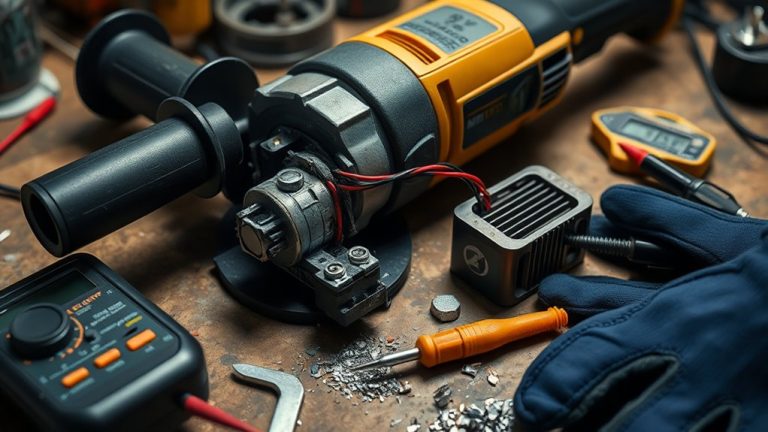
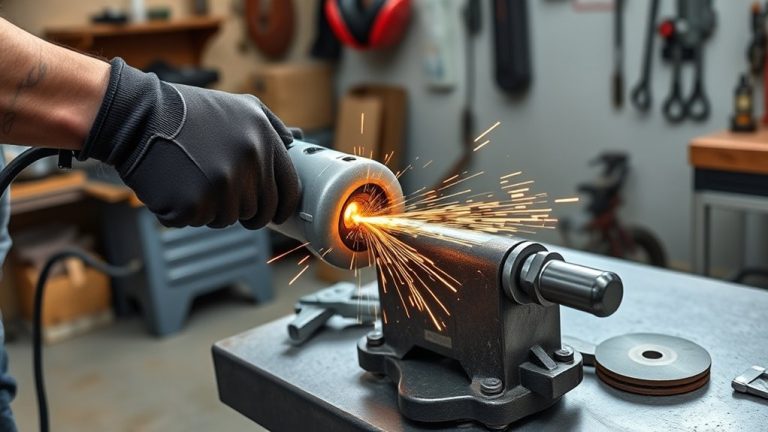
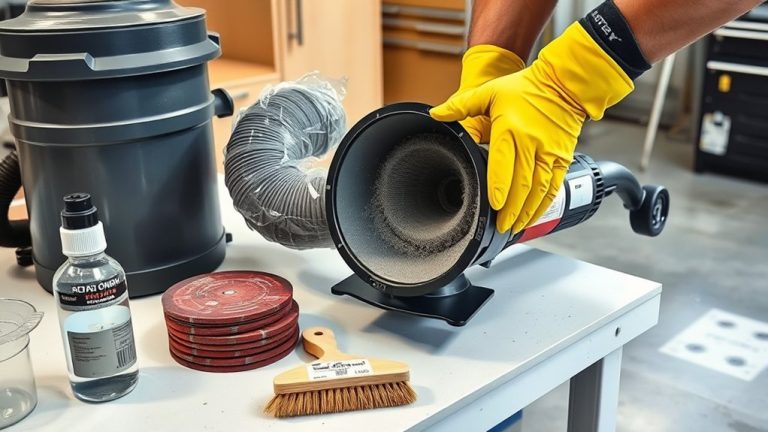
To extend your angle grinder’s life in dusty conditions, start with thorough pre-use inspections, checking for cord damage and functionality. Maintain a consistent cleaning routine, using a damp cloth and compressed air to remove dust. Operate safely by gripping firmly and allowing for cooling breaks to prevent overheating. Regularly lubricate according to the manual and replace worn parts as needed. Discover additional maintenance tips to guarantee your tool stays in peak condition for years to come.
How to Conduct Essential Pre-Use Inspections
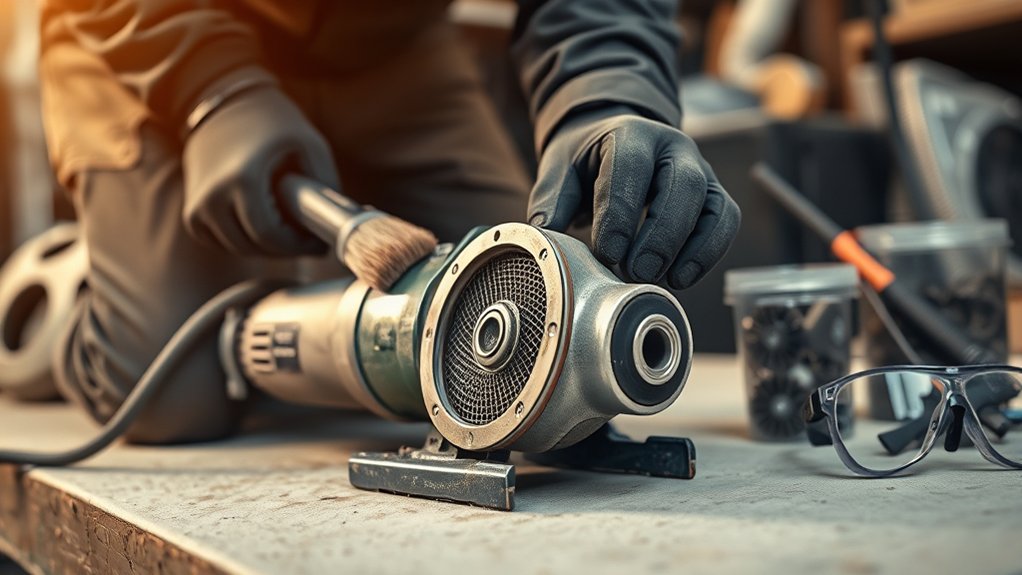
Before you use your angle grinder, it’s crucial to conduct essential pre-use inspections to guarantee safety and peak performance. Start by checking the power cord for any cuts, frays, or exposed wires. A damaged cord can lead to electrical hazards. Next, inspect the tool housing for cracks or signs of wear; damaged components can result in malfunctions or accidents. Verify all guards and attachments are securely fastened—loose parts can cause kickback, leading to serious injury.
Test the switches and speed controls to confirm they function properly; malfunctioning controls compromise both safety and performance. Finally, conduct a thorough visual inspection for any visible damage. Pay attention to areas prone to metal buildup, as this can affect the efficiency of your grinder. By following these pre-use inspections, you’ll not only enhance your grinder’s lifespan but also create a safer working environment. Always wear safety glasses during these inspections for added protection.
Daily Cleaning Routines for Angle Grinders
Regular maintenance not only enhances the performance of your angle grinder but also extends its life considerably. Implementing daily cleaning routines is crucial, especially in dusty environments. Start by wiping the grinder’s exterior with a clean, dry rag before each use to remove dust that can obstruct ventilation. For stubborn residue, use a damp cloth after the grinder cools down, making sure all surfaces are dried thoroughly to prevent rust, particularly around the spindle area.
After every use, blow out the ventilation slots with compressed air to prevent overheating from dust accumulation. Weekly, inspect the vents for dust buildup and clean as necessary to maintain ideal airflow. Additionally, perform a three-minute wipe-down after every shift to guarantee consistent airflow and keep your grinders running efficiently. These practices not only safeguard safety and performance but also greatly prolong your tool’s lifespan.
Safe Operating Techniques for Angle Grinders
To operate an angle grinder safely, you need to maintain a firm two-handed grip for maximum control and stability. Applying consistent, moderate pressure is essential to prevent overheating and strain on the tool, especially in dusty environments. These techniques not only enhance safety but also contribute to the longevity of your equipment.
Proper Grip Techniques
Mastering proper grip techniques is vital for safe and effective operation of an angle grinder. Always maintain a firm, two-handed grip to enhance control and prevent slips, particularly in dusty environments. Position your body to the side of the tool, guaranteeing a stable stance that balances the grinder and reduces the risk of kickback injuries. Use moderate pressure while grinding, allowing the tool to operate at its natural speed, which minimizes overheating and improves efficiency. Regularly check your grip and posture during prolonged use to maintain consistent control and reduce fatigue-related accidents. Finally, verify the grinder’s guard is securely in place and properly adjusted, maximizing safety while you maintain that vital grip.
Consistent Pressure Application
Applying consistent pressure while using an angle grinder is essential for maintaining ideal performance and prolonging the tool’s lifespan. Here are key practices to follow:
- Moderate Grip: Use a firm yet gentle grip. This allows the grinder to navigate materials naturally, reducing wear and preventing motor strain.
- Monitor Performance: Keep an eye on the tool’s efficiency. If you notice strain, reduce pressure immediately and allow for cooling.
- Regular Breaks: For extended tasks, take breaks to avoid overheating. Continuous use under excessive pressure can cause irreversible damage to the motor and bearings.
How to Diagnose and Prevent Overheating Issues?
Overheating can greatly shorten your angle grinder’s lifespan, so it’s essential to diagnose and prevent these issues proactively. Start by regularly monitoring the motor housing for excessive heat and listening for unusual sounds, as these can signal overheating. Make sure your ventilation slots are clear of dust and debris; blow them out with compressed air after each use to maintain proper airflow. Be alert for burning smells during operation, which often indicate worn carbon brushes that need replacement to maintain performance and prevent overheating. Implement cooling breaks of at least 5 minutes during extended use to allow the grinder to cool down and avoid thermal overload. Finally, regularly check and clean the grinder’s components, including bearings and lubrication points, to minimize friction and heat buildup. This diligence enhances your tool’s longevity and performance in demanding, dusty conditions.
Why Lubrication Matters for Tool Longevity
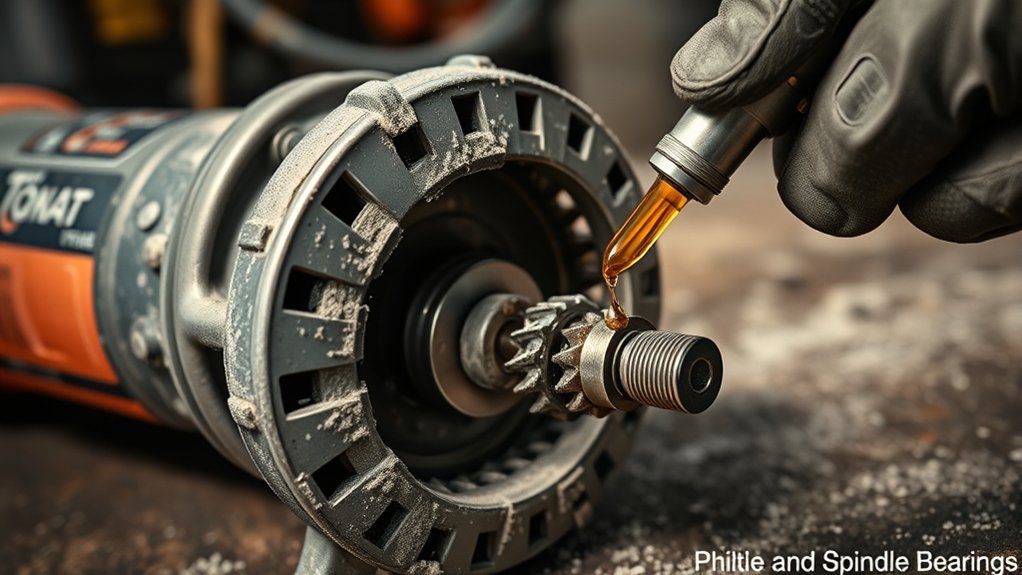
Lubrication is essential for your angle grinder’s longevity, as it directly impacts performance and efficiency. You need to follow lubrication frequency guidelines, choose the correct lubricant type, and understand the benefits of proper lubrication to prevent wear and overheating. By adhering to these practices, you can greatly extend the lifespan of your tool.
Lubrication Frequency Guidelines
When you prioritize regular lubrication for your angle grinder, you’ll greatly enhance its lifespan by minimizing friction-related wear on critical components like bearings and gears. Follow these lubrication frequency guidelines to maintain peak performance:
- Lubricate every 100-150 hours of use, as specified in your owner’s manual, to prevent premature wear.
- Use manufacturer-specified grease to guarantee compatibility and effectiveness, which contributes to your tool’s longevity.
- Avoid over-lubrication; excess grease can attract dust and debris, causing blockages and overheating.
Choosing Correct Lubricant Type
Choosing the correct lubricant type for your angle grinder is vital for guaranteeing peak performance and longevity. By selecting the right lubricant as specified in your owner’s manual, you can greatly reduce wear on bearings and gears. Regular lubrication intervals, typically every 100-150 hours of use, maintain smooth operation and prevent overheating, especially in dusty conditions. However, be cautious—over-lubrication can attract dust and debris, which increases friction and risks damage. Properly lubricated tools run cooler and more efficiently, essential for extending lifespan. If you’re unsure, seek professional guidance to confirm the appropriate lubricant is used and applied correctly. This meticulous approach will help you achieve peak performance and prolong your angle grinder’s service life.
Benefits of Proper Lubrication
Maintaining the right lubricant not only assures smooth operation but also provides significant benefits for your angle grinder’s longevity. Here’s why proper lubrication matters:
- Reduce Wear: Proper lubrication decreases friction between bearings and gears, extending their lifespan.
- Prevent Overheating: Regular application of manufacturer-recommended grease or oil every 100-150 hours assures effective cooling and reduces the risk of overheating.
- Consistent Power Delivery: Inspecting and replacing worn carbon brushes every 100-200 hours assures stable operation, preventing unnecessary strain on the motor.
Identifying and Replacing Worn Parts in Angle Grinders
Inspect your angle grinder regularly to identify and replace worn parts before they lead to performance issues. Start with the carbon brushes; replace them when they’re worn down to 1/4 of their original length, usually every 100-200 hours, to maintain peak motor performance. Pay attention to any unusual noises—grinding or clicking sounds could signal bearing wear, requiring immediate replacement to prevent further damage.
Before each use, check your grinding discs and wheel guards for cracks or damage, as compromised parts can result in accidents and reduced efficiency. Verify all attachments, including the mounting collar and brush skirts, are secure and in good condition. This helps prevent air leaks and guarantees effective dust control during operation. Regularly clean and replace worn parts to maintain proper airflow, extending your angle grinder’s lifespan and enhancing its overall performance.
How to Store Your Angle Grinder Right
To guarantee your angle grinder stays in peak condition, proper storage is essential. Follow these steps to make certain it remains functional and free from damage:
Proper storage is essential to keep your angle grinder functional and free from damage.
- Choose a Dry Place: Store your angle grinder in a clean, dry environment with controlled humidity levels between 40-60%. This prevents moisture buildup and corrosion inside the motor housing.
- Use Protective Cases: Always utilize original protective cases or bags to shield your grinder from dust and physical impacts during storage.
- Hang Vertically: Hang the grinder vertically to avoid pressure on its components, making sure all parts remain undamaged.
Before storing, always unplug the grinder to eliminate any risk of accidental activation. Regularly inspect your storage area for humidity levels and make certain temperatures stay between 60-75°F. By following these guidelines, you’ll prolong your angle grinder’s life and maintain its performance.
Utilizing Dust Extraction Systems for Cleaner Operation
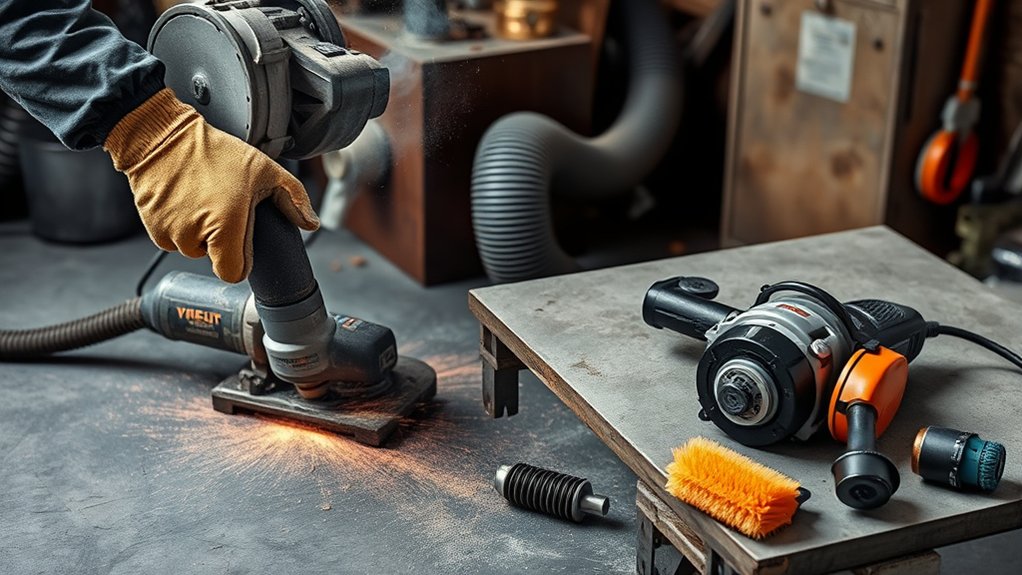
While using an angle grinder, implementing a dust extraction system is vital for maintaining a clean and safe work environment. A well-designed dust extraction setup can capture up to 95% of harmful silica dust, greatly reducing health risks associated with prolonged exposure. Connect a HEPA extractor or high-CFM shop-vac to your grinder to enhance dust control and maintain ideal airflow efficiency.
Incorporating a dust shroud with your extraction system allows for better containment of debris, guaranteeing improved job site cleanliness and minimizing post-job cleanup time. Regular maintenance of the dust extraction system—such as cleaning filters and checking for clogs—is essential to prevent dust escape and maintain effective operation. Additionally, complying with OSHA regulations regarding dust exposure protects you from costly fines, emphasizing the need for a dependable dust extraction system on job sites. Prioritize these practices to guarantee both your safety and the longevity of your equipment.
When to Seek Professional Help for Angle Grinder Repairs?
Maintaining a clean workspace with an effective dust extraction system is just one aspect of guaranteeing your angle grinder operates smoothly. You should seek professional help if you notice any of the following issues:
- Unusual Noises: Grinding, clicking, or whirring sounds might indicate bearing problems that need expert repair.
- Overheating: If the motor housing gets excessively hot or emits a burning smell, it’s a sign of blocked vents or failing components, requiring professional attention.
- Visible Damage: Cracks or significant wear on the tool housing or safety guards should prompt immediate evaluation to confirm safe operation.
Ignoring these signs can lead to frequent breakdowns and further damage. Don’t compromise your safety or the performance of your angle grinder. Instead, when you spot these warning signs, act swiftly and consult a qualified technician to keep your tool in peak condition.
Frequently Asked Questions
How to Stop Dust From Angle Grinder?
To stop dust from your angle grinder, implement dust control measures like using grinder enclosures and dust extraction systems. Always wear protective gear, maintain workspace organization, and guarantee efficient airflow for ideal results.
What Are 10 Safety Precautions Before Using a Grinding Machine?
Before using a grinding machine, always wear safety gear, conduct a grinder inspection, guarantee dust extraction is functional, clear your work area, and familiarize yourself with emergency procedures to guarantee a safe, efficient operation.
How to Maintain an Angle Grinder?
To maintain your angle grinder, adopt effective grinder cleaning techniques, implement proper tool storage solutions, utilize dust collection methods, follow blade replacement tips, and adhere to a consistent maintenance schedule for peak performance.
What Is the Lifespan of an Angle Grinder?
An angle grinder typically lasts 5 to 10 years, influenced by maintenance frequency, ideal usage practices, and common issues. To enhance durability, regularly inspect and clean it, addressing factors that affect its lifespan.
Conclusion
In the harsh landscape of dusty conditions, your angle grinder can be a steadfast ally if cared for properly. By following these steps, you’ll not only extend its life but also guarantee it performs like a well-tuned engine, slicing through tasks with ease. Remember, a little maintenance goes a long way; treat your tool with respect, and it’ll return the favor, working tirelessly through even the toughest jobs, like a reliable companion in a gritty battlefield.