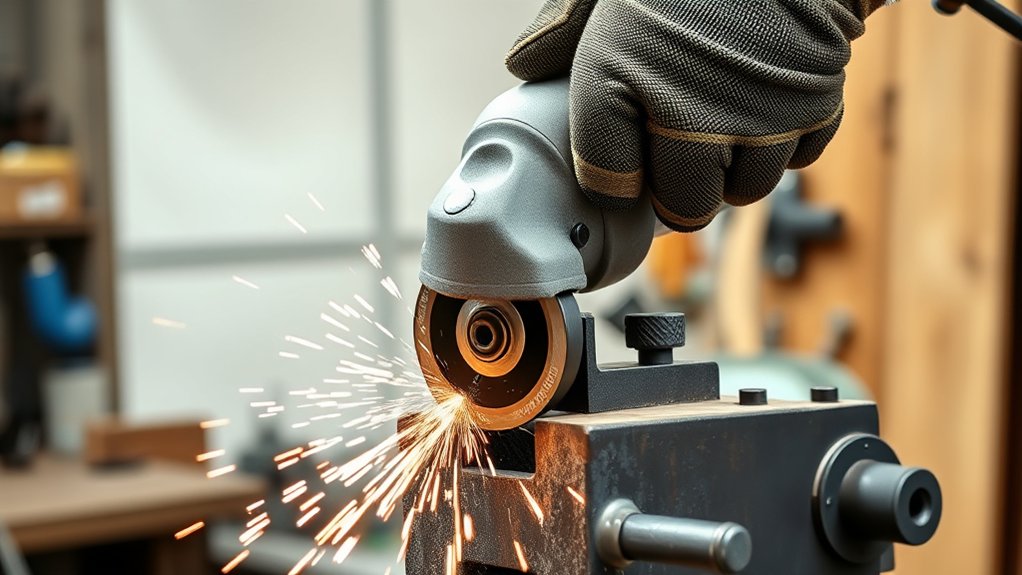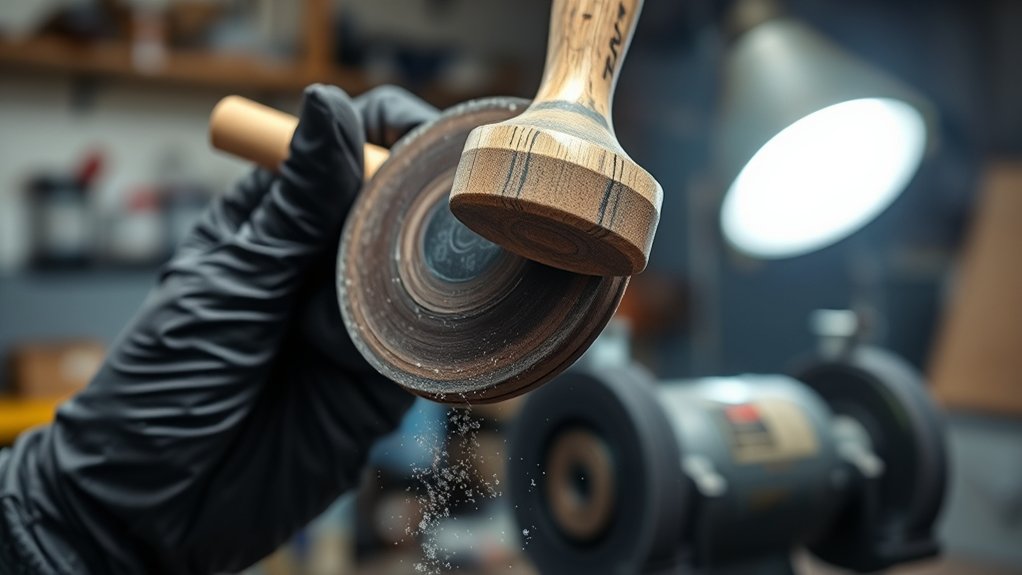
A damaged bonded abrasive wheel can break apart at operating speed and throw fragments with enough force to cause severe injury. Before you mount a grinding wheel, inspect its surfaces, markings, and mounting area, then use a ring test only when the wheel’s type, size, and manufacturer instructions make that test appropriate.
Quick Answer
Inspect every bonded abrasive wheel before mounting. Check both faces, the edge, arbor hole, blotters, and label for cracks, chips, distortion, contamination, missing markings, or an expired use-by date. Ring-test only suitable wheel types. A dull, dead, or suspicious result means the wheel stays out of service.
Key Takeaways
- Inspect a wheel immediately before mounting and again whenever damage is suspected.
- Never use a wheel with cracks, chips, distortion, an unknown maximum RPM, or other serious damage.
- A ring test is mainly useful for vitrified and silicate bonded wheels that are large enough and shaped appropriately.
- Use a light, non-metallic implement and tap gently. A clear, even tone is acceptable only when the visual inspection also passes.
- Obey restriction symbols. A symbol may prohibit one use, such as side grinding or wet grinding, without meaning the wheel must be discarded.
- Do not mount a wheel that has been dropped or whose condition, identity, or speed rating cannot be confirmed.
At a Glance
| Time Required | Usually a few minutes per wheel |
| Difficulty | Basic inspection; mounting should follow workplace training and manufacturer instructions |
| Tools Needed | Good lighting, a clean soft brush, wheel instructions, and a light non-metallic handle or wooden mallet when ring testing is allowed |
| Cost | No added cost when approved inspection tools and PPE are already available |
Why Abrasive Wheel Inspection Matters
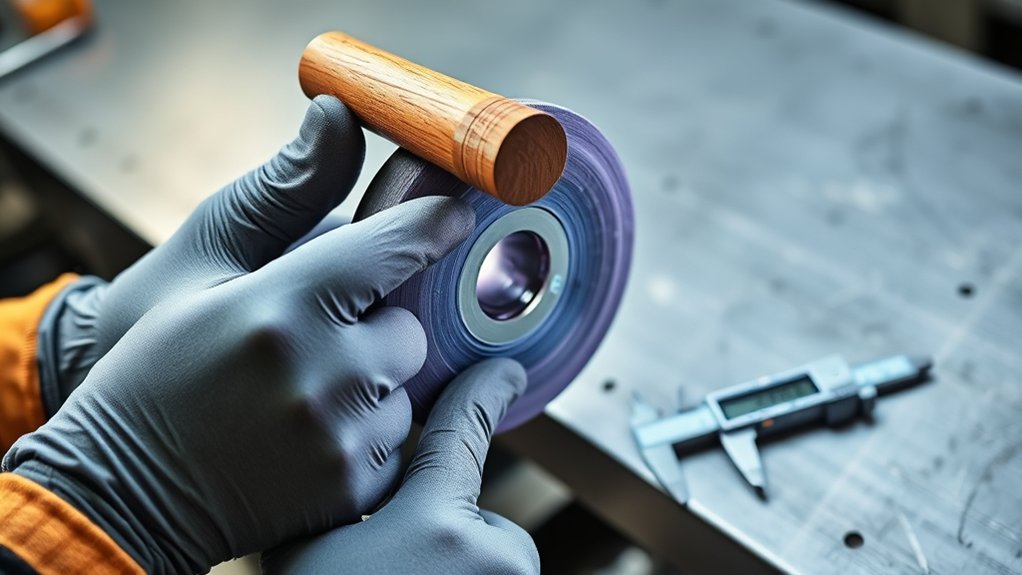
A bonded abrasive wheel stores considerable energy while rotating. Cracks, impact damage, incorrect mounting, excessive speed, or poor storage can allow a defect to grow until the wheel breaks.
A visual inspection finds surface damage such as cracks, chips, gouges, missing abrasive, distorted edges, damaged blotters, and problems around the arbor hole. It also helps you catch contamination, incorrect markings, and a wheel that does not match the machine or job.
Some internal fractures are difficult to see. For suitable vitrified or silicate bonded wheels, a ring test provides another screening step because a crack can dampen the tone produced by a gentle tap.
Warning: A clear ring does not prove that a wheel is safe. Visible damage, a drop, an unreadable speed rating, the wrong wheel type, or any other failed check overrides the sound test.
Step-by-Step Visual Inspection Process
Inspect the wheel before mounting it. Use bright, even lighting, clean hands or gloves, and a surface that prevents the wheel from falling or rolling.
Check for Visible Damage
Examine both faces, the full outer edge, the arbor hole, and any attached blotters or labels. Look and feel carefully for:
- Hairline cracks, chips, gouges, or missing pieces
- Distortion, warping, an out-of-round edge, or an enlarged mounting hole
- Crushed edges, impact marks, or damage around the bore
- Soft, loose, blistered, or uneven areas that differ from the rest of the wheel
- Oil, water, heavy moisture staining, or foreign material
- Damage to an attached hub, threaded insert, or reinforcing area
Do not glue, patch, drill, force, or reshape a damaged wheel. Dressing or truing is a controlled maintenance process for an otherwise sound wheel; it is not a repair for cracks or impact damage.
Check the Label, Maximum RPM, and Use-By Date
Read the wheel label, blotter, package, and manufacturer instructions. Confirm the wheel type, dimensions, intended application, maximum operating speed, and any restriction symbols. Under OSHA’s abrasive wheel machinery requirements, the grinder’s no-load speed must not exceed the maximum RPM marked for the wheel.
Check and obey a use-by date when the manufacturer provides one. Not every abrasive wheel carries an expiration date, but HSE abrasive-wheel guidance identifies use-by dating for organic bonded wheels used in hand-held applications. Do not use a dated wheel after its marked validity period.
A restriction pictogram is not always a discard mark. It may mean “not for hand-held grinding,” “not for wet grinding,” or “not for side grinding.” Use the wheel only in an application its markings permit.
If the label is missing or unreadable and you cannot confirm the wheel’s identity, dimensions, maximum speed, or permitted use, quarantine the wheel and do not mount it.
Decide Whether the Wheel Can Be Ring-Tested
The ring test is mainly intended for bonded wheels that produce a meaningful tone. It does not apply equally to every abrasive product.
| Wheel or Product Type | Ring-Test Guidance |
|---|---|
| Vitrified or silicate bonded wheel of suitable size and shape | Generally suitable when the manufacturer instructs you to ring-test it |
| Organic, resinoid, rubber, or reinforced wheel | May not produce a clear metallic ring; follow the manufacturer’s inspection method |
| Wheel 4 inches (100 mm) in diameter or smaller | The test may be ineffective or impracticable; rely on the specified visual and manufacturer checks |
| Plug, cone, mounted point, segment, plate-mounted wheel, or inserted-nut disc or cylinder | Often unsuitable for a ring test because of shape or mounting construction |
| Flap disc, sanding disc, wire wheel, or other non-bonded accessory | Do not use this ring-test procedure; inspect according to the accessory manufacturer’s instructions |
Note: When the wheel type is unclear, do not guess from its appearance. Use the label, package, safety data, or manufacturer guidance to identify the bond and approved inspection method.
How to Perform a Ring Test
Perform the ring test only after the wheel passes the visual and label checks and only before mounting, following the tap positions in OSHA 29 CFR 1910.215(d)(1). The wheel must be clean and dry because moisture, sawdust, and debris can deaden the sound.
Products Worth Considering
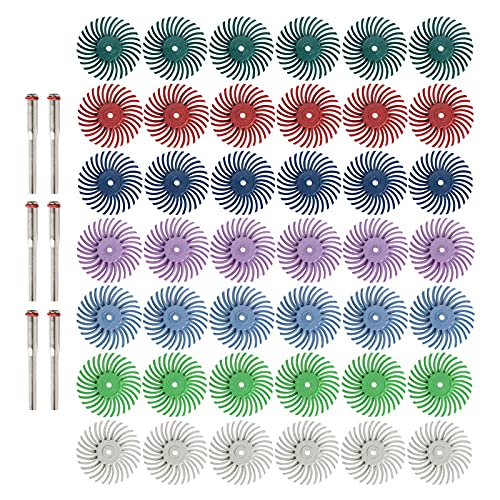
Bristles disc suit for deburring, cleaning, finishing and polishing detailed parts, tiny areas and irregular places more effectively with no scrach

10-piece set includes 8 abrasive nylon radial discs and 2 shanks (1/8 inch). Discs measure 1 inch diameter, color-coded by grit: Dark Green 80, Dark Blue 120, Red Brown 220, Brown 320, Blue 400, Purple 600, Green 1000, White 2500.

【REPLACE PART NUMBER 】 The manual piston ring filer replace 66785, 66786
Required Tools and Materials
- A clean, dry wheel that is suitable for ring testing
- A light non-metallic implement, such as a plastic screwdriver handle for light wheels or a wooden mallet for heavier wheels
- A quiet area where you can hear differences in tone
- A safe support method recommended for the wheel’s size and type
Never use a metal hammer or strike hard enough to chip, dent, or mark the wheel.
Step-by-Step Procedure
- Clean the wheel. Brush away loose dust and make sure the wheel is dry.
- Support it correctly. Suspend a light wheel through its arbor hole on a finger or small non-damaging pin so it can vibrate freely. Support a heavy wheel using the manufacturer’s approved method, which may require holding it upright on a clean, hard floor. Do not lay it flat on a bench.
- Tap gently. On a typical straight wheel, tap about 45 degrees to one side of the vertical centerline and about 1 to 2 inches from the outer edge.
- Test the opposite side. Tap at the matching point about 45 degrees to the other side of the centerline.
- Rotate and repeat. Rotate the wheel about 45 degrees, then repeat the two gentle taps.
- Compare the tones. Listen for an even, clear tone at each test point. A dead, dull, or noticeably different tone is a rejection signal.
Pro Tip: When available, compare the sound with an undamaged wheel of the same manufacturer, specification, size, and production lot. Different wheel types can naturally sound different.
Interpreting the Results
| Sound or Result | Action |
|---|---|
| Clear, even metallic tone at all test points | The wheel passes this screening step only if every visual, label, speed, and handling check also passes |
| Dull, dead, flat, or inconsistent tone | Do not mount the wheel; mark it unsafe and remove it from service |
| Result is difficult to hear or interpret | Do not approve the wheel by guesswork; repeat under correct conditions or contact the manufacturer or a competent safety professional |
The test is a screening method, not a certification. A wheel with visible damage or an uncertain history must stay out of service even if it rings clearly.
What to Do After an Unclear Ring Test
First, confirm that the wheel is dry, clean, correctly supported, and actually suitable for ring testing. Move to a quieter location and repeat the test gently.
If the sound remains uncertain, quarantine the wheel. Label it so another person cannot mount it, then follow your workplace procedure or contact the wheel manufacturer. The cost of discarding a questionable wheel is small compared with the risk of a burst wheel.
How to Recognize Damaged Abrasive Wheels
Damage can appear as a crack, chipped edge, missing abrasive, gouge, distortion, damaged bore, loose insert, blister, soft area, or uneven surface. A wheel may also be unsafe because its markings are unreadable, its use-by date has passed, or its maximum speed is below the grinder’s speed.
Pay special attention to the center area. Cracks, crushed blotters, distorted bushings, or damage around the mounting hole can prevent even clamping and concentrate stress.
Storage clues matter too. Moisture marks, oil contamination, crushed packaging, toppled stacks, and impact-damaged edges can show that the wheel was mishandled even when a large crack is not obvious.
Products Worth Considering

【Premium Material】This wire metal sheet thickness gauge set is made of high quality 2Cr13 stainless steel, which is firm and durable, well made, not easy to bend, easy to read, accurate measurement, simple to operate. (There will be a little oil on the wire metal sheet thickness gauge, which is used to prevent rust)

✅ PATENT PENDING - ROLL STOP FENCE WITH FLAT SPOT - woodworking tasks with a high-end wheel marking gauge, which will help you lay out lines parallel to a flat wood surface with max precision and indicate exactly where wood needs to be cut.

These polisher abrasive buffing wheel are used for Dremel DIY engraving, grinding, polishing.Ideal for Removing Rust/Corrosions from Any Metal Surfaces,fit for detail work on jade, ceramic, glass, wood, hardened steel, cast iron, stainless steel.
When to Discard Grinding Wheels
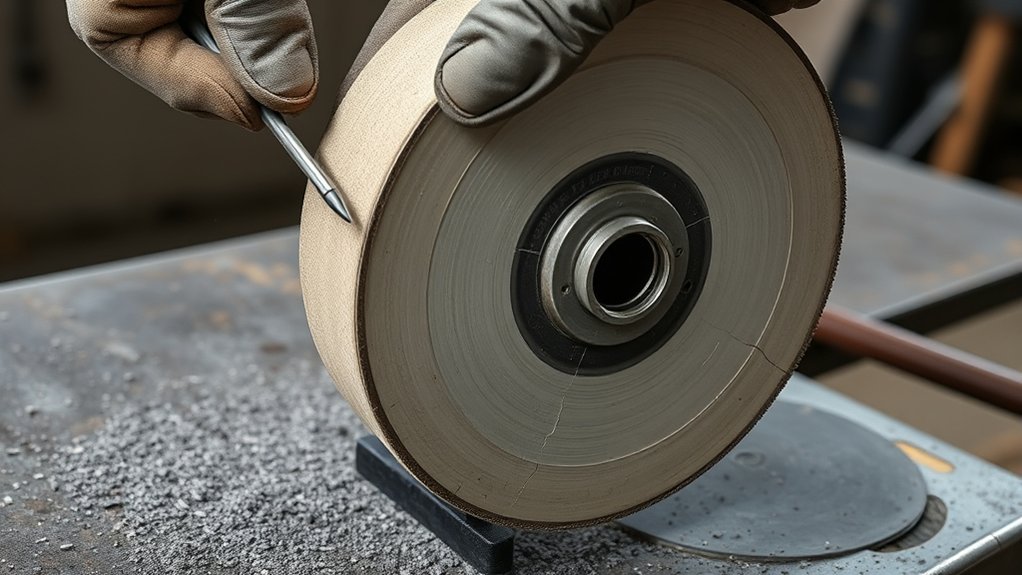
Remove a wheel from service when you find a crack, chip, gouge, missing piece, distortion, damaged bore, loose insert, or other serious defect. Do not use a wheel that produces a dead or suspicious ring when the test applies.
Also reject a wheel when you cannot verify its maximum RPM, wheel type, dimensions, intended use, or required mounting method. Discard a wheel after its marked use-by date, but do not assume every wheel has the same shelf life.
Do not mount a wheel that has been dropped or subjected to a hard impact. Quarantine it and follow the manufacturer’s instructions. Many wheel manufacturers direct users not to use dropped wheels because hidden damage may escape both visual inspection and ring testing.
Restriction symbols require a different decision. Do not discard a sound wheel merely because it is marked “not for side grinding” or “not for wet grinding.” Instead, prevent the prohibited use and select a different wheel for that operation.
Warning: Do not leave a rejected wheel on a bench or storage rack. Mark it clearly, isolate it from usable stock, and dispose of it under the manufacturer’s and workplace procedures.
Essential Tips for Maintaining Abrasive Wheels
Good storage and handling protect wheels from impact, warping, moisture, and temperature changes. Keep them in a dry area away from oil, water, excessive heat, freezing conditions, and condensation.
As detailed in CCOHS handling and storage guidance, storage position depends on wheel construction. Most plain and tapered wheels are supported on their edges or on a central support in a rack that prevents rolling. Thin organic bonded cutting-off wheels are generally stored flat on a rigid horizontal surface to prevent warping. Follow the wheel manufacturer’s storage instructions for the exact product.
Keep wheels in their original packaging when practical, separate different wheel types, and issue older stock before newer stock. Record the delivery date and consult the manufacturer when long storage, poor conditions, or an uncertain history raises doubt.
- Carry wheels carefully and never roll them on a hard floor.
- Use a suitable cart or supported container for heavy wheels.
- Do not stack tools, castings, or other loads on wheels.
- Keep labels, blotters, and manufacturer instructions with the wheel.
- Inspect stock after any storage incident, water exposure, or damaged shipment.
Safety Tips for Using Abrasive Wheels
Inspection is only one part of abrasive wheel safety. You also need the correct wheel, a compatible machine, a properly positioned guard, safe mounting hardware, and job-specific personal protective equipment.
Use appropriate safety glasses or goggles with side protection and add a face shield when the hazard assessment calls for it, consistent with OSHA eye and face protection requirements. Wear hearing protection, protective footwear, suitable clothing, and respiratory protection when required by your workplace exposure assessment and respiratory protection program.
Match the wheel to the grinder, material, task, and permitted grinding surface. Never use a cutting wheel for side grinding unless the wheel is specifically designed and marked for that use.
Keep the work area stable and clear of trip hazards, flammable debris, and bystanders. Control sparks, dust, noise, and vibration under the machine instructions and workplace safety program.
Why Vitrified Wheels Are Commonly Ring-Tested
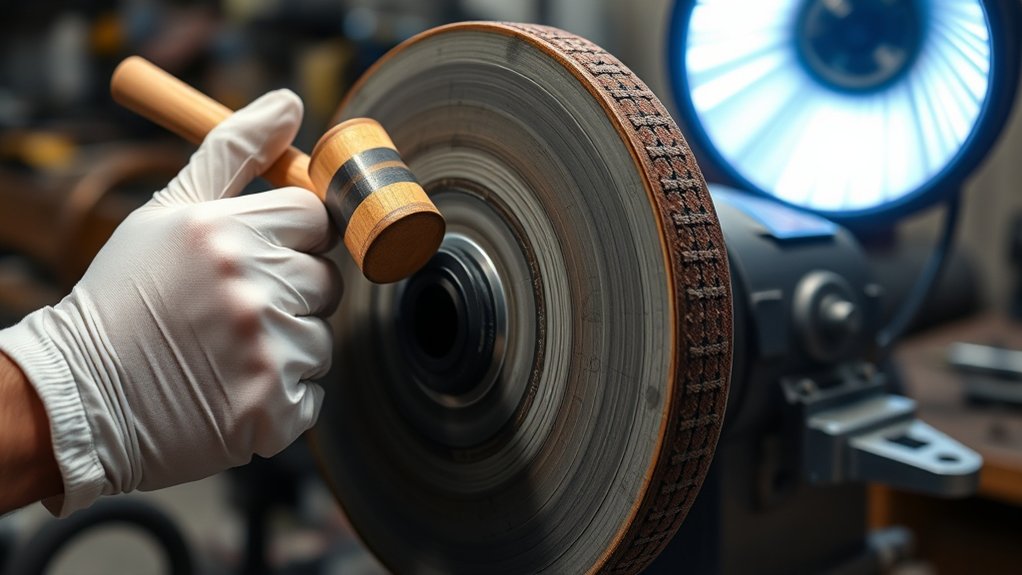
Vitrified wheels use a hard, glass-like inorganic bond. They hold their shape well, but the bond is brittle, and an internal crack may not be visible on the surface.
Because a sound vitrified wheel often produces a clear metallic tone, the ring test can reveal damping caused by a fracture. Organic bonded wheels are tougher and do not produce the same clear metallic ring, so sound alone is less useful for those products.
Use these habits with a vitrified wheel:
- Inspect before mounting. Check both faces, the edge, the bore, and the label.
- Ring-test when applicable. Use the correct support and gentle tap locations.
- Review its history. Reject impact damage, poor storage, unknown identity, and uncertain speed ratings.
- Mount without stress. Use compatible flanges, required blotters, a free spindle fit, and only enough nut pressure to hold the wheel.
What to Do Before Mounting the Wheel
Disconnect the machine from its power source and follow required lockout or energy-control procedures before changing a wheel. Confirm that the machine, guard, spindle, flanges, and mounting hardware are designed for the wheel.
Check the machine’s no-load spindle speed against the wheel’s maximum RPM before mounting. Clean the spindle, flange faces, wheel contact surfaces, and required blotters. Replace warped, burred, mismatched, or damaged mounting parts.
Mount the Wheel Without Forcing It
The wheel must fit freely on the spindle. Never force it into place, enlarge or alter the arbor hole, hammer it onto the spindle, or substitute an ordinary washer for the correct flange system.
Use blotters where the wheel and mounting system require them. Blotters are not required for every wheel type, so follow the wheel and machine instructions. Tighten the spindle nut only enough to hold the wheel securely; excessive tightening can create damaging stress near the arbor hole.
Rotate the mounted wheel by hand to confirm clearance where the machine design allows this check. Reinstall and secure the guard before restoring power.
Perform a Guarded Trial Run
After mounting, run the wheel at operating speed with the guard in place for the period specified by the wheel or machine manufacturer. Manufacturer guidance for many bonded grinding wheels calls for at least one minute before grinding.
Stand out of the wheel’s plane and keep everyone else clear during startup. Stop the machine immediately if you notice unusual vibration, wobble, rubbing, noise, or movement. Disconnect power and inspect the complete setup before trying again.
Note: On bench and pedestal grinders, OSHA requires the work rest to stay within 1/8 inch of the wheel and the adjustable upper tongue or peripheral guard within 1/4 inch. Make adjustments only while the wheel is stopped.
Frequently Asked Questions
How do you ring-test an abrasive wheel?
Confirm that the wheel is suitable for ring testing, then clean and support it correctly. Tap gently with a light non-metallic implement about 45 degrees on each side of the vertical centerline and 1 to 2 inches from the edge. Rotate the wheel 45 degrees and repeat. Reject a dull, dead, or inconsistent result.
What is the best method for inspecting an abrasive wheel for cracks?
Start with a complete visual and tactile inspection, verify the label and maximum RPM, and review the wheel’s handling history. Add a ring test only when the wheel type, size, shape, and manufacturer instructions make it appropriate. No single check replaces the others.
What is the OSHA ring test for grinding wheels?
OSHA requires wheels to be closely inspected and sounded immediately before mounting. The user taps an applicable clean, dry wheel gently with a light non-metallic implement. A dead sound means the wheel must not be used, while a clear metallic tone is only one part of the inspection.
How should you test a new grinding wheel for cracks?
Inspect the packaging and wheel for shipping damage, check all surfaces and the mounting hole, verify the markings and speed rating, and ring-test the wheel when applicable. After correct mounting, complete the manufacturer’s guarded trial run while standing out of the wheel’s plane.
Can every abrasive wheel be ring-tested?
No. The test is mainly useful for vitrified and silicate bonded wheels of suitable size and shape. Small wheels, plugs, cones, mounted wheels, segments, plate-mounted products, organic bonded wheels, and non-bonded accessories may need different inspection methods.
What should you do if an abrasive wheel fails inspection?
Do not mount or use it. Mark and quarantine the wheel, remove it from usable stock, and follow the manufacturer’s and workplace disposal procedure. Do not leave it where another person could mistake it for a serviceable wheel.
Can you use a grinding wheel after dropping it?
Do not mount a dropped wheel. Isolate it and follow the manufacturer’s instructions. Hidden impact damage may not be visible and may not produce an obvious ring-test failure, so many manufacturers direct users to discard dropped wheels.
Safety Disclaimer: This article provides general information and does not replace hands-on training, the wheel and machine manufacturer’s instructions, your employer’s hazard assessment, or applicable OSHA and local requirements. Only trained and authorized people should select, mount, and use abrasive wheels in the workplace.
Conclusion
Inspecting an abrasive wheel before mounting helps you catch damage, incorrect markings, and handling problems before the wheel reaches operating speed. Begin with the visual and label checks, then perform a ring test only when the wheel is suitable for it.
Keep any wheel out of service when it is cracked, chipped, distorted, dropped, expired where a use-by date applies, incorrectly marked, or doubtful in any way. Safe storage, correct mounting, proper guarding, and a controlled trial run complete the process.
Sources
- OSHA 29 CFR 1910.215: Abrasive Wheel Machinery — ring testing, speed checks, mounting, flanges, blotters, guards, and bench-grinder clearances
- OSHA 29 CFR 1926.303: Abrasive Wheels and Tools — construction requirements for inspection, ring testing, spindle fit, nut pressure, and eye protection
- HSE HSG17: Safety in the Use of Abrasive Wheels — wheel markings, shelf life, ring-test limitations, handling, storage, mounting, and startup
- Norton Abrasives: How to Perform a Ring Test on a Grinding Wheel — manufacturer guidance on applicability, tap locations, and sound interpretation
- Norton Abrasives: Proper Handling and Storage of Grinding Wheels — dropped-wheel precautions, storage, pre-mount inspection, and guarded trial runs
- Canadian Centre for Occupational Health and Safety: Handling and Storing Bonded Abrasive Wheels — practical ring-test exclusions, handling, and storage by wheel type