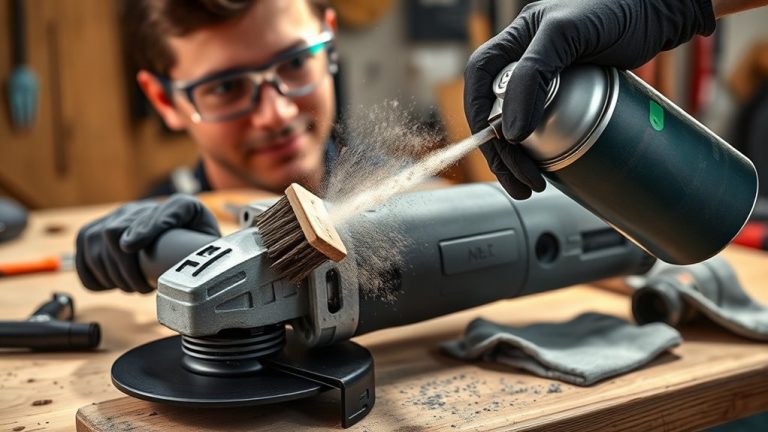
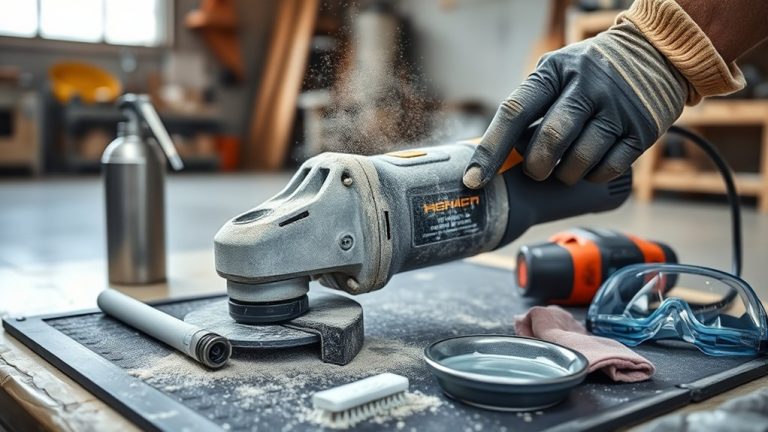
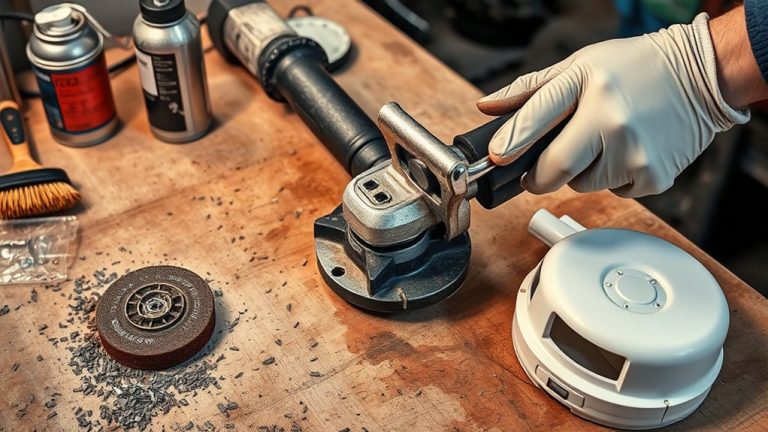
To inspect your angle grinder cord safely, first unplug the tool to avoid electric shock. Then, visually check the entire cord for frays, cuts, or exposed wires. Pay close attention to the connection points at the grinder and plug, looking for loose connections or burn marks. Flex the cord in various spots to identify internal damage. If you spot any issues, it’s important to replace the cord promptly. You’ll find more helpful tips on maintaining your grinder cord efficiently.
Why Inspecting Your Angle Grinder Cord Is Essential
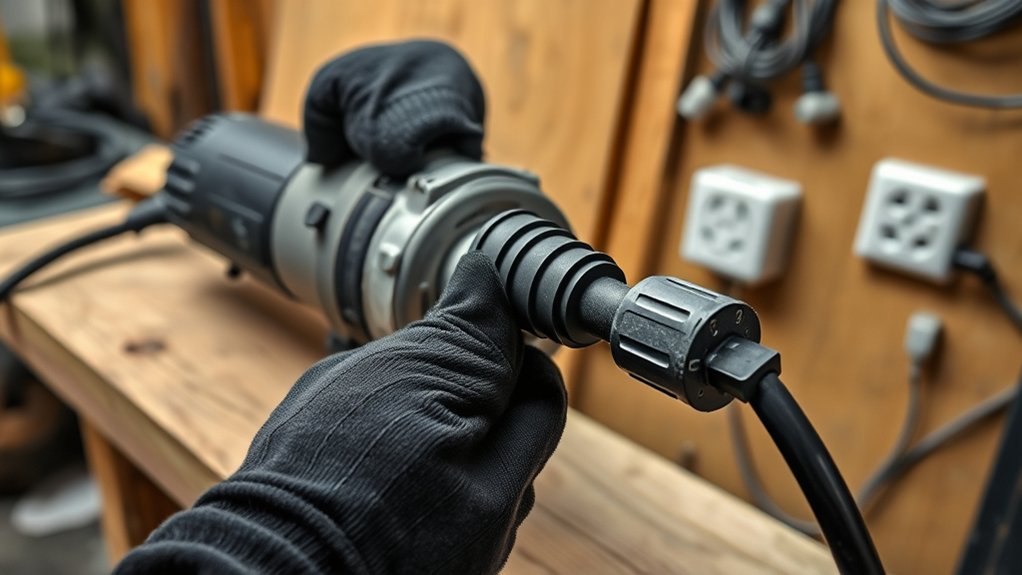
Inspecting your angle grinder cord is essential because even minor damage can lead to serious safety hazards. Damaged cords can expose you to electrical shock or even fires, jeopardizing your safety. Regularly checking for frays, cuts, or exposed wires is an integral step in maintaining angle grinder safety. A compromised power cord may cause intermittent power delivery, increasing the risk of accidents during operation.
Following safety guidelines is imperative; electrical safety standards recommend inspecting cords before each use. This simple act can prevent costly repairs and guarantee consistent performance. If you find any damaged cords, replacing them promptly is key to extending the tool’s lifespan and safeguarding your well-being. By prioritizing cord inspection, you’re not just following protocol—you’re empowering yourself to work confidently and liberate your projects from the threat of malfunction.
First Things First: Unplugging the Grinder
Before you inspect the angle grinder cord, make sure to unplug it from the power source. This step is essential to prevent any risk of electric shock while you examine the cord. Always prioritize safety by handling the unplugging process correctly.
Safety Precautions First
To guarantee your safety while inspecting the angle grinder cord, it’s essential to unplug the grinder from the power source first. This simple step prevents electric shock and assures you can focus on the inspection without fear.
- Always wear personal protective equipment, like gloves and safety glasses.
- Examine the entire length of the power cord for fraying, cuts, or exposed wires.
- Check the connection points for signs of wear or looseness.
Gently tug on the cord to confirm it’s securely connected. Loose connections can lead to sparking or intermittent power issues. If you find any damage during your inspection, replace the power cord immediately to maintain the safety and efficiency of your power tool. Your safety comes first!
Proper Unplugging Technique
Unplugging your angle grinder properly is essential for both safety and equipment longevity. Follow these steps to guarantee you’re using the proper unplugging technique:
| Action | Importance |
|---|---|
| Grip the plug, not the cord | Prevents internal wiring damage |
| Pull straight out | Maintains connection integrity |
| Inspect the cord | Check for signs of wear or damage |
Before inspecting the cord, always disconnect the grinder from the power source to eliminate the risk of accidental activation. Look for visible wear, such as fraying or exposed wires, and check for overheating signs, like melted insulation. Remember these safety tips to keep both you and your equipment safe.
Visual Inspection: Spotting Damage on the Cord
When inspecting your angle grinder’s power cord, look for common issues like frays, cuts, or exposed wires. Focus on the areas near the plug and where the cord enters the grinder, as these spots are more vulnerable to damage. Using effective inspection techniques will help confirm the cord is safe and functional before you use the grinder.
Common Cord Issues
Inspecting an angle grinder cord for damage is crucial for your safety and the tool’s performance. Common issues can greatly affect how the cord functions, leading to potential hazards. Here’s what to look for:
- Frayed areas that expose wires, increasing the risk of electrical shock.
- Cuts or abrasions that weaken insulation and compromise the cord’s integrity.
- Cracks or damage on the plug, which can result in unsafe connections.
Additionally, check for signs of overheating, like discoloration or melted plastic, indicating excessive current flow. Finally, verify the cord remains flexible; stiff sections may signal internal damage. Addressing these common cord issues promptly guarantees both safety and peak performance.
Inspection Techniques Explained
To guarantee your angle grinder operates safely, you’ll want to conduct a thorough visual inspection of the power cord. Start by examining the entire length for visible signs of wear, such as fraying or cuts. Pay special attention to the cord’s connection points at the grinder and plug—make sure they fit securely to prevent electrical hazards. Look for kinks or twists that could cause internal damage. The insulation of the cord should be free from cracks or discoloration, indicating potential overheating. Avoid any temporary fixes like electrical tape, which may not guarantee long-term safety.
| Inspection Area | What to Look For | Safety Implications |
|---|---|---|
| Entire Cord | Fraying, cuts, exposed wires | Serious safety risks |
| Connection Points | Looseness, damage | Electrical hazards |
| Insulation | Cracks, discoloration | Compromised safety |
Common Signs of Wear and Tear: Identifying Damage
Although you might not think about it often, regularly checking your angle grinder cord for damage is essential for your safety and the tool’s performance. Identifying wear can prevent electrical hazards and guarantee your grinder operates effectively.
Here are common signs to inspect:
- Visible frays or cuts: Look for any exposed wires that could lead to electric shock.
- Burn marks: Signs of melting indicate overheating, which may pose serious risks.
- Kinks or tight bends: These can cause internal damage over time.
Additionally, examine the plug for cracks or loose connections, as these can compromise safety. Regular inspections at stress points, especially near the plug and grinder, will help you catch any damage early. Prioritizing these checks can enhance both your safety and the longevity of your angle grinder.
When to Replace Your Grinder Cord
Knowing when to replace your grinder cord is crucial for maintaining safety and guaranteeing peak performance. Always inspect the cord before each use for visible signs of wear, like cuts, frays, or exposed wires. If you spot any damage, replace the grinder cord immediately; using a compromised cord can lead to electric shock or fires.
Additionally, check for loose or damaged connections at both the grinder and outlet ends—secure connections are essential for safe operation. If your grinder frequently trips circuit breakers or shows intermittent power issues, it’s a strong indicator that you should replace the grinder cord.
Make it a part of your maintenance routine to regularly schedule inspections of the cord. This proactive approach not only enhances safety but also guarantees the long-term performance of your angle grinder. Remember, your safety is worth the effort!
How to Test for Electrical Issues
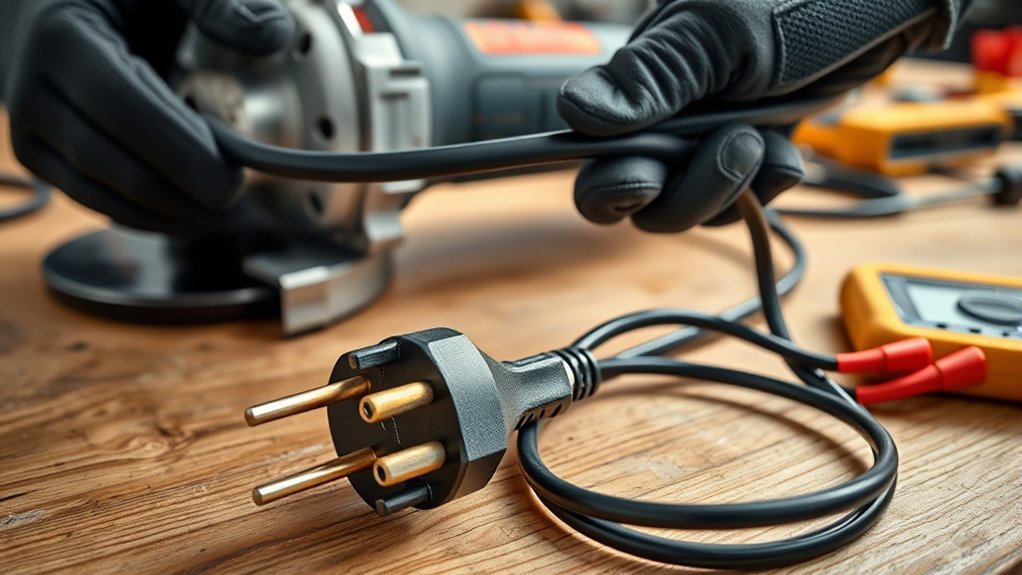
Before using your angle grinder, it’s essential to test the cord for electrical issues to confirm safe operation. Start by visually inspecting the cord for any visible damage, like frays or cuts. Next, perform a flex test by bending the cord at different points; watch for flickering lights or power loss, which may indicate internal damage.
To conduct a continuity test, use a multimeter set to resistance (ohms). Test both ends of the cord—zero readings indicate a complete circuit, while infinite readings suggest a break. Additionally, do a grounding check to verify the cord has a three-prong plug, confirming proper grounding to avoid electric shock risks.
- Always inspect for wear and tear.
- Conduct a continuity test with a multimeter.
- Perform a grounding check to verify safety.
If you find any issues, consult a qualified technician for repairs to keep your angle grinder safe.
Ensuring a Secure Fit With the Plug and Connections
Making certain that a secure fit with the plug and connections is vital for the safe operation of your angle grinder. Start by checking the plug for cracks, fraying, or exposed wires, as these can signal potential electrical hazards. Verify the plug fits snugly into the outlet; any looseness can cause sparking or disconnection during use.
Next, inspect the connections at both ends of the power cord. Loose connections can lead to overheating or failure, posing serious risks. Look for visible wear on the cord, particularly near stress points like the plug and where the cord enters the grinder. These areas are common spots for damage.
If you find any damaged plugs or connections, replace them immediately. Maintaining a secure fit is essential not only for performance but also for your safety during operation. Don’t compromise on electrical safety; confirm everything is in top condition before you start working.
Tips for Maintaining Your Angle Grinder Cord
Maintaining your angle grinder cord is just as important as guaranteeing secure connections. Regular inspections can help you spot visible signs of wear, preventing potential electrical hazards. Here are some key tips for keeping your cord in top shape:
Maintaining your angle grinder cord is essential for safety; regular inspections help prevent electrical hazards and ensure optimal performance.
- Inspect regularly: Look for fraying or exposed wires that indicate damage.
- Avoid yanking: Pulling the cord can strain internal wiring and lead to failure.
- Store properly: Keep the cord free from tight bends or knots to prevent internal damage.
Additionally, always verify that connections at both the grinder and outlet are secure and free from corrosion. This keeps sparking at bay and promotes safe operation. Finally, be mindful of heat sources and sharp edges that can compromise the cord’s integrity. By following these tips, you can extend the life of your angle grinder cord and maintain a safer workspace.
Frequently Asked Questions
How to Inspect an Angle Grinder?
To inspect your angle grinder, check the electrical cord for common issues like frays or discoloration using basic tools. Repair damaged cords immediately to guarantee safe operation and maintain peak angle grinder performance.
What Are the Safety Precautions for an Angle Grinder?
To guarantee angle grinder safety, check cords for damage, wear proper safety gear, conduct electrical safety checks, and store tools correctly. Avoid common cord issues by maintaining them regularly, enhancing your workspace’s safety and efficiency.
What Are 10 Safety Precautions Before Using a Grinding Machine?
Before using a grinding machine, verify you’ve completed electrical safety checks, organized your workspace, maintained the grinding wheel, worn personal protective equipment, and met operator training requirements for a safe and effective experience.
How to Inspect a Grinder?
Inspect your grinder like a detective on a case. Check for frayed cords, secure connections, and kinks. Regular maintenance and electrical safety checks prevent common issues, ensuring your tool’s longevity and performance.
Conclusion
By regularly tending to your angle grinder cord, you’re ensuring it’s in tip-top shape, ready to tackle your projects without a hitch. Think of it as giving your tool a little TLC to keep it running smoothly. If you spot any signs of wear, don’t hesitate to swap it out. A well-maintained cord not only extends the life of your grinder but also keeps you safe, allowing your creativity to flow without interruption.