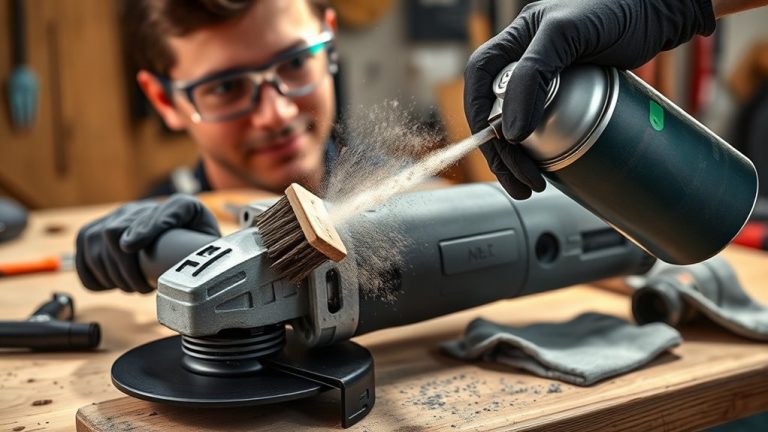
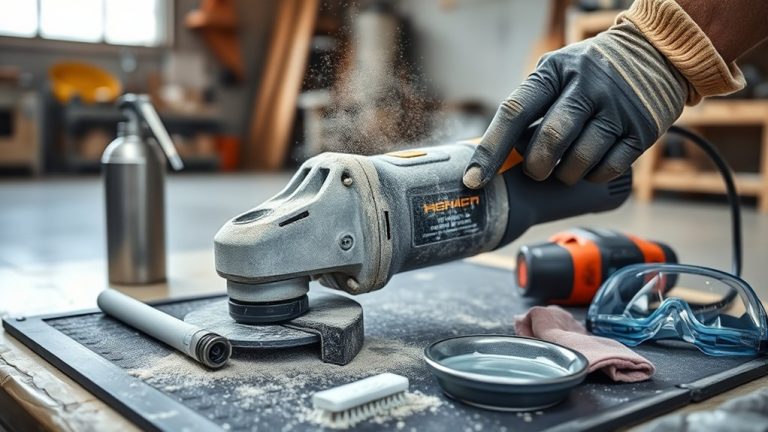
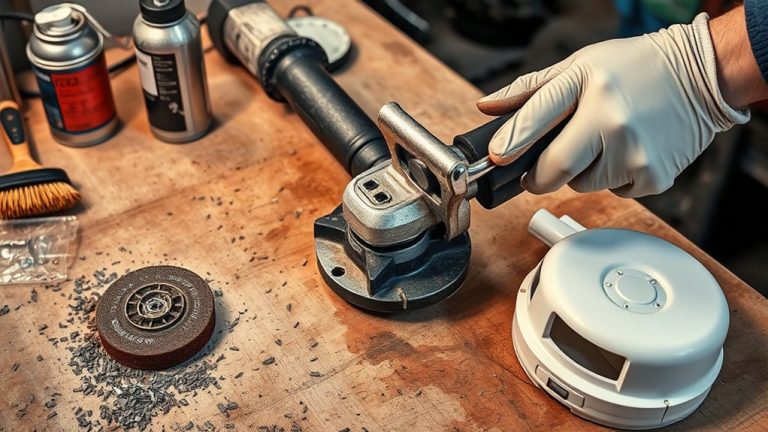
Before using your angle grinder, always inspect the wheel for cracks, chips, or deformities. Check that the wheel’s RPM rating matches or exceeds your grinder’s speed. Confirm the hole fits snugly on the spindle, and the mounting surfaces are clean. Install the wheel securely and avoid overtightening. Finally, conduct a brief test run to monitor for vibrations or unusual sounds. Following these steps enhances safety and performance—discover more essential tips for effective grinder maintenance.
Why Inspecting Your Grinder Wheel Is Essential
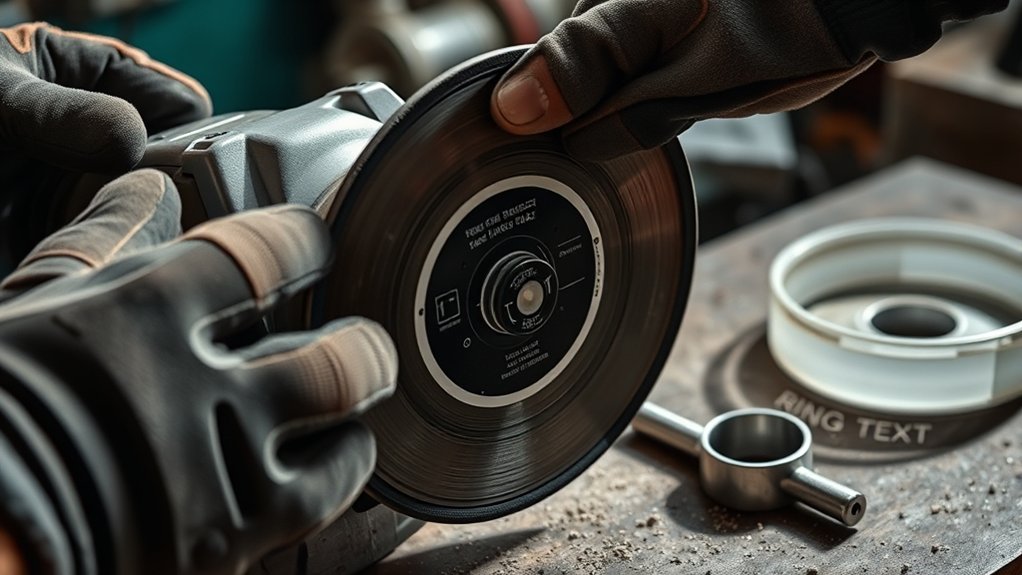
Inspecting your grinder wheel is essential because it directly impacts your safety and efficiency during operation. A damaged wheel can shatter at high speeds, risking serious injury from flying debris that can travel over 300 mph. Before you start, always verify the wheel’s RPM rating matches or exceeds your grinder’s speed; this compatibility prevents breakage and enhances your safety.
Regularly inspect for chips, cracks, and other deformities. Identifying these issues early allows you to replace worn wheels before use, mitigating potential hazards. This proactive maintenance not only safeguards you but also extends the lifespan of your grinder wheel, improving overall grinding performance.
Common Damage Signs to Look For on Grinding Wheels
When inspecting grinding wheels, watch for visible cracks and chips, as these can lead to dangerous failures. Also, check for any discoloration or uneven wear, which may indicate improper use. Addressing these signs promptly guarantees safe and efficient operation of your angle grinder.
Cracks and Chips
Cracks and chips on a grinding wheel can seriously compromise its integrity, so it’s crucial to examine the surface carefully. Start by inspecting the wheel for visible cracks or chips; even small imperfections can lead to catastrophic failure during operation. Look for uneven surfaces or missing segments, as these signs of damage affect both performance and safety. Don’t overlook the mounting hole—make sure it’s undamaged and fits properly on the grinder’s spindle to prevent wobbling. Finally, run the wheel briefly in a protected area, checking for vibrations or unusual noises that might indicate hidden damage. Taking these steps guarantees you’re prioritizing safety and maintaining the longevity of your grinding wheel.
Discoloration and Wear
Discoloration and wear on a grinding wheel can signal serious issues that may affect its performance and safety. You should inspect the wheel closely for signs of overheating, which can compromise its structural integrity. Look for visible wear such as uneven surfaces or flat spots that indicate reduced performance. Cracks or chips, even small ones, can propagate under stress, leading to catastrophic failures. If the wheel has darkened or developed a glossy finish, it may need replacement. Always refer to the manufacturer’s specifications for acceptable wear limits and damage signs.
| Damage Type | Action Required |
|---|---|
| Discoloration | Inspect for overheating |
| Uneven Wear | Replace if significant |
| Cracks | Immediate replacement needed |
| Chips | Inspect carefully |
| Glossy Finish | Consider replacement |
How to Ensure Wheel Size and RPM Compatibility
To guarantee safety and efficiency, you must verify that the angle grinder wheel size aligns with your grinder’s specifications. Start by checking the wheel’s diameter and thickness; using an incorrect size can lead to instability and accidents. Next, inspect the maximum RPM rating of the wheel. It should equal or exceed your grinder’s RPM to prevent wheel breakage during operation. Consult the packaging or manufacturer’s guidelines to confirm the wheel’s compatibility with the specific material and task. Additionally, verify that the wheel’s arbor hole fits your grinder’s spindle securely without any modifications; improper fittings can compromise safety. Regularly inspect and replace worn or damaged wheels to maintain peak performance. By following these steps, you’ll enhance your safety and efficiency while using your angle grinder.
Proper Wheel Installation Techniques You Should Follow
When installing an angle grinder wheel, it’s essential to start with a thorough inspection of the wheel itself. First, check the disc for visible cracks or chips, as damaged grinding wheels can shatter during use. Verify the wheel’s RPM rating meets or exceeds your grinder’s maximum speed to prevent breakage. Next, clean the flanges and mounting surfaces, confirming they’re flat and free from debris. This promotes even pressure and stability.
Once everything’s clean, ensure that the wheel hole fits snugly on the grinder’s spindle without forcing it, maintaining proper alignment. Always install the wheel guard to protect yourself from flying debris. Finally, tighten the flange nut securely using the proper wrench, but avoid overtightening to prevent stressing the wheel. Following these proper installation techniques guarantees a safer and more effective grinding experience.
Safety Checks for Your Angle Grinder
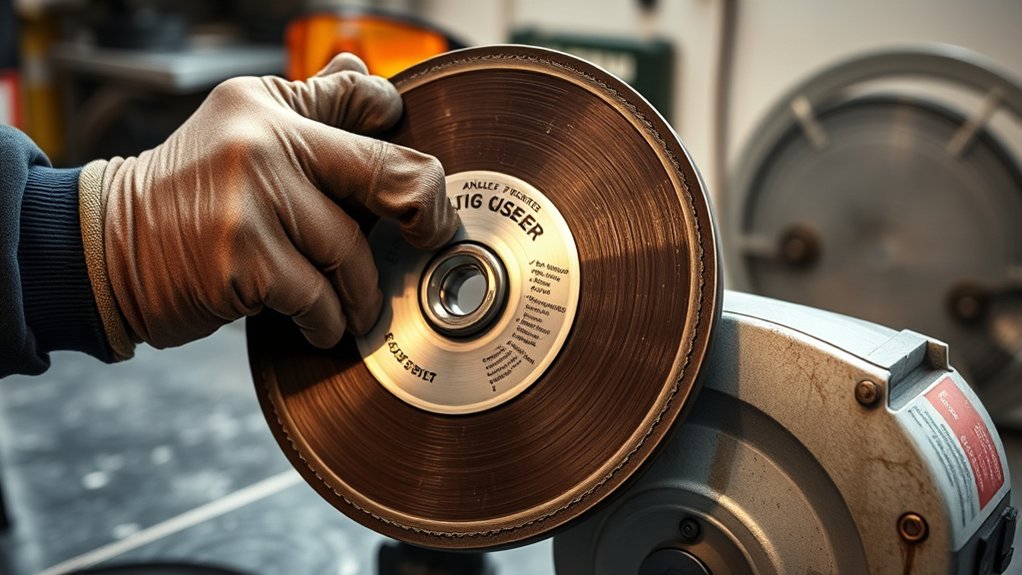
Before you start using your angle grinder, conduct essential safety checks to guarantee everything’s in order. Begin with a visual inspection of the wheel and verify its compatibility with the grinder. Additionally, practice safe handling to prevent accidents during operation.
Visual Inspection Checklist
A thorough visual inspection of your angle grinder wheel is essential for safe operation. Start by inspecting the grinding disc for any visible cracks or chips; these can lead to catastrophic failures. Next, check the RPM rating of the wheel to confirm it meets or exceeds your grinder’s speed—this prevents breakage during use. Verify the compatibility of the wheel by confirming the hole size fits the grinder’s arbor without forcing it onto the spindle. Examine the surface condition for signs of wear, such as uneven surfaces or missing segments, which can compromise performance. Finally, inspect the flanges to guarantee they are clean, flat, and undamaged, securing the wheel properly during operation.
Wheel Compatibility Verification
Verifying wheel compatibility is essential for the safe operation of your angle grinder. First, verify that the wheel size matches your grinder’s specifications to prevent wobbling. Next, check the wheel’s RPM rating; it should meet or exceed your grinder’s maximum speed to avoid breakage during use. Inspect the wheel for any visible cracks, chips, or damage, as these can lead to dangerous failures. Confirm the wheel’s hole fits snugly on the grinder’s spindle without forcing it, as improper fitting compromises safety. Finally, check that the flanges used with the wheel are clean, flat, and undamaged. This promotes even pressure and secure attachment, contributing to a safer grinding experience. Your diligence here is key to effective and liberated work.
Safe Handling Practices
After confirming the compatibility of your angle grinder wheel, focus on safe handling practices to guarantee a secure and effective operation. Always inspect the wheel for cracks or damage before use. Confirm the RPM rating meets or exceeds your power tool’s maximum speed to avoid breakage. Check that the wheel is properly tightened with the correct wrench—secure, but don’t overtighten. Verify the wheel fits the grinder’s arbor without alterations. Before grinding, run the wheel in a protected area for one minute at full speed to detect vibrations or imbalances. Don’t forget to wear safety glasses during operation. Following these steps helps maintain control and promotes safety while using your grinding discs.
Performing a Test Run: Quick Safety Check Before Use
Before you start using your angle grinder, it’s crucial to perform a quick safety check. First, inspect the guard to verify it’s securely attached and directs sparks away from you. Next, check that the right disc is properly mounted and tightened to the spindle, without excessive pressure. Make sure the wheel is free of cracks, chips, or any visible damage. Always confirm that the wheel’s maximum RPM rating matches or exceeds your grinder’s speed to avoid catastrophic failure.
Now, it’s time for a test run. Turn on the power switch and run the grinder at full speed for one minute in a protected area. This helps you detect any operational issues or vibrations. Maintain a good grip during this process. If everything sounds smooth and stable, you’re ready to safely proceed with your work while confidently operating an angle grinder.
Creating a Regular Inspection Routine for Long-Term Safety
Once you’ve verified your angle grinder’s functionality, it’s important to establish a regular inspection routine to keep your equipment in top shape. Aim to check your grinder before each use. This inspection schedule should focus on detecting any signs of wear or damage, guaranteeing you prioritize grinder safety.
| Inspection Item | Action Required |
|---|---|
| Grinder Wheel | Check for cracks or chips |
| Maximum RPM | Verify it matches grinder speed |
| Wheel Tightness | Confirm secure tightening |
| Flanges | Inspect for cleanliness and damage |
Document your findings to maintain a clear record of the wheel’s condition. This way, you can make proactive replacements as needed, reducing risks of failure. By adhering to this methodical approach, you’ll enhance your angle grinder’s longevity and guarantee a safer working environment.
Frequently Asked Questions
How to Inspect a Grinding Wheel?
Inspect your grinding wheel types by checking for wear indicators and conducting a visual inspection. Use proper wheel mounting techniques and damage detection methods to guarantee safety standards compliance before operating the grinder.
How to Inspect an Angle Grinder?
To inspect an angle grinder, check wheel types for compatibility, note safety features, look for common defects, and follow maintenance tips. Verify performance indicators are met and adhere to usage guidelines for peak safety.
What Is a Critical Safety Check Before Starting the Grinder?
Before starting the grinder, check for wheel cracks and guarantee proper wheel installation. Confirm wheel balance and compatibility with your machine. Don’t forget wheel cleanliness—those dusty flanges won’t hold up your dreams of liberation!
What Is the Step by Step Procedure in Using a Grinding Machine?
To use a grinding machine, choose the right wheel type, wear safety gear, apply proper grinding techniques, check performance factors, and follow maintenance tips. Troubleshoot any issues before starting for safe, effective operation.
Conclusion
To summarize, inspecting your angle grinder wheel isn’t just a good practice; it’s a lifesaver. By keeping an eye out for damage, ensuring compatibility, and following proper installation techniques, you’re setting yourself up for success. Remember, a stitch in time saves nine—taking a few moments to check your equipment can prevent bigger issues down the road. Create a regular inspection routine, and you’ll keep your grinding safe and effective for every project.