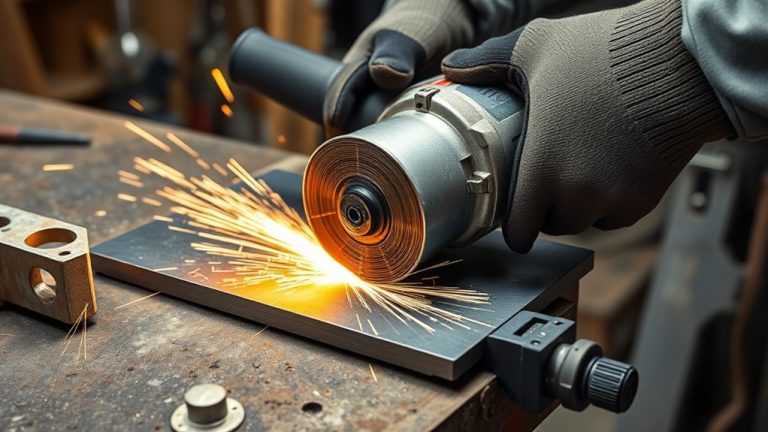
To prevent moisture damage to abrasive discs, store them in a cool, dry place with 40-50% relative humidity and temperatures between 60-80°F (15-29°C). Elevate discs at least four inches off concrete floors to avoid moisture transfer. Use original packaging or light-resistant containers to shield them from sunlight. Regularly inspect discs for warping or discoloration, and always rotate stock to minimize sitting time. Keep following these guidelines to guarantee your abrasive discs remain in peak condition.
How Moisture Affects Abrasive Discs?
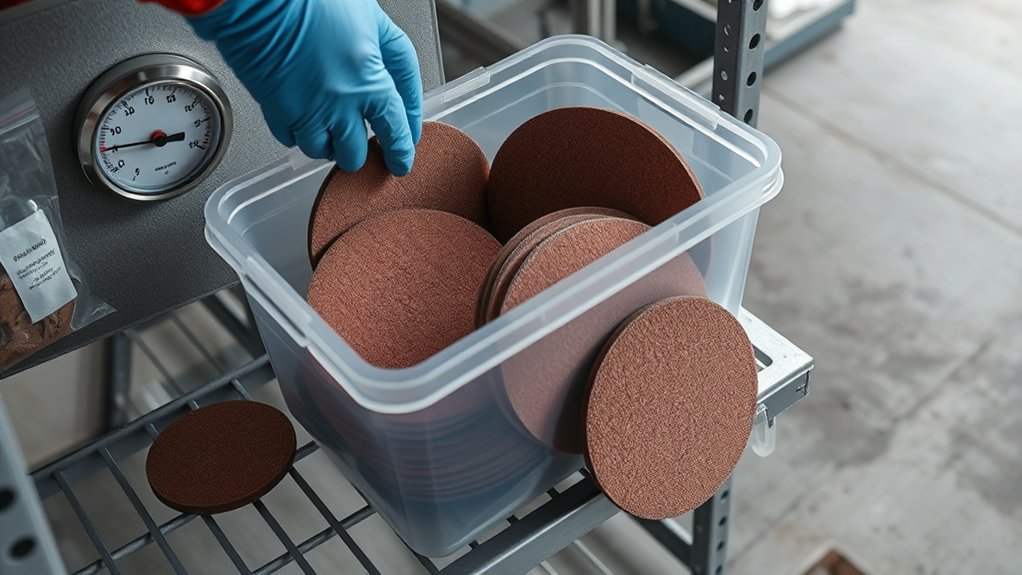
Moisture can severely compromise the integrity of abrasive discs, leading to significant operational issues. Excessive moisture causes the fiber backing to absorb water, resulting in cupping that can snag on workpieces and break during use. High humidity weakens adhesive bonds, leading to the loss of abrasive grains and reduced cutting efficiency. Even minimal moisture exposure accelerates wear, shortening the lifespan of your discs.
To prevent damage, regularly inspect your abrasive discs for cracks and signs of deterioration, such as bent shapes or discolored surfaces. Storing them in their original packaging is essential to protect against moisture. Make certain you maintain a dry environment, as even slight humidity can lead to warping and uneven grinding. This vigilance not only enhances performance but also safeguards your safety during operation. Taking these steps will help you liberate your work from the risks posed by moisture damage.
Ideal Storage Conditions for Abrasive Discs
To guarantee peak performance and longevity of your abrasive discs, follow five key storage conditions. First, keep discs in a cool, dry place, maintaining a relative humidity level between 40-50%. This prevents moisture absorption, which can cause cupping and degrade performance. Next, store them within a temperature range of 60-80°F (15-29°C) to maintain adhesive integrity and avoid brittleness or warping.
Ensure your discs are at least 4 inches above concrete floors to prevent moisture transfer from the ground. Use their original packaging or light-resistant containers to shield them from direct sunlight and dust, which can harm abrasive grains. Finally, implement a first-in, first-out stock rotation method to minimize storage time, reducing the risk of moisture-related damage. By adhering to these conditions, you’ll enhance the durability and efficacy of your abrasive discs.
How to Properly Store Abrasive Discs
While maintaining ideal storage conditions is essential, knowing how to properly store abrasive discs can greatly enhance their lifespan and performance. Store your abrasive discs in a cool, dry environment with a relative humidity of 40-50% and a temperature of 60-80°F (15-29°C) to prevent moisture absorption. Elevate the discs at least 4 inches above concrete floors and keep them away from direct sunlight and heat sources to maintain their integrity. Use the original packaging or labeled containers to protect the discs from dust and physical damage while guaranteeing easy access. Implement a first-in, first-out method to rotate stock, minimizing the time discs sit unused and reducing moisture exposure risk. Finally, check discs regularly for signs of moisture damage, such as warping or discoloration. Retire any damaged discs promptly to guarantee safety during use.
Best Practices for Daily Handling of Abrasive Discs
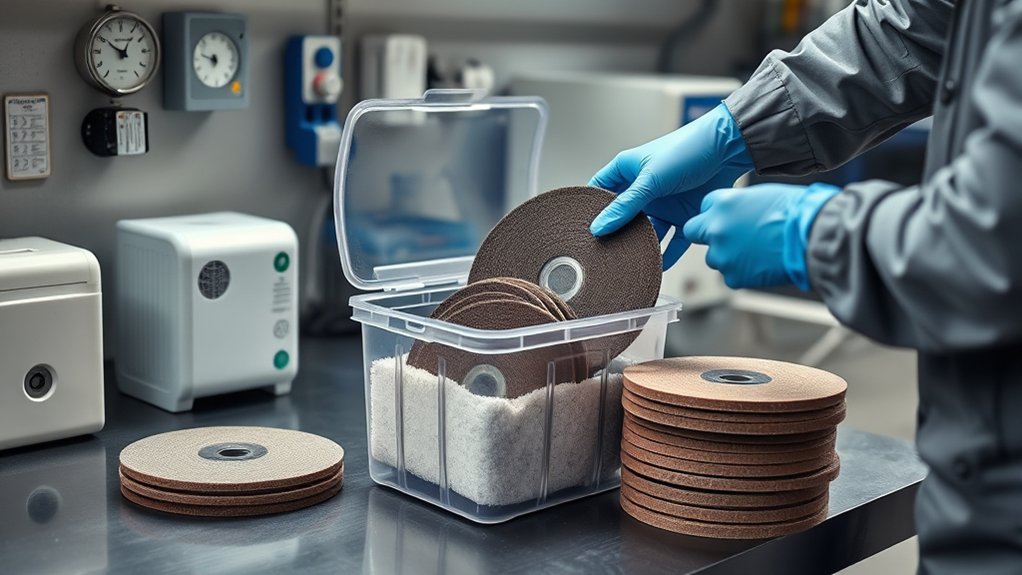
Handling abrasive discs with care is vital for maintaining their performance and safety. Always inspect your discs for bends, cracks, or dampness before use, confirming they’re in good condition. Avoid placing abrasive products on wet surfaces or in humid environments, as humidity can cause moisture absorption and damage. To keep your stock fresh, rotate by using older discs first, minimizing their sitting time. When handling, gently grasp the support ring around the edge; this prevents cracks from drops or rough handling. Additionally, limit exposure to humid air by only removing discs from storage when needed. This practice helps guarantee you never use compromised grinding discs, enhancing both safety and efficiency in your work. Remember, keeping your abrasive discs in good condition is essential for peak performance and longevity.
Identifying and Addressing Moisture Damage in Abrasive Discs
How can you tell if moisture has damaged your abrasive discs? Inspect them carefully for warping, discoloration, or loose abrasive grains. These signs indicate moisture damage, which can severely compromise cutting efficiency and the lifespan of your coated abrasive. If you notice cupped discs, be aware that they can snag on workpieces, leading to breakage and significant safety hazards during operation. Weak adhesive bonds from moisture exposure may cause abrasive grains to detach, further diminishing performance. To prevent these issues, guarantee your storage conditions maintain relative humidity levels between 40-50% and temperatures of 60-80°F (15-29°C). Regularly rotate your stock, using older discs first, to minimize their exposure to humidity. By being proactive, you can maintain the integrity of your abrasive discs and protect both your work and safety.
Frequently Asked Questions
How Should an Abrasive Wheel Be Stored?
Store abrasive wheels in protective packaging at 60-80°F, ensuring humidity control between 40-50%. Regularly inspect for damage, use proper handling techniques, and consider shelf life to maintain performance across various abrasive wheel types.
What Are the Safety Precautions for Abrasive Cleaners?
Always wear safety gear, use proper handling techniques, and guarantee adequate ventilation to minimize chemical exposure. Maintain personal hygiene, participate in training programs, and know first aid procedures to handle abrasive cleaners safely.
When Storing Abrasive Wheels, How Should Cylinders and Dish Wheels Be Stored?
Store cylinders upright like soldiers, ensuring proper orientation. Stack dish wheels thoughtfully, using protective covers and moisture barriers in ventilated containers. Maintain temperature control and inspect regularly to safeguard their integrity against moisture damage.
What Can Cause Damage to an Abrasive Wheel While in Storage?
Environmental factors like humidity levels and temperature extremes can damage abrasive wheel composition. Contaminant exposure and improper stacking during storage duration lead to warping or degradation, compromising performance and lifespan. Proper care is essential.
Conclusion
By understanding how moisture impacts abrasive discs, you can take proactive steps to protect your investment. Proper storage in climate-controlled environments, along with daily handling best practices, guarantees the longevity and effectiveness of your discs. Remember, even a small amount of moisture can compromise performance, leading to costly replacements. By following these guidelines, you not only safeguard your tools but also enhance your overall workflow efficiency. Stay vigilant, and your abrasive discs will serve you well for years to come.