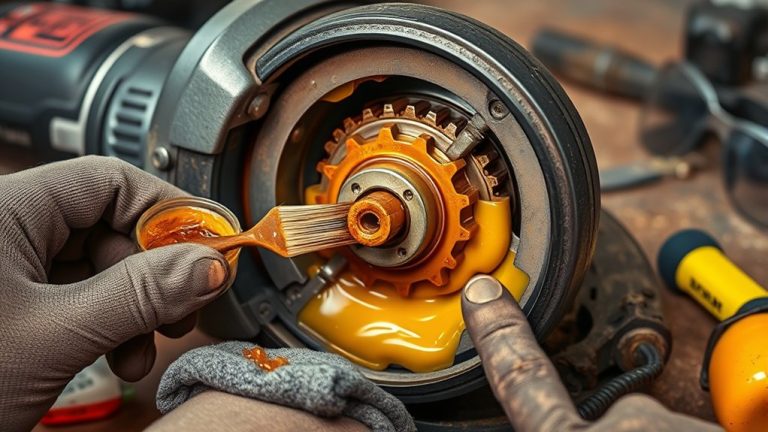
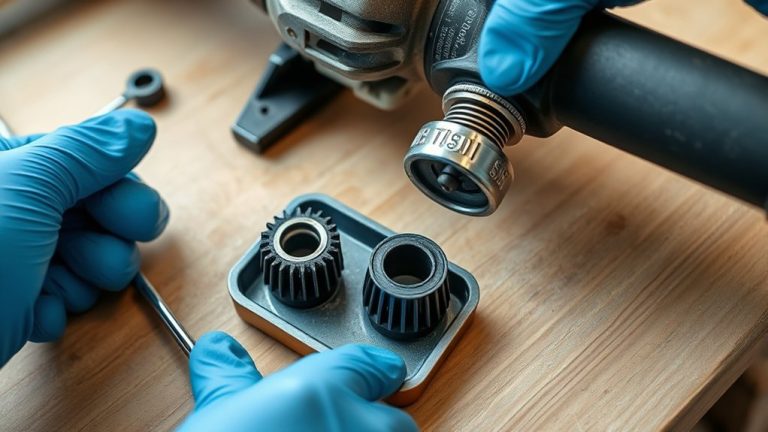
To store cutoff and grinding wheels safely, keep them in a dry, cool place away from sunlight and extreme temperatures. Use segmented shelves to avoid stacking, which can cause cracks. Regularly clean wheels with a soft brush and inspect for damage. Always handle wheels carefully, using proper equipment for transport. Monitor for signs of wear, like cracks or sound changes, indicating a need for replacement. Discover more essential tips to guarantee your wheels last longer.
Understanding the Importance of Safe Storage for Abrasive Wheels
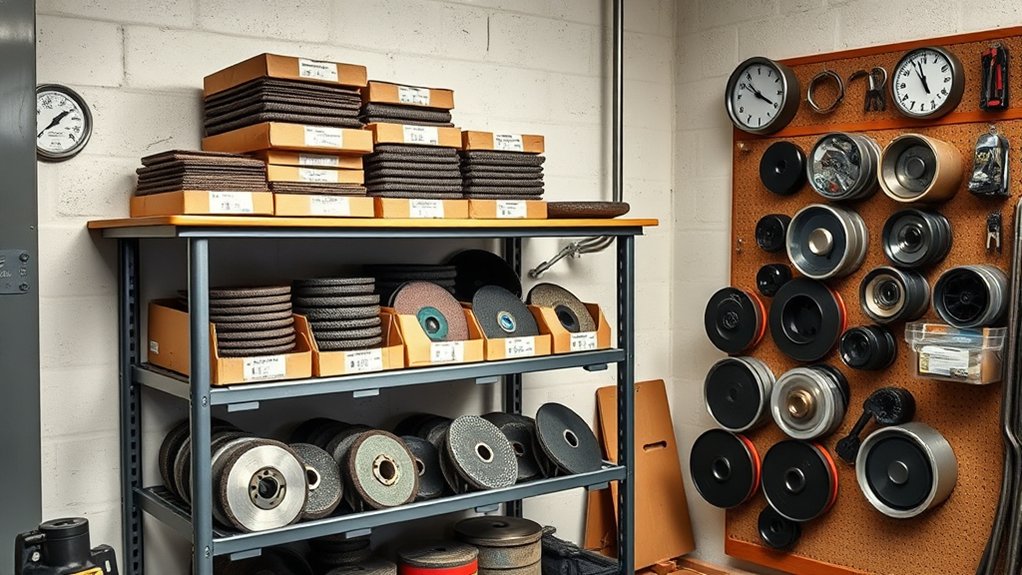
When you store cutoff and grinding wheels safely, you not only protect your investment but also guarantee safety during use. Proper storage is essential for preventing damage, as improper handling can lead to cracks and fractures that compromise their integrity. When storing abrasive wheels, choose a dry, cool environment, away from extreme temperatures and direct sunlight. This helps maintain their lifespan and performance.
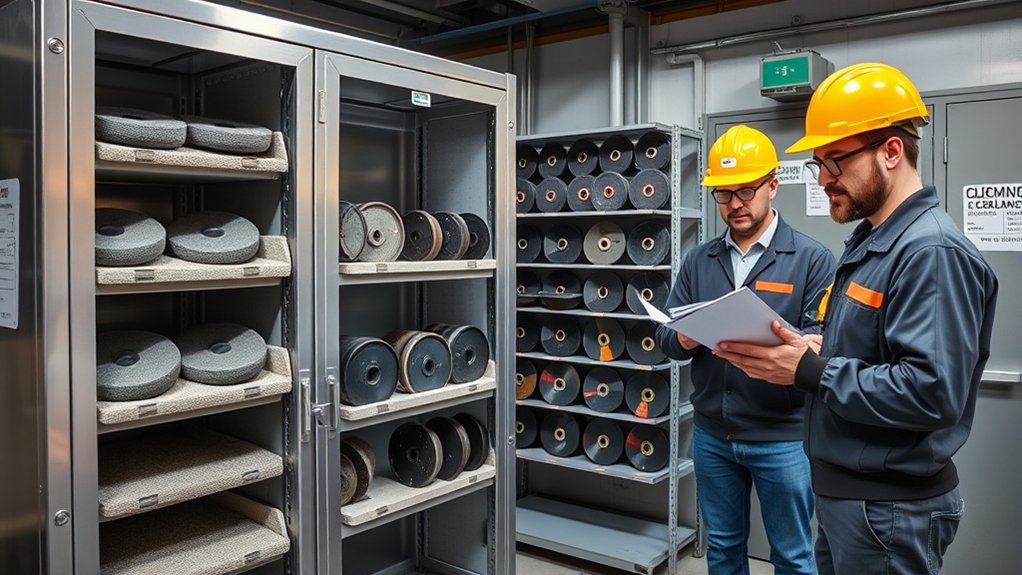
Utilize segmented storage units or racks to avoid stacking wheels on top of one another, minimizing breakage risks. Regularly inspect your storage area for signs of damage or wear, ensuring all wheels remain in good condition before use. Adhering to manufacturer guidelines for safe storage can greatly reduce the chances of accidents related to wheel failure during operation. By prioritizing safe storage, you empower yourself to work confidently and effectively with your tools.
How to Clean Your Wheels Before Storage
Before storing your cutoff and grinding wheels, it’s crucial to clean them properly. Use a soft brush to remove any dust and debris, avoiding water or solvents to protect their structure. During this process, inspect each wheel for damage, as this will help maintain their quality during storage.
Cleaning Tools Required
Cleaning your cutoff and grinding wheels is essential for maintaining their performance and safety. To do this effectively, you’ll need the right cleaning tools. A soft bristle brush or a clean, dry cloth works best to remove dust and debris from the wheels. This prevents contamination and damage. Avoid using water or any liquid cleaners since moisture can weaken the wheel and lead to failure. While cleaning, inspect the wheels for any cracks or damage; if you find defects, discard the wheel immediately. After cleaning, store your tools in a dedicated, dry area to avoid contamination from other materials. Regularly maintain your storage area to guarantee a safe and organized environment for your cutoff and grinding wheels.
Cleaning Techniques Explained
To guarantee your cutoff and grinding wheels remain in top condition, start by gently brushing them with a soft bristle brush. This cleaning method removes dust and debris that could damage or contaminate your wheels. While you’re cleaning, inspect each wheel for any visible damage or wear; ensuring they’re safe for future use is essential. Next, use a damp cloth to wipe down the surfaces, but be careful not to apply excessive moisture, as this can lead to rust or degrade the bonding material. After cleaning, store your wheels in a designated area, away from harsh chemicals or extreme temperatures. Finally, label your storage containers with the wheel type, size, and expiration date for effective management and timely replacement.
Ideal Storage Conditions for Safe Wheels
While storing cutoff and grinding wheels, it’s important to maintain a cool, dry environment to prevent moisture absorption and material degradation. Ideally, wheels should be stored in segmented storage units with racks or compartments. This arrangement avoids stacking, which can lead to cracks and damage. Regularly inspect your storage area to confirm it’s free from hazards that might cause toppling or impact on the wheels.
Good housekeeping is vital; keep the area organized to minimize the risk of accidents and guarantee easy access. When you need to move the wheels, always handle and store them with care. Use trucks or conveyors for transportation, and avoid rolling them on hard surfaces. By following these ideal storage conditions, you’ll extend the life of your cutoff and grinding wheels, making sure they’re always ready for use when needed.
Essential Handling Techniques for Abrasive Wheels
When handling abrasive wheels, you’ll want to focus on safe transportation methods, proper storage practices, and thorough inspections before use. It’s essential to avoid rolling wheels on hard surfaces and to store them securely in designated racks to prevent damage. Regular checks can help guarantee that your wheels remain in peak condition for safe operation.
Safe Transportation Methods
Transporting abrasive wheels requires careful attention to ascertain their safety and longevity. To secure effective handling, follow these safe transportation methods:
- Use Trucks or Conveyors: For heavy wheels, utilize trucks or conveyors instead of rolling them on hard surfaces to prevent damage.
- Inspect Wheels: Always inspect wheels for visible damage or defects before and after transportation. Discard any that show signs of wear.
- Segmented Storage: Transport wheels in segmented storage units to prevent them from colliding or toppling during movement.
- Appropriate Lifting Techniques: Maintain a stable grip and posture when handling abrasive wheels to avoid accidents and injuries.
Proper Storage Practices
Proper storage practices for cutoff and grinding wheels are vital to maintaining their integrity and performance. Store abrasive wheels in segmented storage units with racks or compartments to prevent damage and guarantee easy access. Handle these tools carefully; avoid stacking heavy items on top to prevent cracking or warping. When moving heavy wheels, use trucks or conveyors instead of rolling them on hard surfaces, which can lead to surface damage. Regularly inspect your storage areas to prevent toppling and maintain a clean, organized environment that minimizes hazards. Good housekeeping practices in both storage and work areas are significant for preventing accidents and extending the lifespan of your wheels. Prioritize these practices to keep your equipment in peak condition.
Inspection Before Use
After confirming your cutoff and grinding wheels are stored correctly, the next step is to inspect them before use. This inspection is essential for safety and performance. Follow these steps to make sure your wheels are safe to use:
- Check for visible damage like cracks, chips, or warping.
- Conduct a ring test by tapping the wheel lightly with a non-metallic object; listen for any sound inconsistencies.
- Make sure the wheels are clean and free of debris that could hinder performance.
- Verify the expiration date marked on the wheel and confirm it hasn’t surpassed its recommended usage.
Always remember to wear protective equipment during this process. A thorough inspection helps prevent failures and maintains a safe working environment.
Organize Your Storage for Maximum Efficiency
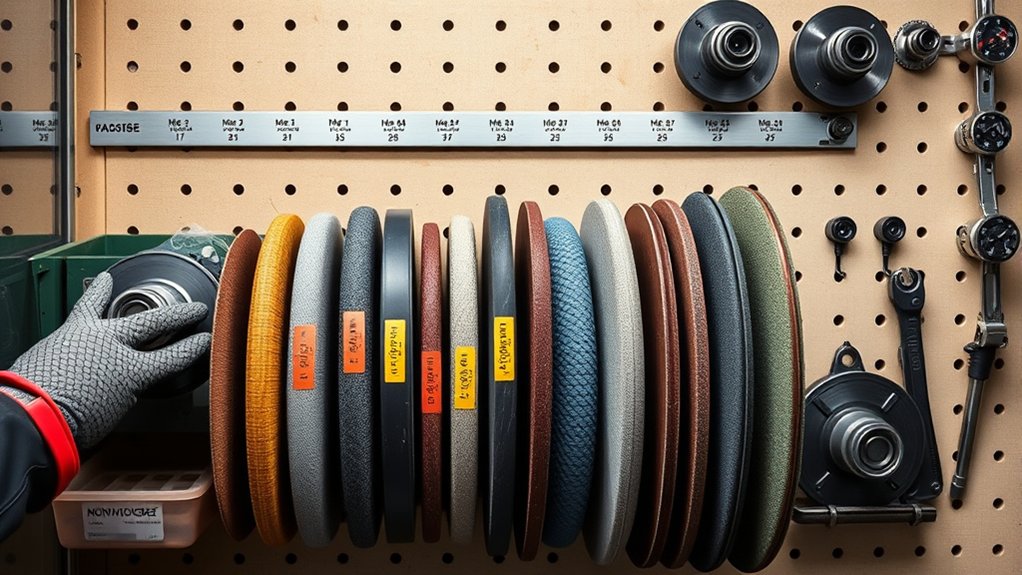
To maximize efficiency in your workshop, organize your storage for cutoff and grinding wheels effectively. Use segmented storage units with dedicated racks or compartments to store cutoff wheels, ensuring they’re protected from damage and easy to access. Handle wheels carefully; avoid stacking heavy items on top, which can lead to cracking or warping. For moving heavy wheels, utilize trucks or conveyors instead of rolling them on hard surfaces to prevent impact damage.
Regularly inspect your storage areas for stability and safety, ensuring no items are at risk of toppling. Implement good housekeeping practices to keep your storage clean and clutter-free. This not only enhances safety but also boosts efficiency, allowing you to focus on your work without distractions. By organizing your storage properly, you create a streamlined workspace that promotes both safety and productivity.
Inspection and Maintenance: How to Ensure Your Wheels Are Safe
Ensuring your cutoff and grinding wheels are safe starts with thorough inspection and maintenance practices. By prioritizing these steps, you can avoid accidents and maximize efficiency.
- Inspect Upon Delivery: Check for visible damage like cracks or chips. Discard any wheels that don’t meet safety standards.
- Conduct a Ring Test: Before each use, perform a ring test to listen for a clear sound, indicating the wheel is free from cracks.
- Clean Thoroughly: Use a brush to remove debris, making any potential damage easier to identify.
- Check Expiration Dates: Regularly review the maximum operating speed marked and replace any wheels that have reached their expiration, regardless of their visible condition.
Signs That Your Wheels Need Replacement
Recognizing when your cutoff and grinding wheels need replacement is vital for maintaining safety and efficiency in your operations. Look for visible cracks, chips, or warping on the cutoff wheel; these are clear signs of wear that can lead to wheel failure during use. If you notice a decrease in cutting performance, it’s time to replace the wheel, as worn wheels struggle to cut effectively. Excessive dust or debris during operation also indicates a dull wheel that should be replaced. Don’t forget to check the expiration date marked on the disc; once reached, it’s crucial to replace the wheel. Finally, if you experience increased noise or vibration while using the wheel, it’s a strong signal of wear or damage. Address these issues promptly to guarantee your safety and the quality of your work.
Understanding Legal Regulations for Abrasive Wheel Storage
While you might focus on the performance of your cutoff and grinding wheels, understanding the legal regulations surrounding their storage is equally important for safety and compliance. Adhering to these regulations helps you use your equipment safely and effectively.
Understanding legal regulations for the storage of cutoff and grinding wheels is crucial for ensuring safety and compliance.
- Health and Safety at Work Act 1974: Mandates safe storage practices to prevent accidents.
- Provision and Use of Work Equipment Regulations 1998 (PUWER): Requires storage methods that minimize risks of damage and injury.
- Regular Inspections: Verify storage areas are secure and free from hazards like toppling or environmental damage.
- Personal Protective Equipment at Work Regulations 1992: Emphasizes the use of appropriate PPE when handling and storing abrasive wheels.
Frequently Asked Questions
How Should Grinding Wheels Be Stored?
Store grinding wheels in dedicated, vibration-free compartments, keeping them away from moisture and extreme temperatures. Regularly inspect them to maintain shelf life and prevent damage, ensuring their materials remain intact for peak performance.
How to Safely Use a Cutoff Wheel?
To safely use a cutoff wheel, always inspect for damage, guarantee proper tool usage, and wear PPE. Follow wheel maintenance tips, avoid common mistakes, and conduct a test run to confirm functionality before cutting.
How Would You Store, Handle, and Transport Abrasive Wheels Safely?
To store, handle, and transport abrasive wheels safely, follow safety regulations, use proper handling techniques, maintain wheels in segmented racks, and adhere to transport guidelines to prevent damage and guarantee longevity. Always label each wheel accordingly.
Which of the Following Is Not Recommended for Storing Cutting Wheels?
Storing cutting wheels flat isn’t recommended; it warps them. Imagine your favorite wheel cracking after poor storage conditions. Following cutting safety tips and handling precautions can greatly extend your wheel lifespan. Always prioritize proper storage!
Conclusion
Storing your cutoff and grinding wheels safely is essential, much like safeguarding a fragile treasure. By following proper cleaning, storage conditions, and handling techniques, you can guarantee their longevity and efficiency. Regular inspections will help you catch any issues early, preventing accidents. Remember, a well-organized storage system not only protects your tools but also enhances your workflow. Stay vigilant and informed, and your abrasive wheels will serve you reliably for years to come.