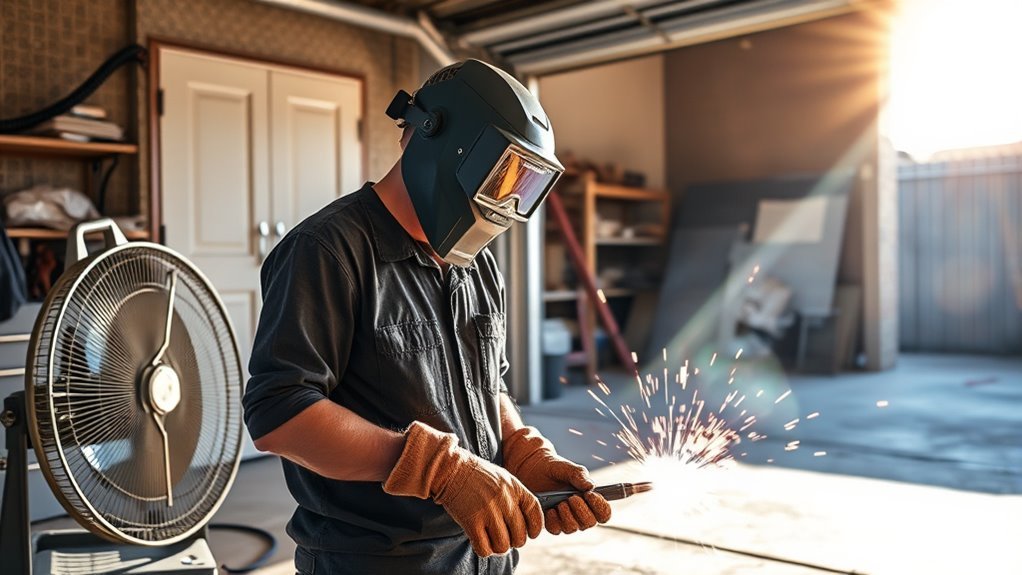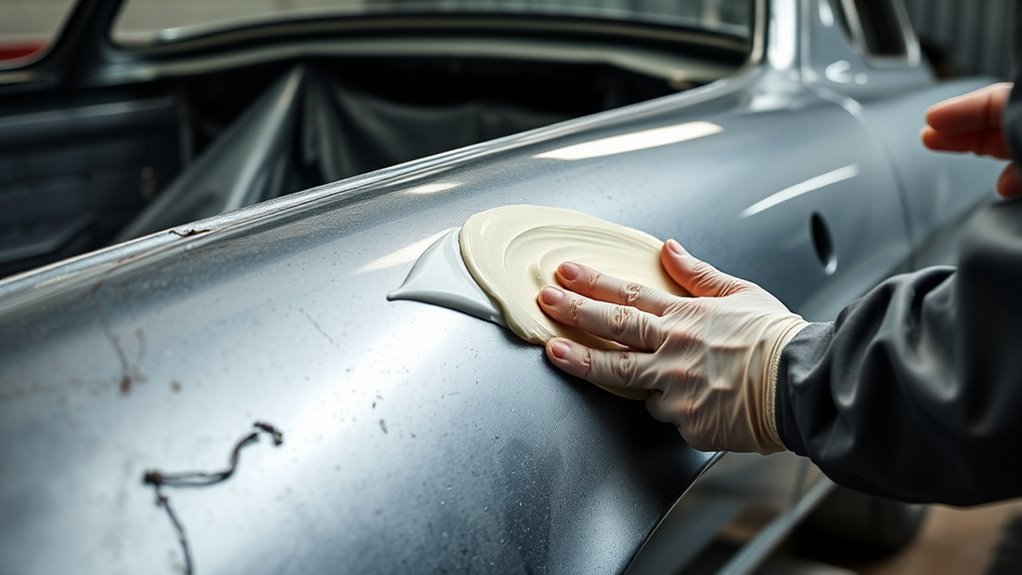
You can apply body filler over welded seams, but only after the weld is solid, the metal is clean, and the surface is shaped close to final form. Filler is for leveling small surface waves, not for hiding weak welds, rust, holes, or poor panel fit. The best results come from careful weld cleanup, thin filler coats, patient block sanding, guide coat checks, and the right primer system before paint.
Quick Answer
Yes, you can put body filler over welds if the seam is fully welded, ground smooth, rust-free, dry, and roughened for adhesion. Fix pinholes first, apply filler in thin coats, feather it beyond the seam, block sand it level, then seal the repair with epoxy primer and finish with primer surfacer before paint.
Key Takeaways
- Body filler should go over clean, shaped metal or a compatible cured epoxy primer, depending on the filler and primer technical sheets.
- Do not use filler to bridge holes, cover rust, hide weak welds, or replace metal repair.
- Close weld pinholes before filler, then use glazing or stopper putty only for tiny surface pinholes after sanding.
- Block sanding and guide coat checks matter more than piling on extra filler.
- Use epoxy primer for sealing and corrosion protection, then high-build primer surfacer for final leveling.
At a Glance
| Time Required | 2 to 6 hours of hands-on work, plus product cure times |
| Difficulty | Moderate; careful sanding and surface reading are the hard parts |
| Tools Needed | Grinder, sanding blocks, spreaders, guide coat, 80 to 400 grit paper, panel wipe, PPE, epoxy primer, and primer surfacer |
| Cost | Usually $30 to $120 for filler, sandpaper, guide coat, cleaner, and primer materials |
Warning: Sanding filler, old paint, primer, and welded metal creates dust. Solvents, fillers, glazes, and primers can also be flammable or harmful to breathe. Work with ventilation, wear eye protection, gloves, and a suitable respirator, and read the safety data sheet for every product. If the panel may contain old lead filler, do not dry sand it. Use lead-safe methods or have a qualified shop handle it.
Prep the Welded Seam for Body Filler
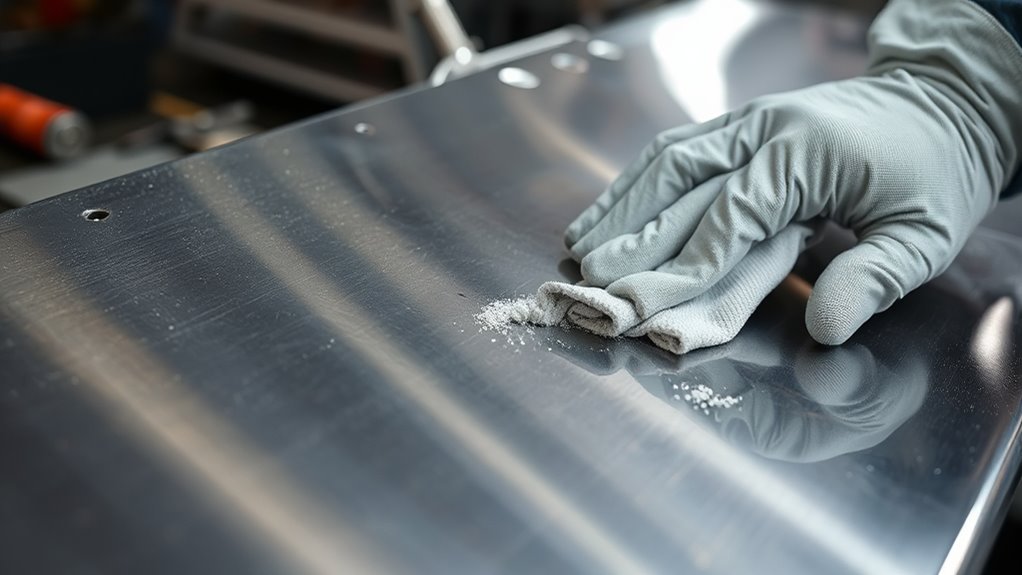
Before you spread filler, make sure the welded seam is strong, smooth, and clean. Body filler bonds best when the repair area is dry, grease-free, and rough enough for mechanical grip. It should not cover loose primer, rust, burn-through holes, weld porosity, or cracked metal.
Start by grinding the weld bead close to the panel surface. Keep the grinder moving and use light pressure so you do not thin the surrounding sheet metal. If the seam still has pinholes, stop and repair them with welding before you move to filler. Filler can hide tiny surface texture, but it should not seal an open weld defect.
Remove paint, primer, rust, scale, and seam contamination from the repair zone. Feather the coating edge around the seam so the filler does not end on a sharp paint ledge. Then sand the metal with 80 grit, or the grit recommended by your filler maker, to leave a firm scratch pattern.
Use a wax-and-grease remover or panel prep solvent that matches your paint system. Wipe with one clean cloth and dry with a second clean cloth before the solvent flashes off. Do not soak the seam, and do not trap solvent under filler.
Note: Some refinishing systems allow filler over properly cured and scuffed epoxy primer, while others call for filler over clean bare metal. Follow the body filler and primer technical data sheets. When the two products disagree, use a matched system or ask the coating maker.
On the reverse side of the repair, use a compatible seam sealer only where the metal work is complete and the surface is ready. Do not spread body filler over seam sealer. Seam sealer belongs on joints, flanges, and backside seams to help block moisture after the metal repair is sound.
Gather the Tools and Materials
Having everything ready helps you work before the filler begins to set. Most welded seam repairs need these items:
- Body filler and the correct hardener for that filler
- Glazing or stopper putty for tiny pinholes and sanding scratches
- Mixing board and clean plastic or metal spreaders
- Sanding blocks, including long, short, and flexible blocks
- Abrasives, usually 80, 120, 180, 220, 320, and 400 grit
- Guide coat, either dry guide coat or a light contrasting mist
- Panel prep solvent and clean lint-free cloths
- Epoxy primer and high-build primer surfacer
- PPE, including gloves, eye protection, hearing protection, and a suitable respirator
Check the filler’s working time before you mix it. Many fillers set quickly, especially in warm shops or when mixed with too much hardener. Mix small batches until you know how fast the product behaves.
Products Worth Considering

What You Will Receive: you will receive 2 sets of body filler spreaders with the shape of trapezoid, each set of 3 pieces, 6 pieces in total; The body filler spreaders are sufficient to meet your various applying needs, and you can share them with your family members

Basic tools for better application of products

When Not to Use Body Filler Over a Weld
Body filler is a surface-leveling material, not a structural repair. Skip filler and fix the metal first if you see any of these problems:
- Rust remains under or around the seam.
- The weld has pinholes, cracks, skipped spots, or weak penetration.
- The panel oil-cans, flexes, or moves when you press it.
- The repair needs filler thicker than the product allows.
- The surface has uncured primer, seam sealer, silicone, oil, or wax.
- The seam is part of a structural area that needs an approved collision-repair method.
If the panel is badly warped, work the metal closer before filler. Use careful hammer-and-dolly work, shrinking, or panel replacement when needed. The thinner the filler coat, the better the repair will hold its shape.
Spread Body Filler Across the Seam
Mix the body filler on a clean board using the hardener ratio listed by the manufacturer. Fold and smear the filler until the color is even, but do not whip air into it. Air pockets can become pinholes after sanding.
Spread the first coat firmly across the welded seam. Press the filler into the sanding scratches, then pull it outward in smooth passes. Extend the filler beyond the repair area far enough to feather the shape, often about 3 to 6 inches on each side if the panel gives you room.
Keep the coat thin and even. A heavy mound creates extra sanding, heat, shrinkage risk, and a higher chance of waves. If the repair needs more build, use two controlled coats instead of one thick coat.
Pro Tip: Hold the spreader at a low angle for the first pressure pass, then raise it slightly for the shaping pass. This pushes filler into the scratches first and leaves a smoother skim on top.
Let the filler cure until it sands cleanly without smearing. Cure time depends on the product, shop temperature, hardener amount, and film thickness. Do not rush this step. Soft filler can clog paper and tear out of the repair.
Rough Shape the Filler Before It Gets Too Hard
Once the filler reaches the right sanding stage, rough shape it with 80 grit on a block. The goal is to cut the high ridges while keeping the panel contour. Avoid finger sanding because your fingertips can dig grooves into the repair.
Use a crosshatch pattern. Sand one direction, then sand across it at an angle. This helps keep the surface flat and makes highs and lows easier to see. If you break through to metal in a small high spot, stop and check the shape instead of grinding the area lower.
After the first shaping pass, move to 120 grit or 180 grit to refine the surface. Do not jump straight to fine paper too early. Fine paper can polish high spots while leaving waves behind.
Block Sand Until the Welded Seam Is Level
Block the filler with a sanding board until the seam is level with the surrounding metal. Match the block to the panel shape. Use a long block on broad, flat panels, a shorter block near edges, and a flexible block on gentle curves.
- Use light to moderate pressure and let the paper cut.
- Keep the block moving past the edges of the filler so the repair feathers out smoothly.
- Sand in long strokes rather than short scrubbing motions.
- Stop often and feel the panel with a clean bare hand or a thin glove.
- Refill low spots instead of sanding the surrounding metal down to meet them.
The repair should end up smooth, feathered, and level. It should not be slightly low. A low area will show after primer, especially on a glossy finish.
Use a Guide Coat to Find Low Spots
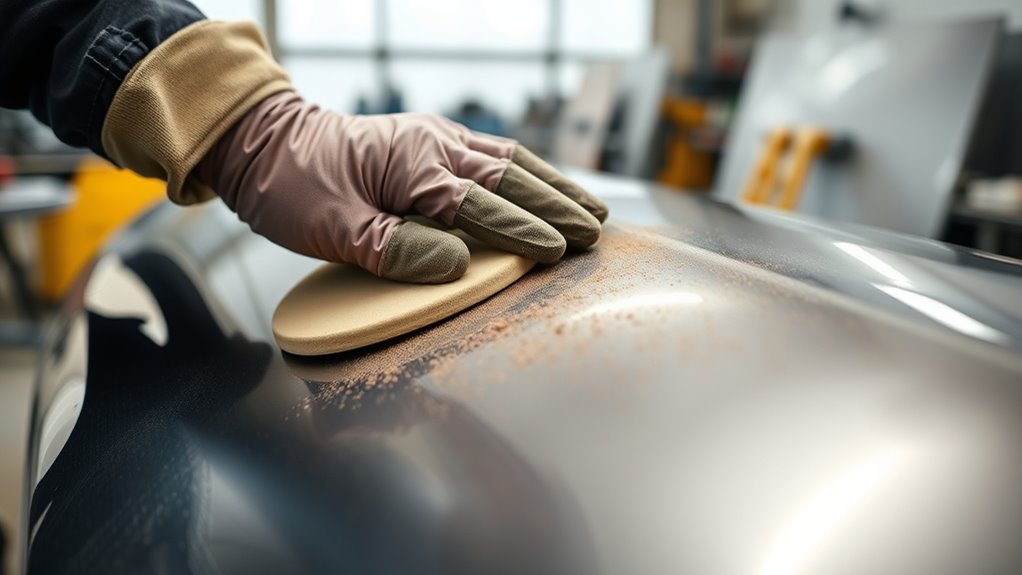
Lightly apply a contrasting guide coat over the sanded filler. A dry guide coat is clean and easy to control, but a very light mist of contrasting paint can also work if it is compatible with your refinishing system.
Guide coat tells the truth. High spots lose color first, while low spots and scratches keep color until you level or fill them.
Block sand again with even pressure. If the guide coat remains in a low area, do not keep sanding the whole panel to chase it. Add a thin skim of filler or glazing putty where needed, let it cure, then block again.
Use good lighting from a low angle to read the surface. Your hand will catch waves that your eyes miss, and the guide coat will catch scratches that your hand misses.
Fill Pinholes With Stopper Putty
After the main filler is blocked, inspect the surface for pinholes, small pits, and sanding scratches. Use stopper putty or glazing putty only for tiny defects. If you find a deep low spot, use body filler again instead of loading the area with putty.
Many glazing putties are made for small auto-body imperfections such as pinholes and scratches. For example, 3M Bondo Glazing & Spot Putty is described for pinholes in body filler, minor sand scratches, and small spot repairs. Always follow the product’s surface, drying, and sanding directions.
Inspect and Seal Pinholes
Check the welded panel under strong light. If a pinhole goes through the weld, repair the weld first. If the pinhole is only in the cured filler surface, clean the area and press a thin layer of glazing putty into the defect.
- Blow off sanding dust and wipe the repair with a safe panel cleaner.
- Use a clean spreader to press putty into each pinhole.
- Keep the layer thin and local.
- Let it dry fully before sanding.
- Sand the repair smooth with 220 to 320 grit, then recheck.
Repeat only where needed. Too much putty over a large area can shrink, clog paper, or leave a soft repair under primer.
Apply Thin Stopper Layers
Apply stopper putty in a thin knifing layer. Pull the spreader tight to the panel so you fill defects without creating a new ridge. Work in one or two controlled passes rather than repeatedly brushing the same area.
After the putty cures, block it lightly. If the spot still shows in the guide coat, apply one more thin layer and sand again. Your goal is a clean surface that needs primer, not more filler.
Prime the Repaired Panel for Paint
Once the filler and putty are smooth, clean the panel and prepare it for primer. Primer has two jobs here: sealing the repair and creating a sandable base for paint.
Use epoxy primer when you need strong adhesion and corrosion protection over bare metal and repaired areas. Then use a high-build primer surfacer if you need to fill fine sanding scratches and minor texture before final sanding.
If you work in a professional shop or spray coatings for others, check the rules that apply to your area and process. 40 CFR Part 63 Subpart HHHHHH covers paint stripping and certain autobody refinishing and spray-applied surface coating operations at area sources.
Surface Inspection
Before primer, inspect the repaired area from several angles. Look for low spots, hard filler edges, sanding scratches, dust, wax, pinholes, and exposed rust. Use another light guide coat if needed.
The panel should feel even across the repair. If your fingers catch an edge, the paint will likely show it. Feather the edge, correct the low spot, or re-sand the area before primer.
Primer Selection
Choose primer based on the coating system, not guesswork. Epoxy primer is the best choice for sealing bare metal and protecting against moisture. High-build primer surfacer is better for final leveling after the repair has already been sealed.
Apply primer in light, even coats at the flash time and film build listed by the maker. Do not bury uncured filler, solvent, or sanding dust under primer. Follow the product sheet for recoat time, sanding time, and topcoat window.
Paint-Ready Finish
After primer cures, block sand the primer surfacer with a guide coat. Many paint systems finish primer sanding around 400 to 600 grit, but the exact grit depends on the paint maker’s instructions.
- Guide coat the primed area.
- Block sand until the guide coat disappears evenly.
- Fix remaining lows, pinholes, or scratches.
- Clean the panel with the recommended final wipe.
- Move to sealer or paint only when the surface is uniform.
A paint-ready surface should look boring in the best way: no shiny lows, no deep scratches, no rough edges, and no visible seam shape.
Troubleshooting Common Body Filler Problems
| Problem | Likely Cause | Fix |
| Pinholes | Air whipped into filler, dirty surface, or open weld pores | Repair weld defects, mix without whipping, then glaze tiny surface pinholes |
| Filler lifts or peels | Poor cleaning, wrong substrate, too fine a scratch, or incompatible primer | Strip back, clean, sand with the recommended grit, and use compatible products |
| Repair looks wavy | Finger sanding, short strokes, or too much filler | Use a longer block, crosshatch, guide coat, and refill low areas |
| Hard edge shows in primer | Filler was not feathered far enough | Feather the repair wider and block it into the panel shape |
| Sand scratches show after primer | Skipped grits or primer applied too thin | Step through grits, apply proper primer surfacer, guide coat, and reblock |
Products Worth Considering

VERSATILE FORMULA repairs scratches, pinholes, holes and nicks

Versatile Application: Ideal for minor imperfections like door dings, hail damage, pinholes, and grind marks on various surfaces including aluminum, steel, fiberglass, and more—ensuring a smooth, professional finish on any project.

VALUE 2-TUBE PACK: Includes 2 tubes of nitrocellulose glazing and spot putty, 4.5 oz each (9 oz total), for filling pinholes, scratches and small dents in body panels before paint.
Frequently Asked Questions
Can you put body filler over welds?
Yes, you can put body filler over welds after the seam is fully welded, ground smooth, cleaned, dry, and sanded with the correct scratch pattern. Fix weld pinholes first. Use filler only as a thin leveling layer, not as a patch for holes or weak metal.
When should you not use body filler?
Do not use body filler over rust, loose paint, uncured primer, seam sealer, oily metal, flexible plastic, cracked welds, open holes, or structural damage. Fix the metal first. If the area needs thick filler to look straight, the panel needs more metal work.
Can you apply body filler over bare metal?
Yes, many polyester body fillers are designed for properly sanded bare metal. The metal must be clean, dry, and roughened with the grit recommended by the filler maker. Some systems also allow filler over cured and scuffed epoxy primer, but only when the product data sheets allow it.
What primer should you use under or over body filler?
Use the primer system recommended by the product maker. A common repair path is filler over clean sanded metal, epoxy primer over the finished repair, then high-build primer surfacer for final blocking. Some systems allow filler over epoxy primer after the primer cures and is scuffed.
How thick should body filler be over a welded seam?
Keep body filler as thin as practical. The metal should be shaped close before filler goes on. Follow the maximum thickness listed by your filler maker, and build with controlled skim coats rather than one heavy layer.
Should you seam seal before or after body filler?
Use seam sealer on joints, flanges, and backside seams after the metal repair is sound and the surface is prepared for sealer. Do not spread body filler over seam sealer. Filler belongs on the shaped panel surface, while seam sealer belongs where moisture could enter a joint.
Conclusion
A smooth welded seam starts before the filler ever touches the panel. Finish the weld, close pinholes, remove rust and old coatings, clean the metal, and use filler only as a thin leveling coat. Block sand with guide coat, correct low spots, glaze tiny pinholes, then seal the repair with epoxy primer and finish with primer surfacer. If you keep each layer clean, thin, and compatible, the seam will blend into the panel instead of showing through the final paint.
Sources
- 3M Bondo Glazing & Spot Putty — supports use of glazing putty for pinholes, small scratches, and minor auto-body imperfections.
- 3M Bondo Product Selector Guide — supports body filler surface compatibility, cure/sand time differences, and paintability by product.
- 3M Bondo Bumper Repair Adhesive Kit — supports the need to match repair material to panel type and flexibility.
- eCFR 40 CFR Part 63 Subpart HHHHHH — supports the refinishing compliance note for paint stripping and spray-applied coating operations.