Damaged auto body panels can look simple to fix, but modern vehicle bodies use different steels, aluminum, adhesives, foams, coatings, sensors, and safety systems. A safe repair starts by identifying the panel and checking the vehicle maker’s body repair procedure. For a small, nonstructural steel patch, clean fit-up, short welds, controlled heat, and complete corrosion protection can produce a durable result. Structural, ultra-high-strength steel, aluminum, hybrid, and electric-vehicle repairs usually belong in a properly equipped collision shop.
Quick Answer
To repair a weldable auto body panel, first confirm the OEM-approved repair method, remove fire and electrical hazards, clean the weld zone, and test settings on matching scrap. Clamp the patch tightly, add spaced tack welds, let the metal cool naturally, then grind lightly and restore primer, seam sealer, cavity wax, and paint.
Key Takeaways
- Check the vehicle-specific body repair manual before cutting or welding; panel material and attachment methods vary by model.
- Do not treat pillars, rails, rockers, roof rails, seat-belt mounts, or SRS mounting areas like ordinary cosmetic sheet metal.
- Control distortion with tight fit-up, spaced tack welds, short weld intervals, and full cooling time rather than continuous beads.
- Remove coatings only where the approved repair requires it, and use local exhaust when welding zinc-coated or painted metal.
- Finish the repair on both sides with the specified primer, seam sealer, cavity wax, undercoating, and paint system.
At a Glance
| Time Required | Several hours to a full day for a small nonstructural patch, excluding primer and paint curing time |
| Difficulty | Intermediate to advanced; structural, UHSS, aluminum, hybrid, and EV repairs require specialized training |
| Tools Needed | OEM repair information, suitable welder, matching scrap, clamps or clecos, cutting and sanding tools, PPE, local fume extraction, fire extinguisher, primer, seam sealer, and cavity protection |
| Cost | Varies with the panel, welding equipment, shielding gas, abrasives, corrosion materials, and paint; structural repairs should be professionally estimated |
What’s in This Article
- Avoiding Common Welding Mistakes in Auto Body Repair
- Decide Whether the Panel Should Be Welded
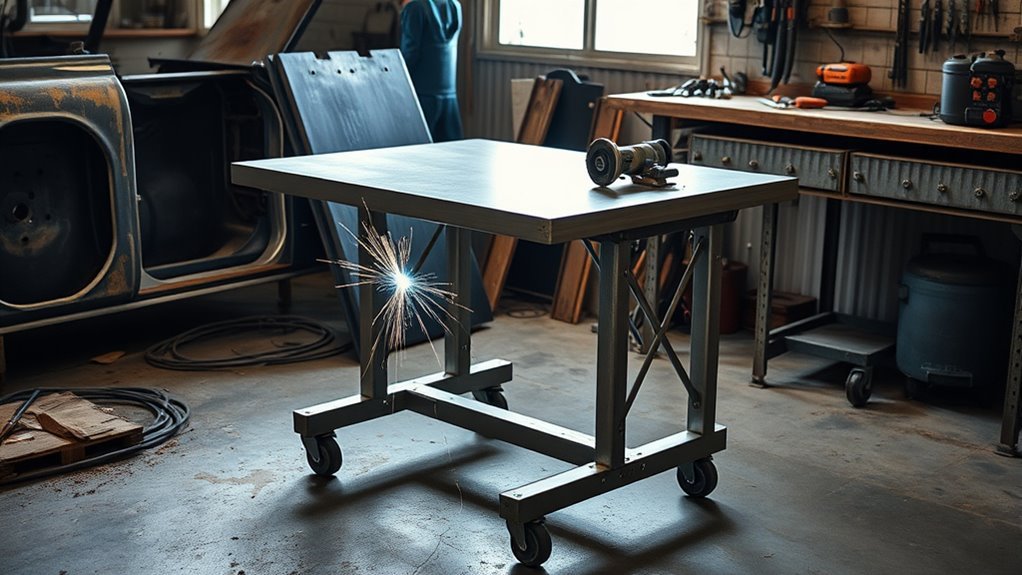
- Prepare Your Workspace and Safety Gear
- Protect Vehicle Electronics, SRS, and High-Voltage Systems
- Choosing the Best Welding Method for Body Panels: MIG vs. TIG
- Must-Have Tools for Effective Body Panel Welding
- Before You Begin Auto Body Panel Welding
- Welding Body Panels: A Step-by-Step Guide
- Common Mistakes and Troubleshooting Tips
- How to Ensure a Durable Finish After Welding
- Nailing the Final Touches for a Pro Finish
- Frequently Asked Questions
- Conclusion
- Sources
Avoiding Common Welding Mistakes in Auto Body Repair
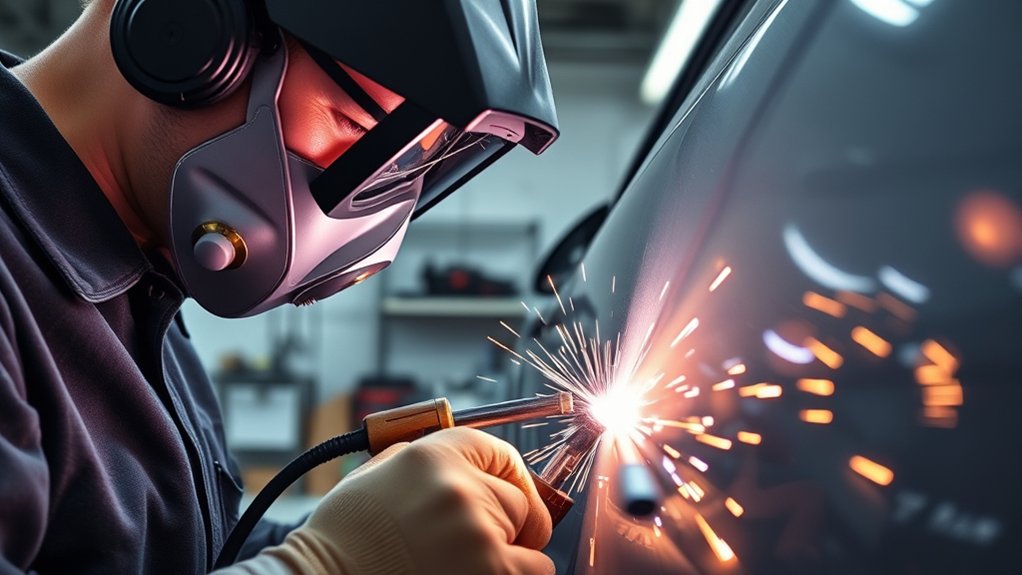
The most serious mistake is starting before you know what the panel is made from and how the vehicle maker says it may be repaired. Modern bodies can combine mild steel, high-strength steel, ultra-high-strength steel, aluminum, adhesives, rivets, resistance spot welds, GMA welds, and MIG brazed joints. The approved cut line, joint type, weld count, plug-weld size, wire, shielding gas, and corrosion materials may be vehicle-specific.
For cosmetic, nonstructural steel panels, start with proper surface preparation. Remove paint, rust, oil, seam sealer, undercoating, and EDP coating only from the area that must be welded. Preserve factory coating outside the weld zone whenever possible. Do not weld over unknown coatings, foam, adhesive, or contamination.
Use the plug-weld hole diameter, spacing, and attachment method listed in the OEM procedure. A generic hole size is not safe for every panel. Holes that are too small may not fuse to the lower panel; holes that are too large add heat and can weaken the flange. Over-grinding mating flanges can also reduce panel thickness and joint strength.
Secure panels with approved clamps, clecos, or temporary fasteners so the mating surfaces sit tight. If self-tapping screws are used as temporary holders, confirm that the repair procedure permits them, remove them before final finishing, and close or protect the holes as required. Tight fit-up reduces movement, gaps, burn-through, and distortion.
Warning: Do not section or weld a structural component simply because you can access it. Rails, pillars, rockers, roof rails, reinforcements, seat-belt mounts, and SRS mounting areas can affect crash-energy management and occupant protection. Use the vehicle-specific body repair manual or refer the repair to a qualified collision shop.
Decide Whether the Panel Should Be Welded
Before choosing MIG or TIG, determine whether welding is the approved repair method. Some outer steel skins may be patchable, while another panel that looks similar may require complete replacement at factory seams. Other repairs may call for squeeze-type resistance spot welding, GMA plug welds, MIG brazing, adhesive bonding, riveting, or a combination of methods.
Check the Panel and Repair Category
- Cosmetic outer panel: A fender, door skin, or nonstructural quarter-panel area may allow a welded patch, but only within the maker’s limits.
- Structural panel: A rail, pillar, rocker reinforcement, roof rail, or safety-system mounting area needs vehicle-specific repair information and professional measuring.
- High-strength or ultra-high-strength steel: Heat can change material properties. Do not straighten, section, or weld it unless the OEM procedure allows the exact operation.
- Aluminum: Aluminum repair needs dedicated tools, strict contamination control, correct filler and shielding gas, and often a separated work area.
- Plastic or composite panel: These parts may need plastic repair, adhesive bonding, or replacement rather than metal welding.
Note: “MIG welding” is common shop language, but many steel collision repairs use gas metal arc welding with an active argon/carbon-dioxide blend, technically GMA/MAG. Use the terminology, consumables, and settings stated in the repair manual and welder instructions.
Prepare Your Workspace and Safety Gear
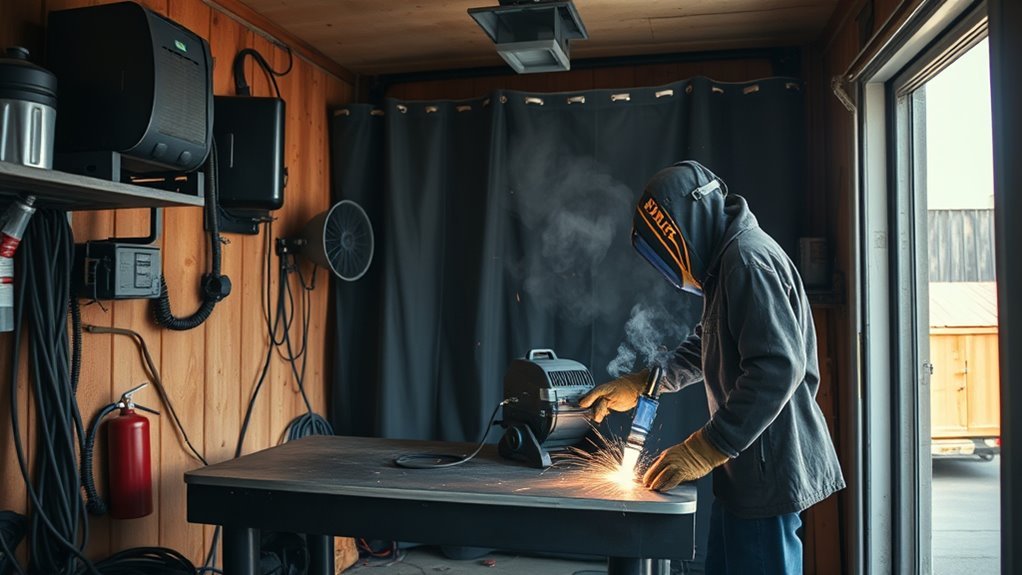
Set up a clean, dry, well-ventilated workspace before striking an arc. Move fuel containers, solvents, aerosol cans, oily rags, paper, wood dust, and other combustibles away from the work. OSHA hot-work rules use a 35-foot risk area when sparks can reach combustible material, and concealed spaces on the opposite side of a panel also need inspection and protection.
Remove or shield trim, carpet, headliners, seats, sound deadener, foam, wiring, fuel and brake lines, glass, and painted surfaces near the repair. Inspect the backside of the panel whenever possible. Sparks and conducted heat can ignite material that you cannot see from the welding side.
Keep a suitable, charged fire extinguisher within immediate reach. When a meaningful fire risk remains, use a trained fire watcher who can see the front, backside, floor, and nearby cavities. Continue checking the area for at least 30 minutes after welding because insulation, seam sealer, or undercoating can smolder without an obvious flame.
Place welding cables, gas hoses, and extension cords where they will not create a trip hazard or contact hot metal. Secure shielding-gas cylinders upright with a chain or approved restraint. Keep the workpiece and floor dry to reduce electric-shock risk.
Safety Gear for Body Panel Welding
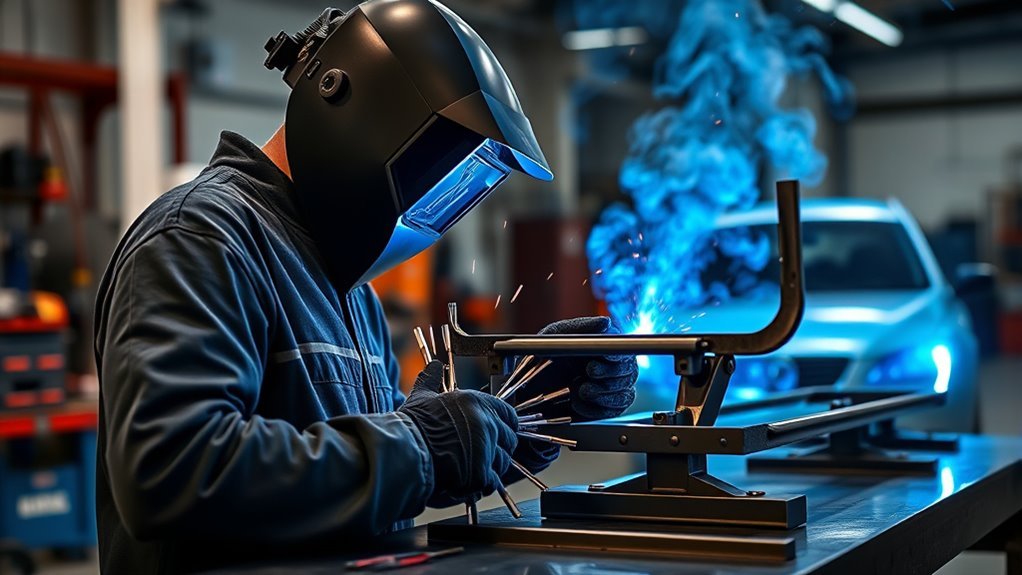
- Welding helmet: Use a helmet with a filter shade suitable for the process and amperage.
- Safety glasses: Wear impact-rated safety glasses with side protection under the helmet, especially during grinding and wire brushing.
- Gloves: Use dry, flame-resistant welding gloves that still allow control of the torch or gun.
- Protective clothing: Wear long sleeves, long pants, closed footwear, and flame-resistant material without exposed cuffs that can catch sparks.
- Hearing protection: Use suitable hearing protection when grinding, cutting, or air tools create hazardous noise.
- Respiratory protection: Use local exhaust near the weld. A respirator must be selected for the hazard and used under a proper respiratory-protection program; it is not a substitute for ventilation.
Warning: Never weld near a fuel leak, an unpurged fuel tank, a deployed or live pyrotechnic safety device, or unknown foam and insulation. Stop if you smell fuel, see damaged high-voltage parts, or cannot inspect the backside of the repair area.
Protect Vehicle Electronics, SRS, and High-Voltage Systems
Welding current, heat, and sparks can damage wiring, modules, sensors, batteries, and restraint-system components. Before welding on a vehicle, follow the maker’s service procedure for powering down the vehicle. That may include recording needed settings, switching the ignition off, disconnecting the 12-volt battery in a specified order, and waiting a stated time before working near SRS components.
Place the welding ground clamp on clean bare metal as close to the weld as practical and on the same panel or assembly when the procedure allows. The goal is to keep the return-current path short and away from bearings, hinges, wiring, modules, and other components. Never place the clamp so current must pass through an airbag module, electronic control unit, steering component, or drivetrain bearing.
Remove or protect nearby wiring harnesses, sensors, cameras, radar units, antennas, fuel lines, brake lines, and interior trim. After the repair, reconnect systems exactly as specified, inspect the work area, and perform any required diagnostic scan, calibration, or initialization.
Warning: Hybrid and electric vehicles contain lethal high voltage. Do not disconnect orange cables, remove a service plug, or assume the system is safe because the vehicle is switched off. High-voltage disabling and verification must be completed by a qualified technician using the vehicle-specific procedure and rated test equipment.
Choosing the Best Welding Method for Body Panels: MIG vs. TIG
Choosing the right welding method affects heat input, joint strength, appearance, and whether the repair matches the vehicle maker’s design. For collision work, the OEM procedure takes priority over personal preference.
GMAW, commonly called MIG welding, suits many approved steel body repairs because it is fast, widely used, and effective for tack, stitch, and plug welds. It uses continuously fed wire and shielding gas. Thin sheet metal can still burn through or warp when voltage, wire speed, travel speed, fit-up, or technique is wrong.
GTAW, commonly called TIG welding, gives a skilled operator precise control and can produce a small, workable bead on clean, accessible sheet metal. It is slower and requires both hands plus heat control. TIG is useful for some restoration and custom-metal work, but it is not automatically approved for modern collision repairs.
Squeeze-type resistance spot welding may be required to duplicate factory spot welds. MIG brazing, adhesives, and rivets may also be specified for certain steels, roofs, quarter panels, or mixed-material joints. Do not substitute one attachment method for another without documented approval.
| Method | Best Use | Main Advantage | Important Limitation |
|---|---|---|---|
| GMAW/MIG | Many approved steel plug, tack, and stitch welds | Fast, practical, and widely supported | Can add heat quickly; wire and gas must match the procedure |
| GTAW/TIG | Restoration, custom work, and approved thin-metal repairs | Precise puddle and heat control | Slower, skill-intensive, and not approved for every collision repair |
| STRSW | Factory-style spot-weld replacement where specified | Can closely reproduce factory attachment | Requires access, correct tips, adequate machine output, and test welds |
| MIG brazing | Selected coated or high-strength steel joints where specified | Lower base-metal heat than fusion welding | Requires correct silicon-bronze wire, gas, technique, and OEM approval |
Products Worth Considering

3-in-1 Multi Process Welder: Designed to handle Gasless MIG welder, MMA, and Lift TIG perfectly, this 110V welding machine is a garage essential for home DIY and fast farm repairs.(Lift TIG Torch NOT included)

MULTIFUNCTIONAL: A 4-in-1 welder, capable of Flux Core MIG/Gas MIG/ Stick/Lift TIG (need to purchase extra tig lift torch). This unit caters to a wide range of welding applications and meets your various welding needs.

Must-Have Tools for Effective Body Panel Welding
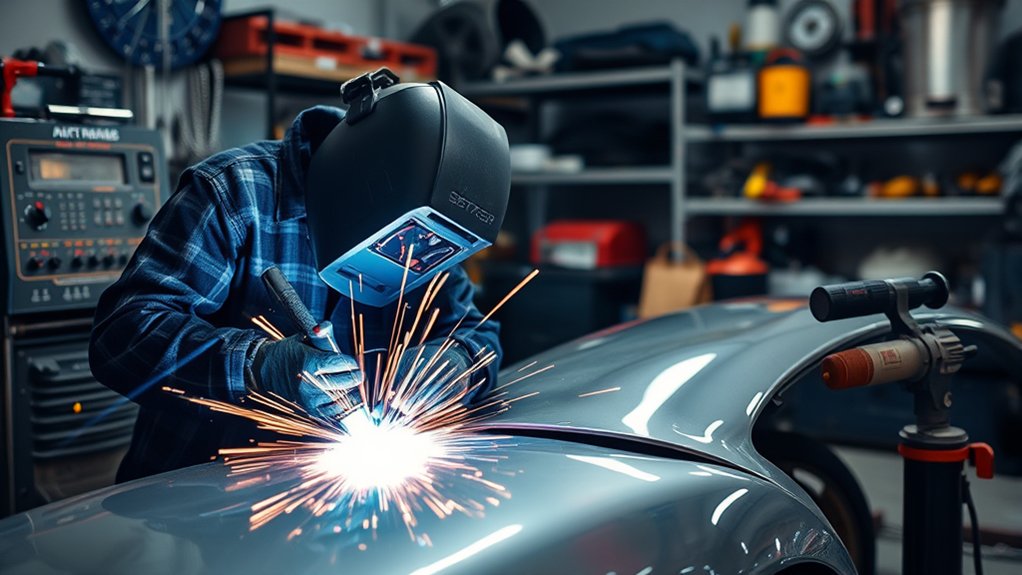
To weld body panels well, you need tools for identification, measuring, cutting, cleaning, clamping, welding, fire prevention, and corrosion restoration. The welder is only one part of the system. A repair can fail even with a good machine when the panel is misidentified, the flange is over-ground, the weld area is contaminated, or the backside is left unprotected.
A stick welder may be useful for heavier fabrication, but it is generally a poor choice for thin automotive body skins because it is difficult to control heat and bead size. Use the process and equipment approved for the panel.
Products Worth Considering

Value Pack: The package includes 24 packs of butt welding clamps, enough quantity to meet your daily needs and replacements. Each butt welding clamps is individually wrapped in a small bag, convenient to carry and use.

3-PIECE SEAM SPLITTER SET INCLUDES: These body panel tools include (1) straight splitter, (1) 30-degree offset splitter, and (1) 90-degree angle seam splitter; With this array of angles, you can complete a multitude of different jobs

Automotive Bodywork and Rust Repair
Essential Welding Equipment
| Equipment | Purpose | Checks Before Use |
|---|---|---|
| OEM repair information | Identifies materials, cut lines, weld type, spacing, and corrosion products | Confirm the exact year, model, body style, and repair location |
| Suitable welder | Makes the approved GMA, GTA, STRSW, or brazed joint | Inspect leads, torch, liner, contact tip, nozzle, gas flow, and calibration |
| Clamps, clecos, and panel tools | Hold gaps, flushness, and flange contact | Confirm clean contact surfaces and enough access for the torch |
| Local fume extraction | Captures fumes close to the arc without pulling away shielding gas | Position correctly and verify airflow before welding |
| Fire-control equipment | Controls sparks, shields combustibles, and responds to fire | Check extinguisher charge, blankets, shields, and fire-watch access |
Surface Preparation Tools
The best welding machine will not correct poor surface preparation. Use a stripping disc, small abrasive disc, wire brush, scraper, or sander selected for the coating and metal. A flap disc can remove paint and rust, but aggressive pressure can thin the panel or round off a flange.
A dual-action sander helps level and feather the area before primer. A vacuum-assisted abrasive blaster may help remove rust in pits or tight areas, but keep blasting media out of cavities, bearings, electrical connectors, and moving parts. Do not blast thin sheet metal so aggressively that it stretches or warps.
Use dedicated stainless-steel brushes and abrasives for aluminum to avoid iron contamination. Clean oil and residue with a product approved by the paint or repair system, allow solvents to evaporate fully, and keep chlorinated brake cleaner or degreaser away from welding heat and ultraviolet arc radiation.
Safety Gear Necessities
Inspect your helmet, lenses, gloves, clothing, respirator, and safety glasses before every job. Replace damaged PPE. A welding helmet protects against arc radiation, but it does not replace impact-rated glasses during grinding, drilling, or wire brushing.
Keep bystanders out of the arc area or protect them with noncombustible welding screens and suitable eye protection. Bright arc light can injure people who are not directly beside the welder.
Before You Begin Auto Body Panel Welding
Plan the repair before cutting, grinding, or welding. Confirm panel material, thickness, coating, joint location, attachment method, adjacent parts, and access to the backside. Look for wiring, sensors, airbags, inflators, fuel and brake lines, glass, seam sealer, adhesives, foam, sound deadener, and corrosion protection.
Measure panel gaps and body dimensions before removing a welded panel. Brace openings when the repair procedure requires it. Trial-fit replacement parts before making final cuts, and compare body lines, door gaps, glass openings, and adjacent panels.
Test your settings on clean scrap that matches the panel material, thickness, coating condition, joint design, wire, and shielding gas. Make destructive test coupons when the repair standard calls for them. A bead that looks acceptable from the front can still have poor fusion on the backside.
Pro Tip: Let the panel cool naturally between weld intervals. Move to a distant part of the seam and wait until the metal is cool enough for the next tack. Avoid quenching the weld with a wet cloth, and do not blast compressed air at the hot joint unless a documented procedure specifically calls for it.
Plan the Joint and Fit-Up
Use the joint design specified by the vehicle maker. A butt joint can create a flush cosmetic repair but demands accurate trimming and heat control. A lap or flange joint may be approved in another location, but it can trap moisture if it is not sealed and protected. Never create a sectioning joint in a structural part at a convenient location without an approved procedure.
Trim the patch in small steps. Aim for an even gap suited to the chosen process rather than forcing a poorly shaped patch into place. Check the panel from multiple angles and use a straightedge, contour gauge, or flexible profile tool to confirm shape.
Welding Body Panels: A Step-by-Step Guide
These steps apply to a small, nonstructural panel repair only after the vehicle-specific procedure confirms that welding is allowed. Stop and seek professional help when the damage reaches structural reinforcement, an SRS mount, a high-voltage component, or a panel whose material you cannot identify.
- Inspect the complete damage. Check the visible panel, adjacent seams, mounting points, and backside. Remove trim as needed so hidden rust, cracks, foam, and wiring are visible.
- Obtain the repair procedure. Confirm the approved cut location, joint type, weld method, plug-weld size and spacing, wire, gas, corrosion products, and any scan or calibration requirements.
- Make the vehicle safe. Follow the OEM power-down procedure, protect electronics and SRS parts, isolate fuel hazards, and have high-voltage systems handled by a qualified technician.
- Remove coatings and contamination. Clean paint, rust, EDP coating, oil, seam sealer, adhesive, and undercoating only where necessary for the weld and ground connection.
- Trim and test-fit the patch. Match the panel contour and maintain an even, process-appropriate joint gap. Check exterior shape and backside clearance.
- Clamp the panel securely. Use panel clamps, clecos, magnets away from the arc when appropriate, or approved temporary fasteners. Make sure overlapping flanges contact tightly.
- Prepare plug-weld holes if required. Drill or punch only the diameter and spacing listed in the procedure. Deburr holes and clean both mating surfaces.
- Apply approved flange protection. Use weld-through primer or another corrosion product only where the OEM and product instructions specify it. Keep the actual fusion point clean enough for a sound weld.
- Test the welder. Reproduce the joint on matching scrap. Adjust voltage, wire speed, amperage, gas flow, technique, and stickout until the test shows acceptable fusion without excessive burn-through.
- Place initial tack welds. Start with widely spaced tacks that lock alignment. Recheck panel contour and gaps before adding more heat.
- Close the seam gradually. Add very short welds in alternating areas. Allow complete cooling between rounds. Do not run a continuous bead across a flat panel unless the approved technique and panel shape support it.
- Complete plug welds correctly. Start on the exposed lower panel and spiral or fill outward so the weld fuses both sheets and fills the hole. Confirm backside evidence of fusion where accessible.
- Inspect before grinding. Look for pinholes, cracks, porosity, incomplete fusion, missed edges, burn-through, and movement. Repair defects before hiding them with filler or primer.
- Dress the weld carefully. Remove only excess weld metal. Use short grinding intervals because grinding heat can warp thin sheet metal. Do not thin the parent metal or erase required welds.
- Restore shape and protection. Use controlled hammer-and-dolly work where appropriate, then apply the required primer, seam sealer, cavity wax, undercoating, and paint system to all affected surfaces.
- Reassemble and verify systems. Reconnect the battery and components according to the service procedure. Complete required scans, calibrations, corrosion checks, leak checks, and final inspection.
Galvanized steel needs extra care. Remove zinc only from the immediate fusion area as directed, use local exhaust, and avoid breathing the plume. Heating zinc-coated metal can produce zinc oxide fume associated with metal fume fever. Do not rely on an open garage door alone when the plume reaches your breathing zone.
A durable body repair is not just a smooth weld on the visible side. It also restores the vehicle maker’s attachment method, material properties, fire safety, electronics protection, and corrosion protection behind the panel.
Common Mistakes and Troubleshooting Tips
Body panel welding problems usually come from poor identification, contaminated metal, weak fit-up, excessive heat, wrong consumables, or unverified settings. Stop when a defect repeats. Continuing to add weld can turn a small problem into a distorted or unsafe panel.
| Problem | Likely Cause | Practical Fix |
|---|---|---|
| Panel warping or oil-canning | Too much heat, long beads, overheated grinding, poor fit-up, or forced alignment | Stop, allow full cooling, correct fit-up, shorten weld intervals, skip around, and use careful metal finishing |
| Burn-through | Excess heat, wide gap, thin or rusted metal, slow travel, or wrong settings | Cut back to sound metal, tighten the gap, retest settings, and use shorter trigger time |
| Poor fusion | Dirty coating, weak ground, low heat, excessive stickout, wrong wire or gas, or loose flange contact | Clean both surfaces, move the ground close, clamp tightly, verify consumables, and repeat test welds |
| Porosity or pinholes | Contamination, moisture, wind, poor gas coverage, leak, or clogged nozzle | Remove the defect, clean and dry the area, shield drafts, check gas flow and connections, and clean the nozzle |
| Plug weld sits on top | No fusion to the lower panel, wrong technique, hole size, or poor flange contact | Remove the failed weld, restore clean tight contact, use the specified hole size, and retest technique |
| Rust returns | Bare metal, open pinholes, missing seam sealer, damaged E-coat, or unprotected backside cavity | Repair defects, clean and prime, seal seams, coat the backside, and apply cavity wax or undercoating as specified |
| Electronics fault after welding | Incorrect power-down, poor ground location, damaged wiring, heat exposure, or disturbed sensor | Stop, inspect wiring and grounds, follow OEM diagnostics, scan modules, and complete required calibration |
When to Stop and Replace the Panel
Replace or professionally assess the panel when rust extends beyond solid metal, cracks continue into reinforcement, the panel has been severely stretched, the approved cut line cannot be reached, or repeated burn-through shows that the remaining metal is too thin. Also stop when the repair procedure prohibits sectioning, heating, or welding the material.
How to Ensure a Durable Finish After Welding
A durable finish starts before primer. Inspect the welds in good light and, where possible, from both sides. Correct cracks, pinholes, missed edges, sharp points, and incomplete fusion. Clean grinding dust, spatter, oil, soot, and loose coating without thinning the surrounding metal.
Prime and seal the repair using products approved by the vehicle maker and paint system. Many collision-repair systems prefer seam sealer over properly prepared two-component epoxy or urethane primer or intact OEM E-coat, unless the sealer is specifically approved for direct-to-metal use.
- Apply the specified primer to exposed metal and repaired flanges.
- Reproduce factory seam sealer location and thickness without blocking drains.
- Restore chip coating or undercoating where it was removed.
- Apply cavity wax inside rockers, pillars, quarter panels, and other closed sections when required.
- Protect the backside of welds and edges that paint cannot reach from the exterior.
- Follow product flash, cure, temperature, and film-build instructions.
Note: Weld-through primer is not a universal substitute for post-repair corrosion protection. Use it only on mating flanges and only when the OEM and product instructions call for it. Primer, seam sealer, cavity wax, and exterior coatings still need to be restored after welding.
Do not grind every weld perfectly flat by default. A cosmetic butt seam may need careful leveling, while required plug welds must retain enough metal to preserve the joint. Grinding too deeply can thin both the weld and the surrounding panel.
Nailing the Final Touches for a Pro Finish
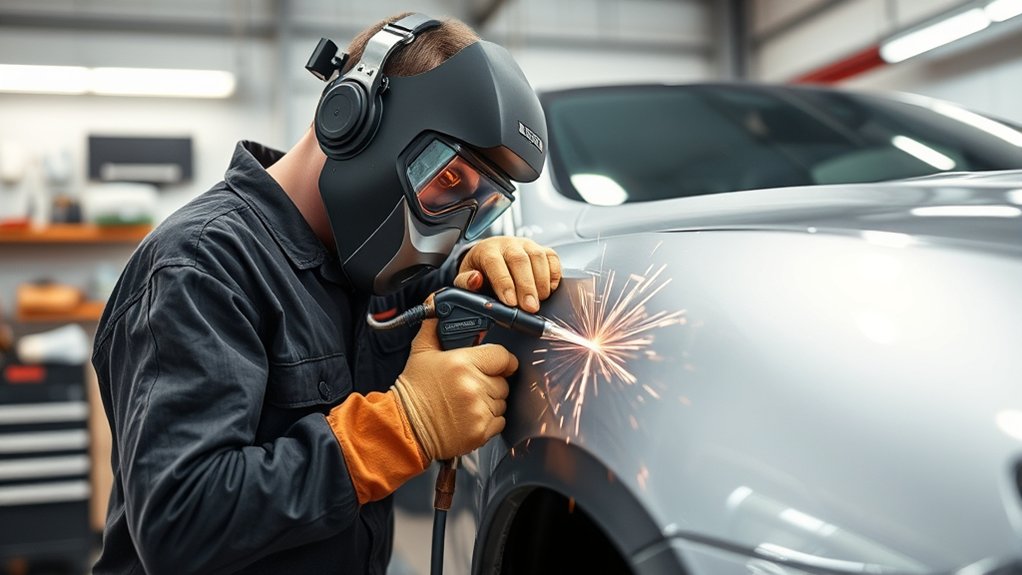
A professional finish depends on shape, corrosion protection, and system verification, not just smooth paint. Blend the repair into the surrounding contour without using filler to hide a loose joint, burn-through, or poorly fused weld.
Essential Surface Preparation
Remove rust and damaged coating until you reach solid material. Feather surrounding paint according to the coating system. Use a flap disc or small abrasive disc for controlled weld dressing, then switch to finer sanding steps. Avoid holding a grinder in one spot because grinding heat can distort the panel.
Use a dual-action sander to refine the surface and a suitable hand block to check shape. Scotch-Brite-type pads can help clean and scuff areas before coating, but they do not replace removal of rust, scale, or weak paint. Vacuum or blow dust away from the repair before final cleaning, while protecting open connectors and cavities from debris.
- Keep factory E-coat outside the repair zone intact where possible.
- Remove only enough weld metal to reach the required contour.
- Use dedicated abrasives for aluminum and keep steel dust out of the aluminum work area.
- Check drain paths and flange openings before applying sealer or cavity wax.
Effective Priming Techniques
Use the primer recommended by the paint company and repair procedure. Clean and dry the surface, then apply the specified number of light, even coats with the required flash time. Heavy coats can trap solvent, run, or create poor adhesion.
Apply body filler only over a substrate approved by the filler and paint manufacturers. Sand filler and primer with the recommended grit sequence, use guide coat to reveal highs and lows, and keep bare metal exposure to a minimum.
Final Inspection Steps
Inspect the panel before paint hides the repair. Use direct and reflected light to find ripples, pinholes, sanding scratches, open seams, and contamination. Check the backside, nearby trim, wiring, and protected cavities.
- Confirm every required weld is present and acceptable.
- Verify panel gaps, flushness, body lines, latch operation, and glass opening dimensions.
- Check seam sealer continuity, drain paths, primer coverage, undercoating, and cavity wax.
- Inspect for heat damage, spatter, melted clips, damaged harnesses, and fuel or brake-line contact.
- Reconnect components according to the service manual and complete required diagnostic scans and calibrations.
- Perform water-leak or dust-leak testing when the repair affects a seam, roof, floor, quarter panel, or glass opening.
These checks catch problems before paint, trim, and interior panels hide them. A small correction now is easier than repairing corrosion, wind noise, water leaks, warning lights, or paint failure later.
Frequently Asked Questions
What types of auto body panels can be welded?
Many mild-steel outer panels can be welded when the vehicle maker allows the repair. High-strength steel, ultra-high-strength steel, aluminum, structural panels, and mixed-material joints need vehicle-specific procedures. Plastic and composite panels generally require plastic repair, bonding, or replacement rather than metal welding.
How do I prevent warping during welding?
Use accurate fit-up, spaced tack welds, very short weld intervals, and a skip-around sequence. Let the panel cool naturally between rounds, and limit grinding heat. Do not force a misaligned patch flat with weld metal, and do not run a long continuous bead across a broad flat panel.
Can I weld aluminum auto body panels with MIG?
Yes, some aluminum panels can be welded with properly configured GMAW equipment, correct aluminum wire, pure argon, dedicated feeding equipment, and strict surface cleaning. However, the OEM procedure may specify a different method, and structural aluminum repair requires specialized training, isolation from steel dust, and dedicated tools.
What is the best way to clean welded areas?
First let the metal cool. Remove spatter and excess weld carefully, then vacuum dust and wipe with a cleaner approved by the coating system. Use the least aggressive abrasive that removes contamination without thinning the panel. Prime exposed metal promptly and protect the backside of the repair.
How can I identify panel thickness before welding?
Use the body repair manual first. Where an accessible bare edge exists, measure it with a micrometer or caliper and compare it with known matching scrap. Coatings can affect the reading, and thickness alone does not identify the steel grade, so never use a thickness measurement as a substitute for material identification.
Should I disconnect the battery before welding on a car?
Follow the exact vehicle maker procedure. Many vehicles require the ignition to be off and the 12-volt battery to be disconnected in a specified order, followed by a waiting period before work near restraint components. Some systems need initialization afterward. Hybrid and EV high-voltage systems must be disabled and verified by a qualified technician.
Can I use flux-core wire for body panels?
Flux-core can join thin steel, but it often creates more spatter, smoke, cleanup, and heat-management difficulty than gas-shielded solid wire. For modern collision repair, use the wire, shielding gas, and process stated by the OEM. Do not substitute flux-core for an approved GMAW procedure without documentation.
When should I hire a professional collision repair shop?
Use a qualified shop when damage reaches structural parts, high-strength steel, aluminum structure, an airbag or seat-belt mount, ADAS sensors, high-voltage components, major corrosion, or factory seams that require specialized welders and measuring equipment. Professional repair is also the safer choice when OEM procedures are unavailable.
Conclusion
Strong auto body panel repair depends on more than clean metal and a neat bead. First confirm that the panel may be welded and follow the vehicle-specific repair procedure. Then control fire, fumes, electronics, fit-up, and heat. Test on matching scrap, weld in short intervals, inspect before grinding, and restore every corrosion layer on both sides. For structural, UHSS, aluminum, hybrid, or EV repairs, specialized collision training and equipment are essential.
Sources
- OSHA 29 CFR 1910.252: Welding, Cutting, and Brazing — fire prevention, fire watch, ventilation, PPE, zinc-coated metal, and hot-work precautions
- OSHA 29 CFR 1910.133: Eye and Face Protection — side protection and filter-shade requirements
- I-CAR OEM Technical Information Matrix — vehicle-specific materials, sectioning, attachment methods, weld-through primer, and corrosion procedures
- Miller: How to MIG and TIG Weld Auto Body Sheet Metal — short weld intervals, cooling, grinding control, and sheet-metal distortion reduction
- 3M Collision Repair Corrosion Protection — cavity wax, undercoating, and restoring internal corrosion protection
- NHTSA Electric and Hybrid Vehicle Safety — qualified high-voltage service and EV/HEV safety