Disclosure: As an Amazon Associate, we earn from qualifying purchases. If you click a link on this page and make a purchase, we may receive a small commission at no extra cost to you.
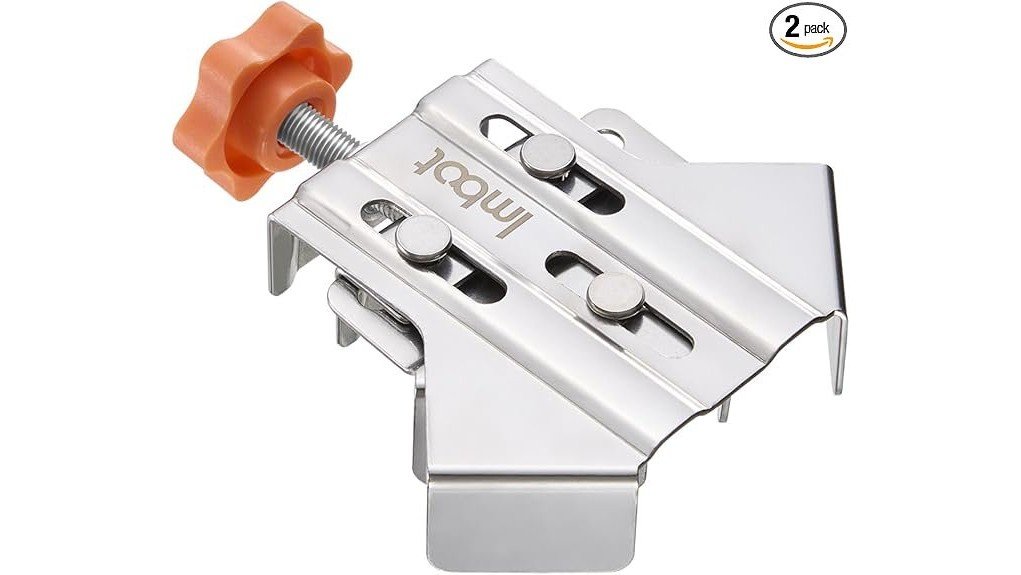
Square corners can make or break a cabinet, frame, shelf, box, or small furniture repair. The Imbot Right Angle Clamp is made to hold two pieces at a 90-degree angle while you align, glue, drill, screw, nail, or fasten the joint. Its main strengths are the adjustable swing jaw, stainless steel construction, 6 to 35 mm clamping range, and 3.94-inch jaw width. The key limitation is fit: it works best only when your material thickness and shape sit securely inside that stated range.
Quick Verdict
Rating: 8/10
Best For: DIY woodworkers, cabinet builders, furniture repair projects, picture frames, shelves, boxes, and square corner assembly.
Bottom Line: The Imbot Right Angle Clamp is a practical two-pack for repeat 90-degree corner work. Its adjustable swing jaw gives you useful flexibility, but it is not a heavy-duty fabrication fixture or a clamp for materials outside the 6 to 35 mm range.
| Specification | Detail |
|---|---|
| Brand | Imbot |
| Product type | Right angle clamp |
| Design | 90-degree corner clamp with adjustable swing jaw |
| Clamping thickness | 6 to 35 mm |
| Jaw width | 3.94 inches, 100 mm |
| Material | Stainless steel construction |
| Handle style | Rubberized handles for grip comfort |
| Jaw movement | Single-handle jaws swivel in both directions |
| Supported materials | Wood blocks, metal pipes, steel pipes, and thick glass when used carefully |
| Package count | Two clamps |
| Best use | Cabinet assembly, furniture framing, box building, picture frames, and general DIY corner alignment |
| Use limitation | Not for lifting, load support, or safety-critical holding |
| Care note | Wipe dust, glue, or metal debris from the jaws after use |
What Is the Imbot Right Angle Clamp?
The Imbot Right Angle Clamp is a corner-holding tool for projects where two pieces need to meet at a square 90-degree angle. It is most useful when you need an extra hand during assembly, especially when lining up cabinet sides, shelves, drawer frames, small boxes, picture frames, or furniture parts.
The clamp uses an adjustable swing jaw that fits clamping thicknesses from 6 to 35 mm. That range gives you more flexibility than a fixed corner jig, but you should still measure your workpiece before ordering. The 3.94-inch, 100 mm jaw width gives you a broader contact area than many compact hobby clamps.
Its stainless steel construction supports regular shop and home use, while the rubberized handles help with grip comfort during repeated tightening. The single-handle jaw design also keeps setup simple when you are working alone and need to position both pieces before fastening.
Before You Buy: Measure your material thickness first. This clamp is designed for a 6 to 35 mm clamping range, so very thin trim, oversized boards, rounded pieces, or unusually shaped workpieces may not fit securely.
Who Should Buy It?
Best For
- DIY woodworkers who need cleaner 90-degree corners for small and medium projects.
- Cabinet, shelf, box, frame, and furniture assembly where two pieces need steady alignment.
- Buyers who want a two-clamp set for holding opposite corners or repeating similar joints.
Skip If
- Your material is outside the 6 to 35 mm clamping range.
- You need a heavy-duty industrial fixture for high-force metal fabrication.
- You need a clamp for lifting, load support, or safety-critical holding.
Quality and Design Features of the Imbot Right Angle Clamp
The biggest design advantage is the combination of a stainless steel body and an adjustable swing jaw. Stainless steel helps the clamp handle regular shop use, while the swing jaw helps it adapt to different material shapes and thicknesses within the supported range.
The clamp is made to hold 90-degree corners, which matters when you want cleaner joints and fewer alignment errors. You can use it to hold pieces in position while you drill pilot holes, drive fasteners, apply glue, or check the joint before final assembly.
The 3.94-inch jaw width gives you a useful holding face for many small and medium workpieces. That wider contact area can help distribute pressure across more of the surface, although you should still avoid overtightening soft wood, thin material, painted surfaces, or glass.
Adjustable Swing Jaw and Clamping Range
The adjustable swing jaw is the feature that makes this clamp useful across different projects. It supports clamping thicknesses from 6 to 35 mm, so it can handle many common boards, blocks, pipe shapes, and repair materials when the shape fits the jaws.
This range helps when you work with materials that are not all the same thickness. You may use the clamp on a small frame one day and a cabinet corner the next. The jaw movement can also help the clamp hold uneven pieces more securely than a rigid fixed jaw in some setups.
The limitation is fit. If your workpiece is too narrow, too thick, rounded in the wrong place, or oddly shaped, the clamp may not grip evenly. Test the fit before applying glue, drilling holes, or driving fasteners.
Comfort and Ease of Use
The rubberized handles improve grip comfort during repeated tightening. That matters when you are building several frames, assembling cabinet parts, or working through a project that requires the clamp to be opened and closed many times.
The single-handle design also keeps operation simple. You can position the pieces, bring the jaws into place, and tighten the clamp without managing several separate screws. This can reduce frustration when you are working alone.
It is still a manual clamp, so it will not correct poor measuring or uneven cuts by itself. It works best when your cuts are already close to square and you use the clamp to hold the joint steady during assembly.
Pro Tip: Dry-fit your pieces first, tighten the clamp lightly, check the corner with a carpenter square or speed square, and then finish tightening. This helps prevent a clean-looking clamp setup from locking in a slightly crooked joint.
Versatility and Applications in Various Projects
The Imbot Right Angle Clamp is useful for more than basic woodworking. The article-supported material list includes wood blocks, metal pipes, steel pipes, and thick glass. That makes it a flexible tool for home repairs, shop projects, and creative DIY work when you use it within its limits.
For woodworking, it can help with cabinet boxes, drawer frames, shelves, picture frames, and furniture corners. For light metal or pipe positioning, it can help hold parts together while you mark, align, or prepare the next step. For glass, use extra care, avoid excessive pressure, and consider protective padding to reduce the risk of surface damage.
The two-clamp package also adds practical value. You can hold two corners at once, work on matching assemblies, or keep one clamp set up while adjusting another part of the project.
Material Safety and Practical Limits
This clamp is a positioning and assembly aid, not a substitute for safe work supports. Do not use it as a lifting clamp, load-bearing support, or safety device. Heavy materials should be supported by a bench, stand, helper, or proper fixture before you tighten the clamp.
When working with finished wood, painted material, metal pipe, or thick glass, inspect the contact points before clamping. If the surface can scratch, dent, or chip, add protective padding where appropriate and tighten slowly. This matters most with soft wood, painted surfaces, and glass.
Keep the clamp away from conditions that could damage the rubberized handle grip. If your project involves heat, sparks, grinding, welding, or abrasive cutting, remove the clamp from the hazard area unless the setup is safe for the tool and the workpiece.
How It Performs in Real Use
For Cabinet and Box Assembly
For cabinets, small boxes, and shelf corners, the clamp helps you hold two boards at 90 degrees while you fasten them. This is useful when you are working alone and need both hands for screws, glue, or alignment checks.
For Picture Frames and Small Wood Projects
The clamp can help keep frame corners steady while the joint sets or while you prepare fasteners. Because the jaw width is 3.94 inches, it gives a useful holding surface for many small and medium pieces. You still need accurate cuts for the cleanest results.
For Furniture Repair and Home DIY
For furniture repair, the clamp can hold parts in position while you check fit, mark holes, or tighten fasteners. It is best for controlled assembly work, not for forcing warped parts into shape.
For Light Metal, Pipe, or Glass Positioning
The clamp can hold metal pipes, steel pipes, and thick glass when the shape and thickness fit the jaws. Use it as an alignment helper, not as the only support for heavy or fragile materials. For glass, avoid overtightening and protect the contact area.
How to Use It Correctly
Start by checking that your workpiece fits the 6 to 35 mm clamping range. Place both pieces into the jaw at the angle you need, then tighten the handle gradually. Do not fully tighten the clamp until you confirm the corner is square.
Use a carpenter square or speed square before you drill, glue, or fasten the joint. A right angle clamp can hold parts in place, but it should not be your only measuring tool.
After use, wipe dust, glue, or metal debris from the jaws. Clean contact surfaces help the clamp grip more evenly and reduce the chance of marking your next project.
Common Mistakes to Avoid
Do not use the clamp to pull badly cut pieces into square. If the boards are uneven or the ends are not cut cleanly, the clamp may hold the joint in place but the finished corner can still look off.
Do not overtighten the handle on delicate surfaces. Soft wood, painted trim, and thick glass may need a thin protective pad between the jaw and the workpiece. Tighten only enough to hold alignment while you complete the next step.
Do not rely on this clamp as the only support for heavy pieces. Support the weight first, then use the clamp to help with positioning and alignment.
Pros and Cons
Pros
- Adjustable swing jaw fits clamping thicknesses from 6 to 35 mm.
- 3.94-inch, 100 mm jaw width gives a useful holding surface for corner assembly.
- Stainless steel construction supports durability for regular DIY and woodworking use.
- Rubberized handles improve comfort during repeated tightening.
- Two-clamp package helps when holding multiple corners or repeated assemblies.
Cons
- Not suitable for materials outside the 6 to 35 mm clamping range.
- Not a replacement for a full assembly jig, bench vise, or heavy-duty fabrication fixture.
- Fragile, painted, or finished surfaces may need padding to prevent marks.
Is It Worth the Price?
The Imbot Right Angle Clamp is worth considering if you often build square corners and want a simple tool that can hold parts while you work. Because the package includes two clamps, it offers better practical value than a single clamp when you need to hold more than one corner.
It makes the most sense for buyers who care about speed, repeatability, and cleaner alignment in woodworking or general DIY tasks. The stainless steel build, rubberized handles, and swing jaw design add value for regular use.
It is not the best fit if you only need a clamp once, if your material is outside the supported range, or if you need a heavy-duty industrial fixture. For everyday corner assembly, it is a strong value for the price if the size range matches your projects.
How It Compares to Alternatives
Compared with a basic C-clamp, the Imbot Right Angle Clamp is easier to use for 90-degree corner alignment because it is shaped for square assembly. Compared with a bar clamp, it gives better corner control but less reach across wide panels.
A fixed corner clamp may be simpler for one repeated material size, while this Imbot clamp is better if you need adjustability across different thicknesses. A bench vise or larger jig may be better for heavy holding force. The best choice depends on whether your main need is corner accuracy, clamping span, or strong work support.
Frequently Asked Questions
What materials can the Imbot Right Angle Clamp hold?
It can hold wood blocks, metal pipes, steel pipes, and thick glass when the material fits the jaws. For fragile or finished surfaces, use care and consider padding the contact points.
Is it adjustable for different wood thicknesses?
Yes. The adjustable swing jaw supports clamping thicknesses from 6 to 35 mm, which covers many common woodworking materials. Measure your board or workpiece before buying to avoid fit issues.
How many clamps are included?
The package includes two clamps. That is helpful when you need to hold two corners at the same time or set up matching assemblies during a project.
Can this clamp be used for metalworking projects?
It can help position metal pipes and steel pipes when the material fits the clamping range. Treat it as an alignment tool, not as a heavy-duty industrial fixture or load-bearing clamp.
Will it make every corner perfectly square?
It helps hold pieces at a 90-degree angle, but your cuts and setup still matter. Check the joint with a square before drilling, gluing, or fastening.
Can it damage wood or glass?
Any clamp can mark soft, finished, or fragile surfaces if overtightened. Tighten slowly and use protective padding when working with delicate wood finishes or glass.
What is the warranty period for the Imbot Right Angle Clamp?
The available article details do not confirm an exact warranty period. Check the current Amazon listing or seller information before purchase if warranty coverage is a deciding factor.
Who should skip this clamp?
Skip it if your material is outside the 6 to 35 mm range or if you need a clamp for heavy structural holding. It is best for alignment and assembly, not lifting or load support.
The Bottom Line
The Imbot Right Angle Clamp is a good buy for DIY woodworkers, cabinet builders, and home repair users who need a simple way to hold square 90-degree corners. Its adjustable 6 to 35 mm swing jaw, 3.94-inch jaw width, stainless steel construction, and two-clamp package make it practical for many small and medium assembly jobs. Skip it if your material does not fit the stated range or if you need a heavy-duty fixture for structural holding.