The 7/8-inch arbor hole is essential for securely attaching angle grinder discs. It guarantees compatibility with major brands like Dewalt and Milwaukee while providing safe operation. Always check your grinder’s specifications and the RPM ratings of the cutting wheels. This assures you’re using the right size for peak performance and safety. For best results and to avoid common mistakes, you’ll want to understand more about selecting the right arbor hole size and maintenance practices.
Understanding the 7/8-Inch Arbor Hole
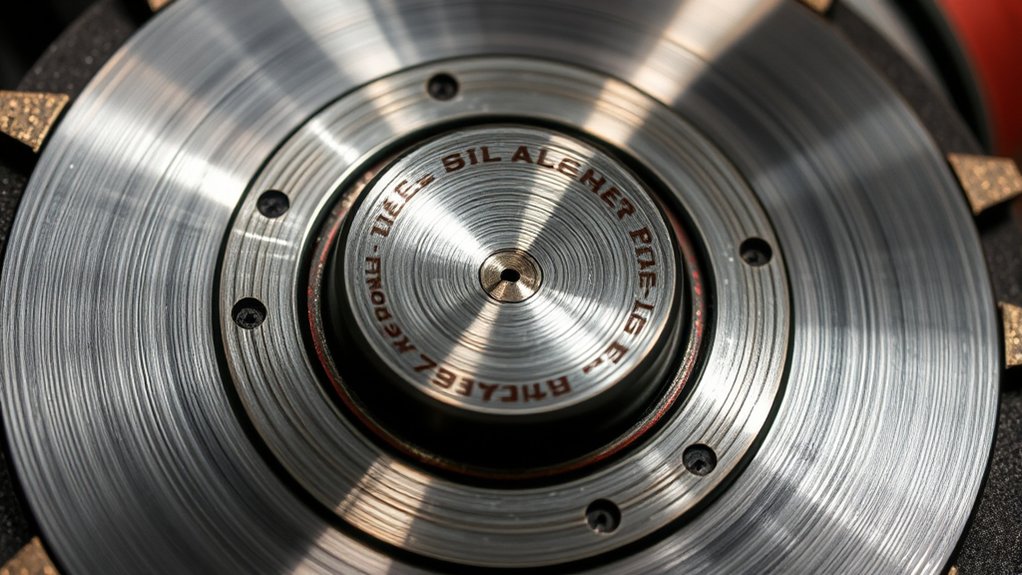
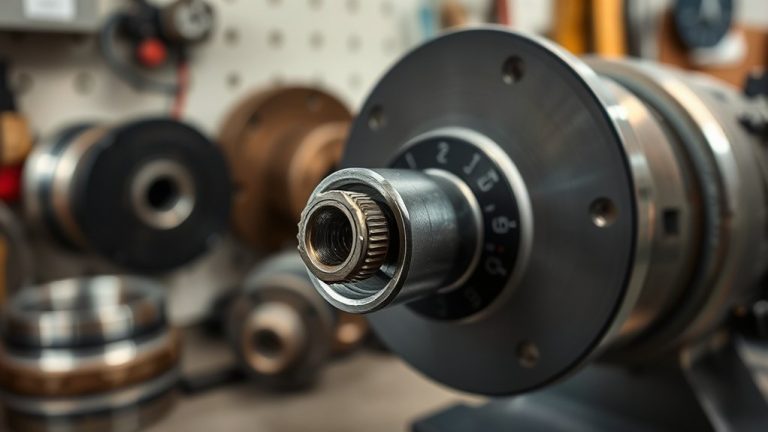
When working with angle grinders, understanding the 7/8-inch arbor hole is essential for guaranteeing compatibility and safe operation. This arbor hole size is a common standard for many cutting wheels, allowing you to use a wide range of discs without worry. Matching a disc with a 7/8-inch arbor hole to your grinder helps maintain peak performance and safety during operation.
Discs designed with a shouldered structure provide secure mounting on compatible grinders, reducing the risk of slippage or damage. If you use cutting wheels that don’t match the 7/8-inch arbor size, you could face inefficiency, excessive wear, or even potential tool damage. Consequently, always check the arbor hole sizes before purchasing any cutting wheels. By taking this precaution, you guarantee proper fit and function, empowering your work with precision and confidence.
How to Choose the Right Arbor Hole Size for Your Grinder
Choosing the right arbor hole size for your angle grinder is vital for ensuring a secure fit and ideal performance. Most grinders use a standard 7/8-inch arbor hole, but compatibility with various models may also include a 5/8-11 size. Always verify that the disc’s arbor hole matches your grinder’s spindle to avoid operational issues and enhance safety.
Understanding Arbor Hole Sizes
Understanding arbor hole sizes is vital for guaranteeing ideal performance and safety when using an angle grinder. The arbor hole size refers to the inner diameter of the disc, which must match your grinder’s spindle for optimal functionality. A common size for angle grinders is 7/8-inch, as it accommodates various compatible discs. It’s important to confirm that the disc’s arbor hole size aligns with your grinder’s specifications to avoid inefficiency or potential damage during operation. Some discs come with a reversible collar, allowing flexibility for different hole sizes and tools. Always verify that the disc is securely mounted with the correct arbor hole facing the spindle, maintaining stability and control while cutting. Your safety and success depend on it.
Compatibility With Grinder Models
Selecting the right arbor hole size for your angle grinder is essential for guaranteeing compatibility and ideal performance. To choose the correct size, follow these steps:
- Check your grinder’s specifications – Look for the compatible arbor hole sizes listed.
- Prefer 7/8-inch arbor holes – This size fits most major brands like Dewalt and Milwaukee.
- Assess the disc’s RPM rating – Verify it matches your grinder’s specifications for safe operation.
- Consider using a reversible collar – This feature allows adaptability for various arbor sizes.
Understanding Arbor Hole Sizes and Compatibility
When it comes to using angle grinder discs, knowing the arbor hole size is essential for ensuring a secure fit on the grinder’s spindle. The arbor hole size, which refers to the diameter of the hole in the center of a cutting wheel, must match your angle grinder’s specifications. A 7/8-inch arbor hole is the standard for many discs, ensuring compatibility with most grinders on the market.
Selecting the right disc means checking that the arbor hole size aligns with your grinder’s spindle to avoid inefficiencies or potential damage during operation. Many cutting wheels incorporate a shouldered inner disc designed for 7/8-inch arbors, enhancing stability and security during use. Remember, incorrect arbor hole sizing can lead to improper mounting, resulting in safety hazards or equipment failure. Prioritizing compatibility not only optimizes performance but also safeguards your workspace.
Why RPM Ratings Matter for Safety
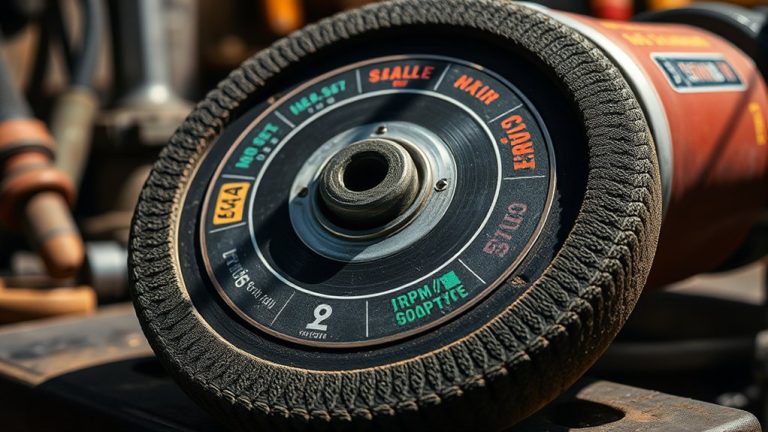
Verifying your angle grinder disc’s RPM rating aligns with your grinder’s speed is essential for safe operation. RPM ratings indicate the maximum rotational speed a cutting wheel can handle. Exceeding this limit can lead to catastrophic wheel failure and serious injury.
To maintain safety, remember to:
- Check the RPM rating on the cutting wheel’s label before use.
- Match the RPM rating with your grinder’s speed to prevent accidents.
- Avoid using wheels with lower RPM ratings than your grinder to reduce wear and overheating.
- Regularly verify compatibility of discs and grinders to guarantee workplace safety.
Taking these precautions not only enhances your operational efficiency but also liberates you from the fear of equipment damage and personal injury. Prioritize RPM ratings, and you’ll guarantee a safer, more productive experience with your angle grinder.
Tips for Ensuring a Secure Arbor Hole Fit
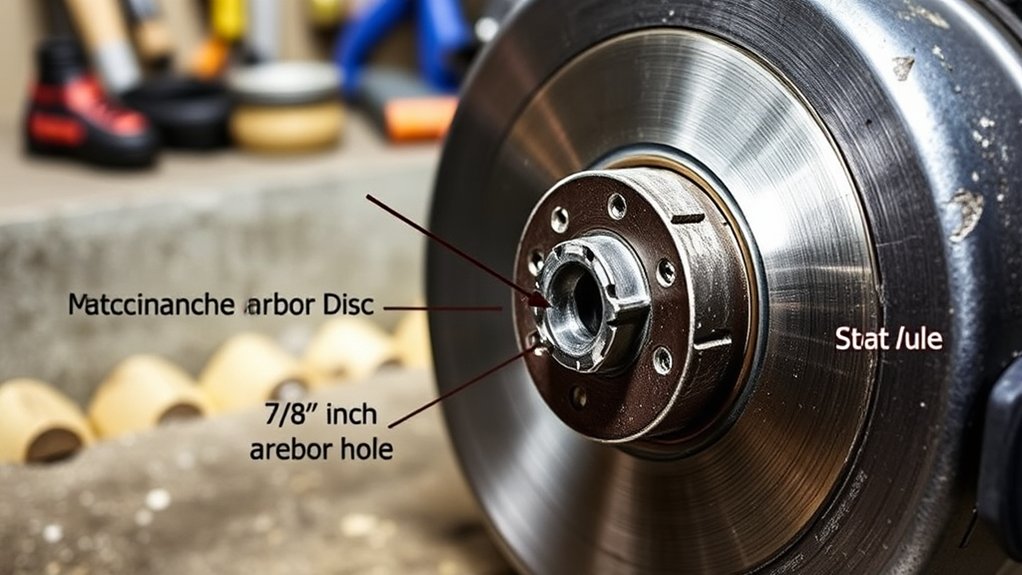
To guarantee a secure fit for your angle grinder discs, start by verifying that the arbor hole size matches your grinder’s spindle. Regularly inspect the arbor hole for any signs of wear or damage, as a compromised fit can lead to unsafe operation. Proper compatibility and condition are key to maintaining efficiency and safety during your cutting tasks.
Verify Disc Compatibility Size
A secure fit between the angle grinder disc and the arbor hole is essential for effective operation. To guarantee compatibility with your 7/8-inch arbor hole, follow these steps:
- Check the Disc’s Shouldering: Confirm the inner disc is shouldered for a proper fit on compatible grinders.
- Match RPM Ratings: Verify the disc’s RPM rating aligns with your angle grinder’s maximum speed to maintain safety.
- Inspect for Dewalt Compatibility: If using specific discs, confirm they fit a Dewalt 5/8-11 arbor.
- Use a Reversible Collar: If available, utilize one to accommodate different hole sizes and enhance versatility.
Inspect Arbor Hole Condition
Inspecting the condition of the arbor hole is essential for achieving a secure fit with your angle grinder discs. Always check for any signs of wear, damage, or debris before mounting a disc. Verify the inner diameter of the disc’s arbor hole matches the grinder’s arbor, typically a 7/8-inch size. Look for a shouldered design in the arbor hole, as this feature stabilizes the disc during cutting and prevents wobbling. If you’re using backing pads, confirm their compatibility with the arbor hole size to maintain secure attachment. Regularly clean the arbor hole and grinder spindle to eliminate build-up, verifying a snug fit and enhancing safety during operation. This diligence guarantees peak performance and a liberating experience in your cutting tasks.
Avoid These Common Arbor Hole Sizing Mistakes
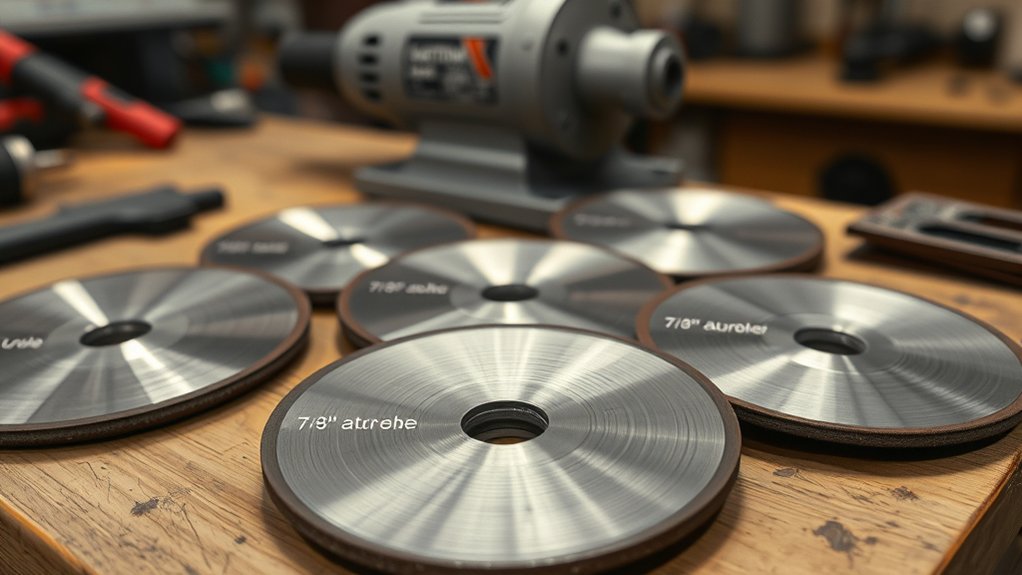
One common mistake when using angle grinder discs is selecting the wrong arbor hole size, which can lead to operational inefficiencies and potential damage. To avoid these pitfalls, keep the following in mind:
- Ensure the disc is shouldered for a 7/8-inch arbor hole to guarantee a proper fit and stability during operation.
- Verify disc diameter and thickness are compatible with your angle grinder’s specifications to prevent safety hazards.
- Inspect the arbor hole for any signs of wear or damage; a compromised hole can severely affect performance and safety.
- Select the correct side when using reversible collar accessories to accommodate the 7/8-inch hole for ideal functionality.
How Different Disc Types Impact Cutting Performance
When selecting an angle grinder disc, understanding how different types impact cutting performance is vital for achieving ideal results. The choice between a cut-off wheel and a grinding wheel can greatly affect your efficiency. Cut-off wheels are typically thinner, allowing for precise cuts on various materials, while grinding wheels are thicker, suitable for shaping and beveling.
Moreover, the type of abrasive grain plays an important role; aluminum oxide offers versatility, whereas zirconia alumina provides durability for tougher jobs. Selecting the appropriate bond type, such as resinoid bonds, enhances cutting performance and guarantees longevity.
Your choice of disc thickness should align with the material you’re cutting—thicker wheels for steel and specialized blades for aluminum help minimize glazing and burr formation. By matching the right disc to your specific application, you’ll guarantee a cleaner, more effective cut, enhancing your overall workflow and results.
Best Practices for Maintaining Your Angle Grinder and Discs
To keep your angle grinder and discs performing at their best, regular maintenance is essential. By following these best practices, you can guarantee peak performance and longevity:
Regular maintenance is crucial for optimal angle grinder and disc performance, ensuring longevity and peak efficiency.
- Inspect for Damage: Regularly check your grinding wheel and discs for cracks or chips. Replace any damaged parts immediately.
- Clean the Grinder: Keep the motor and vents free from dust and debris to prevent overheating and maintain efficiency.
- Match Arbor Sizes: Confirm the arbor hole size of your discs matches the grinder’s spindle—typically 7/8 inches—to avoid accidents.
- Lubricate Moving Parts: Follow the manufacturer’s recommendations for lubrication to ensure smooth operation and extend the grinder’s lifespan.
Additionally, store your angle grinder discs in a cool, dry place, away from sunlight and extreme temperatures, to prevent degradation of the abrasive material. By adhering to these practices, you’ll enhance your tool’s performance and safety.
Frequently Asked Questions
What Is the Most Common Arbor Size for an Angle Grinder?
The most common arbor size for an angle grinder is 5/8-11 inches. This size guarantees broad compatibility with various grinding and cutting wheels, enhancing your tool’s efficiency and performance during operation. Always verify compatibility before use.
Can You Use a 7/8 Arbor on a 5/8 Grinder?
No, you can’t use a 7/8 arbor on a 5/8 grinder without an adapter. Always check your grinder specifications for arbor compatibility to avoid safety hazards and guarantee peak performance during your projects.
What Size Hole on an Angle Grinder?
The hole size on an angle grinder typically ranges from 5/8 inch to 7/8 inch. For ideal angle grinder compatibility, make sure your disc size selection matches your grinder’s spindle to enhance safety and performance.
What Does 5 8 11 Arbor Mean?
“Measure twice, cut once.” The 5/8-11 arbor means your disc has a 5/8 inch hole with 11 threads per inch, ensuring proper arbor specifications and thread compatibility for a secure, efficient grinding experience.
Conclusion
In the world of angle grinding, selecting the right 7/8-inch arbor hole is like choosing the key to a finely-tuned engine. It guarantees your discs fit securely, maximizing performance and safety. By understanding compatibility and RPM ratings, you not only enhance your cutting experience but also prevent mishaps. Remember, a well-fitted disc is your shield against inefficiency and danger. Keep your tools well-maintained, and you’ll access the full potential of your grinding tasks.