As an Amazon Associate I earn from qualifying purchases. Buying through these links costs you nothing extra.
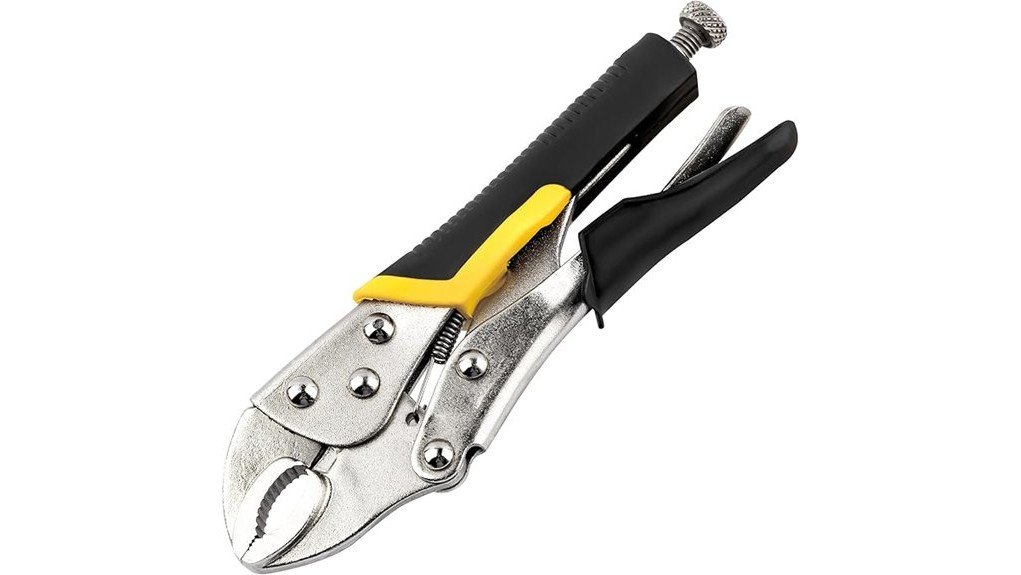
These 7-inch locking pliers are a general-purpose locking tool with alloy steel, nickel-plated jaws, saw-toothed teeth, rubber-covered handles and a one-handed release trigger, per the listing. They are a handy extra hand for holding small work, twisting wire and tacking sheet or tube. They are not a substitute for dedicated welding clamps when heat and spatter are heavy, and the rubber grips need care.
7-inch locking pliers: quick specs at a glance
| Item | Detail |
|---|---|
| Product | 7-inch locking pliers |
| Material | Alloy steel jaws with nickel-plated finish, per the listing |
| Jaw | Saw-toothed teeth for grip |
| Handles | Rubber-covered, anti-slip |
| Release | One-handed trigger lever |
| Adjustment | Adjusting screw sets the jaw opening |
Specs are from the seller listing, which does not give a reliable jaw-opening figure. Check the photos and description for capacity.
Check the current price on Amazon →
What it is and who it suits
Locking pliers clamp on with a toggle-lock action, so they hold without hand pressure. At seven inches they are small enough to work in tight spots and big enough to hold bolts, small tube, sheet edges and wire.
For welders, they are mostly for holding parts in position for tacking, clamping a piece to a rail or table, and gripping small parts that are too hot to hold. They fit hobby and DIY users who want a general-purpose tool rather than a specialist.
How to check it fits your work
- Jaw shape: curved jaws suit round stock; flat or C-clamp jaws suit sheet. Check the listing photos.
- Capacity: measure your stock and compare with the stated jaw size, as not all 7-inch models open the same width.
- Adjusting screw: make sure it turns smoothly and holds its setting.
- Handle covering: rubber handles are comfortable but can melt near hot work.
- Release: test the trigger on arrival, as release quality can vary on low-cost pliers.
Check the current price on Amazon →
Pros and limitations
Pros
- Locking action frees both hands.
- Quick-release trigger for fast repositioning.
- Nickel finish helps resist rust.
- Serrated jaws grip round or rough surfaces.
Limitations
- Serrated teeth can mar finished surfaces.
- Small size limits capacity and reach.
- Rubber grips are not heat-proof, so don’t leave them near a weld.
- Mechanism quality varies, so check the lock and release when it arrives.
Using locking pliers for welding
- Set the jaw opening so the pliers snap closed with firm hand pressure.
- Clamp on clean metal away from the weld.
- Tack, then check alignment before final welding.
- Open the pliers with the trigger after the part cools slightly, and clear spatter from the jaws.
Don’t use pliers as a ground clamp, and don’t hammer on them. Wear gloves, since the metal and teeth stay hot. Replace pliers with a weak lock or rounded jaws.
Alternatives and related guides
- locking pliers for welding: an overview of locking pliers for welders
- adjustable locking pliers: another adjustable style to compare
- Olympia 9-inch locking pliers: a brand-name, larger pliers option
- VCT 3-piece locking clamp set: welding-style locking clamps
Frequently Asked Questions
What are locking pliers used for in welding?
They hold parts in position for tacking, clamp thin metal to a table or rail, and grip small pieces. They free both hands for the torch. For heavy fixturing or large parts, welding clamps and F-clamps are usually better.
Can I weld right next to locking pliers?
You can, but spatter will stick to the jaws and may damage rubber handles. Keep the handles away from the heat, wipe or brush off spatter, and let hot pliers cool before releasing them or handling the grips.
What size locking pliers do I need?
Seven inches is a good general size for small stock and wire. Larger 10-inch pliers and clamp-style versions give more reach and force. Pick the jaw shape for your material and check the stated opening against your workpiece.
Why won’t my locking pliers release?
Dirt, spatter or a poorly adjusted screw can jam the mechanism. Open the adjusting screw a turn, clean the pivot and lock, and add a drop of oil. If the trigger still sticks or slips, replace the tool.
Final verdict
These 7-inch locking pliers are a versatile grip tool for holding small work and tacks, with a nickel finish and quick release. For heavy welding fixtures, add dedicated clamps. Prices change, so check the current listing.
Check the current price on Amazon →