As an Amazon Associate I earn from qualifying purchases. Buying through these links costs you nothing extra.
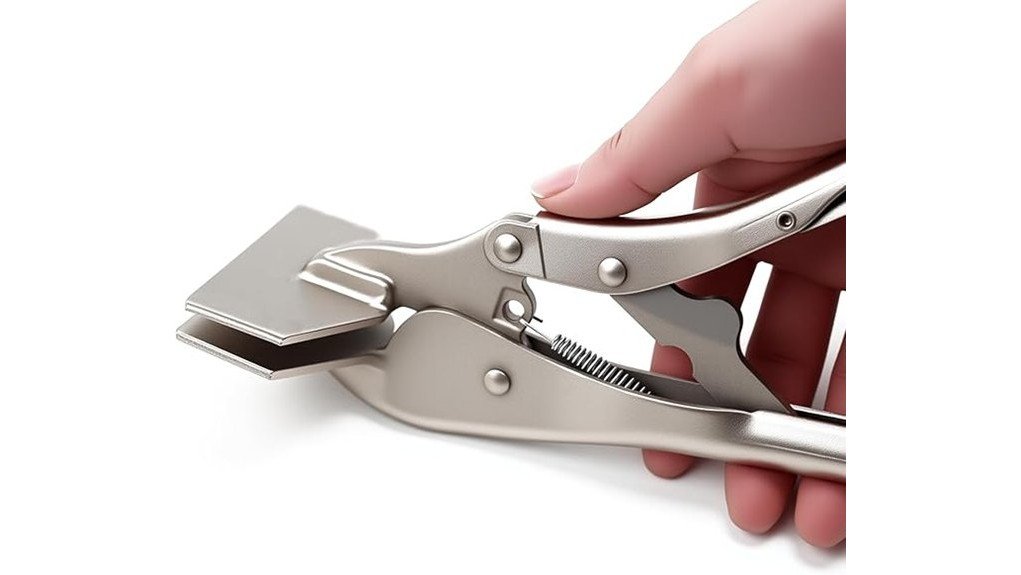
Dtacke adjustable locking pliers come in two sizes, 8 in and 10 in, and are sold for gripping, clamping and holding plate while you work. This Dtacke locking pliers review is based on the Amazon listing, not hands-on testing, and focuses on which size suits which job.
They are worth considering as a general-purpose clamping aid at the bench. Skip them if you need a welding-specific clamp with a purpose-built jaw, such as a sheet-metal clamp or a magnetic ground clamp.
Quick specs at a glance
| Item | Details |
|---|---|
| Product type | Adjustable locking pliers |
| 8 in size (per listing) | About 210 mm overall length, clamp head about 78 mm |
| 10 in size (per listing) | About 250 mm overall length, clamp head about 97 mm |
| Material (per listing) | Alloy steel body with a plated finish and cushioned handles |
| Typical uses (per listing) | Clamping and holding plates, bending, general gripping |
Jaw profile (curved, straight or long-nose) is not clear from the listing text. Check the listing images before ordering.
What these pliers are and who they suit
Locking pliers use an over-center toggle to lock the jaws at a set gap, so they hold without your hand squeezing. An adjustment screw in the handle sets the gap and the clamping force.
For welders, the common job is holding two pieces of plate in alignment for tack welding, gripping a hot workpiece (with gloves) and holding small parts while you grind. They suit hobbyists and shop users who want a quick clamp that works one-handed.
Dtacke locking pliers: 8 inch or 10 inch, which to choose
| Size | Better for | Trade-off |
|---|---|---|
| 8 in (about 210 mm) | Tight spaces, small tubes, holding small parts, thin sheet tabs | Shorter handle means less leverage |
| 10 in (about 250 mm) | Larger plate, more leverage, reaching further from the edge | Bulkier; harder to place near the joint |
If you only buy one, pick the size that matches your typical stock. Many users end up with both.
How to check fit and compatibility
- Jaw shape: a curved jaw grips round tube; a flat or sheet-metal jaw holds plate without marking. Check images for the jaw profile.
- Opening: the listing quotes clamp head dimensions. Compare to the thickness of your stock.
- Finish: plated finishes resist rust but burn off near heat. Do not expect the plating to survive hot work.
- Handle covers: rubber or plastic grips can melt near hot metal. Handle hot work with welding gloves.
- Quantity and sizes: confirm whether the listing is one pair per order and which size you are selecting.
Pros and limitations
Pros
- One-handed operation and positive locking.
- Two sizes to match bench or fieldwork.
- Useful for holding awkward shapes where a C-clamp does not fit.
Limitations
- Clamping force is limited by the toggle and handle length.
- Gap needs readjusting for different thicknesses.
- Jaws can slip on oily, scaled or very hard surfaces.
- Not a ground clamp, and heat can damage handle grips.
Using locking pliers safely at the welding table
- Set the gap with the adjustment screw so the pliers snap closed with firm hand pressure.
- Place the jaws on clean metal, away from the weld path.
- Check the lock is fully over-center. If the pliers loosen when tapped, readjust or retire them.
- Release only when the work has cooled; use gloves if you must move hot work.
- Oil the pivot and screw lightly and keep spatter off the threads.
Alternatives and related guides
- Inch locking pliers review – another locking pliers option to compare
- Olympia 9 in locking pliers review – a branded 9 in alternative
- Locking pliers essentials review – a general look at locking pliers use in welding
- VCT 3-piece locking welding clamp review – welding-style locking clamps for sheet and plate
Frequently Asked Questions
Are locking pliers good for welding?
They are handy for holding parts for tack welds and for gripping small items. For repeated sheet-metal fixturing or ground connections, a purpose-built welding clamp is usually better. Keep the pliers out of heavy spatter.
What is the difference between the 8 inch and 10 inch?
Per the listing, the 8 in is about 210 mm long with a 78 mm head, and the 10 in is about 250 mm with a 97 mm head. The longer one gives more leverage and reach; the shorter one is easier to use in tight spots.
Can I use them to hold hot metal?
Only with welding gloves and care. Plating and handle covers can be damaged by high heat. If handles feel hot, put the work down, because grips may soften near hot steel.
How do I adjust the clamping force?
Open the pliers, turn the screw at the end of the handle in or out, and close them. Tighten the screw to increase force. Stop when the pliers lock firmly with moderate hand pressure.
Final verdict
The Dtacke pliers are a practical general clamping tool in two sizes. Pick 8 in for tight work and 10 in for more reach, check the jaw profile, and keep them clear of the arc.