Disclosure: As an Amazon Associate, we earn from qualifying purchases. If you click a link on this page and make a purchase, we may receive a small commission at no extra cost to you.
When you are welding, a standard pair of pliers can slow you down. You may need one tool to trim wire, another to clean the nozzle, and another to pull or adjust hot parts near the gun. The IRWIN VISE-GRIP MIG Pliers, 8-inch model 1873303, are made to combine several of those small welding tasks into one hand tool. This review helps you decide if they are a smart buy for MIG cleanup, wire handling, and light welding-gun maintenance, or if you need a heavier shop setup instead.
Quick Verdict
Rating: 8.2/10
Best For: MIG welders, hobby fabricators, and maintenance users who want one compact tool for wire trimming, nozzle cleaning, spatter removal, and small adjustments.
Bottom Line: The IRWIN VISE-GRIP MIG Pliers are worth considering if you want a single 8-inch welding plier with a spatter-removal nose, induction-hardened cutting edge, multiple jaws, dipped grips, and an integrated hammer. The tradeoff is that they are still a hand tool, not a full replacement for dedicated clamps, nozzle tools, or heavier welding-gun repair tools.
| Specification | Detail |
|---|---|
| Brand | IRWIN VISE-GRIP |
| Model | 1873303 |
| Product type | MIG welding pliers |
| Size | 8 inches |
| Material | Steel body with dipped grips |
| Cutting edge | Induction-hardened cutting edge |
| Key functions | Wire cutting, wire drawing, tip and nozzle handling, spatter removal, and light tapping with integrated hammer |
| Grip type | Dipped ergonomic grips |
| Mechanism | Spring-loaded handle action |
| Best use | MIG welding setup, cleanup, and light welding-gun maintenance |
| Manufacturing note | Article-supported detail lists manufacturing origin as China |
What Are the IRWIN VISE-GRIP MIG Pliers?
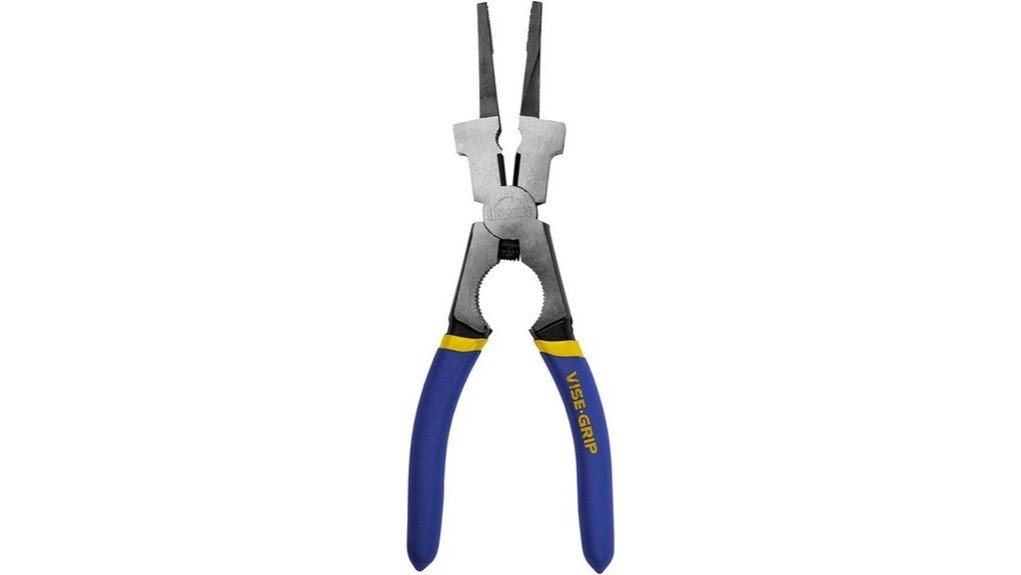
The IRWIN VISE-GRIP MIG Pliers are an 8-inch multi-function hand tool made for common MIG welding tasks. Instead of using separate tools for trimming wire, pulling wire, cleaning spatter, and adjusting tips or nozzles, you get several welding-focused functions in one compact pair of pliers.
The tool’s main feature is its welding-specific jaw and nose design. The specially shaped nose helps remove welding spatter from the nozzle area, while the multiple jaws help you grip, pull, and manage wire, tips, and nozzles. The integrated hammer adds a small tapping surface for light maintenance, but it should not be treated like a full-size shop hammer.
For buyers, the appeal is simple: fewer tool changes during setup and cleanup. If you weld often enough to get tired of switching between basic pliers, cutters, and small hand tools, this design can make your bench or welding cart feel more organized.
Before You Buy: These are MIG welding pliers, not locking pliers and not a complete welding-gun repair kit. Buy them for wire trimming, spatter cleanup, nozzle work, and light adjustments, not for clamping workpieces or heavy hammering.
Who Should Buy It?
Best For
- MIG welders who want one tool for trimming wire, cleaning spatter, and handling tips or nozzles.
- Hobby fabricators who need a practical welding-cart tool without buying several separate hand tools.
- Maintenance users who value an 8-inch plier with dipped grips and a spring-loaded action for repeated tasks.
Skip If
- You need locking pliers for holding metal parts in place while welding.
- You want a heavy hammer, dedicated nozzle reamer, or full welding-gun service kit.
- You do not use MIG welding tools often enough to benefit from the specialized jaw design.
Design and Build Quality
The 8-inch size gives you a useful balance between control and leverage. It is long enough for common wire and nozzle tasks, but it should still fit easily in a welding-cart drawer, tool pouch, or workbench tray.
The steel body is the important durability point. Welding pliers live near heat, wire, spatter, grime, and sharp edges, so a weak tool can wear quickly. The IRWIN model uses an induction-hardened cutting edge, which is designed to hold sharpness longer than a softer cutter during repeated wire trimming.
The dipped grips are simple but useful. They give your hand a more comfortable hold than bare steel, especially when you are opening and closing the pliers many times during a project. They do not remove the need for welding gloves, but they do make the tool easier to manage during routine bench work.
Wire Cutting and Wire Handling
For MIG work, wire trimming is one of the most common tasks. The induction-hardened cutting edge is the key feature here because it gives the pliers a dedicated cutting surface for welding wire. That matters when you are trimming wire stick-out before a weld or cleaning up wire ends after a stop.
The multiple jaws also make the tool more useful than basic cutters. You can draw out wire, grip small welding-gun parts, and handle tips or nozzles without reaching for a separate pair of general-purpose pliers. This saves time when you are moving between setup, welding, and cleanup.
The limitation is that wire size and condition still matter. Dirty wire, very hard wire, or misuse on materials outside normal welding tasks can dull cutters faster. Use the tool for its intended MIG jobs and keep a separate heavy cutter for tougher shop work.
Spatter Removal and Nozzle Work
The specially designed nose is one of the main reasons to buy MIG pliers instead of using regular pliers. Welding spatter can build up around the nozzle and affect how smoothly your gun performs. A nose shaped for spatter removal helps you clean that area with better control.
The pliers also help with tip and nozzle handling. When parts are warm, dirty, or hard to grip, the jaw shape gives you more control than your fingers. You should still let parts cool when needed and follow your welder’s manual, but the pliers can make common adjustments easier.
This tool is best for routine cleanup, not aggressive scraping on delicate parts. If your nozzle is badly clogged, worn, or damaged, replacement may be safer than forcing it with pliers.
Comfort and Ease of Use
The spring-loaded mechanism helps the handles open after each squeeze. That small feature can make a real difference when you are trimming several wire ends, cleaning repeated weld starts, or making many small adjustments in one session.
The dipped ergonomic grips help reduce hand fatigue during longer jobs. They give your fingers a softer contact point and make the tool less harsh than bare metal handles. For hobby welders, this can make the pliers more pleasant to use. For frequent users, it can also make repeated tasks feel less tiring.
The 8-inch length is also easy to control. Larger tools can feel clumsy around nozzles and wire tips, while smaller tools may not give enough leverage. This size sits in a practical middle range for most light and moderate MIG tasks.
Pro Tip: Keep these pliers on your welding cart and wipe the nose, cutter, and pivot after each session. A clean pivot and cutter help the spring-loaded action feel smoother and keep the tool ready for the next weld.
Integrated Hammer and Light Maintenance
The integrated hammer is useful for light tapping around welding-gun maintenance tasks. It can help when you need a small tap without picking up a separate hammer. This makes sense for quick bench work where space is limited.
That said, the hammer feature should be used with restraint. The pliers are not built to replace a dedicated chipping hammer, ball-peen hammer, or heavy shop hammer. If a part needs hard striking, use the correct tool for the job.
For most users, the value of the integrated hammer is convenience. It gives you one more small function in the same tool, which is helpful when you are working quickly through setup and cleanup steps.
How It Performs in Real Use
For Daily MIG Setup
During setup, these pliers are useful for trimming wire stick-out and checking the gun end before welding. The cutter, nose, and jaw layout keep the most common small tasks in one place, which can reduce clutter on your workbench.
For Spatter Cleanup
After welding, the shaped nose helps remove spatter from the nozzle area. This is one of the best reasons to choose a dedicated MIG plier instead of a basic shop plier. You get better access to the part of the gun that often needs quick cleaning.
For Tip and Nozzle Handling
The multiple jaws help grip tips and nozzles during routine maintenance. This is helpful when parts are dirty or difficult to hold by hand. Let hot parts cool when needed and avoid twisting parts with more force than the gun manufacturer recommends.
For Long-Term Shop Use
Long-term value depends on how you treat the cutting edge, pivot, and grips. If you use the pliers only for MIG tasks and clean them after use, they should hold up better than if you use them as an all-purpose pry tool, clamp, or heavy hammer.
How to Use It Correctly
Use the cutter for welding wire, not random hard shop materials. Use the nose for spatter around the nozzle area, not for digging into parts that should be replaced. Use the jaws for pulling wire and handling small welding-gun parts, but avoid crushing threads or deforming nozzles.
For better results, keep the pliers close to your welder, not buried in a general toolbox. That makes it more likely you will use the right tool during setup and cleanup. After each job, wipe off debris and check that the pivot opens and closes smoothly.
Always follow your welder’s manual and basic shop safety practices. Wear proper eye protection and gloves, let hot parts cool when needed, and disconnect equipment before doing maintenance that requires it.
Tool Safety and Materials
The article-supported material detail is a steel body with dipped grips. Steel gives the pliers the strength needed for cutting, gripping, and light tapping. The dipped grips improve comfort, but they are not a substitute for welding gloves or heat-safe handling.
Because this tool is used around welding equipment, heat and debris matter. Do not grab freshly heated parts with bare hands just because the pliers have coated grips. Also avoid using the pliers on live electrical parts or powered equipment unless the tool and work setup are rated and prepared for that task.
Check the cutting edge, nose, and pivot from time to time. If the cutter chips, the jaws bend, or the spring action becomes unsafe, stop using the tool until it can be repaired or replaced.
Pros and Cons
Pros
- 8-inch size gives a good mix of control, reach, and storage convenience.
- Induction-hardened cutting edge is built for repeated wire trimming.
- Special nose helps remove welding spatter around the nozzle area.
- Multiple jaws support wire drawing, tip handling, and nozzle work.
- Dipped grips and spring-loaded action improve comfort during repeated use.
Cons
- Not a replacement for locking pliers or clamps when holding workpieces.
- Integrated hammer is only suited for light tapping, not heavy striking.
- Specialized MIG design may be unnecessary if you weld only occasionally.
Is It Worth the Price?
The IRWIN VISE-GRIP MIG Pliers are a strong value for the price if you weld often enough to use the specialized features. You get wire cutting, spatter removal, wire handling, nozzle work, light tapping, dipped grips, and a spring-loaded action in one compact tool.
The most value goes to buyers who want a dedicated welding-cart tool. If you already switch between cutters, general pliers, and small tools during MIG cleanup, this design can save time and reduce clutter.
It is not the best fit if you only need basic pliers for household tasks. The value comes from the MIG-specific design, so occasional non-welding users may not benefit enough from the extra functions.
How It Compares to Alternatives
Compared with basic shop pliers, the IRWIN VISE-GRIP MIG Pliers make more sense for welding because the nose, jaws, cutter, and hammer are aimed at MIG tasks. Basic pliers can grip and pull, but they are not shaped as well for nozzle cleanup or wire-management work.
Compared with a full set of dedicated welding tools, these pliers are more compact and convenient. A separate nozzle tool, cutter, hammer, and specialty plier may offer more control for certain jobs, but this IRWIN tool is better for buyers who want one practical tool for common MIG tasks.
Frequently Asked Questions
Are the IRWIN VISE-GRIP MIG Pliers good for beginners?
Yes, they make sense for beginners who are learning MIG setup and cleanup. The all-in-one design helps you trim wire, clean spatter, and handle small gun parts without reaching for several tools.
Can these pliers replace locking pliers?
No. These are MIG welding pliers, not locking pliers. Use them for cutting wire, cleaning spatter, pulling wire, and handling tips or nozzles, not for clamping workpieces in place.
What does the specially designed nose do?
The nose is shaped to help remove welding spatter from the nozzle area. This helps keep the gun end cleaner during routine MIG welding maintenance.
Are the grips heat resistant?
The article supports dipped ergonomic grips for comfort, but it does not verify a heat-resistance rating. Use welding gloves and avoid handling hot parts directly unless your setup and safety instructions allow it.
Can I use these pliers for jobs besides welding?
You can use them for some light gripping, cutting, and pulling tasks, but their shape is made for MIG welding. For general repairs, a standard plier, cutter, hammer, or clamp may be a better match.
How should I maintain the pliers?
Wipe off spatter, dust, and debris after use. Keep the pivot clean, add a light rust-prevention lubricant when needed, and avoid using the cutting edge on materials it was not designed to cut.
Who should skip these MIG pliers?
Skip them if you do not MIG weld or if you need a dedicated clamp, heavy hammer, or full welding-gun service kit. They are most useful when you regularly handle wire, nozzles, tips, and spatter cleanup.
The Bottom Line
The IRWIN VISE-GRIP MIG Pliers are a smart buy for MIG welders who want an 8-inch tool for wire trimming, spatter cleanup, nozzle handling, and light maintenance. The main strength is the multi-function welding design, while the main limitation is that it does not replace locking pliers, clamps, or heavier shop tools. If you want one practical plier to keep beside your welder, this model earns a recommended-with-caveats verdict.