Disclosure: As an Amazon Associate, we earn from qualifying purchases. If you click a link on this page and make a purchase, we may receive a small commission at no extra cost to you.
Repairing or building an extension cord is not a place to guess on fit, wire gauge, or connector style. These Lighted Extension Cord Ends are made for users who want replacement cord caps with a visible power indicator, easier handling, and standard NEMA 5-15P and 5-15R compatibility. This review helps you decide whether the lighted design, heat-resistant nylon body, and 18 to 12 AWG wire support fit your cord repair needs. The main strength is visibility and grip, while the main limitation is that you still need the right cord rating and safe installation.
Quick Verdict
Rating: Recommended with caveats
Best For: DIY cord repairs, shop extension cords, generator cords, RV hookup cords, and light-duty equipment cords using compatible NEMA 5-15P or 5-15R ends.
Bottom Line: These lighted cord ends are a practical upgrade if you want a quick visual power check and a grippy body during setup. Skip them if your cord uses a different NEMA configuration, has damaged insulation, or needs a professional-grade repair beyond a simple plug or connector replacement.
Key Specifications
| Specification | Detail |
|---|---|
| Product type | Lighted replacement extension cord ends |
| Connector style | NEMA 5-15P and NEMA 5-15R, based on the article details |
| Wire compatibility | 18 to 12 AWG wiring |
| Indicator | Lighted power indicator for a visible power-flow cue |
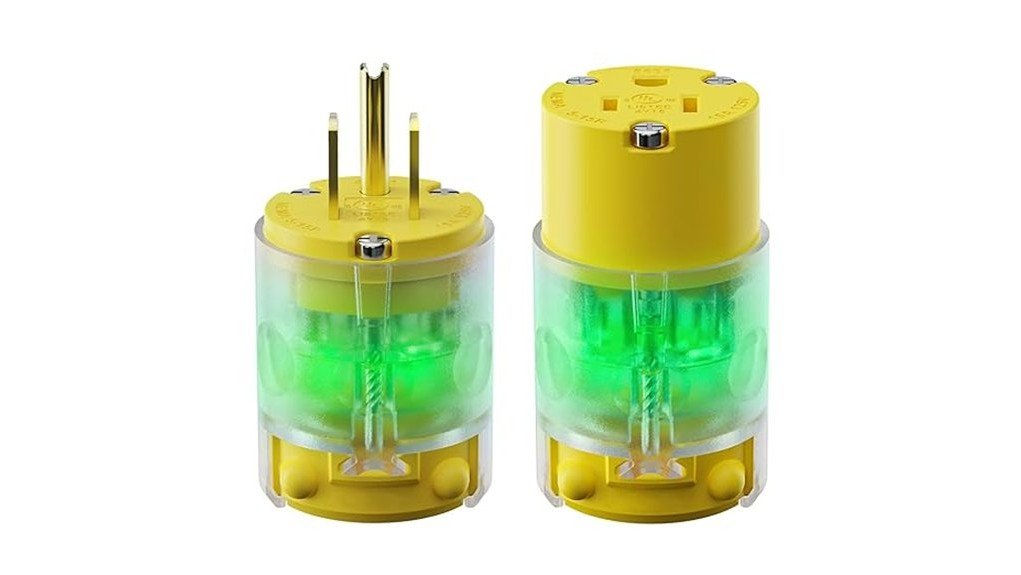
| Body design | Dimpled grip body with transparent angled entry holes |
| Material | Heat-resistant nylon body, solid brass terminals, and transparent PC terminal covers |
| Approximate weight | About 0.5 lb, based on the original article |
| Durability claim | Stated to withstand more than 50,000 plug and unplug cycles |
| Best use | Cord repair, shop use, generator connections, RV power, pumps, marine systems, and compatible equipment cords |
| Safety note | Match the connector, wire gauge, cord rating, environment, and load before use. Hire a qualified electrician if you are unsure. |
What Is the Lighted Extension Cord Ends Kit?
The Lighted Extension Cord Ends kit is a replacement plug and connector solution for compatible extension cords. It is meant for situations where the cord body is still serviceable, but the end needs replacement or upgrading. The lighted indicator helps you see when power reaches the cord end, which can save time when you are troubleshooting tools, pumps, or temporary power setups.
The article-supported details point to a NEMA 5-15P and 5-15R setup, 18 to 12 AWG wire compatibility, a heat-resistant nylon body, solid brass terminals, and clear PC terminal covers. Those details matter because cord ends need secure conductor contact, safe strain handling, and a body that stays manageable during repeated use.
Before You Buy: Confirm your cord gauge, amperage needs, NEMA configuration, and indoor or outdoor rating before ordering. These ends are not a fix for cracked insulation, burned wiring, undersized cable, or a cord that should be replaced completely.
Key Takeaways
- The lighted indicator gives you a quick visual cue that power is present at the cord end.
- The dimpled body can make the plug easier to grip with bare hands or work gloves.
- The transparent angled entry holes help you see wire placement during installation.
- The article lists compatibility with 18 to 12 AWG wiring, which covers many common cord repair needs.
- The NEMA 5-15P and 5-15R configuration is useful for standard household-style 15-amp plug and receptacle connections.
- Safe use still depends on correct wiring, a sound cord jacket, the right load, and the right environment.
Who Should Buy It?
Best For
- Users replacing a compatible NEMA 5-15 plug or connector end on a serviceable cord.
- Workshops, garages, RV setups, generators, and pump areas where a visible power indicator helps.
- DIY users who understand basic cord-end wiring and can follow the product instructions carefully.
Skip If
- Your cord uses a twist-lock, 20-amp, 30-amp, RV-specific, or other non-matching configuration.
- The cord jacket is cut, brittle, burned, crushed, or damaged along the cable length.
- You are not comfortable wiring electrical connectors or verifying load ratings.
Overview of Features and Functionality
The biggest feature is the lighted indicator. It does not replace a proper tester, but it gives you an immediate visual cue that the cord end has power. That is helpful when you are checking whether a generator outlet, shop receptacle, or appliance cord is energized.
The dimpled body adds grip, which matters when you plug and unplug a cord often. Smooth plastic can become harder to handle in cold weather, dusty shops, or outdoor work areas. A textured surface gives your fingers more contact, especially when the plug is tight in the receptacle.
The transparent angled entry holes also help during setup. You can see wire placement more easily before tightening the terminals, which can reduce mistakes during installation. You still need to follow the included instructions and verify that each conductor sits securely in the correct terminal.
Materials and Build Quality
The original article lists a heat-resistant nylon body, solid brass terminals, and transparent PC terminal covers. Nylon is a common choice for wiring device bodies because it can offer a tough, practical housing for repeated handling. Brass terminals matter because the conductor contact point needs stable conductivity and secure clamping.
The article also states that the ends can withstand more than 50,000 plug and unplug cycles. That claim points to a product built for repeated use, but your real-world lifespan will depend on load, storage, pulling angle, moisture exposure, and how well the cord end was installed.
Fit and Compatibility
Compatibility is the main buying checkpoint. These lighted ends are described as fitting NEMA 5-15P and 5-15R configurations, which are common straight-blade grounded plug and receptacle styles. They are not the right choice for twist-lock connectors, larger RV connectors, 20-amp T-slot designs, or 30-amp generator plugs.
The article states that the design accommodates 18 to 12 AWG wire. A lower AWG number means a thicker conductor, so a 12 AWG cord is heavier than an 18 AWG cord. You should match the replacement end to the existing cord jacket, wire gauge, and intended electrical load.
Pro Tip: Before you remove the old cord end, take a clear photo of the wiring layout and note the cord gauge printed on the jacket. This helps you compare the old setup with the new terminal layout before tightening anything.
Installation and Setup
Installation is designed to be straightforward, but electrical work still requires care. The angled entry holes help guide the conductors, while the clear covers let you inspect placement before the housing is closed. That makes the product friendlier than a fully opaque cord cap.
Do not rush the strain relief. A secure cord end should hold the outer jacket properly, not just the individual wires. If the cord pulls against the terminal screws during use, the connection can loosen over time and create heat or intermittent power.
Compatibility and Safety
Use these cord ends only with a compatible cord in good condition. A replacement plug end should not be used to hide a deeper problem, such as damaged insulation, undersized wire, water intrusion, or overheating marks. If you see melted plastic, darkened copper, burning odor, or repeated breaker trips, stop using the cord.
Outdoor and wet-location use needs extra caution. The cord, plug end, receptacle, and connected equipment all need ratings that fit the environment. When in doubt, use a qualified electrician, a proper tester, and a GFCI-protected outlet where appropriate.
How It Performs in Real Use
For Garage and Shop Use
In a garage or shop, the lighted indicator can help you quickly check whether a cord is live before connecting a tool or charger. The grippy body is also useful when dust, gloves, or tight receptacles make smooth cord ends harder to handle.
For Generator Power
For compatible generator outlets, the indicator can help you confirm that power is reaching the cord end. You still need to verify the generator outlet type, cord gauge, and connected load. Do not use a 15-amp style cord end for equipment that needs a higher-rated connector.
For RV and Outdoor Setup
The article lists RV usage as a possible application, but this depends heavily on the actual plug configuration and load. Many RV power systems use dedicated connector types, so check the RV cord and pedestal before assuming compatibility. For damp locations, use only properly rated outdoor equipment.
For Pumps and Emergency Backup
For sump pumps, well pumps, or backup power setups, the lighted end can make quick checks easier. It is not a substitute for proper pump wiring, waterproof protection, or load matching. Use it as a visibility aid, not as proof that the whole system is safe.
Common Mistakes to Avoid
- Do not install these ends on a cord with cracked, cut, burned, or exposed insulation.
- Do not assume all three-prong plugs are the same NEMA configuration.
- Do not exceed the cord rating, tool rating, circuit rating, or connector rating.
- Do not use a repaired cord outdoors unless the full cord assembly is suitable for that environment.
- Do not pull the cord from the cable when unplugging. Grip the plug body instead.
Versatile Applications and Use Cases
These lighted extension cord ends make the most sense in places where a visible power cue and a stronger grip add practical value. They can help with general cord repair, shop setups, generator connections, RV-related power checks, and compatible equipment cords.
| Application Type | Specific Use Case | Buyer Note |
|---|---|---|
| Generator connection | Temporary power checks | Confirm outlet type and load rating first. |
| RV power connection | Compatible cord-end repair | Many RV systems use different connectors. |
| Welding equipment | Shop power cord visibility | Check amperage and connector style carefully. |
| Sump and well pumps | Power confirmation during setup | Protect from moisture and cord damage. |
| Marine or boat systems | Basic power connection checks | Use only if the full setup is rated for the environment. |
Pros and Cons
Pros
- Lighted indicator helps you confirm power at a glance.
- Dimpled body improves grip during plugging, unplugging, and installation.
- Transparent angled entry holes make wire placement easier to inspect.
- Supports 18 to 12 AWG wiring, based on the article details.
- Heat-resistant nylon body and brass terminals support repeated cord-end use.
Cons
- Only fits the listed NEMA 5-15P and 5-15R style applications.
- Does not fix a cord with damaged insulation, overheating, or internal wire damage.
- Installation requires correct wiring and safe load matching.
Is It Worth the Price?
These lighted cord ends offer strong value for the price if you need a practical replacement end with better visibility than a basic non-lighted cord cap. The indicator, grippy body, and transparent entry design make the product more useful for hands-on repair work than a plain plug end.
The best value goes to users who already have a compatible cord in good condition. If the cord itself is worn out, undersized, or not rated for your environment, replacing the whole cord may be the safer and smarter buy.
How It Compares to Alternatives
Compared with basic non-lighted cord ends, this kit gives you better power visibility and easier handling. A plain replacement end may cost less, but it will not show a power cue at the plug or connector.
Compared with buying a full new extension cord, these ends make sense when the existing cable is still safe and properly rated. If you need a different amperage, a twist-lock connection, a weather-rated assembly, or a heavy-duty RV cord, a different product category will be a better fit.
Frequently Asked Questions
How do I know if this kit fits my existing extension cord?
Check the plug configuration, receptacle style, wire gauge, and cord rating printed on the cable jacket. The article lists NEMA 5-15P and 5-15R compatibility and 18 to 12 AWG support, so do not use it for a different connector type.
Can I use these cord ends outdoors or in wet conditions?
Use caution outdoors and avoid wet conditions unless the full cord assembly and connection point are rated for that environment. A lighted end does not make a cord waterproof or safe for standing water.
What wire gauge does it support?
The article states that the cord ends support 18 to 12 AWG wiring. Always match the end to the cord jacket, load, circuit, and connected equipment before use.
Are these compatible with other NEMA configurations?
No. The article describes compatibility with NEMA 5-15P and 5-15R configurations. Do not assume compatibility with twist-lock, 20-amp, 30-amp, 50-amp, or RV-specific connectors.
Does the lighted indicator prove the cord is safe?
No. The light only helps show that power is present at the end. You still need to inspect the cord, confirm wiring, match the load, and test the setup safely.
How should I clean and maintain the cord ends?
Wipe the exterior with a dry or slightly damp cloth only when the cord is unplugged. Avoid harsh chemicals, soaking, or spraying water into the connector body.
Who should skip this product?
Skip it if your cord is damaged beyond the plug end, if you need a higher-rated connector, or if you are unsure how to wire the terminals correctly. In those cases, replacing the cord or hiring a qualified electrician is safer.
The Bottom Line
The Lighted Extension Cord Ends kit is worth considering if you need a compatible NEMA 5-15P or 5-15R replacement end with a visible power indicator and easier handling. It is best for careful DIY repairs on sound cords, but it is not a shortcut for damaged wiring, mismatched connectors, or unsafe outdoor use. The verdict stays at recommended with caveats because the product is useful only when fit, load, and installation are correct.