Poor welds usually come from inconsistent heat input. Learning one repeatable technique—controlling heat input by maintaining a steady travel speed, correct torch/electrode angle, and consistent arc length—answers most quality problems across MIG, TIG, and stick welding. This guide explains what that technique looks like in practice, how to apply it for different processes and thicknesses, common mistakes, and quick fixes you can use at the bench.
🔥 What “control heat input” means and why it matters
Heat input is the energy delivered per unit length of weld. It directly affects penetration, bead shape, distortion, and defects like porosity and lack of fusion. Controlling heat input is not just about setting the machine; it is a combination of three consistent actions performed while welding:
- Consistent travel speed — how fast the torch or electrode moves along the joint.
- Correct torch/electrode angle — direction and tilt relative to the joint.
- Stable arc length or stick-out — the distance from the contact tip or tungsten to the workpiece.
When these three elements are steady, the weld receives uniform energy, producing predictable penetration, clean fusion, and a proper bead profile.
🛠️ Quick pre-weld checklist (setup that makes the technique work)
- Clean the joint: Remove rust, paint, oil, and mill scale from the weld area.
- Fit-up and gap: Ensure consistent gap and root opening for the chosen process.
- Select proper consumables: Wire/electrode size, filler rod, gas type and flow, tungsten size.
- Machine settings: Set amperage/voltage based on material thickness and process, then tune using short test beads.
- Practice a “calibration pass”: On scrap of the same material, weld a few beads while observing puddle behavior and bead shape.
🎯 Step-by-step: Apply the technique while welding
Follow these steps every time to keep heat input steady.
- Establish a reference speed
- Make a short bead on scrap at your intended machine setting.
- Measure bead length per second visually or mark the joint and time how long it takes to cover the mark.
- Use that speed as your baseline and practice until you can reproduce it.
- Hold and maintain the correct angle
- MIG: typically 5 to 15 degrees push or pull depending on joint type.
- TIG: 10 to 20 degrees from vertical in the direction of travel.
- Stick: 10 to 30 degrees back from perpendicular so slag clears and arc focuses on fusion.
- Keep arc length or stick-out consistent
- MIG: 3/8″ to 1/4″ depends on wire size; shorter arc for less spatter and better control.
- TIG: tungsten to puddle distance about 1.5 to 3 mm.
- Stick: maintain recommended arc length for the electrode (usually about the diameter of the electrode).
- Watch the puddle, not just the arc
- Use visual cues: puddle shape, color, and ripple spacing show whether heat is right.
- Adjust travel speed if puddle is too large (slow down makes puddle bigger; speed up to reduce heat input).
- Use short, controlled tacks and back-step when necessary
- For long joints, use intermittent tacks to control distortion and then weld between tacks while maintaining the same technique.
⚙️ Practical settings and examples (guidelines, not rules)
Settings vary by material, thickness, and process. Use these as starting points and then perform the calibration pass described above.
- MIG on carbon steel: 0.030″ wire on 1/8″ (3 mm) plate — 120 to 160 amps, short arc, travel speed medium-fast.
- TIG on stainless or mild steel: 1/16″ tungsten, AC/DC depending on metal — 70 to 140 amps for 1/8″ (3 mm) to 1/4″ (6 mm), keep very steady arc length.
- Stick (SMAW) on mild steel: E7018 — amperage around 80–110 amps for 1/8″ rod on 1/8″ plate, maintain short consistent arc and steady travel speed.
Note: These numbers are launch points. The central technique is consistency: once an appropriate setting is found, keep speed, angle, and arc length the same to reproduce quality results.
✅ Checklist for evaluating whether you are controlling heat input
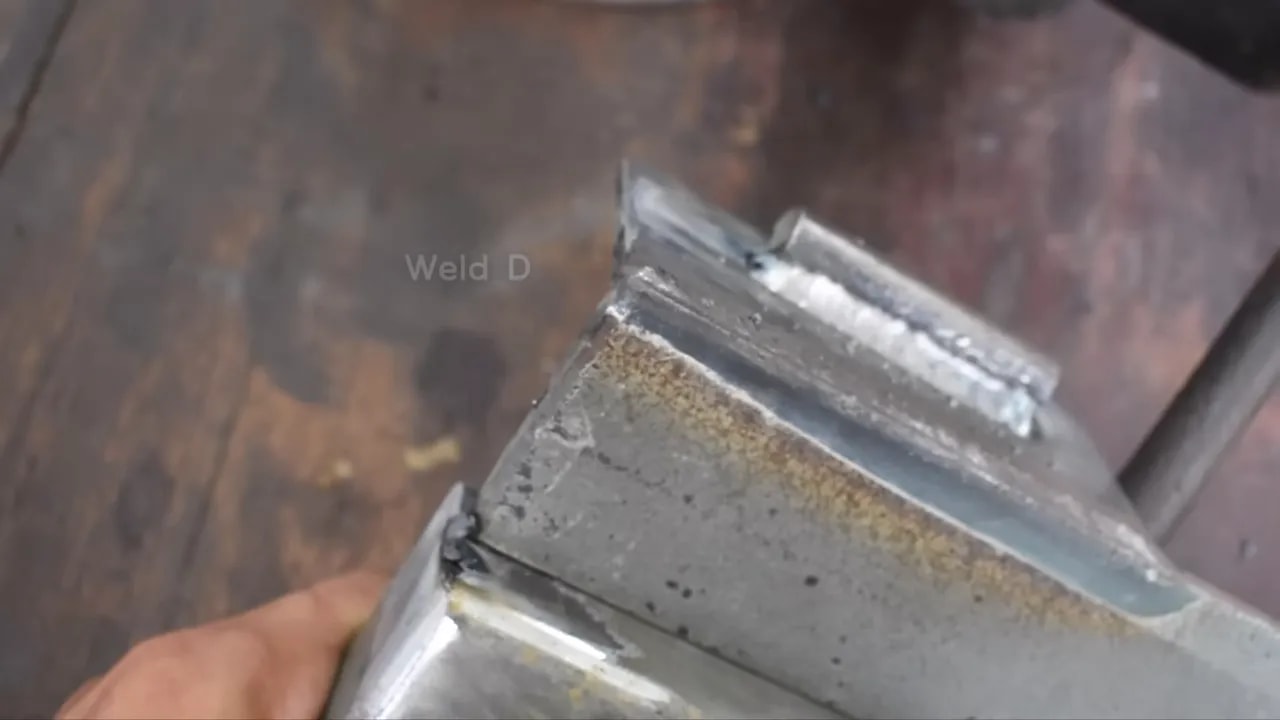
- Bead width remains consistent from start to finish.
- Penetration is even across the joint with no cold laps.
- No excessive spatter, porosity, or undercut.
- Minimal distortion compared to previous runs at higher or lower heat input.
- Ripple spacing is even (closer ripples indicate slower travel/higher heat input; wider ripples mean faster travel/lower heat input).
⚠️ Common mistakes and how to fix them
- Slow travel speed — Symptoms: excessive penetration, burn-through, wide bead, heavy convexity. Fix: increase travel speed or reduce amperage.
- Fast travel speed — Symptoms: lack of fusion, narrow bead, cold lap. Fix: slow down or raise amperage slightly.
- Long arc or excessive stick-out — Symptoms: spatter, unstable arc, reduced penetration. Fix: shorten arc to recommended distance.
- Poor angle — Symptoms: uneven side penetration, undercut. Fix: correct work angle and keep it steady as you move.
- Inconsistent fit-up or dirty metals — Symptoms: porosity, slag entrapment, lack of fusion. Fix: clean metal, adjust gap, and tack properly.
🩺 Quick troubleshooting guide (defect → probable cause → fix)
- Porosity — Cause: contamination, wrong gas flow, or draft. Fix: clean metal, check gas type/flow, shield from drafts.
- Lack of fusion — Cause: low heat input or wrong angle. Fix: slow travel, increase amperage/voltage slightly, adjust angle.
- Burn-through — Cause: too much heat or slow travel. Fix: reduce amperage, increase speed, or use backing/heat sinking.
- Undercut — Cause: too hot or incorrect technique at edges. Fix: reduce heat input, adjust angling, maintain steady travel speed.
🔎 Common misconceptions about improving weld quality
- Misconception: Higher amperage always equals stronger welds. Fact: Too much amperage can thin the base metal, cause burn-through, and weaken the joint. Strength comes from proper penetration and fusion, not raw amperage.
- Misconception: Faster travel always saves time without drawbacks. Fact: Excessive speed causes lack of fusion and weaker welds. Balance speed with heat input.
- Misconception: Machine settings are the only thing that matters. Fact: Operator consistency in travel speed, angle, and arc length is equally important.
📌 Quick reference cheat sheet
- Calibrate on scrap before critical welds.
- Pick a travel speed and count your steps or mark the joint to reproduce it.
- Keep arc length and electrode stick-out steady.
- Hold the recommended torch/electrode angle and do not let it wander.
- Adjust machine settings only after confirming the technique is consistent.
❓FAQ
How do I judge the correct travel speed?
Make a test bead on scrap with the chosen settings. Observe bead appearance: a steady ripple pattern and uniform bead width indicate a good speed. If ripples are too close, speed up. If bead is narrow and shows lack of fusion, slow down or increase heat slightly.
Can this technique fix porosity?
Partially. Consistent travel speed and arc control help reduce turbulence and contamination-related porosity, but porosity often stems from contamination, improper gas coverage, or drafts. Clean the metal and verify gas flow along with using the technique.
Does the technique apply to all welding processes?
Yes. The principle of controlling heat input through steady travel speed, angle, and arc length applies to MIG, TIG, and stick welding. Equipment differences mean the exact numbers change, but the human control aspects remain the same.
How do I practice to become consistent?
Practice on scrap of the same thickness. Use visual targets or marks to pace travel speed, make repeated calibration beads, and inspect each bead for penetration and profile. Video yourself or count steps per inch to develop muscle memory.
🔚 Final takeaway
Improving weld quality starts and ends with controlling heat input. Learn to hold a steady travel speed, keep the correct torch or electrode angle, and maintain a consistent arc length. Combine that discipline with proper setup and cleaning, and most quality defects disappear. Use the calibration pass and the checklists above to turn this single technique into reliable, repeatable welds.