Disclosure: As an Amazon Associate, we earn from qualifying purchases. If you click a link on this page and make a purchase, we may receive a small commission at no extra cost to you.
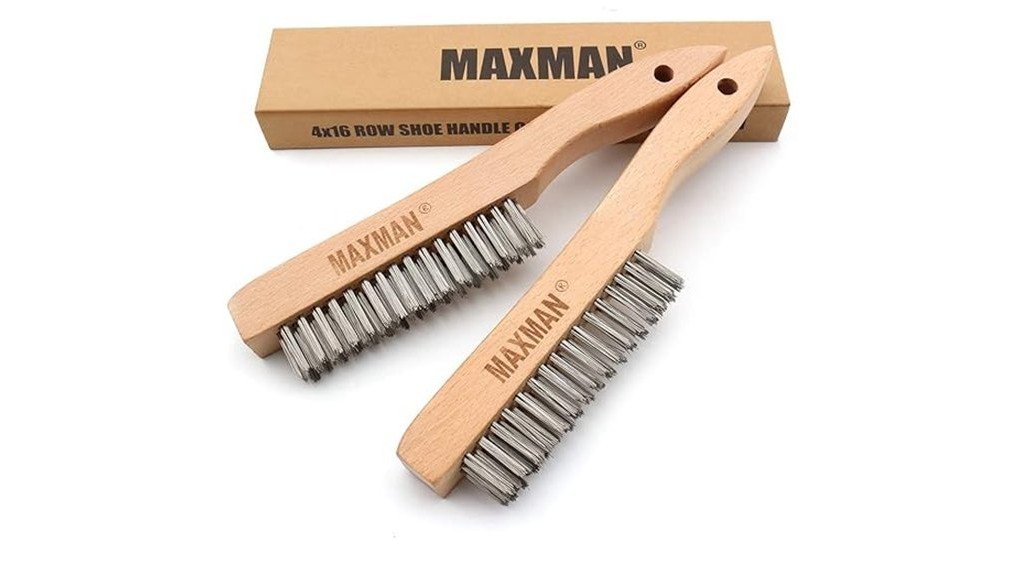
Rust, old paint, and welding slag can take more effort than a light-duty brush can handle. The MAXMAN Wire Brush is a compact 10-inch hand brush built around stainless steel bristles, a curved hardwood beech handle, and a 16-row bristle layout for tough surface cleanup. This review helps you decide if it is the right brush for metal prep, shop cleanup, tile scrubbing, and general DIY work. It is a strong pick for aggressive cleaning, but it is not the right choice for delicate finishes or surfaces that scratch easily.
Quick Verdict
Editorial Rating: 8/10
Best For: DIYers, welders, mechanics, and homeowners who need a stiff brush for rust, paint, residue, and slag removal.
Bottom Line: The MAXMAN Wire Brush gives you wide bristle coverage and a sturdy wood handle in a simple hand tool. The tradeoff is that its stiff stainless steel bristles can scratch soft, polished, or finished surfaces if you use too much pressure.
| Specification | Detail |
|---|---|
| Brand | MAXMAN |
| Model | Not listed in the source article |
| Product type | Handheld wire brush |
| Overall length | 10 inches |
| Bristle length | Approximately 1.4 inches |
| Bristle layout | 16 rows |
| Bristle material | Stainless steel |
| Handle material | Hardwood beech |
| Handle design | Curved ergonomic grip |
| Best use | Rust removal, paint stripping, welding slag cleanup, and heavy-duty surface prep |
| Safety note | Best for hard surfaces. Test first on softer metals, tile, painted finishes, or any surface you do not want scratched. |
What Is the MAXMAN Wire Brush?
The MAXMAN Wire Brush is a handheld scratch brush made for demanding cleaning and surface preparation. It uses stainless steel bristles to remove stuck-on material from hard surfaces, including rust, paint, welding slag, and residue.
The brush is designed for people who need more bite than a nylon brush or soft cleaning pad can provide. Its 16 rows of bristles give you a wider working face, while the 10-inch body keeps it easy to control by hand.
The curved hardwood beech handle is the main comfort feature. It gives your hand a more natural grip than a flat handle, which helps when you need repeated short scrubbing strokes on metal, tile, or shop materials.
Key Takeaways
- The MAXMAN Wire Brush uses stainless steel bristles for heavy-duty rust, paint, and slag removal.
- The brush measures 10 inches overall, with bristles about 1.4 inches long.
- The 16-row bristle layout gives you broad contact for faster coverage on larger areas.
- The curved hardwood beech handle supports a firmer grip during longer cleaning sessions.
- It is not ideal for delicate, polished, soft, or coated surfaces unless you test carefully first.
Before You Buy: This is a stiff stainless steel wire brush. Do not use it on delicate finishes, nonstick coatings, polished surfaces, or soft materials unless the product instructions and a hidden test spot show it is safe.
Who Should Buy It?
Best For
- DIY users removing rust, old paint, or surface buildup from hard materials.
- Welders and garage users who need a hand brush for slag and residue cleanup.
- Homeowners who want a compact brush for tough tile, metal, and shop cleaning jobs.
Skip If
- You need a gentle brush for polished, painted, coated, or soft surfaces.
- You want a brush for food-contact grill grates without checking bristle safety and product instructions first.
- You need a scraper, drill attachment, or power tool for thick layers of material.
Design and Build Quality
The main build feature is the stainless steel bristle set. Stainless steel is a practical choice for tough cleaning because it resists corrosion better than plain carbon steel and keeps enough stiffness for scraping rust, paint, and slag.
The brush has 16 rows of bristles, which helps it cover more surface area with each pass. That matters when you are cleaning broad metal panels, shop parts, or tile edges where a narrow detail brush would take longer.
The handle is made from hardwood beech and shaped with a curve for grip comfort. That curved shape helps you apply pressure while keeping your wrist in a more natural position, especially during short back-and-forth strokes.
Performance and Versatility
For rust removal, the MAXMAN Wire Brush is best used on hard metal surfaces that can tolerate aggressive brushing. The 1.4-inch bristles give you enough reach to work into shallow texture, corners, and uneven buildup without making the brush feel oversized.
For paint stripping, it can help break loose flaking or weakened paint before sanding, scraping, or refinishing. It should not be treated as a finish-safe detailing brush because stiff stainless steel can leave visible scratches.
For welding cleanup, the brush is suited for slag and surface residue after the work area has cooled and the user can safely handle the piece. Use eye protection and work gloves, since small debris can lift from the surface during brushing.
The article supports use on aluminum, stainless steel, and tiles, but those surfaces need caution. Aluminum is softer than steel, and some tile finishes can scuff, so testing a hidden area is the safest first step.
User Experience and Comfort
A wire brush is only useful if you can control it well. The MAXMAN design gives you a 10-inch overall length, which is long enough for a full hand grip but still compact enough for a toolbox, welding cart, or garage drawer.
The hardwood beech handle should feel more solid than a thin plastic grip. The curved shape can also reduce hand strain because your fingers are not fighting a flat block during longer cleaning jobs.
Comfort still depends on the job. If you press hard for a long time, any handheld wire brush can tire your hand. For thick rust or heavy paint layers, this brush works best as part of a process that may also include a scraper, sandpaper, or a power tool.
How It Performs in Real Use
For Rust Removal
On hard metal, the stainless steel bristles are useful for loosening surface rust before painting, oiling, or further prep. Use steady pressure and short strokes instead of forcing the brush into the surface.
For Paint Stripping
The brush works best on loose, chipped, or already weakened paint. It can roughen the surface below, so it is better for prep work than for final finishing.
For Welding Slag and Shop Cleanup
The 16-row bristle pattern gives you enough coverage to clean slag and residue from cooled workpieces. Wear eye protection, because slag flakes and metal dust can move quickly when the brush catches them.
For Tile and Hard Surface Scrubbing
The brush can help on tough residue around durable tile or hard surfaces, but it may damage glossy, decorative, or sealed finishes. Test a small hidden area before using it where scratches would matter.
How to Use It Correctly
- Start with light pressure: Let the stainless steel bristles do the work before pressing harder.
- Brush in controlled strokes: Short strokes give you better control and reduce slips.
- Match the brush to the surface: Use it on hard surfaces that can handle abrasion, not on delicate coatings.
- Keep your hands protected: Gloves help protect your skin from sharp edges, debris, and bristles.
- Clean the brush after use: Tap out debris, remove stuck material from the bristles, and let the brush dry before storage.
Pro Tip: When you are cleaning metal for paint or repair, brush first, wipe away dust, then inspect the surface under bright light. That helps you see rust spots or paint edges that still need sanding or scraping.
Material Safety and Surface Compatibility
Stainless steel bristles are strong, but they are also abrasive. Use the MAXMAN Wire Brush on surfaces where scratches are acceptable or part of the prep process. Avoid using it on glass, nonstick coatings, polished trim, soft plastics, finished wood, and decorative surfaces.
Inspect the brush before and after use. If you see loose, bent, or broken bristles, stop using it and replace it. This is especially important around any surface that may later contact food, skin, pets, or children.
The source article describes a hardwood beech handle, but it does not verify a chemical-proof rating. Wipe the handle clean instead of soaking it, and avoid harsh chemicals unless the product label says they are safe for the wood handle.
Pros and Cons
Pros
- Stainless steel bristles suit aggressive rust, paint, and slag cleanup.
- 16 rows give you broad coverage for faster surface prep.
- 10-inch size is compact enough for a toolbox or garage drawer.
- Curved hardwood beech handle improves grip control during repeated strokes.
- Useful across hard metal, stainless steel, tile, and other durable surfaces.
Cons
- Can scratch soft metals, polished surfaces, coated materials, and delicate tile finishes.
- Not a full replacement for a scraper, sander, grinder, or drill brush on heavy buildup.
- Warranty, package quantity, and exact model details were not verified from the source article.
Is It Worth the Price?
The MAXMAN Wire Brush looks like a strong value for the price if you need a simple, reusable hand brush for regular garage, welding, repair, or cleanup work. Its value comes from the stainless steel bristles, wide 16-row brush face, and solid wood handle rather than from extra accessories.
It is worth considering if you need a compact brush that can sit in a toolbox and handle rough prep jobs without much setup. You get the most value if you often clean hard metal, remove surface rust, or prep small parts before refinishing.
It is not the best fit if you need a gentle brush or a tool for fine finish work. In that case, a brass brush, nylon abrasive brush, or non-scratch pad may be safer.
How It Compares to Alternatives
Compared with a brass wire brush, the MAXMAN stainless steel bristle design is more aggressive and better suited for tougher buildup. A brass brush may be better for softer metals or jobs where you want less risk of scratching.
Compared with nylon detail brushes and flat scrapers, this brush sits in the middle. Nylon brushes are gentler but less effective on rust and slag, while scrapers can lift thick material but do not cover as much area. The MAXMAN Wire Brush makes the most sense when you want firm bristle contact and broad handheld coverage.
Frequently Asked Questions
What materials are the bristles made from?
The source article describes the bristles as stainless steel. That makes the brush suitable for tough cleaning tasks, but it also means the bristles can scratch softer or finished surfaces.
Can the MAXMAN Wire Brush be used on aluminum?
The article lists aluminum as a possible surface, but you should test first. Aluminum is softer than stainless steel, so the brush may leave marks if you press too hard.
Is this brush safe for delicate surfaces?
No. This is a stiff wire brush made for tough cleaning, not delicate detailing. Skip it for polished surfaces, thin coatings, nonstick finishes, glossy tile, and soft plastics.
How big is the MAXMAN Wire Brush?
The brush is described as 10 inches long overall. The bristles are about 1.4 inches long and arranged in 16 rows for broad contact.
How do you clean the wire brush after use?
Tap the brush to remove loose debris, then pull out stuck material from the bristles with care. Let the brush dry before storage so the wood handle and bristles stay in better condition.
Is the hardwood handle moisture or chemical resistant?
The source article supports a hardwood beech handle, but it does not verify a chemical-proof rating. Wipe the handle clean and avoid soaking it unless the product label says that is safe.
Who should skip this brush?
Skip it if you need a gentle tool for finished, decorative, polished, or soft surfaces. You may also want a scraper, sander, or power brush if the buildup is too thick for hand brushing.
The Bottom Line
The MAXMAN Wire Brush is a practical choice if you need a compact, stiff hand brush for rust, paint, welding slag, and hard-surface cleanup. Its stainless steel bristles, 16-row layout, and curved hardwood beech handle make it useful for shop and DIY work, but it is too aggressive for delicate or polished surfaces. Choose it if you want a simple heavy-duty brush, and skip it if surface scratching would be a major concern.