Disclosure: As an Amazon Associate, we earn from qualifying purchases. If you click a link on this page and make a purchase, we may receive a small commission at no extra cost to you.
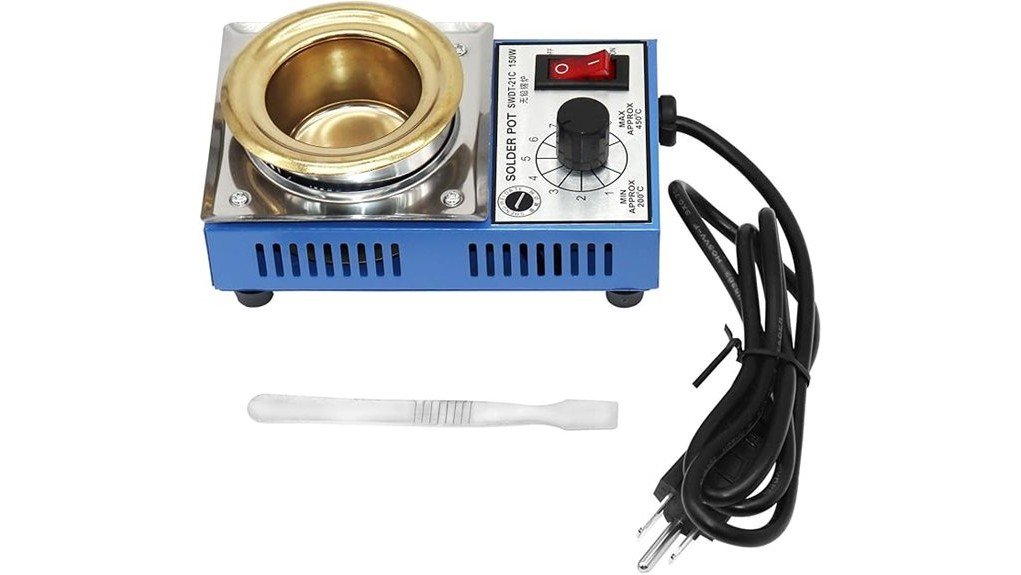
When you need to tin wire ends, coil pins, or small electronic parts in batches, using a soldering iron one joint at a time can become slow. The Together-life 50mm Lead-Free Solder Pot gives you a 500g solder bath, 150W heating power, and an adjustable 200°C to 450°C temperature range in a compact bench unit. Its biggest strengths are its simple controls and useful capacity, but you should also understand that this is a basic dial-controlled solder pot rather than a digital professional station. This review explains where it works well, what comes with it, and the safety and maintenance points you should consider before buying.
Quick Verdict
Rating: 8/10
Best For: Hobbyists, electronics repair benches, wire preparation, coil-pin tinning, and light workshop production.
Bottom Line: The 50mm Together-life solder pot gives you a useful 500g capacity, broad temperature adjustment, and relatively simple operation. Its main tradeoff is the basic control system, so buyers who need digital readouts, tighter process control, or larger production capacity should consider a more advanced solder pot.
Key Takeaways
- You get a 500g solder capacity and a 50mm or 1.97-inch pot opening, giving you more working area than a soldering-iron tip.
- The 150W heater runs from AC 110V/60Hz with a US plug.
- Temperature is adjustable from 200°C to 450°C through an electronic temperature-control system.
- The manufacturer lists an approximate 8-minute melting time, although actual warm-up time can vary with solder quantity, alloy, ambient temperature, and starting conditions.
- The body uses stainless steel with a titanium plate, and the package includes a solder paste scraper.
- The unit must be properly grounded, and you should manually turn it off when you finish. An automatic shut-off feature is not specified for this model.
Key Specifications
| Specification | Detail |
|---|---|
| Brand | Together-life |
| Model | rongxiguo02 |
| Product type | Lead-free solder pot / soldering bath |
| Input | AC 110V, 60Hz, US plug |
| Power | 150W |
| Temperature range | 200°C to 450°C |
| Capacity | 500g |
| Pot opening | 50mm / 1.97in diameter |
| Material | Stainless steel + titanium plate |
| Solder pot size | 150 × 90 × 65mm / 5.9 × 3.5 × 2.2in |
| Approx. melting time | About 8 minutes under listed conditions |
| Scraper size | 120 × 10mm / 4.7 × 0.4in |
| Package includes | 1 solder pot and 1 solder paste scraper |
| Typical uses | Wire tinning, coil-pin tin plating, transformer work, and electronics production tasks |
What Is the Together-life 50mm Lead-Free Solder Pot?
This is a compact electric soldering bath designed to keep a pool of solder molten so you can dip compatible wires, terminals, coil pins, and other parts instead of applying solder individually with an iron. You get a 50mm opening and enough capacity for up to 500g of solder.
The unit uses an electronic temperature-control board with stepless adjustment from 200°C to 450°C. That wide range gives you flexibility for different solder alloys and jobs, but you should still use the temperature recommended for the solder and process you are working with rather than automatically turning the control to maximum.
Its 150W heater and compact 150 × 90 × 65mm body make it better suited to a workbench or light-production environment than to high-volume industrial lines that need much larger solder baths.
Who Should Buy It?
Best For
- You regularly tin stripped wire ends or small terminals in batches.
- You work on transformers, coils, wiring assemblies, or electronics repair projects.
- You want a compact 110V solder pot without paying for a larger digital production station.
Skip If
- You require a digital temperature display and tighter documented temperature accuracy.
- You need substantially more than 500g of molten solder for continuous production.
- Your workspace cannot safely accommodate an open bath of molten solder.
Before You Buy: This is a 110V/60Hz unit with a US plug. It also requires proper grounding. Do not treat the electronic constant-temperature function as an automatic shut-off, because the manufacturer instructs you to switch off the power when you finish.
Design and Build Quality
The furnace construction combines stainless steel with a titanium plate. That is useful around a solder bath because heat and flux residues can be hard on exposed metal surfaces over time.
The 50mm opening gives you enough space for common wire ends, coil pins, and similar components while keeping the overall unit compact. The 500g capacity also reduces how often you need to replenish the bath compared with very small hobby pots.
You also receive a 120 × 10mm scraper. The package description for this exact model lists one solder pot and one scraper, so you should not assume an extra replacement pot is included unless the seller specifically states otherwise.
Temperature Control and Heating Performance
You can adjust the solder bath from 200°C to 450°C through the unit’s electronic temperature-control system. The listing also describes automatic constant-temperature operation, which helps reduce large temperature swings once the unit reaches its operating range.
The manufacturer lists an approximate melting time of eight minutes. Treat that number as a reference rather than a guarantee because warm-up depends on how much solder you load, its alloy, room temperature, and the selected heat setting.
The manufacturer’s instructions mention roughly 300°C to 350°C as a general molten-solder working range. Your correct setting can still differ by alloy and process, so follow the solder manufacturer’s temperature guidance when accuracy matters.
Pro Tip: Use the higher control range for initial warm-up only when appropriate, then reduce the setting to the temperature needed for your solder alloy. Running hotter than necessary can accelerate oxidation and shorten pot life.
Capacity and Work Size
A 500g capacity makes this model practical when you repeatedly dip small components. You can keep enough molten solder available for wire preparation and similar bench work without moving to a much larger industrial bath.
The 50mm opening is still a real limitation. Large terminals, wide assemblies, or jobs requiring long sections of a component to enter the bath may need a wider pot. Check the dimensions of the parts you intend to dip before buying.
How It Performs in Real Use
Wire Tinning
This is one of the clearest use cases. Once your solder has reached the correct working temperature, you can prepare compatible stripped wire ends more consistently than repeatedly feeding solder to an iron. Correct flux selection, dip depth, and dwell time still matter.
Coil Pins and Transformer Work
The product is specifically marketed for coil-pin tin plating and electronic transformer work. The open bath lets you bring multiple similar parts to a consistent solder level when your fixture and workflow are set up correctly.
Electronics Repair and Small-Batch Assembly
For a repair bench or small production run, the 150W heater and 500g bath can save repetitive work. It is less suitable when you need continuous high-throughput operation, detailed digital monitoring, or documented process tolerances.
Long-Term Workshop Use
The stainless steel and titanium construction is designed for repeated heating, but pot life also depends on temperature, solder chemistry, flux, and maintenance. Keeping the bath hotter than required or exposing it to aggressive acidic materials can increase corrosion and wear.
How to Use It Correctly
- Place the unit on a stable, heat-resistant work surface. Keep combustible materials away from the solder bath.
- Confirm proper grounding before use. The manufacturer’s instructions specifically require grounding.
- Add an appropriate amount of compatible solder. Do not exceed the pot’s practical capacity.
- Select your operating temperature based on the solder alloy. Avoid using 450°C simply because it is the maximum setting.
- Allow the bath to stabilize. The listed melting time is about eight minutes, but your actual time may vary.
- Prepare parts consistently. Keep dip depth and contact time controlled when you want repeatable tinning.
- Switch the power off when the job is complete. Never rely on an unverified automatic shut-off feature.
Compatibility and Safety
This product works around exposed molten solder at temperatures that can cause severe burns. You should wear appropriate eye protection, keep your hands and loose clothing away from the bath, and use suitable tools or fixtures for handling parts.
Use the pot in a properly ventilated work area and follow the safety information for your solder and flux. Flux fumes and soldering residues should not be treated as harmless simply because the solder is marketed as lead-free.
The Amazon listing mentions melting plastic as a possible application. Heating unknown plastics can release hazardous fumes or damage the material, so this review does not recommend using a solder pot for plastics unless the material, temperature, ventilation, and process are specifically approved for that purpose.
Do not leave the unit operating unattended. The manufacturer explicitly instructs you to turn off the power before leaving the solder pot.
Cleaning and Maintenance
Oxidized material and dross can build up on a solder bath during normal use. Remove surface contamination using an appropriate method for your soldering process and the supplied scraper, while taking precautions around the hot bath.
Avoid highly acidic flux or scaling compounds unless they are specifically suitable for your equipment and process. The manufacturer warns that strongly acidic material combined with excessive temperature can accelerate corrosion or even damage the pot.
If process accuracy matters, periodically verify the actual molten-solder temperature with equipment designed for solder-bath measurement. A control dial tells you the selected range, but it does not provide the same direct feedback as a professional digital solder-pot station.
Before electrical inspection, storage, or deeper cleaning, turn the unit off, unplug it, and allow it to cool fully. Do not attempt electrical servicing while it is energized.
Top Applications for the 50mm Solder Pot
| Application | Why a Solder Pot Helps |
|---|---|
| Coil-pin tin plating | Lets you dip similar pins to a controlled depth during repetitive work. |
| Electronic wire production | Useful for tinning prepared wire ends in batches. |
| Transformer assembly | Supports repetitive tinning of compatible leads and terminals. |
| Electronics bench work | Provides a 50mm molten-solder bath when an iron alone is inefficient for repeated dipping. |
Pros and Cons
Pros
- Wide 200°C to 450°C adjustment range.
- 500g capacity is useful for small-batch and bench work.
- 50mm opening suits common wire and coil-pin tinning tasks.
- Stainless steel plus titanium plate construction.
- Compact 150 × 90 × 65mm body and included scraper.
Cons
- No verified digital temperature display.
- No automatic shut-off feature is specified, so you must turn it off manually.
- The 500g capacity and 50mm opening may be too small for high-volume or large-component production.
Is It Worth the Price?
The Together-life solder pot makes the most sense when you want a simple dedicated solder bath without stepping up to a larger professional station. You get the important basics: 150W heating, a 500g bath, adjustable temperature, compact dimensions, and a scraper.
Its value is strongest for hobbyists, repair technicians, and light-production users who repeatedly tin wires or small components. If your work requires documented temperature accuracy, digital controls, timers, replaceable pot systems, or much larger solder volume, spending more on professional equipment may make more sense.
How It Compares to Alternatives
The QWORK 150W 50mm solder pot is a close alternative with a similar 500g capacity and 200°C to 450°C adjustment range. Some QWORK packages also list an extra 50mm pot in addition to a scraper, so it is worth comparing the exact package contents if replacement-pot value matters to you.
For professional process control, the Hakko FX-301 is a different class of machine. It uses a digital temperature display, offers a 50 × 50mm standard solder pot, and has higher power and larger solder capacity. The Together-life model is the simpler choice when compact size and basic operation are more important than advanced monitoring and production features.
Frequently Asked Questions
Is this solder pot only for lead-free solder?
The product is marketed as a lead-free solder pot. The listing does not state that every possible solder alloy is officially supported, so you should confirm that your solder alloy, flux, and required working temperature are suitable for the equipment before use.
Can you adjust the temperature while the pot is running?
Yes. The electronic control provides stepless adjustment across a listed range of 200°C to 450°C. After changing the setting, allow the molten solder enough time to stabilize before judging the result.
How long does the 50mm solder pot take to heat?
The manufacturer lists an approximate melting time of eight minutes. Your result can change with solder quantity, alloy, room temperature, starting temperature, and control setting.
What comes in the package?
The product description for this exact model lists one solder pot and one solder paste scraper. Do not assume that a replacement 50mm pot is included unless the current seller listing specifically confirms it.
Does it have automatic shut-off?
An automatic shut-off function is not specified for this model. The manufacturer instead instructs you to turn the power off before leaving, so you should never rely on the constant-temperature control as a safety shut-off.
How should you maintain the solder pot?
Keep excessive oxidation and residue from building up, avoid unnecessarily high operating temperatures, and be cautious with strongly acidic fluxes that can increase corrosion. Turn the unit off and unplug it before storage, inspection, or any work involving its electrical components.
Who should choose a larger or more advanced solder pot?
You should consider a larger professional model if you need more than a 500g bath, wider components, continuous high-volume production, digital temperature monitoring, or tighter process control. The Together-life model is better suited to straightforward bench and light-production work.
The Bottom Line
The Together-life 50mm Lead-Free Solder Pot is a practical choice when you want a compact 110V solder bath for wire tinning, coil pins, transformer work, and similar electronics tasks. Its 500g capacity, 150W heater, and 200°C to 450°C adjustment range give you useful flexibility, while the lack of a verified digital display or automatic shut-off makes it less suitable for buyers who need advanced production controls.
If those limitations fit your workflow and you can provide a properly grounded, ventilated, heat-safe workspace, it earns our 8/10 recommendation for light workshop and electronics bench use.