Disclosure: As an Amazon Associate, we earn from qualifying purchases. If you click a link on this page and make a purchase, we may receive a small commission at no extra cost to you.
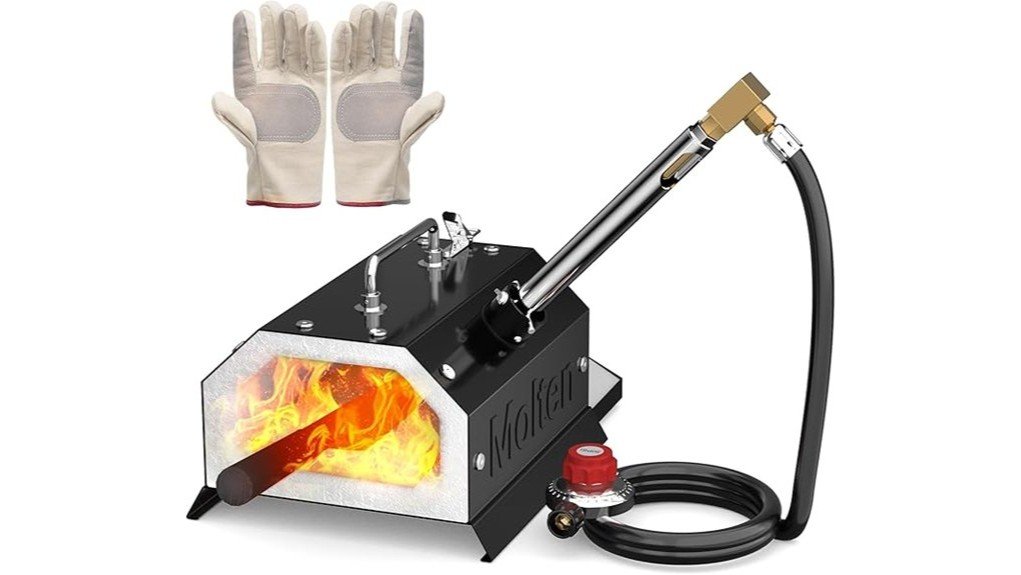
A mini propane forge can save bench space, but a small chamber can also limit the stock and blades you can heat. The MMasters Mini 1 Burner Propane Forge, sold under the Molten Masters brand as model M-F-1, is designed for beginners, hobby blacksmiths, and knife makers who work on compact projects.
This review helps you decide whether its 11 x 6 x 3.3-inch internal chamber, single-burner layout, 1-inch insulation, fire brick, and claimed 2600°F maximum temperature fit your work. Its main advantage is a focused, portable setup. Its main tradeoff is that long bars, wide blades, and larger pieces can outgrow the chamber quickly.
Quick Verdict
Rating: 8/10, Recommended with caveats
Best For: Beginner blacksmiths, hobby knife makers, and small-shop users working with short stock or compact blades.
Review Basis: This is an editorial assessment of the current product listing and supported specifications, not a hands-on temperature or durability test.
Bottom Line: The MMasters Mini 1 Burner Propane Forge offers a compact chamber, simple door access, and a high claimed temperature for small forging tasks. Buy it only after confirming that your workpieces fit and that you can provide a safe, well-ventilated hot-work area.
| Specification | Detail |
|---|---|
| Listing Name | MMasters Mini 1 Burner Propane Forge Kit |
| Brand | Molten Masters |
| Model | M-F-1 |
| ASIN | B0DFWGVQ27 |
| Product Type | Single-burner propane forge kit |
| Color | Black |
| Internal Dimensions | 11 x 6 x 3.3 inches |
| Item Weight | About 13.88 pounds |
| Package Dimensions | About 15.8 x 10.51 x 7.64 inches |
| Maximum Temperature | Up to 2600°F, manufacturer claim |
| Insulation | 1-inch insulating layer with fire brick |
| Door Design | Openable single-door chamber |
| Package Quantity | One forge kit |
| Intended Uses | Small blacksmithing, knife making, bladesmithing, and hobby metalwork |
| Fuel Compatibility | The listing Q&A references standard 20-pound or 30-pound propane cylinders; confirm the supplied regulator, hose, fittings, and local requirements before connection. |
| Package Note | Check the current listing for the exact included accessories, return terms, and warranty details because seller packages can change. |
| Critical Safety Note | The listing recommends applying a rigidizer or protective coating to exposed ceramic-fiber insulation and disconnecting the hose after use. |
What Is the MMasters Mini 1 Burner Propane Forge?
The MMasters Mini 1 Burner Propane Forge is a compact gas forge sold by Molten Masters under model M-F-1. It uses one burner to heat an 11 x 6 x 3.3-inch chamber, which is sized for short pieces of stock, small hooks, practice tools, and compact knife blanks.
The chamber combines 1-inch insulation with a fire brick, and the listing describes a high-temperature coating process. The openable door can reduce the chamber opening when closed, which may help retain heat during small projects. The product is also marketed as portable, but it must be fully cool and disconnected from the propane supply before you move it.
Who Should Buy It?
Best For
- Beginners learning heat control and hammer work on small, easy-to-handle stock.
- Hobby knife makers using blanks that fit the 11-inch chamber without unsafe crowding.
- Small-shop users who want a single-burner forge that is easier to place and store than a larger unit.
Skip If
- You regularly heat long bars, broad blades, thick billets, or multiple pieces at once.
- You need independently measured temperature consistency or proven production durability.
- You do not have a safe outdoor or purpose-built, well-ventilated hot-work area.
Before You Buy: Measure the full cross-section and heated length of your usual workpieces. A piece may fit through the door yet still leave too little room for safe tong control, repositioning, or even heating.
Key Features of the MMasters Mini 1 Burner Propane Forge
Compact Chamber and Single-Burner Layout
The 11 x 6 x 3.3-inch internal space keeps the heating zone concentrated. For small stock, this can reduce the amount of unused chamber volume that one burner must heat. It also keeps the forge body manageable for a garage bench, shed, or mobile hobby setup.
The tradeoff is limited reach and height. Long blades may need repeated repositioning, and wide or awkward workpieces may not sit safely inside the chamber. A two-burner forge is usually a better match when you need a longer, more even heating zone.
Claimed 2600°F Maximum Temperature
Molten Masters advertises a maximum temperature of 2600°F. That figure places the forge in the range marketed for general blacksmithing and knife-making work, but it is a manufacturer claim, not an independently measured result from this review.
Actual chamber temperature depends on propane pressure, burner tuning, airflow, door position, workpiece mass, weather, insulation condition, and heat loss. Do not treat the advertised maximum as the temperature you will reach or maintain in every session.
Insulation, Fire Brick, and Protective Coating
The listing specifies a 1-inch insulating layer and a fire brick. These components are meant to limit heat loss and protect the floor of the chamber. The listing also advises applying a rigidizer or protective coating to exposed ceramic-fiber blanket insulation.
That step is more than cosmetic. Do not operate the forge with damaged, loose, or exposed fiber unless the product instructions say the chamber is ready for use. Follow the manufacturer’s coating, curing, and first-fire directions before normal forging.
Openable Door and Portable Design
The single-door design gives you one main opening for loading and removing stock. Closing the door can reduce heat loss when the workpiece fits, while opening it gives you more access during loading.
The compact body and handle make storage easier after the unit is cold. The handle does not make a hot or connected forge safe to move. Shut off the cylinder, allow the forge to cool completely, disconnect the hose as directed, and inspect the area before relocation.
Performance and Usability
Based on its chamber size and single-burner design, this forge should be easiest to manage with short stock and one workpiece at a time. A smaller chamber can recover heat quickly after brief door openings, but large pieces can absorb heat faster than a single burner replaces it.
The door helps control access, but you still need careful burner tuning. Watch the metal, use the alloy’s proper forging range, and stop if the piece overheats or begins to melt.
How It Performs in Real Use
For Beginner Blacksmithing Practice
The compact chamber is a reasonable match for learning on small hooks, tapers, bends, and simple tools. One burner also gives you fewer controls to manage than a multi-burner forge. Beginners still need hands-on instruction, suitable PPE, safe fuel handling, and a clear hot-metal workflow.
For Knife Making and Bladesmithing
The 11-inch chamber can suit short blanks and localized heating. It is less convenient for long blades that need a broad, even heat. Before ordering, compare the chamber length and 3.3-inch height with your blade, tang, tongs, and the space needed to rotate the work safely.
For Small Workshop Use
The forge occupies less space than many two-burner units, but the hot-work zone must be much larger than the forge itself. Leave room for the cylinder, hose routing, tongs, anvil, quench or cooling equipment, and a safe path for moving hot metal.
For Occasional or Portable Use
At about 13.88 pounds, the forge is light enough to move after cooling. For occasional weekend sessions, dry storage can help protect the burner, insulation, fire brick, and fittings. Never transport or store it while connected to a propane cylinder.
Setup Tips Before First Use
Read the current manual and listing instructions before assembly. Confirm that the burner, regulator, hose, clamps, and fittings match the propane cylinder you plan to use. Do not improvise adapters or substitute pressure-control parts unless the manufacturer approves them.
Inspect the ceramic-fiber insulation and apply the recommended rigidizer or protective coating if it is not already sealed. Follow the required drying and curing process. Check the fire brick for shipping damage, and make sure the burner is seated and secured as directed.
Set the forge on a stable, noncombustible surface. Keep the cylinder upright and away from flame, sparks, hot scale, and radiant heat. Route the hose where you cannot step on it, cut it with hot stock, or expose it to the forge body.
Use smaller practice stock during the first session. This lets you learn burner response, door position, heating time, and tong clearance before you work on an important blade or tool.
Pro Tip: Lay out your forge, anvil, tools, and cooling area while everything is cold. Practice the path your hot workpiece will take so you are not stepping over the hose or searching for a tool after ignition.
Safety Considerations and Maintenance Tips
A propane forge combines open flame, high pressure, extreme heat, and hot metal. Use eye and face protection, hearing protection when hammering, suitable natural-fiber clothing, gloves appropriate to the task, and closed footwear. Keep a suitable fire extinguisher accessible and know how to shut off the propane supply quickly.
Do not use this forge in a living area, basement, or other enclosed space. Propane combustion can create carbon monoxide, and open doors or windows alone may not provide adequate ventilation. The OSHA compressed-gas safety overview identifies fire, explosion, oxygen-displacement, and toxic-exposure hazards associated with compressed gases.
Before every use, inspect the cylinder, regulator, hose, clamps, burner, insulation, and fire brick. Follow the manufacturer’s approved leak-check procedure. Never test for leaks with a flame. Keep the cylinder and hose away from the forge opening, sparks, scale, and hot workpieces.
After use, close the gas supply, follow the shutdown steps in the manual, disconnect the hose as the listing directs, and let every part cool completely. Store the forge dry. Replace damaged hose, cracked fittings, loose burner hardware, or deteriorated insulation before the next session.
| Safety Step | Why It Matters |
|---|---|
| Seal exposed ceramic fiber | The listing recommends a rigidizer or protective coating before use. |
| Use a purpose-built ventilated area | Helps control combustion gases, heat, smoke, and fumes from heated metal or coatings. |
| Inspect and leak-check connections | Damaged or loose fuel components can release propane. |
| Keep the cylinder upright and separated | Reduces the chance of heat, sparks, or hot scale reaching the fuel source. |
| Disconnect after shutdown | Matches the listing’s warning about residual heat transferring to the hose. |
| Store only after full cooling | Protects nearby materials and lets you inspect the forge safely. |
Pros and Cons
Pros
- Compact 11 x 6 x 3.3-inch chamber suits small stock and short blades.
- Single-burner layout is simpler than a multi-burner forge for basic hobby work.
- 1-inch insulation and a fire brick support heat retention.
- Openable door lets you balance access with chamber heat loss.
- About 13.88 pounds, making the cooled forge easier to move and store.
Cons
- Chamber length and height limit larger blades, long stock, and bulky workpieces.
- The 2600°F figure is a manufacturer claim, not an independently verified result in this review.
- Insulation preparation, propane-system inspection, and safe ventilation add setup responsibility.
Is It Worth the Price?
The MMasters Mini 1 Burner Propane Forge competes in the entry-level single-burner segment. It is worth considering when your projects fit the chamber and you want a compact kit rather than the longer heating zone of a two-burner forge.
You get the most value from it when you forge small pieces, work occasionally, and already have a suitable hot-work area and protective equipment. It is not the best fit if you expect production-level duty, need verified temperature uniformity, or will soon move to longer blades and larger billets.
How It Compares to Alternatives
A VEVOR single-burner forge or CAST Master Elite single-burner kit is worth comparing if you want another compact option with different chamber geometry or included accessories. Compare internal dimensions, insulation preparation, regulator specifications, door arrangement, and package contents rather than relying only on the advertised maximum temperature.
A two-burner propane forge is usually better for longer blades and broader heat coverage, but it uses more space and can require more fuel and setup. The MMasters M-F-1 makes the most sense when compact size and one-workpiece hobby use matter more than chamber length.
Frequently Asked Questions
What is the actual brand and model?
The product name uses MMasters, while the Amazon listing identifies the brand as Molten Masters. The model and manufacturer part number are M-F-1, and the reviewed ASIN is B0DFWGVQ27.
Is the chamber large enough for knife making?
The 11 x 6 x 3.3-inch chamber can suit short knife blanks and localized heating. Measure the blade, tang, tongs, and rotation space before buying because a blank that barely fits may still be difficult to handle safely.
Does it really reach 2600°F?
Molten Masters claims a maximum temperature of 2600°F. This review did not independently measure that figure, and actual temperature will vary with burner adjustment, fuel pressure, airflow, insulation condition, weather, and workpiece mass.
Does the insulation need to be coated?
The current listing recommends applying a rigidizer or protective coating to the ceramic-fiber blanket insulation. Follow the product instructions for preparation, curing, and first firing, and do not use damaged or loose insulation.
What propane tank can you use?
The listing Q&A references standard 20-pound or 30-pound propane cylinders. Confirm the regulator, hose, connector type, pressure range, local code, and manufacturer instructions before attaching any cylinder.
Can you use this forge in a garage?
Do not assume an open garage door provides enough ventilation or fire clearance. Use the forge only in a location designed for hot work, follow the manual and local fire rules, and never operate it in a living area or enclosed space.
What should you inspect before every use?
Check the cylinder, regulator, hose, clamps, fittings, burner position, insulation, fire brick, and work surface. Use only the manufacturer-approved leak-check method, keep ignition sources controlled, and do not light the forge if any component is damaged or loose.
Who should skip this mini propane forge?
Skip it if you need a long, evenly heated zone, want to heat several pieces at once, or cannot create a safe propane hot-work setup. It is better suited to compact hobby projects than heavy production work.
The Bottom Line
The MMasters Mini 1 Burner Propane Forge is a sensible compact option for beginners and hobbyists working with small stock or short knife blanks. Its strongest points are the focused 11 x 6 x 3.3-inch chamber, single-burner simplicity, fire brick, and 1-inch insulation.
Skip it if you need a longer heating zone, verified production performance, or a forge that requires less safety preparation. For the right small-project setup, it earns an 8/10 rating with clear size and safety caveats.
Ready to Buy?
Check the latest package contents, price, and product details before you decide.