As an Amazon Associate I earn from qualifying purchases. Buying through these links costs you nothing extra.
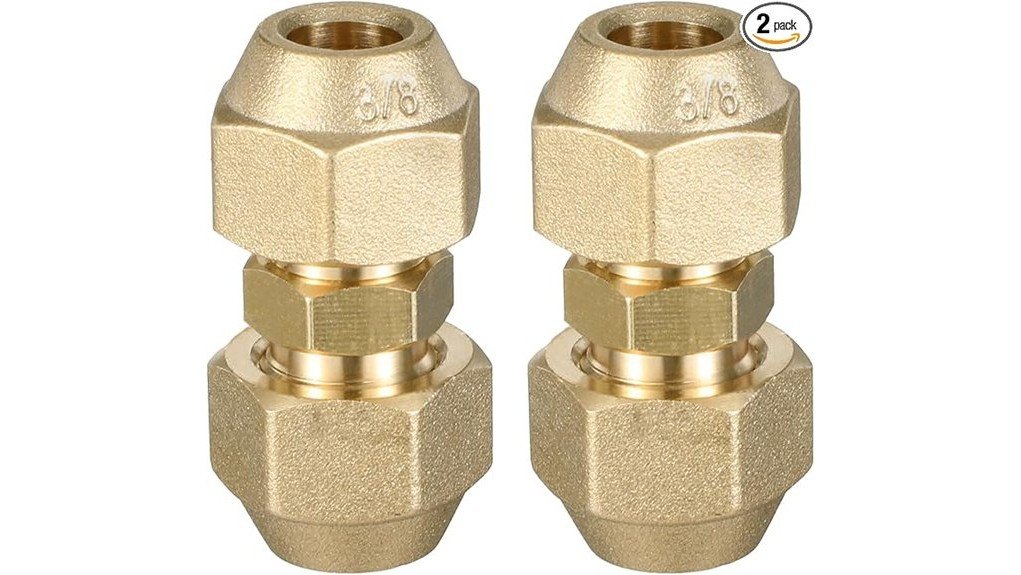
These 3/8 copper pipe extension connectors are a 2-pack of brass flare-style unions meant to join or extend 3/8 in (9.53 mm) copper tube without soldering. They are aimed at air-conditioner, mini-split and refrigeration-style tubing, and they are worth considering if you already own a flaring tool and have confirmed your tube size; skip them for threaded plumbing or any gas line that needs an approved fitting.
The information below comes from the Amazon listing, with the practical checks you need before you trust a flare joint.
Quick specs at a glance
| Item | Detail |
|---|---|
| Item | 2 brass flare-style extension (union) connectors with flare nuts |
| Listed tube size | 3/8 in (9.53 mm) copper tube |
| Material | Brass (per the listing) |
| Joint type | Mechanical flare joint, no soldering or welding |
| Listed uses | Air conditioning, refrigeration, general copper-tube extension |
| Not stated in the listing | Pressure rating, flare angle, thread size, torque value |
What these 3/8 copper pipe extension connectors are and who they suit
A flare union has two flared cone faces and a threaded nut that squeezes the tube’s flared end against the fitting body. When the tube is flared correctly, that metal-to-metal seal can hold refrigerant or air without solder.
This pack suits:
- DIY installers and technicians who need to lengthen or repair 3/8 in line sets.
- People who already have a flaring tool and tube cutter.
- Hobby projects with copper tube where a removable joint is preferred over a brazed one.
It is not a good fit for water supply fittings with pipe threads, for compression-sleeve systems, or for any job where the local code requires an approved fitting.
How to check it fits your setup
Flare joints fail when something small does not match. Work through this list first:
- Confirm your tube is 3/8 in outside diameter, which is how air-conditioning tube is sized. Do not confuse it with 3/8 in nominal water pipe.
- Check the flare type. Refrigeration work in North America normally uses a 45-degree SAE flare; the listing does not say, so look at the product photos or ask the seller.
- Check the nut thread against your existing nuts or fittings if you will mate to a service valve or an existing flare port.
- Make sure the tube wall is suitable for flaring. Soft annealed copper flares well; hard-drawn straight tube can crack.
- Confirm the pack count: two connectors cover one splice with a spare, or two splices.
Pros and limitations
Pros
- No soldering or brazing, so there is no torch or fire risk in tight or finished spaces.
- Brass bodies are a common choice for flare fittings.
- Joints can be undone and remade if you cut off the old flare and re-flare.
Limitations
- You need a flaring tool, a tube cutter and a deburring tool, plus a second wrench for tightening.
- Poor flares are the main cause of leaks, not the fitting itself.
- The listing gives no pressure or torque data, so follow the equipment maker’s guidance for any refrigerant circuit.
- Each flare joint is a potential leak point, so many installers prefer to use one continuous tube where possible.
How to make a flare joint correctly
- Cut the tube square with a rotary cutter, then ream the inside edge and remove burrs.
- Slide the flare nut onto the tube first, with the thread facing the end you will flare. This is the step people forget.
- Clamp the tube in the flaring block so it protrudes by the amount your tool specifies, then form the flare slowly.
- Inspect the flare: it should be smooth and even, with no cracks or off-centre rim.
- Seat the flare on the connector, hand-start the nut, then tighten using two wrenches, one holding the connector body.
- Test for leaks with nitrogen or a leak-detection method suitable to your system, not by guessing.
Refrigerant handling is regulated in many places, and you may need certification to work on a sealed system. If you are unsure, leave that part to a licensed technician. Wear eye protection when cutting and flaring.
Alternatives and related guides
- OPFIUE copper pipe extension joint connectors: a similar connector pack to compare before you buy
- AC copper pipe extension joint connectors: another air-conditioning style connector listing
- Straight copper coupling fittings: solder-type couplings if you prefer a brazed or soldered joint
- PATIKIL 1/4 in copper coupling: a smaller coupling for thinner copper tube
Frequently Asked Questions
What tube size do 3/8 in flare extension connectors fit?
The listing describes them for 3/8 in (9.53 mm) copper tube. That is outside diameter, which is how air-conditioning tube is sized. Standard nominal 3/8 in water pipe is a different size, so measure your tube before buying.
Do I need a flaring tool to use these connectors?
Yes. A flare connector relies on a properly flared tube end. You need a flaring tool, a tube cutter and a deburring tool, and you must slide the flare nut onto the tube before you form the flare.
Can I use these on a natural gas or propane line?
Do not assume so. The listing does not give a pressure rating or fuel gas approval, and gas piping is regulated. Use only parts approved for that service and have a licensed gas fitter check the job.
How do I stop a flare joint from leaking?
Use a clean, square tube cut, deburr it, make a smooth even flare, seat it on the cone and tighten with two wrenches. Do not over-tighten. If it leaks, cut off the flare and make a fresh one instead of cranking the nut.
Final verdict
These 3/8 copper pipe extension connectors are a sensible no-solder option for extending 3/8 in copper tube if you can make a clean flare and have checked the tube and thread size. Treat the flare as the critical step, leak test every joint, and use approved parts for gas or regulated refrigerant work.