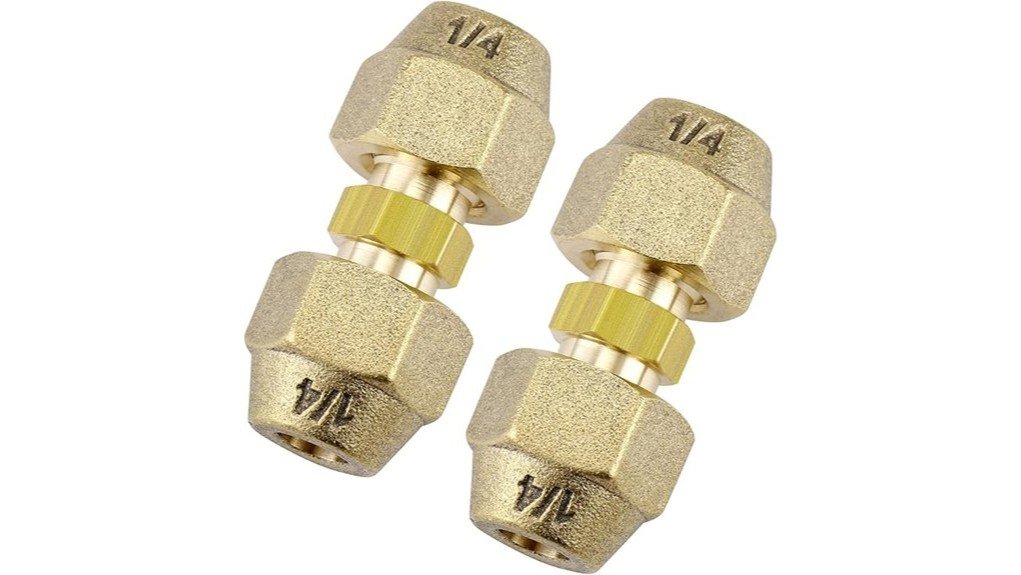
The 2-pack AC copper pipe extension joint connectors are brass flare unions for joining two lengths of 1/4 inch copper tubing without soldering. They suit DIY and HVAC jobs where you need to extend or repair a small line. This AC copper pipe connectors review is based on the Amazon listing, which describes two connectors and four flare nuts per pack. Check that a mechanical flare joint is acceptable for your application.
Quick specs at a glance
| Item | Per the listing |
|---|---|
| Type | Brass flare union / extension connector |
| Tube size | 1/4 inch copper tubing |
| Pack contents | 2 connectors and 4 flare nuts |
| Installation | Mechanical, wrench-tightened; no soldering |
| Intended use | HVAC, refrigeration and plumbing projects |
What these AC copper pipe connectors are and who they suit
A flare union is a short brass body with a flare seat on each end. Two flared tube ends press into it, and the flare nuts pull each tube tight. The result is a removable joint that does not need heat.
It suits people extending a small-bore copper line, replacing a damaged section, or building a lab, tool or air-conditioning line where a mechanical joint is acceptable. It does not replace a brazed joint where a brazed joint is required.
How to check it fits your setup
- Measure your tubing. The listing is for 1/4 inch tube; measure the outside diameter, not the thread.
- Confirm flare type. Most HVAC flares are 45 degree SAE flares. Make sure the nut and union match your flaring tool.
- Check the nuts. Four nuts are included for the two connectors in the pack; make sure the nut thread matches the union.
- Check the system. If the line carries refrigerant, gas or high-pressure fluid, verify the part is rated for it.
- Do not assume a thread size. Flare unions use flare threads, not pipe threads, so compare the nuts with your existing fittings or the product photos.
Pros and limitations
- Pro: no torch, flux or filler metal needed.
- Pro: a brass body is standard for flare fittings.
- Pro: a pack of two connectors and four nuts covers a few simple repairs.
- Limitation: a flare joint is only as good as the flare you make.
- Limitation: not a substitute for an engineered high-pressure or code-required joint.
- Limitation: pressure and temperature ratings should come from the listing or manufacturer, not assumption.
How to make the joint
- Cut the tube square with a tube cutter and remove the burr inside and outside.
- Slide the flare nut onto the tube first, with the thread facing the end.
- Flare the end with a flaring tool at the right angle, with the tube sticking up from the die by the amount the tool specifies.
- Inspect the flare. It should be smooth, even and free of cracks.
- Hold the union with one wrench and tighten the nut with another. Snug, then a little more; avoid over-tightening.
- Pressure or leak test the joint before putting the line into service.
Alternatives and related guides
- For a similar pack with different tube sizes, see the Opfiue copper pipe connector review.
- If you want a soldered joint, read the straight copper coupling fittings review.
- Another pack to compare: packs copper pipe extension joint connectors.
- For a brazing alternative, see PCS brass brazing rods.
Frequently Asked Questions
Do flare unions need soldering or welding?
No. A flare union is a mechanical joint. You flare the end of each tube, slip a flare nut on first, and tighten the nut against the union body. The flare itself creates the seal, so no torch is needed, but the flare must be made correctly.
What tools do I need to join 1/4 inch tubing with a flare union?
You need a tube cutter, a deburring tool, a flaring tool for the right flare angle, and two wrenches, one to hold the union and one to turn the nut. A torque wrench is helpful for avoiding over-tightening.
Can I use these connectors on an AC refrigerant line?
The listing describes them for AC and refrigeration work, but refrigerant lines must be assembled and pressure tested properly. In the US, venting refrigerant is illegal, so have a licensed HVAC technician open or recharge a system.
Why does my flare joint keep leaking?
Common causes are a cracked or uneven flare, a burr on the tube, a nut that is cross-threaded or over-tightened, or mixing flare angles. Cut back to clean tube, re-flare, and tighten with a backup wrench.
Conclusion
These flare unions are a basic, torch-free way to join 1/4 inch copper tube, provided you can make a clean flare. Check the tube size, flare type and system rating before you buy.