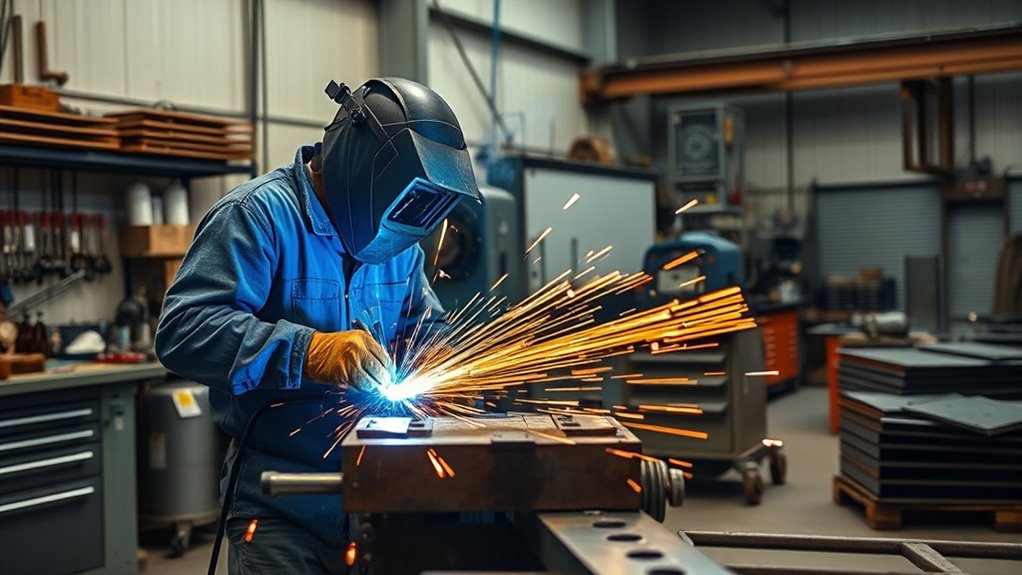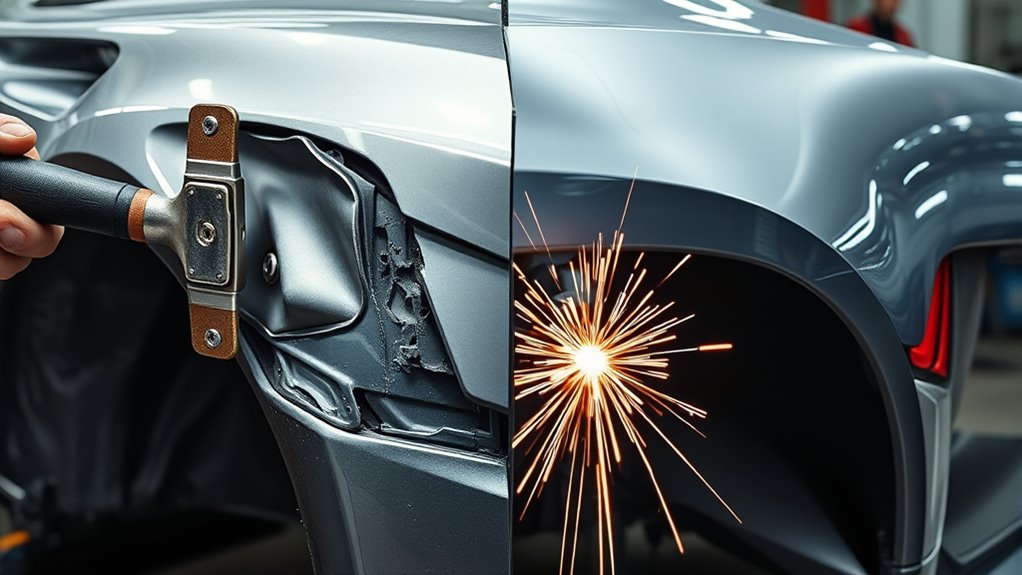
Use panel beating when the damage is mainly cosmetic, such as dents, creases, shallow waves, or panel shape issues where the original metal can still be saved. Choose welding when the repair needs a fused metal joint, section replacement, or structural strength. Use panel bonding only when the vehicle maker or adhesive maker allows it for that panel, joint, and material.
Quick Answer
Panel beating is best for reshaping repairable body panels. Welding is best for cracks, tears, sectioning, and load-bearing metal joints. Panel bonding is best when the OEM repair procedure allows adhesive attachment, especially on some skins, hems, and mixed-material panels where heat distortion is a concern.
Key Takeaways
- Use panel beating for dents, waves, and cosmetic reshaping when the panel is still structurally sound.
- Use welding when the repair needs a fused joint, section replacement, plug weld, butt weld, or structural load path restored.
- Use adhesive bonding, rivets, or hybrid joining only when the vehicle maker, adhesive maker, or approved procedure allows it.
- Prep matters for every method. Dirty metal, paint, rust, moisture, and poor fitment can ruin both welds and bonded joints.
- For structural, airbag/SRS, EV/high-voltage, or ADAS-related repairs, follow OEM procedures or use a qualified collision repair technician.
Warning: Do not guess on structural collision repairs. Before welding, bonding, riveting, or sectioning, check the vehicle maker’s repair information through a trusted source such as I-CAR OEM Information. Welding also creates safety hazards, including fumes, UV exposure, burns, eye injury, and electric shock, so use proper PPE and ventilation.
Panel Beating, Welding, and Panel Bonding at a Glance
| Method | Best For | Main Risk | Check First |
| Panel beating | Dents, shallow creases, metal reshaping, and cosmetic panel alignment | Overstretching metal, cracking paint, hiding deeper structural damage | Panel access, paint condition, metal stretch, and whether the part is structural |
| Welding | Cracks, tears, patch panels, section replacement, plug welds, butt welds, and structural joints | Heat distortion, burn-through, corrosion if not protected, and weak welds from poor prep | OEM weld type, material, thickness, equipment settings, and corrosion protection steps |
| Panel bonding | Approved skins, hems, flanges, quarter-panel areas, and some mixed-material repairs | Bond failure from poor prep, wrong adhesive, wrong clamp time, or missing mechanical fasteners | OEM procedure, adhesive data sheet, cure time, rivet location, and seam sealing plan |
Products Worth Considering
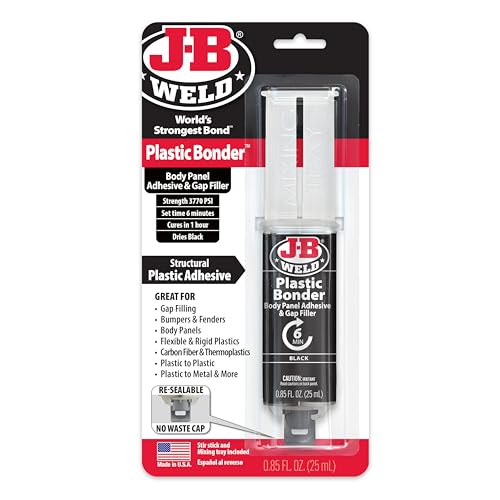
Plasticbonder: Is A Quick-Set, 2 Part, Urethane Adhesive System That Provides Strong, Lasting Repairs And Works On Thermoset, Carbon Fiber Composites, Thermoplastics, Coated Metals, Concrete & More.

OEM Recommended Auto Adhesive – Professional two-part epoxy designed for bonding auto body panels; trusted by OEMs for non-structural repairs like quarter panels, roofs, and door skins.
![[Black] Seam Sealer Automotive-Professional Grade High Strength Waterproof Automotive Adhesive for Auto Body Repair, Rust & Leak Prevention-Quick Paintable Sealant for Metal, Plastic -10.5Oz Tube](https://m.media-amazon.com/images/I/51+H+ZgHQSL._SL500_.jpg)
🔧 Bonds to All Surfaces: Tylove Seam Sealer Automotive forms a strong bond with primed, painted, or bare metal surfaces. With a fast curing time, it’s ready for paint in just 30 minutes—no sanding required! Perfect as an RV roof sealant or polyurethane auto body filler.
What Panel Beating Does Best
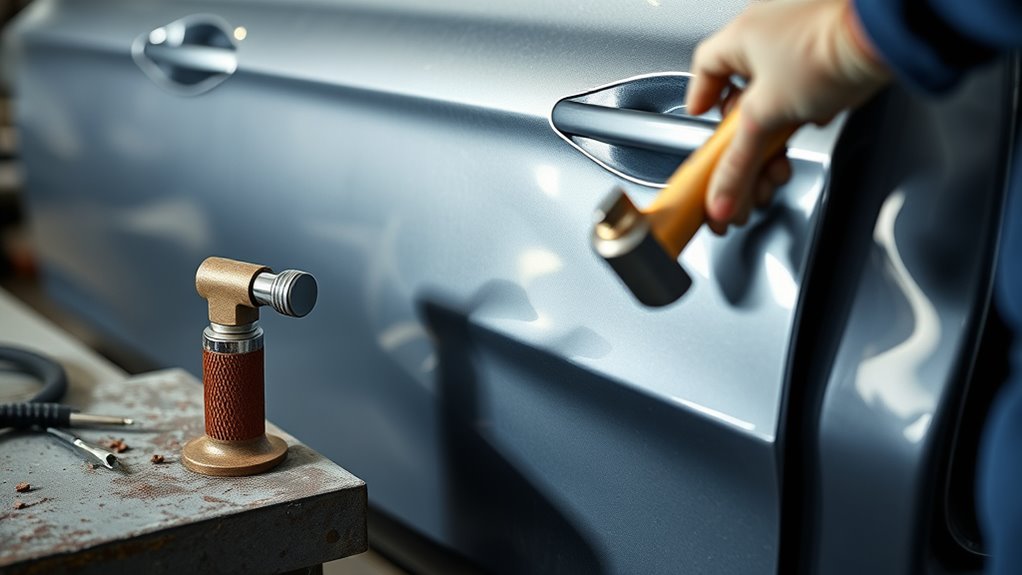
Panel beating works best when you need to restore a panel’s shape without cutting out metal. It is useful for door skins, fenders, hoods, quarter-panel outer surfaces, and other visible body areas where the panel can still be reshaped, aligned, and refinished.
A skilled technician uses hammers, dollies, spoons, pulling tools, shrinking methods, and careful finishing to bring the metal close to its original contour. Body filler may still be used afterward, but the goal is to avoid thick filler by correcting as much of the metal shape as possible first.
Panel beating is not the same thing as structural welding. If the panel is torn, cracked, badly stretched, crushed around a load path, or tied to safety systems, panel beating alone is not enough. That is when the repair moves into welding, bonding, replacement, measuring, and OEM procedure work.
Pro Tip: If the backside of the panel is reachable and the metal is not stretched too far, panel beating or paintless dent repair may save more original material than cutting, welding, or replacing the panel.
When Welding Is the Better Choice
Choose welding when the repair needs a fused metal joint. That includes cracks, tears, rust cutouts, patch panels, replacement sections, plug welds, and structural areas where the joint must carry load. Welding is also used when the OEM procedure calls for a specific weld type instead of adhesive bonding.
The right welding process depends on the vehicle, material, joint design, and repair procedure. Collision work may involve GMAW/MIG welding, squeeze-type resistance spot welding, MIG brazing, plug welds, seam welds, or butt welds. Professional welders also rely on qualified procedures and standards from organizations such as the American Welding Society.
Products Worth Considering


All position copper coated welding wire containing a high level of manganese and silicon to produce welds on dirty or rusty steel
Structural Strength
Welding is often the better choice when the damaged part is part of the vehicle’s load path. Rocker panels, pillars, rails, aprons, reinforcements, and other structural members do more than hold paint. They help manage crash energy and keep the body shell aligned.
A strong weld starts with clean metal, correct fitment, controlled heat, proper penetration, and corrosion protection after the joint is complete. Do not rely on heat to “clean” the repair. Paint, rust, coatings, oil, and moisture can weaken the weld or create porosity.
For thin body panels, heat control is especially important. Short welds, cooling time, good panel gaps, copper backing where appropriate, and correct machine settings can reduce burn-through and distortion. For more detail on thin sheet-metal technique, see this guide to MIG welding thin metal without burning through.
Butt Weld Precision
A butt weld joins two trimmed edges in the same plane. It can produce a clean repair with less overlap and fewer moisture traps than a lap joint, but only if the panel is cut, fitted, and aligned carefully.
Butt welds are useful when a flat, single-layer finish matters. They also demand more skill because the gap, heat, travel speed, and tack sequence all affect warpage. If the gap is too wide or the panel is too thin, the weld can burn through or shrink the surrounding metal.
Common Weld and Join Types in Body Repair
- Plug weld: Often used to replace factory spot welds when approved by the repair procedure.
- Spot weld: Common in factory-style overlapping flanges when the right squeeze-type resistance spot welding equipment is available.
- Butt weld: Used for edge-to-edge panel sectioning when approved and when a flush finish is needed.
- MIG brazing: Used on some modern repairs to reduce heat input compared with fusion welding, but prep and OEM rules still matter.
- Adhesive with rivets or welds: A hybrid repair may be required when the procedure calls for bonding plus mechanical fastening.
Panel Beating vs Welding for Quarter Panels
Quarter panels need careful judgment because they can include cosmetic outer metal, wheelhouse attachments, hem flanges, roof rail joints, trunk openings, and structural tie-in points. A small outer dent may be a panel-beating job. A torn, rusted, or crushed section may need welding, bonding, riveting, or full replacement.
Start With the OEM Procedure
The best quarter-panel repair is the one the vehicle maker allows for that exact model and damage area. I-CAR Best Practices are useful when no vehicle-specific repair information or OEM position statement exists, but they do not replace the vehicle maker’s instructions.
Some quarter-panel designs use adhesive and folded hem flanges. I-CAR notes that rolled hem flange quarter panels can be attached with adhesive and folded over the inner panel, which is why removal and reuse can be restricted on those parts. That does not mean every quarter panel should be bonded. It means the joint design matters.
Adhesive Vs Welded Panels
Panel bonding can reduce heat distortion because it does not melt the panel. It can also seal a flange area when used with the right adhesive, clamp pressure, cure time, and corrosion protection. On some repairs, the procedure may also call for rivets, welds, or other fasteners while the adhesive cures.
Welding may be required when the joint needs fusion, when the OEM procedure calls for plug welds or spot welds, or when the repair area cannot safely rely on adhesive alone. The deciding factor is not preference. It is the vehicle maker’s procedure, the adhesive maker’s instructions, and the damaged panel’s role in the body structure.
Heat Distortion Concerns
Thin sheet metal moves when it gets hot. Too much heat can shrink the weld area, pull a panel out of shape, and create extra filler work. This is why welding sequence, tack spacing, cooling time, and heat control matter on exterior panels.
| Method | Distortion Risk | Best Use |
|---|---|---|
| Panel beating | Low heat risk, but overstretching is possible | Repairable dents and shape correction |
| Welding | Higher heat and shrinkage risk | Cracks, tears, sectioning, and required fused joints |
| Panel bonding | Low heat risk, but prep and cure are critical | Approved flanges, skins, hems, and mixed-material joints |
Rivets, Clamps, And Seams
Rivets and clamps help hold a bonded panel in the correct position while the adhesive cures. They can also provide mechanical backup when the approved procedure calls for them. The key is to use the specified rivet type, spacing, adhesive bead, clamp pressure, and cure time.
After the panel is welded or bonded, the seam still needs protection. Seam sealer, primer, cavity wax, and corrosion protection should be restored according to the repair procedure. A strong joint can still fail early if water reaches bare metal inside a flange.
How Panel Material Changes the Repair
Panel material changes the repair method because steel, aluminum, composites, and mixed-material structures react differently to heat, stress, adhesives, and fasteners.
- Mild steel: Often repairable with panel beating or welding when thickness and damage allow it.
- High-strength steel: May have strict limits on heat, sectioning, straightening, and replacement. Follow OEM procedures.
- Aluminum: Can be welded in some cases, but it needs correct equipment, cleanliness, heat control, and corrosion separation from steel.
- Fiberglass and carbon fiber: Cannot be repaired with normal steel welding. These materials usually require composite repair, bonding, or replacement.
- Mixed-material vehicles: May combine steel, aluminum, adhesives, rivets, and special fasteners. Guessing can create corrosion, weak joints, or safety problems.
Note: Material identification comes before method selection. A magnet, repair manual, panel location, and OEM service information can prevent a costly mistake.
Why Prep Matters for Both Methods
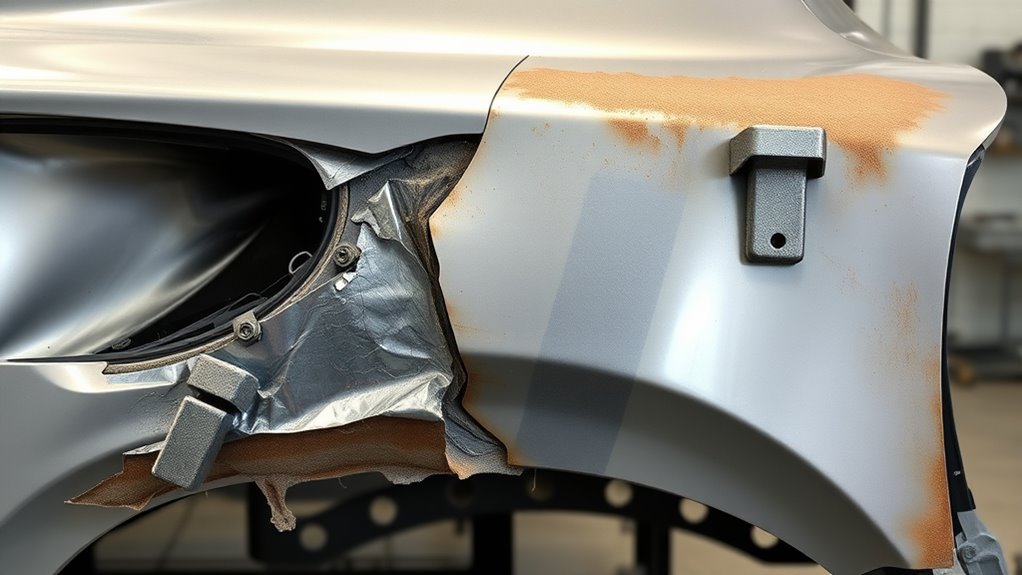
Prep matters because both welding and bonding depend on clean contact, correct fitment, and sealed surfaces. Good prep is not optional. It is what keeps the repair from cracking, rusting, peeling, or failing under stress.
For welding, remove paint and coatings in the weld area, fit the panels tightly, and use the correct weld type and settings. I-CAR’s MIG brazing panel preparation guidance also warns that weld-through primer is not recommended for MIG brazing because it can create severe porosity.
For panel bonding, follow the adhesive system exactly. That usually means removing paint and rust where specified, abrading the surface, cleaning with the correct product, applying the adhesive within its work time, clamping correctly, and allowing full cure before stress or refinishing.
Basic Prep Checklist
- Identify the panel material before sanding, welding, or bonding.
- Check the OEM repair procedure for allowed sectioning points and join methods.
- Remove paint, rust, oil, moisture, and loose coatings where the procedure requires it.
- Test fit panels before applying adhesive or striking an arc.
- Protect adjacent glass, trim, wiring, interior parts, fuel lines, and modules.
- Restore primer, seam sealer, cavity wax, and corrosion protection after the repair.
Panel Beating vs Welding: Cost and Distortion
Panel beating can be cheaper when the damage is shallow and accessible because it may avoid cutting, replacement panels, adhesives, weld consumables, and long refinish work. But severe dents, stretched metal, hidden damage, and poor access can make panel beating slow and expensive.
Welding often costs more when the repair needs sectioning, panel removal, measuring, corrosion protection, and refinishing. It also requires safe equipment, shielding gas or approved consumables, PPE, and skill. The cost is justified when a welded joint is required for strength or when the panel cannot be saved.
Panel bonding can reduce heat distortion, but it is not always cheaper. Adhesive cartridges, applicator guns, rivets, clamps, prep materials, and cure time all affect cost. A bonded repair done with the wrong adhesive or too little clamp time can become more expensive than doing it correctly the first time.
How to Choose the Right Repair
Choose the repair by working through the damage, material, and procedure in order. Do not start with your favorite tool. Start with the panel’s job on the vehicle.
- Identify the damage: Is it a dent, crease, tear, rust hole, crushed flange, or structural deformation?
- Identify the material: Check whether the panel is mild steel, high-strength steel, aluminum, composite, plastic, or mixed material.
- Check the repair procedure: Confirm whether panel beating, welding, bonding, riveting, replacement, or a hybrid method is allowed.
- Consider heat risk: Thin panels and aluminum can distort quickly, so control heat or use an approved low-heat method.
- Consider strength: If the part carries load or crash energy, use the method specified by the vehicle maker.
- Plan corrosion protection: Every cut, weld, flange, and bonded seam needs protection after the repair.
- Know your limit: If the repair touches airbags, seat-belt mounts, ADAS brackets, EV systems, rails, pillars, or crash structures, use a qualified technician.
Common Mistakes to Avoid
- Bonding where welding is required: Adhesive is not a universal replacement for welds.
- Welding where bonding is required: Extra heat can damage thin panels, coatings, or material properties.
- Skipping OEM procedures: Modern vehicles use advanced steels, aluminum, adhesives, sensors, and mixed materials.
- Using too much filler: Filler should refine the surface, not hide poor metal work.
- Ignoring corrosion protection: Bare seams and flanges can rust from the inside out.
- Grinding welds too thin: Over-grinding can weaken the repair and create low spots.
- Rushing adhesive cure: Moving or refinishing a bonded panel too soon can weaken the joint.
Frequently Asked Questions
When should I use panel beating instead of welding?
Use panel beating when the panel is dented, creased, or slightly misshapen but not torn, rusted through, or structurally compromised. It is best for saving original metal and restoring shape before refinishing.
Can I use panel bond instead of welding?
Yes, but only when the OEM repair procedure or adhesive maker allows it for that exact panel and joint. Panel bond can work well on approved flanges, skins, hems, and some mixed-material repairs, but it is not a universal substitute for structural welds.
What is the golden rule in auto body welding?
Use the lowest effective heat that produces the required weld, and follow the approved procedure. Clean prep, tight fitment, correct settings, short weld sequences, cooling time, and corrosion protection matter more than speed.
Is it better to TIG or MIG weld body panels?
It depends on the repair. TIG can offer fine control on clean, thin metal, but many collision repairs use GMAW/MIG, plug welds, spot welds, MIG brazing, or bonding because those are the methods specified for the panel. Follow the vehicle maker’s procedure first.
Does welding make a body panel stronger than panel beating?
Welding can restore a torn or cut metal joint, but it is not automatically better for every panel. If the damage is only a dent, panel beating may preserve more original metal. If the panel is structural or cut, the correct welded or bonded procedure is what matters.
When should I avoid DIY panel repair?
Avoid DIY repair when the damage reaches rails, pillars, rocker panels, seat-belt mounts, airbag/SRS areas, EV high-voltage parts, ADAS brackets, suspension mounts, or major corrosion. These repairs need measuring, OEM procedures, and qualified safety checks.
Conclusion
When you choose between panel beating, welding, and panel bonding, match the method to the damage, material, panel function, and OEM repair procedure. Panel beating is best for saving repairable metal and restoring shape. Welding is best when the repair needs a fused joint or structural strength. Bonding is best when the approved procedure calls for adhesive, rivets, or a hybrid joint. Get the prep, heat control, fitment, and corrosion protection right, and the repair has a much better chance of staying straight, safe, and durable.
Sources
- I-CAR OEM Information — supports using current vehicle-maker repair procedures, position statements, and repair instructions.
- I-CAR Best Practices — supports using best practices only when vehicle-specific repair information is not available.
- I-CAR MIG Brazing Panel Preparation — supports weld-area prep, corrosion protection, and cautions about weld-through primer for MIG brazing.
- I-CAR Recycled Outer Quarter Panels w/Rolled Hem Flanges — supports quarter-panel hem flange and adhesive attachment discussion.
- OSHA Welding, Cutting, and Brazing Hazards and Solutions — supports welding safety, PPE, fumes, UV exposure, burns, and electrical hazard guidance.
- American Welding Society Standards and Publications — supports the importance of welding procedures, standards, and qualified practices.