Disclosure: As an Amazon Associate, we earn from qualifying purchases. If you click a link on this page and make a purchase, we may receive a small commission at no extra cost to you.
Cracked plastic parts can be expensive to replace, especially when the damage sits on a bumper, tank, housing, or shop item you still use. The 1322PCS Plastic Welding Kit is made for repairs that need reinforcement, not just a surface patch. It gives you rods, staples, mesh, and finishing supplies so you can rebuild damaged plastic with more support. This review helps you decide whether the kit has enough depth for your DIY repairs, and where its learning curve may make a simpler repair option smarter.
Quick Verdict
Rating: Recommended with caveats (8/10)
Best For: DIY users repairing bumpers, plastic tanks, equipment housings, trims, bins, and other repairable plastic parts
Bottom Line: This kit gives you a broad 1322-piece repair setup with rods, staples, mesh, sandpaper, smoothing heads, and foil tape. It offers strong repair coverage, but you still need a compatible plastic welding tool and enough practice to control heat correctly.
| Specification | Detail |
|---|---|
| Product Type | Plastic welding repair kit |
| Total Pieces | 1322 PCS |
| Welding Rods | 106 PCS for a 7-plastic-type assortment |
| Staples | 1200 PCS reinforcing staples |
| Reinforcement | Mesh sheets included for backing and support |
| Common Materials | ABS, PP, Nylon, and similar plastics when matched correctly |
| Included Finishing Supplies | Smooth heads, sandpaper, and foil tape |
| Required Tool | Compatible plastic welding tool required separately |
| Best Use | DIY reinforcement repairs on bumpers, tanks, housings, trims, and household plastic parts |
| Safety Note | Not ideal for critical load-bearing, pressurized, fuel-contact, or safety-related parts unless a qualified professional confirms the repair method |
What Is the 1322PCS Plastic Welding Kit?
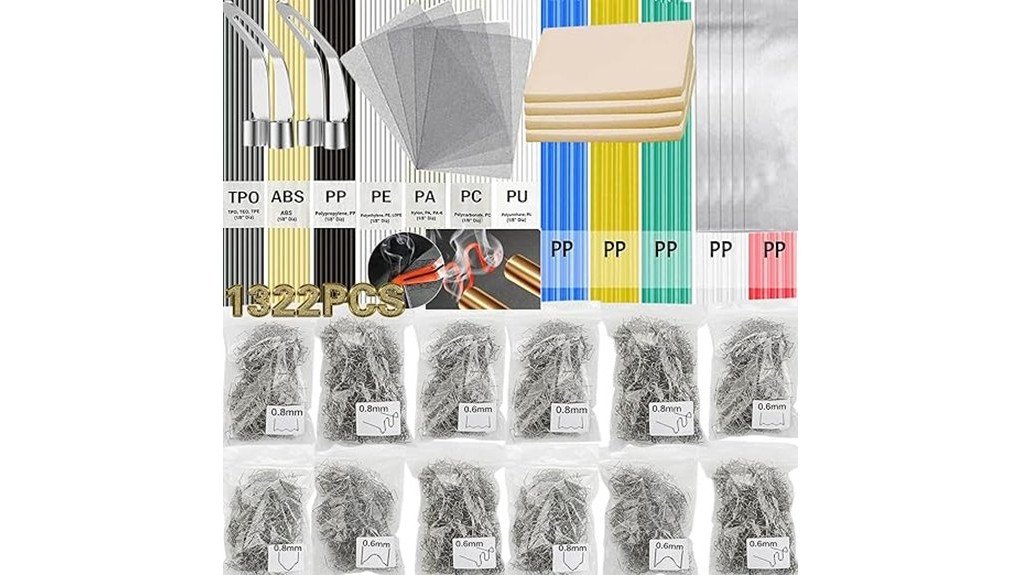
The 1322PCS Plastic Welding Kit is a multi-component plastic repair set for rebuilding cracked or broken plastic parts. Instead of relying on glue alone, it combines plastic welding rods, reinforcing staples, and mesh support so you can strengthen the damaged area from more than one angle.
The kit is best understood as a consumable and reinforcement bundle. It does not replace the main plastic welding tool, so you need a compatible heating device before you can use the rods and staples. That makes it a better match for users who already own a plastic welder or plan to buy one for repeated repairs.
The main selling point is coverage. You get 106 welding rods, 1200 staples, mesh sheets, sandpaper, smoothing heads, and foil tape, which gives you options for cracks, splits, holes, and areas that need backing support.
Who Should Buy It?
Best For
- DIY users fixing cracked car bumpers, trims, and plastic panels
- People repairing plastic tanks, bins, covers, housings, and workshop items
- Users who want reinforcement supplies for repeated plastic welding jobs
Skip If
- You need a one-step cosmetic patch with no sanding or heat control
- You do not own or plan to buy a compatible plastic welding tool
- You are repairing a critical structural, pressurized, fuel-contact, or safety-related part
Key Features and Build Breakdown
Rod Compatibility and Material Coverage
The kit includes 106 welding rods for a 7-plastic-type assortment, with common material coverage listed for ABS, PP, Nylon, and similar plastics. This matters because plastic welding depends on matching the rod to the base material. A mismatched rod can sit on the surface instead of bonding into the repair.
For best results, identify the plastic type before you start. Many automotive parts and bins have molded material markings, such as PP or ABS. Matching that marking to the correct rod gives the repair a better chance of holding under normal flex and vibration.
Staple Reinforcement System
The 1200 included staples help lock both sides of a crack together before you finish the surface. This is useful for bumper cracks, tabs, housings, and stress fractures where a plain surface weld may reopen after movement.
Staples are especially helpful when the broken plastic has tension on it. They act like internal stitching, while the welding rods and mesh help cover and reinforce the repair area.
Mesh Support for Structural Strength
The included mesh gives you a backing layer for cracks, holes, and thin plastic sections. It spreads stress across a wider area, which can reduce flexing around the repair.
Mesh support makes the most sense on the back side of a damaged panel or tank wall where appearance matters less than strength. You still need controlled heat so the plastic bonds without overheating or warping.
Finishing Supplies for Cleaner Repairs
Sandpaper and smoothing heads help you refine the repaired surface after welding. They will not make every repair invisible, but they help remove rough edges and prepare the area for later finishing work.
Foil tape can help with temporary positioning, backing, or heat control during some repairs. Use it carefully and follow the instructions for your welding tool, since every heating setup behaves a little differently.
Pro Tip: Clean the repair area with a plastic-safe cleaner, dry it fully, and test your heat setting on scrap plastic before touching the damaged part. Dirt, oil, and too much heat are common reasons plastic welds fail early.
Compatibility and Safety
This kit is most practical for repairable plastic parts such as bumper covers, trims, tanks, housings, bins, covers, and shop items. It is not a universal fix for every cracked plastic part, especially when the part carries heavy loads or protects people from injury.
Avoid using this kit as your only repair method on fuel-contact parts, pressurized tanks, suspension parts, seat mounts, airbag-related panels, or any component where failure could create a safety risk. For vehicle safety parts or leak-critical repairs, get professional guidance before relying on a DIY plastic weld.
Plastic welding uses heat, so work in a ventilated area and follow the instructions for your compatible welding tool. Wear suitable eye and hand protection, and keep heat away from wiring, upholstery, flammable liquids, and painted surfaces.
How It Performs in Real Use
For Car Bumpers and Trim
You can use the staples to stabilize a bumper crack first, then reinforce the repair with rods and mesh from the back side. This works best on non-structural bumper cover sections where the goal is to stop a crack from spreading. Cosmetic finishing may still require sanding, filler, primer, or paint after the weld cools.
For Plastic Tanks and Housings
Water tanks, equipment housings, and utility covers benefit from mesh backing because the repair area often needs more support than a thin surface weld can provide. The kit can help around stress points, but sealing depends on correct material matching, even heat, and proper surface prep.
For Household and Workshop Plastics
Storage bins, chairs, tool cases, appliance covers, and outdoor plastic items can often be repaired well enough for continued use. The visible repair line may remain, so this kit makes more sense for function-first repairs than showroom-level cosmetic work.
For Long-Term Repairs
Durability depends on the plastic type, crack shape, heat control, and how much stress the part sees after repair. Staples and mesh improve the odds because they reinforce the area beyond the original crack line. Still, highly flexible plastic or parts under constant load may require a different repair method or replacement.
How to Use It Correctly
Start by cleaning the damaged area and removing loose plastic. If the crack has tension, align the pieces and use staples first so the repair does not pull apart while you work.
Next, choose the rod that matches the base plastic as closely as possible. Apply heat slowly and evenly, then build the repair in layers instead of trying to fill the whole area at once.
Use mesh on the back side when the part needs extra support or when the crack crosses a thin section. After the repair cools, trim sharp staple ends if needed and smooth the surface with the included finishing supplies.
Before You Buy: This kit does not include the compatible plastic welding tool needed to heat and apply the rods and staples. Buy it only if you already have the tool or plan to purchase one separately.
Pros and Cons
Pros
- Large 1322-piece set supports many repair scenarios
- 106 welding rods cover a broad plastic-type assortment
- 1200 staples help reinforce cracks before surface welding
- Mesh sheets add backing support for thin or stressed areas
- Sandpaper, smoothing heads, and foil tape help with finishing and setup
Cons
- Requires a separate compatible plastic welding tool
- Results depend heavily on prep, material matching, and heat control
- Not suitable for every structural, pressurized, fuel-contact, or safety-critical repair
Need a Larger Repair Kit?
Check the current product details to confirm the included pieces match your repair plans.
Is It Worth the Price?
This kit sits in a strong value category for buyers who already have a plastic welding tool. The 1322-piece count gives you enough rods, staples, mesh, and finishing supplies for more than one repair job, which can make sense if you work on cars, outdoor gear, shop items, or household plastics.
It is worth considering if you need reinforcement supplies rather than a quick cosmetic patch. The biggest value comes from the combination of rods, staples, and mesh because those parts work together on cracks that need more support.
It is not the best fit if you only need one small repair and do not want to buy or learn a separate heating tool. In that case, a simpler repair kit or part replacement may cost less time and effort.
How It Compares to Alternatives
Compared with rod-only plastic welding kits, this 1322PCS kit gives you more reinforcement options because it includes staples and mesh. Compared with simple epoxy or adhesive patches, it can create a more integrated repair when the rod material matches the base plastic.
Staple-only repair kits may be easier for beginners who only need to hold a crack together, while this kit is better for buyers who want rods, staples, and backing mesh in one set. For highly visible cosmetic repairs, professional body repair materials may still deliver a cleaner final appearance.
Frequently Asked Questions
Do I need a welding tool to use this kit?
Yes, you need a compatible plastic welding tool to heat and apply the rods and staples. The kit supplies repair consumables and finishing items, but it does not replace the main heating tool.
Can it fix car bumper cracks permanently?
It can create a strong repair on many non-structural bumper cover cracks when you use staples, rods, and mesh correctly. Severe damage, safety-related damage, or cracks near mounting points may still need professional repair or replacement.
What types of plastic does it support?
The article-supported material list includes common plastics such as ABS, PP, Nylon, and similar plastics. Always match the welding rod to the base material because mismatched plastics can weaken the repair.
Is this kit beginner-friendly?
Beginners can use it, but it is not an instant repair product. You need practice with heat control, staple placement, rod matching, and surface finishing before expecting clean results.
Does it work on outdoor plastic items?
Yes, it can be used on repairable outdoor plastics such as tanks, bins, covers, and equipment housings. Weather resistance depends on correct material matching, full bonding, and proper sealing of the repaired area.
What is the biggest mistake to avoid?
The biggest mistake is welding dirty plastic or using the wrong rod type. Clean the surface, identify the base plastic, and test your heat setting before working on the final repair.
Should I use staples, rods, or mesh first?
Use staples first when the crack needs alignment or tension relief. Add rods and mesh after that when the repair needs extra bonding area or backing support.
Who should skip this kit?
Skip it if you want a no-heat, no-practice repair method or if you are fixing a critical part where failure could be dangerous. It is also not ideal if you do not want to buy a separate plastic welding tool.
The Bottom Line
The 1322PCS Plastic Welding Kit is a strong choice for DIY users who want rods, staples, mesh, and finishing supplies for repeated plastic repairs. It makes the most sense for bumpers, tanks, housings, trims, and household plastic parts where reinforcement matters more than an invisible finish.
Skip it if you need a simple cosmetic patch, do not have a compatible welding tool, or are dealing with a safety-critical part. Its 8/10 verdict fits buyers who understand that the kit is useful, but the final repair depends on prep, heat control, and material matching.