Disclosure: As an Amazon Associate, we earn from qualifying purchases. If you click a link on this page and make a purchase, we may receive a small commission at no extra cost to you.
Buying a soldering kit can be frustrating when you need the iron, tips, wire tools, and small accessories to work together from day one. The 194PCS soldering iron kit gives you a 100W adjustable iron, a wide 180°C to 520°C temperature range, and a large accessory set for basic electronics repair and DIY wiring. This review helps you decide whether the kit gives you enough performance and control for home use. It is a strong starter bundle, but it is not the same as a calibrated bench-top station for daily professional work.
Quick Verdict
Rating: 7.8/10, Recommended with caveats
Best For: Beginners, DIY electronics users, students, and home repair hobbyists
Bottom Line: This kit makes sense if you want a fast-heating soldering iron and most starter accessories in one box. Skip it if you need industrial durability, precise calibration, or a professional station for long daily sessions.
| Specification | Detail |
|---|---|
| Product Type | Soldering iron kit |
| Total Pieces | 194PCS |
| Power | 100W soldering iron |
| Temperature Range | 180°C to 520°C |
| Heat-Up Time | Around 15 seconds |
| Display and Control | LCD temperature display with adjustable heat control |
| Heat Management | Ventilation holes and automatic sleep function |
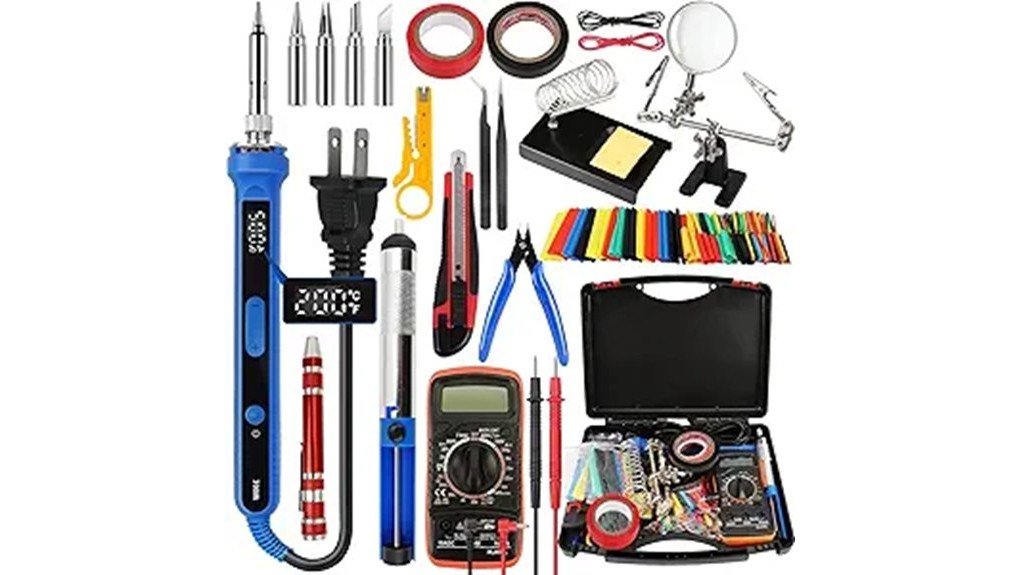
| Included Tools | Multimeter, wire stripper, helping hand, soldering stand with sponge |
| Soldering Tips | Five interchangeable tips |
| Accessories | 164 heat shrink tubes and electrical tape |
| Best Use | DIY electronics, circuit board repairs, small wiring fixes, and hobby builds |
| Safety Note | Use a stand, avoid touching the heated tip, and follow the product instructions during setup and operation |
What Is the 194PCS Soldering Iron Kit?
The 194PCS soldering iron kit is an all-in-one electronics repair bundle built around a 100W adjustable soldering iron. It combines the heated tool with basic support items such as a multimeter, wire stripper, helping hand, soldering stand, sponge, interchangeable tips, heat shrink tubes, and electrical tape.
The kit is made for people who want a complete starter setup instead of buying each small tool separately. Its main appeal is convenience: you can handle basic soldering, continuity checks, wire preparation, and insulation tasks from one package.
It is still a compact DIY kit, not a replacement for a professional soldering station. That matters if you solder every day, need calibration accuracy, or work on expensive boards where temperature stability is critical.
Who Should Buy It?
Best For
- Beginners learning soldering, tinning, and basic circuit repair
- DIY users fixing small wires, connectors, appliances, and hobby electronics
- Students or hobbyists who need a wide accessory bundle in one purchase
Skip If
- You need industrial-grade continuous duty performance
- You already own a quality soldering station, multimeter, and hand tools
- You require verified brand specs, calibration data, or warranty details before buying
Soldering Iron Performance and Heating Control
The 100W heating system is the kit’s strongest performance point. The stated heat-up time of around 15 seconds helps when you only need to make a few joints and do not want to wait several minutes for a low-power pen to stabilize.
The 180°C to 520°C range gives you flexibility for different small jobs. Lower heat settings are better for delicate electronics work, while higher settings can help with thicker wires or larger joints that pull heat away from the tip.
You still need to match the temperature to the solder, component, and joint size. Too much heat can damage pads or insulation, while too little heat can leave weak joints that look dull or fail early.
Display, Controls, and Everyday Usability
The LCD display helps you monitor the selected temperature while you work. That is useful when you switch between light circuit board work and heavier wire joints during the same repair session.
Ventilation holes support heat dissipation around the iron body. The automatic sleep function can also reduce wear during pauses, especially when you stop to trim wires, check continuity, or position a small board in the helping hand.
The kit is easier to manage when you treat the soldering stand and sponge as required tools, not optional extras. The stand gives the hot iron a safer resting point, and the sponge helps you clean oxidation and residue from the tip during use.
Included Tools and Accessories
The 194-piece count gives this kit broad task coverage. The listed accessory set includes 164 heat shrink tubes, electrical tape, a multimeter, a wire stripper, a helping hand tool, five interchangeable soldering tips, and a soldering stand with sponge.
The multimeter helps with simple voltage and continuity checks before or after a repair. The wire stripper helps prepare conductors more cleanly than a knife, which reduces the chance of nicking wire strands.
The helping hand tool is valuable for small parts because it holds the board or wire in position while both of your hands stay free. The heat shrink tubes and electrical tape help finish wiring repairs, although the included accessories should be viewed as starter-grade rather than premium shop supplies.
Setup Tips Before First Use
Start by placing the stand on a stable, heat-resistant surface with open space around the iron. Keep the sponge nearby, organize the tips before turning the iron on, and avoid working near loose paper, fabric, or plastic parts that can melt.
Choose the tip shape based on the job. A finer tip helps with small circuit pads, while a broader tip transfers heat better for larger wire joints.
Test the iron on scrap wire or a low-risk practice board before using it on an important repair. This helps you learn how quickly the 100W iron transfers heat and how often you need to clean and re-tin the tip.
Pro Tip: Keep the soldering tip lightly tinned before, during, and after each session. A thin solder coating helps reduce oxidation and keeps heat transfer more consistent.
Compatibility and Safety
This kit fits light to medium electronics work, small wiring repairs, and hobby projects. It is not the right tool for plumbing, large metalwork, battery tab welding, or heavy production soldering.
Because the iron reaches high temperatures, you should treat the tip, stand, and nearby work area with care. Do not touch the metal tip, do not leave the iron loose on a bench, and let the tool cool before changing tips or storing it.
Good ventilation matters when soldering because flux smoke can irritate your eyes and breathing. Follow the product instructions, use suitable solder for your project, and avoid working on powered circuits unless you know how to do so safely.
How It Performs in Real Use
For Circuit Board Repairs
The adjustable heat range helps you use lower settings for small pads and sensitive components. The helping hand tool also improves control by holding the board steady while you guide the iron and solder.
For DIY Wiring Projects
The wire stripper, multimeter, heat shrink tubes, and electrical tape make the kit useful for basic wiring fixes. You can strip wire, check continuity, solder a joint, and insulate the repair with tools from the same package.
For Hobby Electronics Builds
The five interchangeable tips give you options for small components, header pins, and simple Arduino or robotics projects. The kit works best when you build slowly, clean the tip often, and practice on spare parts before working on final assemblies.
For Light Home Repairs
The fast heat-up time helps with quick fixes such as loose wires or broken low-voltage connections. For higher-risk household electrical work, you should stop and use a qualified professional instead of relying on a small DIY kit.
Before You Buy: This kit is best for occasional DIY electronics and light repair work. Do not buy it as a substitute for an industrial soldering station or verified professional equipment.
Is It Worth the Price?
This soldering kit sits in the budget-friendly starter category because it combines the iron, small hand tools, and many accessories in one package. It offers strong value for the price if you are starting from scratch and do not already own a multimeter, wire stripper, stand, or basic heat shrink assortment.
The best value comes from convenience. You get enough equipment for practice, small fixes, and hobby work without building a tool kit one item at a time.
The tradeoff is accessory quality and long-term precision. If you solder often or need dependable temperature accuracy for expensive components, a bench-top soldering station and higher-grade tools may be a better investment.
How It Compares to Alternatives
Compared with basic 30W soldering pens, this 100W adjustable kit offers faster heat-up and more temperature range. That makes it better for users who move between small boards and thicker wire joints.
Compared with professional soldering stations from established tool brands, this kit wins on bundled accessories and beginner convenience. A dedicated station is still the better choice if you need stable calibration, replaceable station parts, or daily shop use.
Pros and Cons
Pros
- 100W iron heats quickly for small repair sessions
- 180°C to 520°C range supports different soldering tasks
- 194-piece bundle reduces separate tool purchases for beginners
- LCD display makes temperature changes easier to monitor
- Includes multimeter, wire stripper, helping hand, tips, and insulation accessories
Cons
- Not ideal for continuous professional or industrial soldering
- Included accessories are basic starter items, not premium shop tools
- Brand, warranty, and calibration details may require seller-page confirmation before purchase
Want the full kit in one box?
Frequently Asked Questions
Is the 194PCS soldering iron kit good for beginners?
Yes, it is a practical beginner kit because it includes the iron, tips, stand, multimeter, wire stripper, helping hand, and insulation accessories. New users should still practice on scrap wire or a practice board before working on important electronics.
What temperature range does the soldering iron use?
The stated temperature range is 180°C to 520°C. Use lower heat for delicate electronics and higher heat only when the joint size or wire gauge needs more thermal transfer.
How fast does the 100W iron heat up?
The stated heat-up time is around 15 seconds. Real working time can still depend on the selected temperature, tip size, and how much heat the joint pulls away.
Does the kit include a multimeter?
Yes, the kit includes a basic multimeter for simple checks such as continuity and voltage. It is useful for hobby and home repair work, but it should not replace professional test equipment for high-risk electrical diagnosis.
What accessories come with the kit?
The listed accessories include 164 heat shrink tubes, electrical tape, a wire stripper, a multimeter, a helping hand tool, a stand with sponge, and five interchangeable tips. These accessories make the kit more complete for starter wiring and electronics work.
Can you use it for circuit board repair?
Yes, it can handle small circuit board repairs when you use the right tip and temperature. For expensive boards, delicate pads, or advanced repair work, a more precise soldering station may give better control.
What common mistakes should beginners avoid?
Avoid holding the iron on a pad too long, using too much solder, skipping tip cleaning, or working without a stand. You should also avoid soldering powered circuits unless you have the right training and safety setup.
Is it good for professional use?
It is better for DIY, learning, and light repair work than professional daily use. Professionals who need repeatable calibration, stronger accessories, and long sessions should compare dedicated soldering stations.
The Bottom Line
The 194PCS soldering iron kit is a smart buy for beginners and occasional DIY users who want fast 100W heating, adjustable temperature control, and a wide starter accessory set. Its main strength is convenience, while its main limitation is that it does not replace pro-grade soldering equipment.
Buy it for home electronics, practice work, small wiring fixes, and hobby builds. Skip it if you need verified professional specifications, industrial durability, or a calibrated station for daily repair work.