Disclosure: As an Amazon Associate, we earn from qualifying purchases. If you click a link on this page and make a purchase, we may receive a small commission at no extra cost to you.
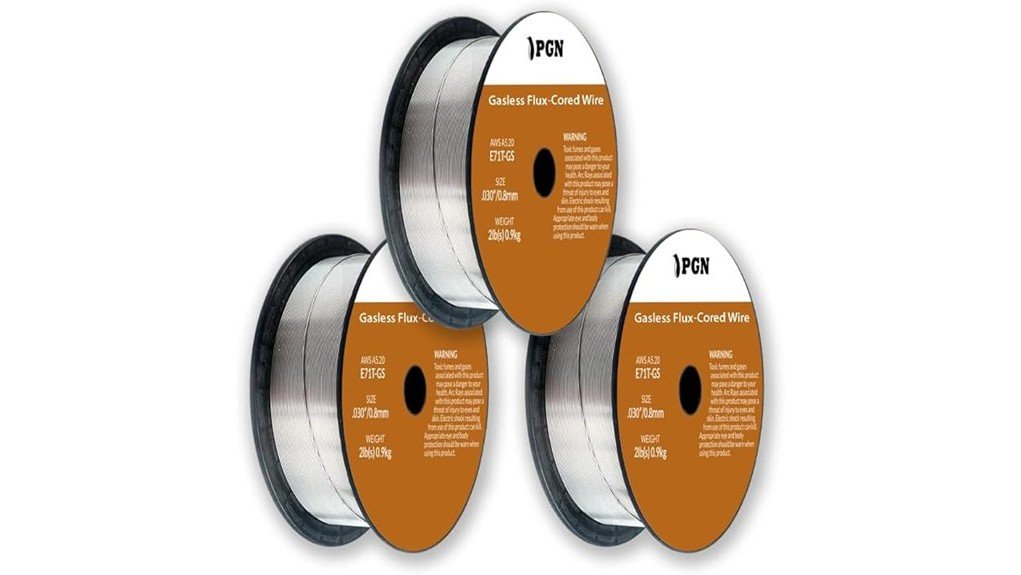
Gasless welding wire saves you from carrying a shielding-gas cylinder, but the wrong spool can feed poorly, create excess cleanup, or fail to match your welder. The PGN Flux Core Wire .030 reviewed here is the E71T-GS, two-spool package for mild steel, with 2 pounds of wire on each spool. This review explains its compatibility, setup needs, real-world uses, and limitations. Its main advantage is portable self-shielded welding, while its main drawback is the slag and spatter you must clean after each pass.
Quick Verdict
Rating: 8/10, Recommended with caveats
Best For: DIY welders, beginners, outdoor mild steel repairs, and occasional shop maintenance
Bottom Line: PGN Flux Core Wire .030 is a practical two-pack when you need gasless welding wire for mild steel and value quick, portable setup. You should expect slag removal, some spatter, and careful compatibility checks before loading the spool.
| Specification | Detail |
|---|---|
| Brand / Manufacturer | PGN / PGN Bearings |
| Model / Part Number | WW-E71TGS-030-2LB-2PCS |
| Wire Classification | E71T-GS |
| Product Type | Self-shielded flux core welding wire |
| Wire Diameter | 0.030 inch |
| Base-Metal Compatibility | Mild steel |
| Package Quantity | Two 2 lb spools, 4 lb of wire total |
| Spool Dimensions | 4-inch diameter, 0.75-inch center hole, 1.75-inch thickness |
| Listed Package Dimensions | 4.7 x 4.7 x 4 inches |
| Listed Item Weight | 4.4 pounds |
| Welding Positions | Listed for all-position welding |
| Pass Capability | Listing states single-pass and multi-pass use |
| Best Use | Fences, gates, brackets, shop fixtures, mild steel frames, farm repairs, and practice beads |
| Safety Note | Use welding PPE and ventilation, follow the spool label and welder chart, and review the listing’s California Proposition 65 warning. |
What Is the PGN Flux Core Wire .030?
PGN Flux Core Wire .030 is a self-shielded E71T-GS wire for mild steel. Flux inside the tubular wire creates shielding during welding, so you do not need an external gas cylinder for normal supported use.
The reviewed Amazon variant carries model number WW-E71TGS-030-2LB-2PCS and includes two 2 lb spools. Each spool has a listed 4-inch diameter, 0.75-inch center hole, and 1.75-inch thickness. Those dimensions matter because your welder must accept the spool hub, width, and wire diameter.
This package targets repair work, hobby projects, and portable welding. The listing describes all-position, single-pass, and multi-pass capability, but your actual procedure must still match the spool label, machine settings, joint design, and required weld strength.
Who Should Buy It?
Best For
- DIY welders repairing mild steel gates, brackets, frames, and shop fixtures
- Beginners who want to practice without buying or moving a shielding-gas cylinder
- Outdoor and mobile users who need a compact two-spool supply for occasional work
Skip If
- You need the cleanest cosmetic bead with minimal slag and spatter cleanup
- You are welding stainless steel, aluminum, pressure parts, or code-controlled structures
- Your welder cannot accept 0.030-inch wire or the listed 4-inch spool format
Arc Behavior, Penetration, and Cleanup
The 0.030-inch diameter suits many compact flux core machines and gives you finer control than a thicker wire can provide on short beads and lighter repair work. PGN lists a tensile strength of 556 MPa for this product, but that number does not guarantee the strength of your finished joint. Joint preparation, settings, technique, and the base metal all affect the result.
The product listing promotes controlled arc behavior and low spatter. In practice, self-shielded wire still produces slag and usually creates more cleanup than solid ER70S-6 wire with shielding gas. Plan to chip the slag, brush the bead, and inspect the weld before adding another pass or applying paint.
Outdoor use is a major benefit because the wire does not depend on a cloud of external shielding gas. Even so, strong wind can disturb the arc, spread sparks, and create unsafe working conditions. Keep your work area controlled and stop when weather makes the job unstable.
Pro Tip: Run a test bead on scrap from the same material before touching the final part. Use the welder chart and spool label as your starting point, then adjust one setting at a time until the arc is steady and the bead ties into both sides of the joint.
Wire Size, Spool Fit, and Welder Compatibility
Before ordering, confirm four details: your machine accepts 0.030-inch flux core wire, the spindle fits a 0.75-inch center hole, the compartment has room for a 4-inch spool, and the drive system has the correct groove. You also need a matching 0.030-inch contact tip.
Flux core wire can be softer than solid MIG wire, so a knurled drive-roll groove is often used to improve grip. Follow your machine manual rather than assuming every welder needs the same roll. Set only enough drive pressure to feed smoothly because too much pressure can deform the wire or create shavings.
Polarity also matters. Many self-shielded wires run with DCEN, but you should not treat that as a universal setting. Check the printed spool label and the welder’s polarity diagram before making a weld.
Before You Buy: The Amazon page includes E71T-GS and E71T-11 choices plus several pack sizes. Confirm that the selected option still shows E71T-GS, .030 inch, and two 2 lb spools before checkout.
Spool Construction, Feeding, and Storage
The two-spool format gives you 4 pounds of wire without requiring a large production spool. It is a sensible amount for occasional repairs because you can keep the second spool sealed until the first is needed.
Feed quality depends on more than the wire itself. Keep the gun cable as straight as practical, use a clean liner, match the contact tip, and avoid excessive drive tension. If feeding becomes erratic, inspect the tip, liner, roll groove, spool brake, and wire surface before changing voltage or wire speed.
Store both spools in a dry cabinet or sealed container. Surface rust, moisture, oil, and shop dust can cause unstable feeding and contribute to porosity. Do not use visibly corroded wire for an important repair.
How It Performs in Real Use
For Outdoor Fence and Gate Repairs
The self-shielded design is useful when you cannot protect a gas MIG arc from light outdoor air movement. The .030-inch wire is manageable for tack welds and short beads on cleaned mild steel brackets, hinges, and frames. Remove coatings near the joint and control fire hazards before starting.
For Beginner Practice
The two 2 lb spools give you enough wire for repeated practice without committing to a large shop spool. Beginners can work on travel speed, gun angle, stick-out, and bead placement. You must also learn to remove slag between passes and recognize porosity or poor fusion.
For Shop Carts, Brackets, and Light Fabrication
This wire fits utility projects where function matters more than a polished appearance. T-joints, lap joints, and butt joints are listed uses. For furniture, display pieces, or visible automotive panels, solid wire with shielding gas may provide a cleaner finish and easier cleanup.
For Mobile Maintenance
A compact flux core welder and 4-inch spool are easier to move than a full gas setup. That makes the package useful for field maintenance and backup supplies. It is not a substitute for a qualified welding procedure on load-bearing, pressure, or safety-critical parts.
How to Use It Correctly
Start by checking the spool label, machine manual, and door chart. Install the proper drive roll and 0.030-inch contact tip, set the required polarity, and make sure the spool turns freely without overrunning.
Clean the joint to bare, sound mild steel. Remove paint, rust, oil, moisture, and heavy mill scale from the weld area. Be especially careful with galvanized or unknown coated metal because welding fumes can be hazardous and may require controls beyond normal shop ventilation.
Make a test weld on matching scrap. Keep a consistent stick-out and use the travel direction recommended for the wire and joint. After each pass, let the metal cool as needed, remove all slag, brush the bead, and inspect it before continuing.
Safety, Fumes, and Fire Control
Flux core welding produces intense light, hot metal, sparks, fumes, and flying slag. Wear a properly shaded welding helmet, safety glasses, welding gloves, flame-resistant clothing, and closed leather footwear. Keep exposed skin covered.
Use local exhaust or effective ventilation and keep your head out of the fume plume. Never weld on a container, tank, coated part, or unknown metal until it has been identified and made safe. The Amazon listing also carries a California Proposition 65 warning for lead and lead compounds, so review the product warning before use.
Clear combustible material from the work area and keep suitable fire-control equipment nearby. After welding, check the surrounding area for smoldering material and allow the workpiece to cool before handling or storage.
Is It Worth the Price?
This PGN package sits in the budget consumables category and gives you two 2 lb spools instead of one. That format can offer strong value for the price when you weld occasionally, want a spare spool, or split supplies between a shop and a mobile kit.
You get the most value when your machine already accepts 0.030-inch wire and 4-inch spools. You avoid the cost and transport of shielding gas, but you trade that convenience for slag removal, spatter management, and more post-weld cleanup.
It is not the best fit for high-volume production or work that requires a documented procedure and certified consumable selection. In those cases, choose wire based on the applicable welding specification rather than package price.
Pros and Cons
Pros
- Self-shielded E71T-GS wire does not require an external shielding-gas cylinder
- Two 2 lb spools provide 4 pounds of wire and a ready spare
- 0.030-inch diameter suits many compact hobby and repair welders
- Listed for all-position, single-pass, and multi-pass welding
- Useful for common mild steel T-joints, lap joints, and butt joints
Cons
- Slag and spatter add cleanup compared with well-tuned gas-shielded MIG
- The product page has multiple classifications and pack options, so checkout details need verification
- Limited to compatible mild steel work and not a default choice for code-controlled fabrication
Good Fit for Your Welder?
Confirm the E71T-GS classification, .030-inch diameter, two-pack quantity, and spool fit before you order.
How It Compares to Alternatives
Solid ER70S-6 MIG wire is usually the better comparison when you weld indoors and want a cleaner bead with less slag. It needs external shielding gas and better wind control, but it can reduce finishing work on visible projects.
A .035-inch self-shielded wire may suit some heavier work or higher-output machines, while a single 2 lb spool may make more sense if you weld rarely. The PGN two-pack is the stronger fit when you specifically want .030-inch E71T-GS wire, compact spools, and a spare on hand.
Frequently Asked Questions
What exactly comes in this PGN package?
The reviewed variant lists two E71T-GS spools with 2 pounds of .030-inch wire on each spool. That gives you 4 pounds of wire total, plus packaging weight.
Is PGN Flux Core Wire .030 good for beginners?
It can be a practical beginner wire because you do not need a shielding-gas setup. You still need to learn polarity, wire speed, stick-out, travel angle, joint preparation, and complete slag removal.
Can you use this wire outdoors?
Yes, the self-shielded design is useful outdoors because it does not rely on external gas coverage. Stop if wind, rain, poor footing, or nearby combustible material makes the job unsafe.
Will the spool fit every flux core welder?
No. Confirm that your welder accepts .030-inch wire, a 4-inch spool, a 0.75-inch center hole, and the required spool width. You also need the correct drive roll and contact tip.
Does E71T-GS require shielding gas?
No, this is self-shielded flux core wire. Follow the spool label and machine chart for polarity and operating settings rather than adding gas by assumption.
Can it weld stainless steel or aluminum?
No. This reviewed E71T-GS variant is listed for mild steel. Stainless steel and aluminum require consumables, settings, and procedures intended for those metals.
Is this wire suitable for structural welding?
Do not select it for structural work from an Amazon description alone. Code-controlled, load-bearing, pressure, and safety-critical welds require an approved procedure, qualified personnel, and consumables that meet the applicable requirements.
How should you store the unused spool?
Keep it dry, clean, and sealed away from humidity and grinding dust. Inspect the exposed wire for rust or contamination before loading it into your machine.
The Bottom Line
PGN Flux Core Wire .030 earns an 8/10 for DIY welders who need a portable E71T-GS two-pack for mild steel repairs, practice, and occasional outdoor work. Its strongest points are gasless operation, compact 4-inch spools, and a useful spare, while its main limitations are cleanup and the need to verify machine fit and the selected Amazon variant. Skip it for incompatible metals, high-volume production, or code-controlled welding that requires a documented consumable and procedure.
Ready to Buy?
Check the selected classification, pack size, current price, and product details before you decide.